Nestrans is the Regional Transport Partnership for Aberdeen and Aberdeenshire. Paul Finch was appointed as Nestrans’ new Director in June 2025, after serving as its Strategy Manager since 2020. He also chairs SCOTS Transport Working Group. Kirsty Chalmers is Aberdeen City Council’s Bus Partnership Programme Manager. She leads the development of Aberdeen Rapid Transit (ART), a transformational rapid bus system for the Aberdeen City Region. At TRANSPORT Smart Class, Scotland 2026, we were delighted to introduce Kirsty and Paul as keynote co-speakers!
Paul set out key elements of the Nestrans’ Regional Transport Strategy, including the vision and key priorities for the region’s transport to 2040. This addressed the key priorities following the recent Holyrood election, headline projects, and the challenges and opportunities that are specific to the north east’s social, economic and community needs.
Kirsty highlighted the approaches to, and progress on Aberdeen Rapid Transit. She detailed the scheme option development and business case progression, including vehicles, routeing, ticketing and delivery pathways.
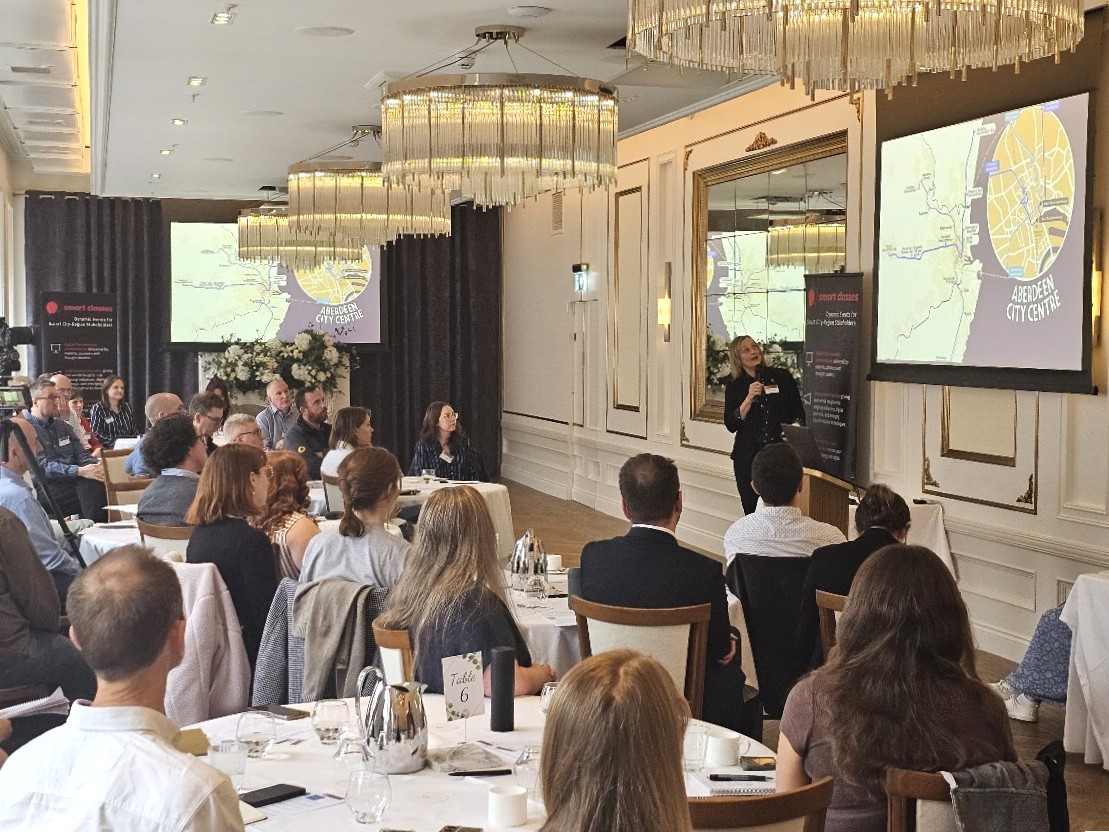
Summary of presentation highlights:
- One of Scotland’s 7 Statutory RTPs – Model 3 (Act as Public Transport Authority) includes SWestrans (South West of Scotland Transport Partnership), SPT (Strathclyde Partnership for Transport) and ZetTrans (Shetland Transport Partnership); Model 1 (Responsibility for Regional Transport Strategy Development and Delivery) includes SEStran (South East of Scotland Transport Partnership), Tactran (Tayside and Central Scotland Transport Partnership), Nestrans (North East of Scotland Transport Partnership) and HITRANS (Highlands and Islands Transport Partnership);
- Nestrans Area – Aberdeen City and Aberdeenshire; Many aspects of transport network work at a cross-boundary, regional, and interregional basis. This is where RTPs principally add value;
- Wider Nestrans Interfaces – HM Government, Network Rail, Department for Transport, Connected Places Catapult, The Scottish Government, Transport Scotland, Universities and Research Orgs, Police Scotland, NHS Grampian, Opportunity North East, Scottish Enterprise, Aberdeen & Grampian Chamber of Commerce, Active Travel, Freight & Logistics, Aberdeenshire Council, Aberdeen City Council, Cairngorms National Park, Community Groups, Stagecoach, ScotRail, LNER, Amey, FirstGroup;
- Key Policy Drivers – Climate/Decarbonisation; Health and Wellbeing; Economic Transformation; Equalities;
- Regional Transport Strategy for the North East of Scotland – nestrans 2040;

- RTS Headline Projects – Aberdeen Rapid Transit/Bus Infrastructure; Encouraging Behaviour Change and Safety; Buses – Network, Fares, Quality; Active Travel Transformation; Lobbying for Strategic Connections; Alternative Fuels and Charging Points; Local Rail Development and Improvements; Supporting Rural Accessibility; Affordability and Accessibility of Transport Network;
- Summary of Key Projects 26/27…
- Revenue Fund – Rail Action Plan including Insch Station access; Active Travel Plan; Bus Satisfaction Survey and BSIP; Freight Action Plan; Climate Resilience; Travel Behaviour Change; Car km Reduction Impacts; Health and Transport Plan;
- Capital Fund – Local rail station appraisal including Cove & Newtonhill; Active Travel Route Development; Walking and Cycling Measures across Aberdeen and Aberdeenshire; Road Safety Measures; Deveron Crossing, Banff; RTPI Upgrades and Innovation; Bus Stops; Bus Interchanges;
- City Region Deal – Aberdeen Rapid Transit Business Case; LDP Strategic Support including strategic investment impacts; A90 Toll of Birness/Cortes Design to DMRB3; A956 Wellington Road interventions to DMRB3; Ballater Mobility Hub and Coach Parking; Future Scenarios – Ellon/Peterhead/Fraserburgh; Drones/Freight Logistics; Laurencekirk & Mearns Rural Accessibility;
- People & Place/Transport to Employment – Recycled bikes and distribution; Bike training – adults and children; School and residential cycle parking; Community Transport support; Inclusive and adapted cycling initiatives; Bike repair/maintenance skills; Access to employment support – system wide; Access to employment support – individuals;
- Looking ahead to the ‘Next 5 Years’ and the ‘Next 20 Years’;

- Aberdeen Rapid Transit…
- ART Strategic Context: Nestrans Regional Transport Strategy; Vision – a proposed new mass rapid transit system designed to provide high quality, fast, frequent and reliable public transport ▪ A step-change improvement ▪ Distinct from but integrated with the wider bus network ▪ Two cross-city routes; Improve sustainable transport connectivity into and across Aberdeen; Increase bus and cycling mode share; National recognition; STPR2 and NPF4;
- Key features of ART: Fast, frequent and reliable services; Bus priority – Re-allocation of road space, continuous bus priority, signal priority; Halts/stops – Level boarding, lighting, CCTV, shelters and seating; Vehicles – High capacity, multi-door, zero emission; Fares and Ticketing – Off-vehicle ticket purchase, minimal driver interaction, integrated ticketing, concessions; Information and branding – Real time, journey planning, distinctive branding;
- Work to date: 2021 – NESTRANS Regional Transport Strategy, Bus Partnership Fund; 2022 – ”Case for Change”, City & Shire Councillor briefing; Nov 2022 – Project Launch; Dec 2022 – Market Research, 400 city & shire interviews; 2023 – Business engagement, Engaged >300 biz on routes; 2023 – Routing Appraisal, Options Appraisal; 2020-2023 – Multi Modal corridor study engagement; 2024 – Stakeholder Engagement to inform Strategic Business Case (SBC); 2025 – Report SBC to City & Shire Committees and City Region Deal NB. Regarding “Preferred Way Forward” for more detailed scheme development and appraisal: June – Approved by City & Shire Committees and Nestrans, September – City Region Deal;

- Programme Level Outline Business Case: Funded through Aberdeen City Region Deal; Developing infrastructure options and phasing – Bus priority and segregated cycle provision, Halt design requirements and locations, Interaction with existing services; Joint Network Review; Delivery mechanism – Setting out how a BSIP pathway could be used to deliver ART; Refining costs and quantifying benefits; Future funding and governance; Early actions that support the vision; Report – March 2027;
- Marketing, communications & engagement: Build awareness and understanding of ART and its potential benefits; Gain buy-in from stakeholders; Engagement on the Strategic Business Case – Events, Online survey, Market Research; Businesses; Interest groups; Vehicle Demo – June 2026.
If you satisfy our regular delegate qualification criteria but were unable to join us in Glasgow on September 10th for the live in-person event at The Exchange, CLICK HERE and complete the short “Download form” (located at the bottom of the post) to receive a unique link enabling free access to the presentation video recordings and slides (including the film footage and slides from Paul and Kirsty’s keynote).
Those qualifying to receive the rich presentation content from this event include commissioning, procurement, trialling, partnering and policy leads, senior influencers, strategic decision makers, programme managers and planners from local authorities (e.g. city, borough, metropolitan, district and county councils); public transport operators; regional transport partnerships, sub-regional transport bodies, combined authorities, integrated transport authorities and passenger transport executives; highways authorities and road operators; government and supporting national transport agencies; non-governmental organisations; fleet operators, parking operators, prime contractors etc.