Rural Scotland continues to face mobility challenges, with limited public transport, car dependency, and barriers for elderly and disabled travellers. On-demand transport, integrated into a Mobility-as-a-Service (MaaS) platform, can provide flexible, accessible journeys — allowing users to plan, book, and pay in one place while ensuring step-free routes, vehicle accessibility, and simplified digital interfaces. This helps connect isolated communities to healthcare, education, and essential services, while reducing car use and social exclusion.
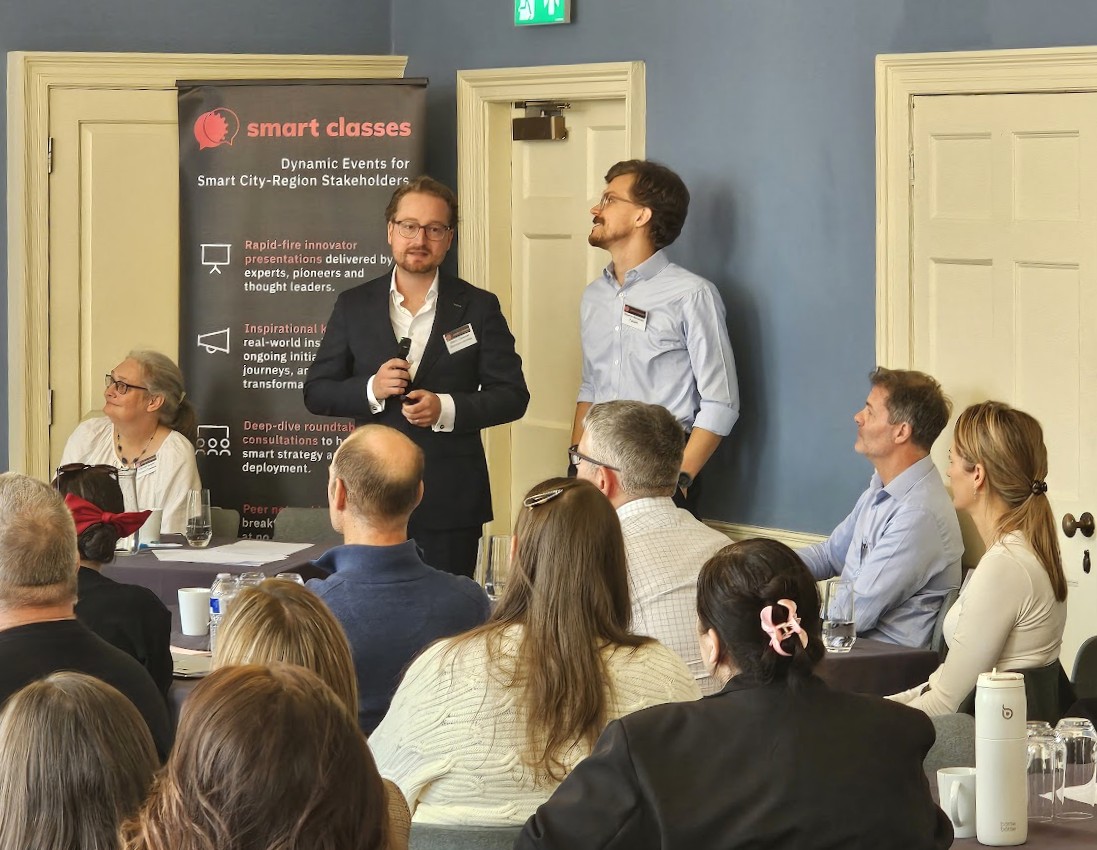
In their joint presentation and co-hosted roundtable sessions on behalf of Siemens Mobility and Padam Mobility, Mario Gessner and Maxime McDonald demonstrated at TRANSPORT Smart Class, Scotland 2025 how these solutions align with the wider UK and Scottish transport policy agenda.
Westminster is debating free bus travel for under-22s and reversing the decline in rural bus services, while Scotland targets a 20% cut in car mileage by 2030 and considers measures such as daily driving charges with rural exemptions. Against this backdrop, MaaS and on-demand transport are not just technological innovations but also politically relevant tools — helping governments meet inclusion, sustainability, and climate targets while strengthening rural connectivity.
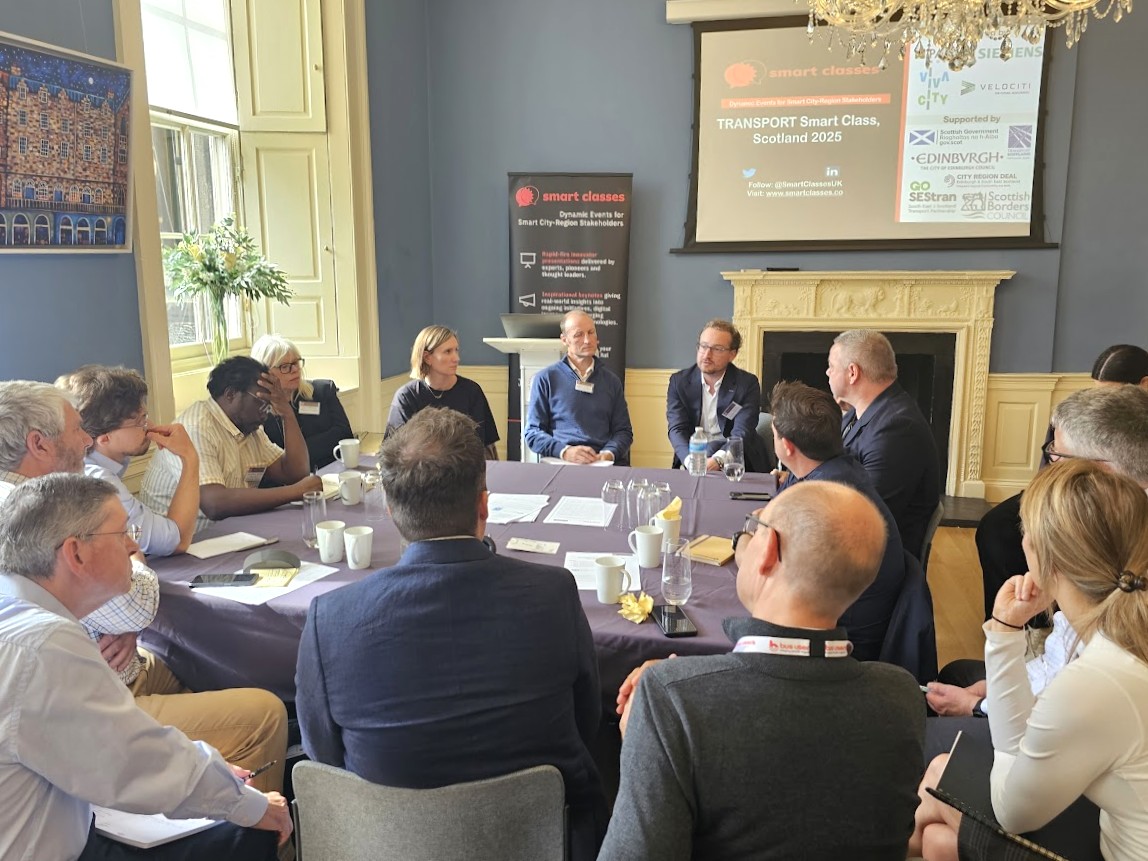
Presentation highlights and notes:
- Life Without a Car? Nearly Impossible in Rural Scotland…
- Car reliance is extreme – Nearly 9 in 10 rural households own a car, compared to just two-thirds in urban areas. Many families even maintain two or more vehicles to cope with limited transport options;
- Limited alternatives – Public bus routes in rural Scotland have been cut back in recent years, creating entire “transport deserts.” Rail links connect towns and cities, but small villages are left behind;
- Access inequality – Around one in five rural residents struggle to reach essential services such as doctors, shops, or schools. This problem is particularly acute for the elderly and disabled, who are less able to drive themselves;
- Isolation & climate impact – Those without access to a car risk social isolation and exclusion from community life. Heavy reliance on private cars also fuels emissions — with transport making up nearly 30% of Scotland’s GHG footprint;
- So how do we address this? The answer isn’t to run more empty buses on fixed routes – that model simply doesn’t work in low-density areas. Instead, we need transport that adapts to real demand and this is where demand-responsive transport comes in;

- From Empty Buses to Smart Shuttles: Transport That Adapts…
- Flexible by design – On-demand shuttles only run when needed, ensuring resources match real demand. This makes service viable even in low-density rural communities;
- First-and last-mile solved – DRT links isolated villages to mainline bus and rail corridors. Passengers can reach broader networks without needing a private car;
- Accessible for all – Vehicles can be equipped with ramps, lifts, and space for wheelchair users. Booking platforms allow travellers to request the right type of vehicle in advance;
- Proven impact – In Europe, Padam Mobility projects in France and Germany have increased ridership by 25–40% in rural zones. In the UK, Bedfordshire’s DRT pilot has become a lifeline for elderly residents without cars;
- DRT service configurations – Different needs, different flavours…
- Zonal configurations e.g. Divergent, Multi-Areas, Feeder, Free-floating;
- Fixed line and Virtual line;
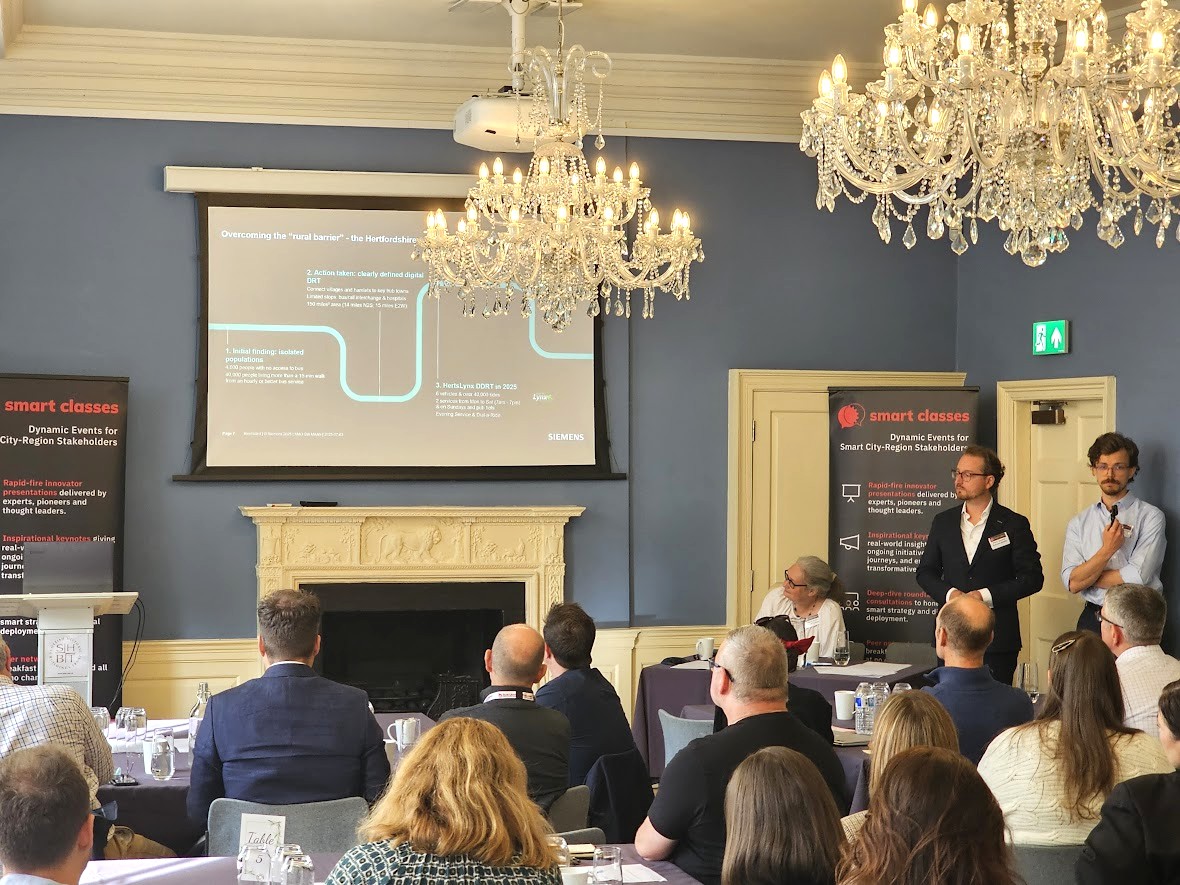
- Overcoming the “rural barrier” – the Hertfordshire Case Study…
- 1) Initial finding: isolated populations – 4,000 people with no access to bus; 40,000 people living more than a 15-min walk from an hourly or better bus service;
- 2) Action taken: clearly defined digital DRT – Connect villages and hamlets to key hub towns; Limited stops: bus/rail interchange & hospitals; 150 miles² area (14 miles N2S; 15 miles E2W);
- 3) HertsLynx DDRT in 2025: 6 vehicles & over 40,000 rides; 2 services from Mon to Sat (7am – 7pm) & on Sundays and public holidays; Evening Service & Dial-a-Ride;
- Now, how does MaaS come into play?
- One App, Every Journey: MaaS Made Simple & Accessible…
- Seamless planning – One app for planning, booking, and paying across all modes, so no more juggling tickets or timetables;
- Accessibility built in – Larger fonts, voice guidance, and high-contrast design; real-time info on step-free routes & vehicle accessibility;
- Integrated networks – Brings together DRT, bus, rail, and community transport into a single connected system;
- Proven at scale – Siemens-powered MaaS platforms, e.g. Renfe (Spain): MaaS across 27 regions, serving both urban and rural users;
- Regional MaaS in Practice – The Renfe Spain Example…
- Renfe, Spain’s national railway company, set out to transform itself from a traditional rail operator into a provider of door-to-door mobility; Siemens Mobility was selected to deliver a countrywide Mobility as a Service platform for the whole of Spain including Madrid, Barcelona, Valencia, Bilbao and Seville;
- Ambitious scope: Siemens Mobility powers Renfe’s MaaS platform, covering 27 major Spanish cities and regions; 7 fully integrated partners and >90 transport operators at informational level;
- Truly multimodal: Integrates trains, metro, buses, bicycles, car-sharing, and scooters – accessible via a single app;
- Seamless user experience: One-stop planning, booking, and payment for all modes, with real-time updates;
- Empowering passengers: Enables door-to-door journeys, personalized travel recommendations, and easy transfers;
- Scalable and inclusive: Serves urban and rural users; supports accessibility and social inclusion;
- Strategic shift: Renfe evolves from rail operator to holistic mobility provider, setting a benchmark for national MaaS;
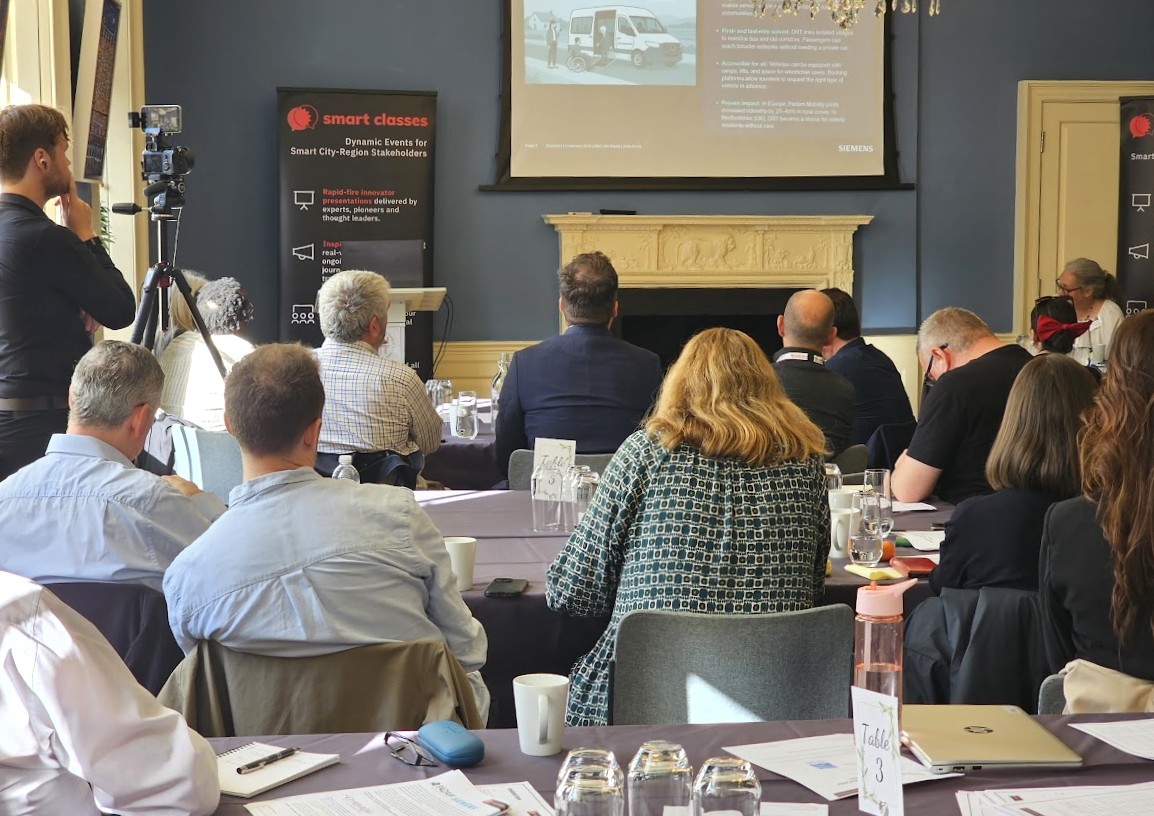
- Demand-responsive shuttles only work if people can actually find and use them easily, and that’s where Mobility as a Service comes in;
- MaaS brings everything together in one app – planning, booking, and paying across trains, buses, on-demand shuttles, and even community transport; Instead of juggling tickets or wondering about connections, passengers see their full journey in one place;
- Crucially, MaaS is designed to be inclusive – The platform can offer larger fonts, high-contrast displays, and even voice guidance; It also provides real-time information about step-free routes and accessible vehicles, so less mobile travellers know exactly what to expect;
- This isn’t new for Siemens – As well as the nationwide example in Spain with Renfe, Siemens is already running large-scale MaaS platforms in Frankfurt with RMV, where on-demand transport is fully integrated with bus, tram, and rail;
- These examples show that MaaS is not just a concept – it’s a proven, scalable solution that can be adapted to Scotland’s needs;
- A Connected, Inclusive Rural Scotland…
- Healthcare access – Elderly residents can book reliable shuttles to GP appointments and return home with peace of mind;
- Accessible journeys for all – Wheelchair users and less mobile travellers connect seamlessly to bus and rail networks via MaaS;
- Community & daily life – Families and young people can reach schools, shops, and leisure activities without needing a car;
- Wider benefits – Less isolation, more independence, stronger rural economies, and reduced CO₂ emissions.
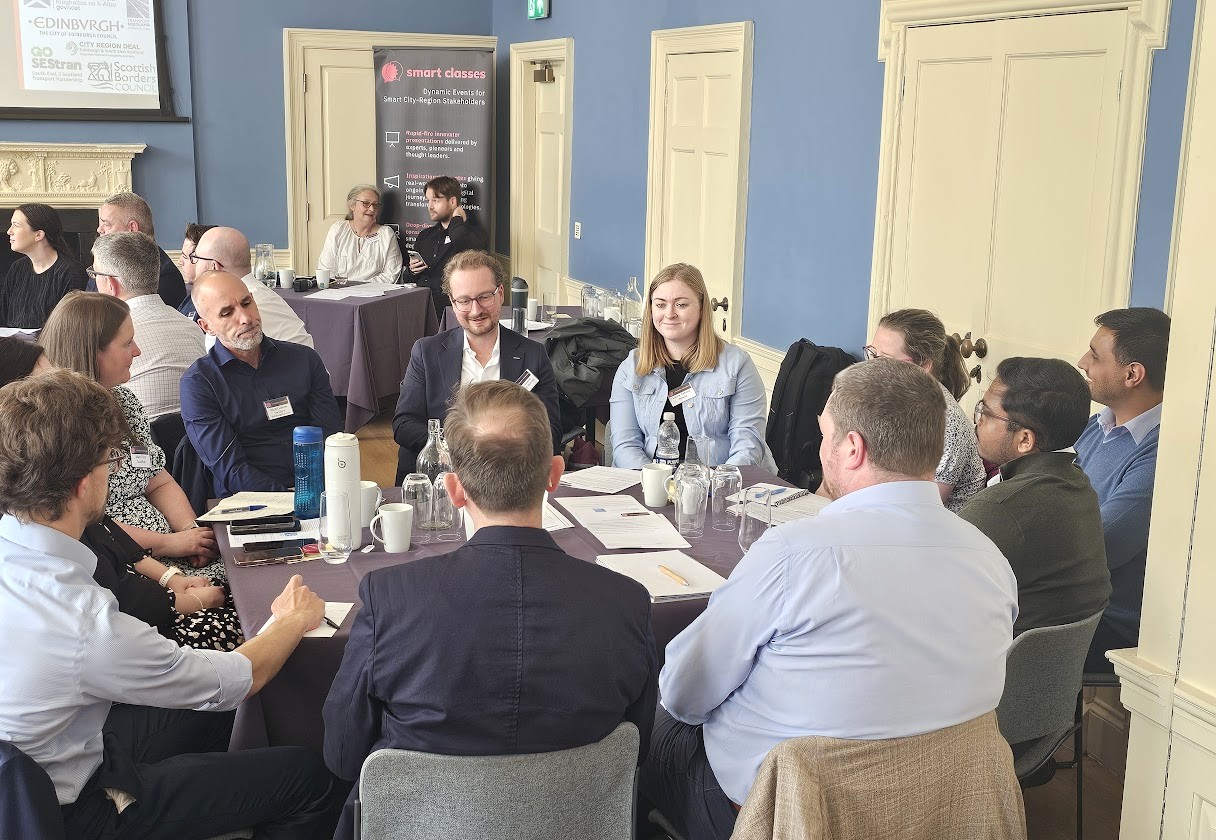
If you satisfy our regular delegate qualification criteria but were unable to join in Edinburgh on September 11th for the live in-person event at Riddle’s Court, CLICK HERE and complete the short “Download form” (located at the bottom of the post) to receive a unique link enabling free access to the presentation video recordings and slides (including the film footage and slides from Mario and Max’s initial presentation).
Those qualifying to receive the rich presentation content from this event include commissioning, procurement, trialling, partnering and policy leads, senior influencers, strategic decision makers, programme managers and planners from local authorities (e.g. city, borough, metropolitan, district and county councils); public transport operators; regional transport partnerships, sub-regional transport bodies, combined authorities, integrated transport authorities and passenger transport executives; highways authorities and road operators; government and supporting national transport agencies; non-governmental organisations; fleet operators, parking operators, prime contractors etc.