In November 2022, the West Midlands Combined Authority Board signed off on a regional ‘Air Quality Framework’. This was the culmination of a significant amount of work by regional stakeholders to develop a plan which contains 143 actions for tackling air quality. These range from simple changes in communication, through to structural transitions required by transport and industry.
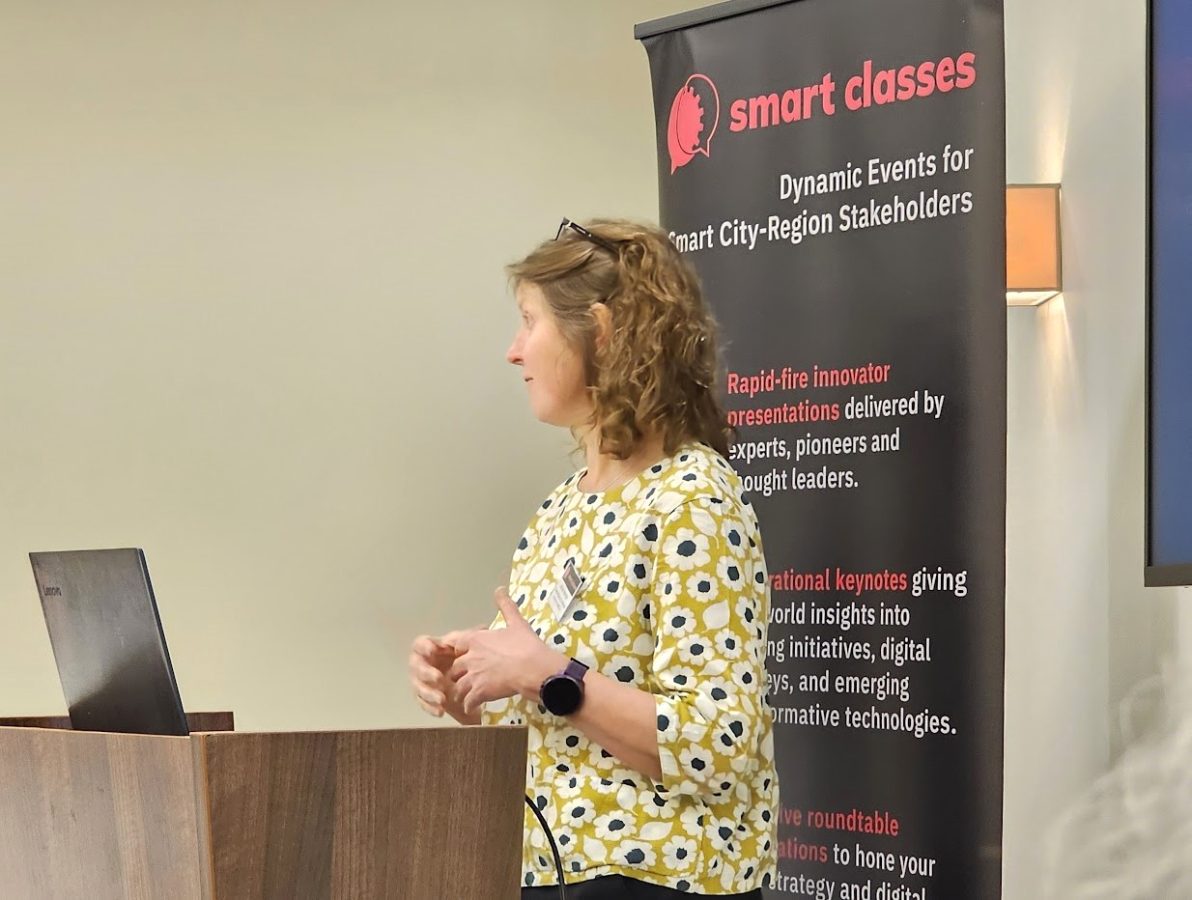
Jackie Homan is Head of Environment at WMCA. In her opening keynote at EMISSIONS & AIR QUALITY Smart Class 2025, she explained how and why the Framework came together; outlined early delivery success, supported by grant funding from Defra and DLUHC; and addressed what the next steps are for tackling air pollution and inequality of exposure across the region.
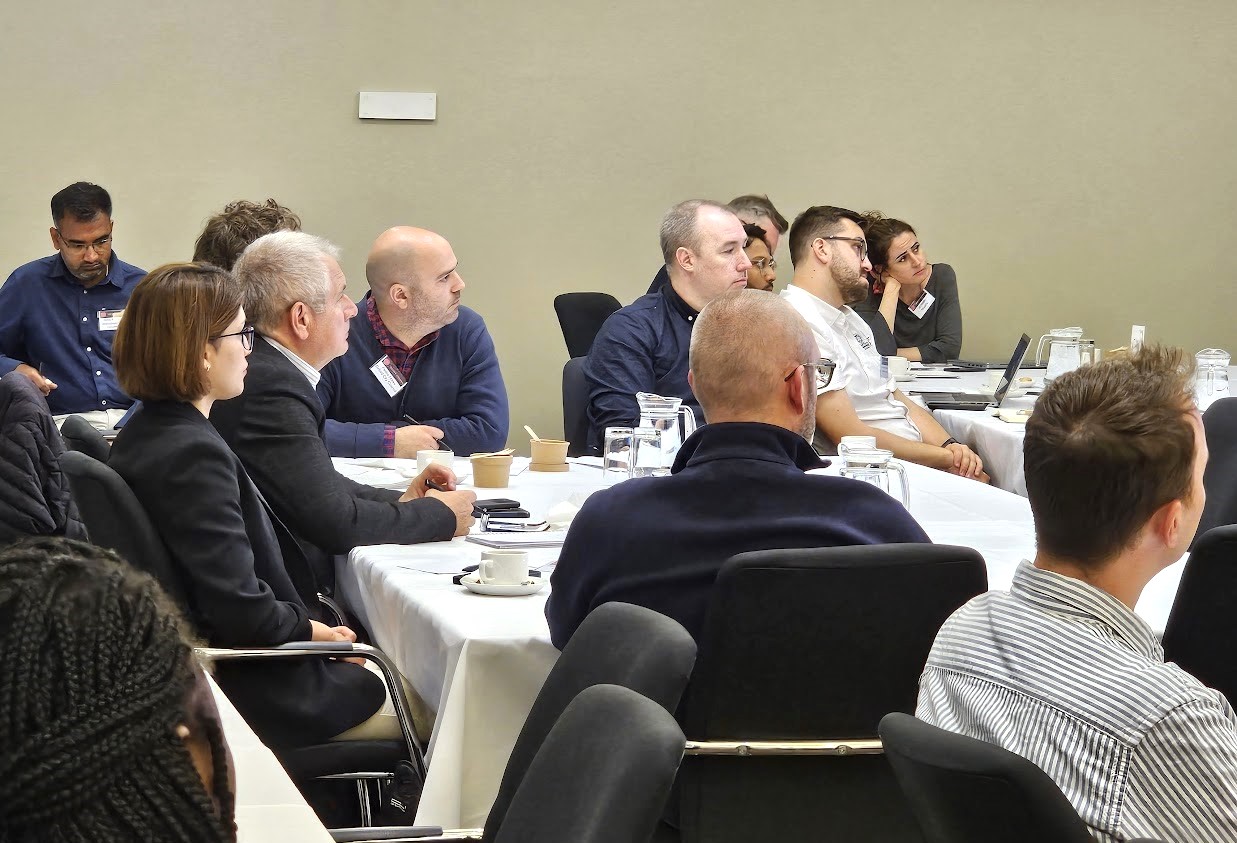
Summary of presentation highlights:
- The WMCA – Established in 2016; Directly elected Mayor from 2017; Current Mayor is Richard Parker; 7 constituent local authorities;
- WMCA environment programme overview – The Environment Programme supports the overall WMCA vision of “building a better connected, more prosperous, fairer, greener & healthier West Midlands”. Key components: Understand our climate-related risks & take steps to be more resilient; Protect, restore & enhance the region’s natural environment for people & biodiversity; Cleaner air for better health & environmental outcomes; Make better use of materials & resources to reduce waste & create environmental & economic benefit; Support & engage people & businesses on environmental issues in an inclusive way;
- Environment Team strategies and plans: Climate Change & Net Zero – ‘WM2041 Actions to meet the climate crisis with inclusivity, prosperity and fairness’, ‘WM2041 Five Year Plan 2021-26’; Behaviour Change – ‘WMCA Net Zero Behaviour Change Evidence Review’; Natural Environment – ‘West Midlands Natural Environment Plan 2021-2026’; Circular Economy – ‘West Midlands Circular Economy Routemap’; Climate Adaptation – ‘A Summary of Climate Change Impacts in the West Midlands Combined Authority’; Air Quality – ‘West Midlands Combined Authority Air Quality Framework’;
- Air Quality within the West Midlands…
- The 2020 WMCA ‘Health of the Region’ report outlines that air quality is one of the wider determinants of health for vulnerable people in the region;
- To date, the focus on addressing air quality in the West Midlands has been in lowering NOx and NO2 emissions; the predominant sources of these are from transport, with typically up to 80% of pollutants coming from road transport; However, road transport typically contributes up to 20% of PM2.5 emissions, with the domestic combustion contribution around 40%; It is also much more of a ‘regional pollutant’;
- WM-Air estimate that annually in the West Midlands, up to 2311 early deaths are attributable to long term PM 2.5 exposure;
- Predicted 2021 NO2 concentrations across West Midlands local authorities based on WM-Air modelling – Map data OpenStreetMap contributors, CC-BY-SA, Accessible Colour Scheme Adapted from Paul Tol Research;
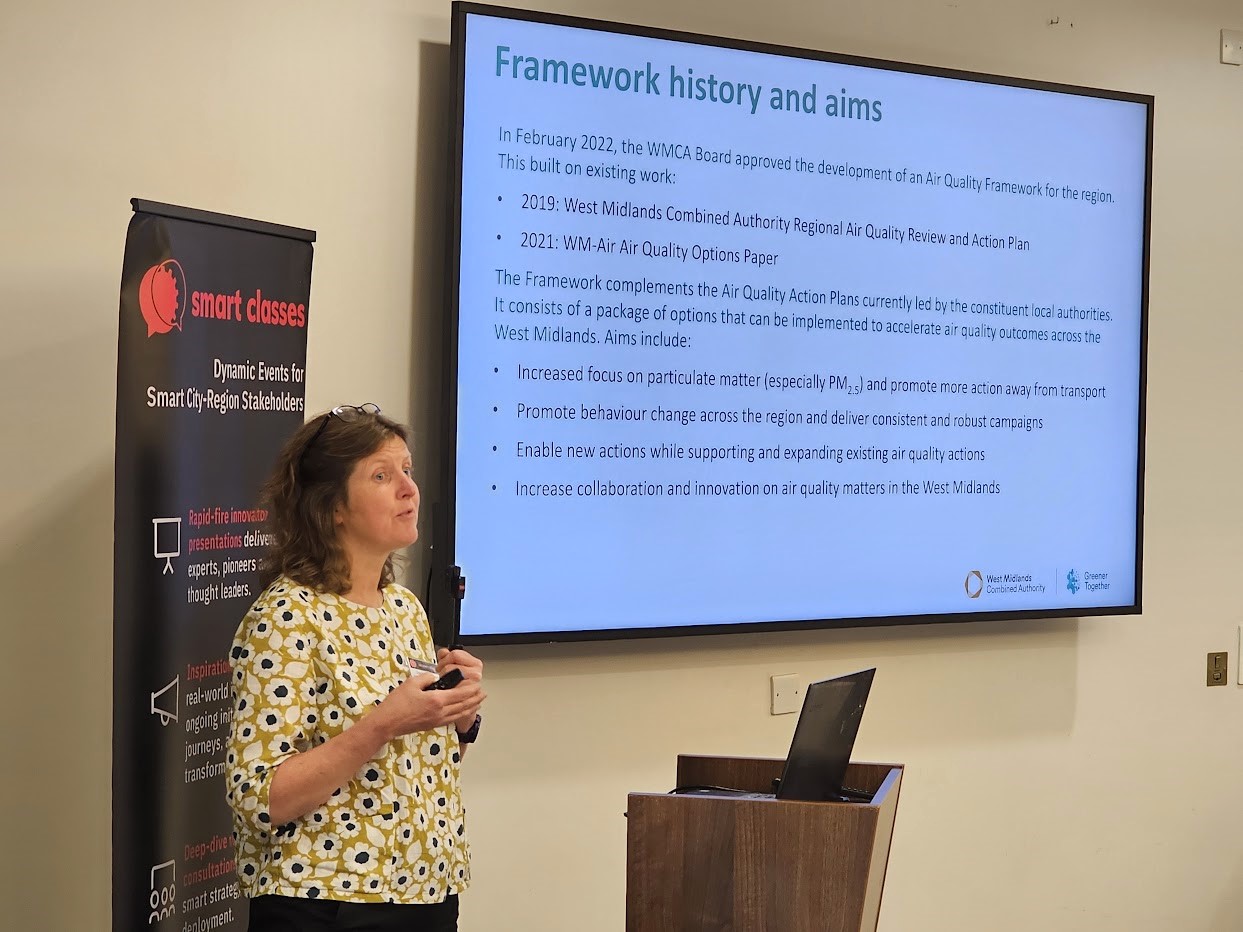
- Framework history and aims…
- In Feb 2022, the WMCA Board approved the development of an Air Quality Framework for the region. This built on existing work: West Midlands Combined Authority Air Quality Review and Action Plan in 2019, WM-Air Air Quality Options Paper in 2021;
- The Framework complements the Air Quality Action Plan currently led by the constituent local authorities. It consists of a package of options that can be implemented to accelerate air quality outcomes across the West Midlands. Aims include: Increased focus on particular matter (especially PM2.5) and promote more action away from transport; Promote behaviour change across the region and deliver consistent and robust campaigns; Enable new actions while supporting and expanding existing air quality actions; Increase collaboration and innovation on air quality matters in the West Midlands;
- Consultation – who was involved?
- The Framework is a collaborative piece of work between the WMCA, constituent local authorities and partner organisations. Core contributors include: Constituent LAs’ Air Quality, public health and planning teams; TfWM; University of Birmingham (via the WM-Air programme); External organisations such as Asthma and Lung UK, Clean Air Justice Network, Mums for Lungs etc;
- Additionally, a Framework workshop took place in August 2023 attended by 48 people from 28 organisations; and a Greener Together Citizens’ Panel produced 13 guiding principles which should be considered when looking at air quality action/measures/mitigation;
- Themes from consultation…
- Through the Framework development process, the following themes occurred: WMCA limited powers when it comes to air quality, however the air quality officers would like the CA to coordinate and assist on air quality; Lack of officer time and funding for air quality; The regional approach to air quality within the planning system is out of date and not supported by modern guidance; Opportunities for leveraging economies of scale, knowledge sharing, and cooperation are being missed; There is a large gap in common engagement, monitoring and digital; Lack of non-transport measures within existing air quality action plans;
- There are eight clear Framework themes which options have been placed into – 1) Domestic Emissions and Indoor Air Quality 2) Transport 3) Natural and Built Environment 4) Monitoring and digital 5) Commercial, Industrial and Agriculture 6) Public health 7) Planning, Policy, Governance and mechanisms for change 8) Climate/Net Zero Considerations;
- WMCA air quality priorities priorities: delivering the Framework…
- The West Midlands will have cleaner air that is safe for all people, no matter where you live in the region, resulting in significantly improved public health and environmental outcomes. There are 143 actions in the air quality framework. The initial priorities are: Monitoring and data, including a stretch target; Behaviour change and providing consistent information; Working with vulnerable groups, including an alert system; Schools programme; Supporting decision makers; Renewal of planning guidance;
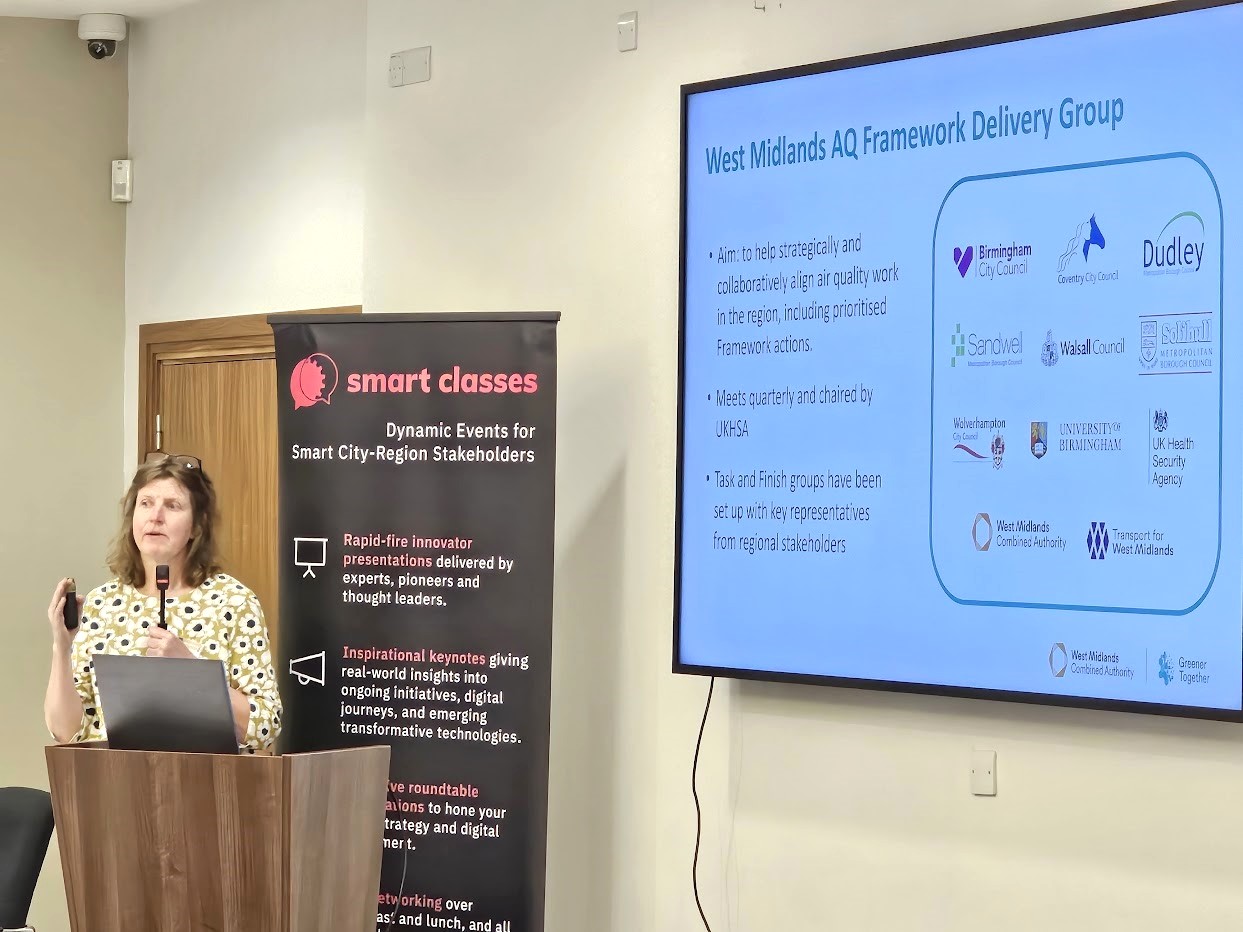
- West Midlands AQ Framework Delivery Group – Aim to help strategically and collaboratively align air quality work in the region, including prioritised Framework actions; Meets quarterly and chaired by UKHSA; Task and Finish groups have been set up with key representatives from regional stakeholders;
- Programme in delivery…
- Sensors – Working with Earthsense to install 90 sensors across the WMCA area; Mapping and data provision on a dedicated website; Can we go faster in the West Midlands? Can we use the data to alert people about air quality?
- Air quality sensor network – The West Midlands region wide sensor network was launched at the end of January 2025 and is made up of 90 sensors monitoring PM2.5 and NO2 concentrations. The network will: Help the WMCA and LAs to gain a greater understanding of air quality within the region; Provide the public with easily accessible information on concentrations through a public facing data platform;
- Behaviour change trials – Ran 7 behaviour change trials (one in each local authority); Trials were focused on PM2.5 looking at reducing emissions and personal exposure; Across all trials, 2731 people were engaged either through surveying or in-depth interventions;
- Coventry – Installing low-cost sensors in homes with log burners/open fires to monitor pollution levels and provide advice on reducing pollution;
- Sandwell – Looked at evaluating different methods of framing information about air quality and the Sandwell Smoke Control Order which will be implemented in July – focused on people most likely to burn solid fuel;
- Wolverhampton – Working with a housing developer to improve behaviours on managing and mitigating particulate matter on small to medium construction sites;
- Walsall – Using low-cost sensors to capture the average person’s exposure to pollutants across their day and to provide advice on the best ways to mitigate their exposure through practical and actionable advice;
- Birmingham – Focused on what message testing works best in relation to changing behaviour around air pollution, focusing on the Ladywood, Castle Vale and Balsall Heath;
- Solihull – Working with pharmacists to disseminate information on air quality to patients with pre-existing health conditions;
- Dudley – Encourage sustainable travel behaviours among council park groups;
- ‘Care for our air’ social media – Avoiding log burners, Limiting car trips, Stopping idling car engines, Keeping cars serviced, Not burn garden waste;
- ‘Breathe Easy’ – Checking your air quality on the new regional website;
- Air quality literacy: supporting decision-makers – The WMCA has run a successful carbon literacy programme over the past three years; During engagement around the regional Air Quality Framework it became apparent that there was scope to develop a module on air quality literacy; The programme has been produced by WMCA Environment Team staff and has been available on a dedicated website since January 2024; Since the launch, 85 officers and councillors across the region have completed the training;
- What next?
- Working with Defra to understand how our work can be supported;
- Additional funding to the West Midlands to support air quality projects;
- Rolling out air quality literacy to increase awareness amongst policymakers;
- Identifying ways to scale behaviour change projects;
- Launching the alert system;
- Ensuring the data is reliable and remains at the highest quality;
- Building air quality into community projects;
- …and more!
If you meet our regular delegate qualification criteria but were unable to join us at Leicester City Hall for the live in-person event on May 8th, CLICK HERE and complete the short “Download form” (located at the bottom of the post) to receive a unique link enabling free access to the presentation video recordings and slides (including the film footage and slides from Jackie’s keynote).
Those qualifying to receive the rich presentation content from this event include commissioning, procurement, trialling, partnering, policy and programme leads, senior influencers, strategic decision makers, environmental managers, climate/sustainability/transport/public health officers and planners from local authorities (e.g. city, borough, metropolitan, district and county councils); public and private transport operators/service providers; sub-regional transport bodies, combined authorities, integrated transport authorities and passenger transport executives; freight and logistics operators; airports and port operators; vehicle manufacturers; energy providers; potential partners from industry (e.g. retail, construction, manufacturing and waste management sectors) and healthcare; DfT, Defra, EA, BEIS, DHSC, UKHSA and other and supporting national agencies; prime contractors; academia etc.