Safe, clean drinking water is vital to public health and the wellbeing of our society. This was first recognised in the Public Health Act of 1848 where water should be “pure and wholesome”, enabling the local Board for Health to construct, or contract waterworks. The technology of water treatment and provision has significantly changed over the last 177 years, but the one thing which remains central is that water must be wholesome with the current legislation for which the duty rests on water companies.
The Drinking Water Inspectorate is the statutory technical regulator delegated by the Secretary of State for the Environment to protect public health and the safety and security of our drinking water. As a highly specialist body, the work is wide ranging, covering the supply from source to tap and addressing quality, sufficiency, operational technology and security using a risk-based data-driven methodology to target regulatory priorities and the outcomes of the water companies.
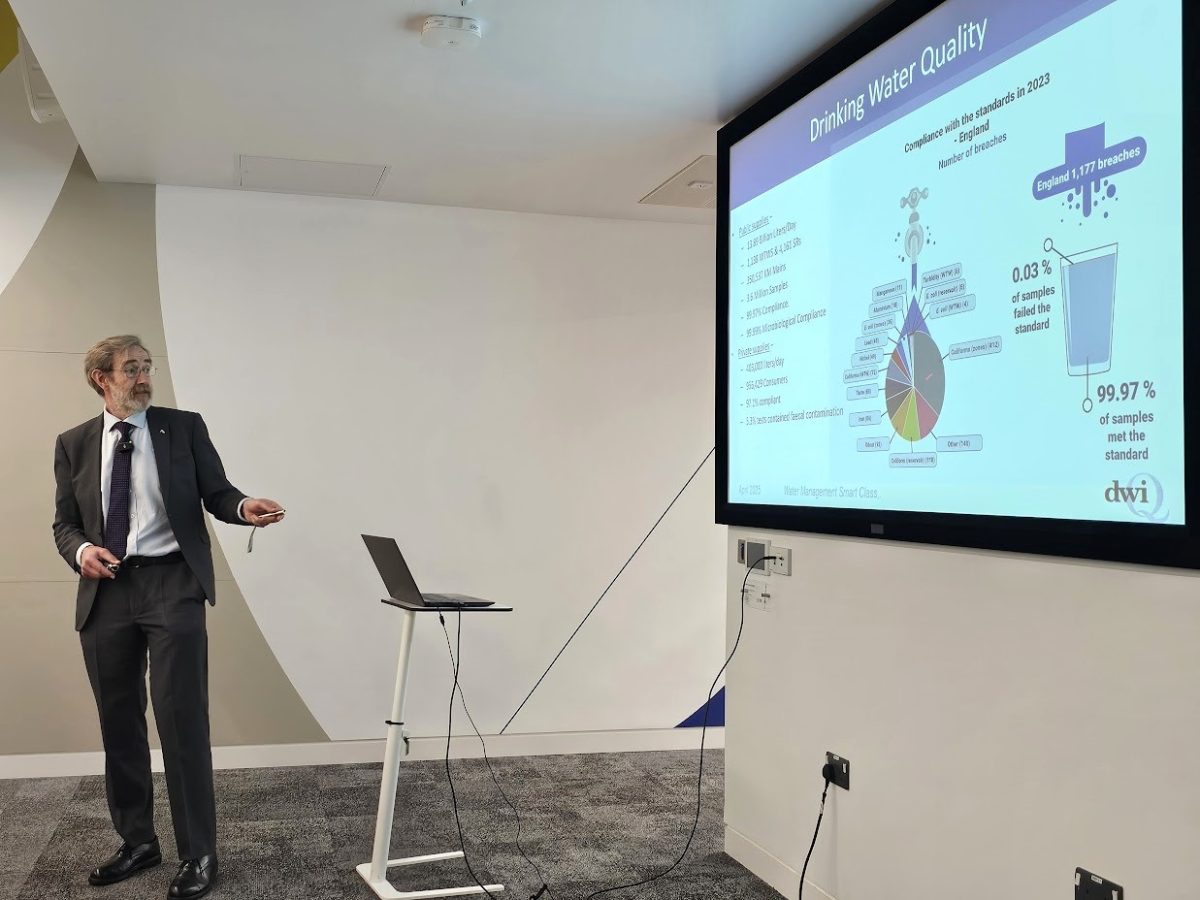
At WATER MANAGEMENT Smart Class 2025, DWI Chief Inspector Marcus Rink provided a short introduction into the Drinking Water Inspectorate and the work of the scientists, analysts and engineers who oversee our drinking water supply arrangements. Marcus’s keynote also explored the successes of water industry regulation since 1990, how the UK’s water supply compares to the rest of the world, and asked, is there more to do?

Summary of presentation highlights:
- Drinking Water Inspectorate – Established in January 1990, Section 60 of the 1989 Water Act established the DWI following privatisation; Chief Inspector is a statutory appointment (Water Act 2003); Resides in Defra for administrative purposes; 56-70 staff;
- Drinking Water Regulation Objectives – “To protect public health and maintain public confidence by securing sufficient safe and clean drinking water, now and for future generations”: To Maintain Public Confidence in Water Quality, Improve and Protect Water Supply, Protect Public Health & Future Generations, Hold Companies to Account, Effective & Proportionate Regulation, and Strategically Plan for DWQ, Sufficiency and Security;
- Drinking Water Regulatory Delivery – Delivering the requirements of legislation and regulation for: Wholesomeness & Sufficiency, NIS & SEMD…By: Delegated Powers (Information Acquisition, Duty of Assistance, Material Controls, Rights of Entry), Enforcement & Prosecution;
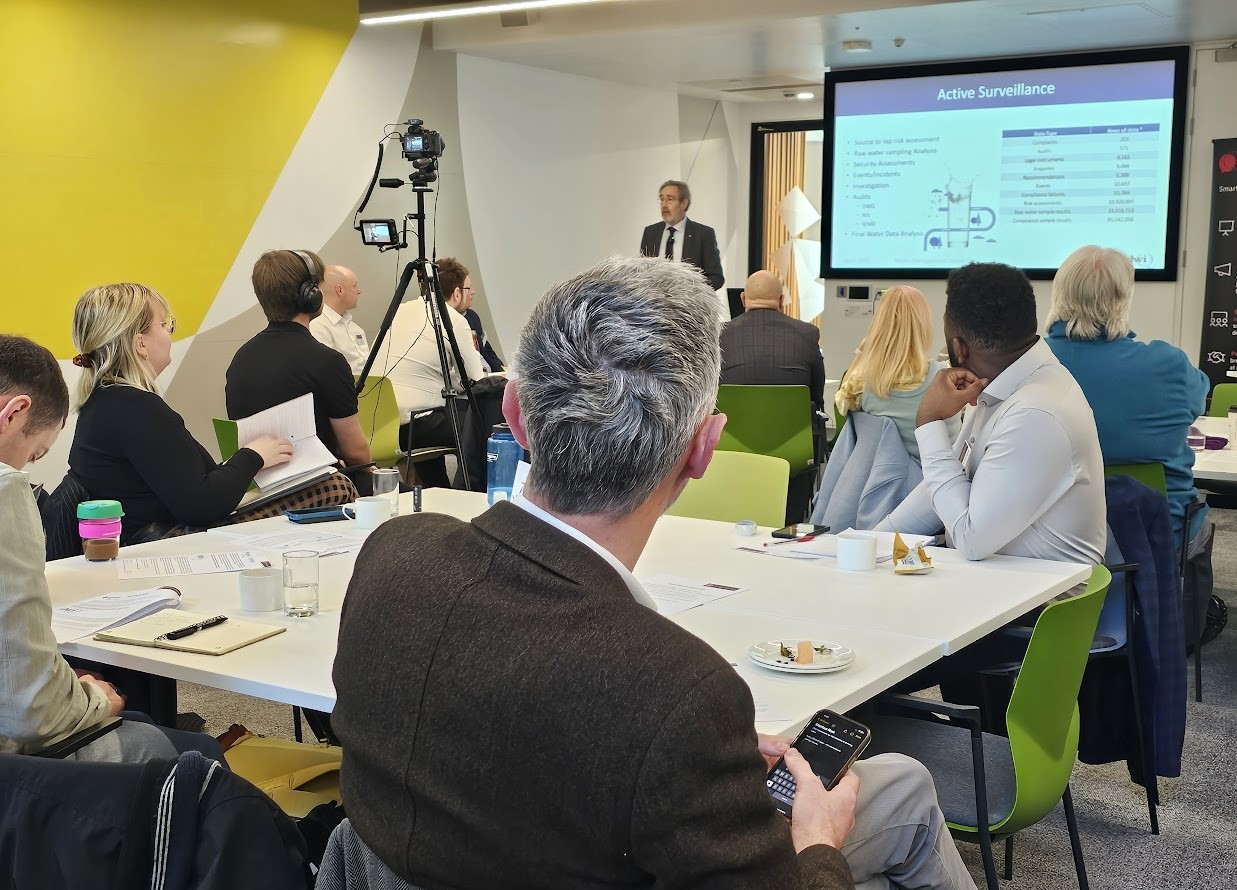
- Active Surveillance – Source to tap risk assessment; Raw water sampling Analysis; Security Assessments; Events/incidents; Investigation; Audits (DWQ, NIS, SEMD); Final Water Data Analysis;
- Data Types and Rows of Data;

- Drinking Water Quality – Compliance with the standards in 2023 (England)…
- Public Supplies – 13.89 Billion Litres/Day; 1,138 WTWS & 4,161 SRs; 350,537 KM Mains; 3.6 Million Samples; 99.97% Compliance; 99.99% Microbiological Compliance;
- Private Supplies – 403,000 Litres/Day; 956,429 Consumers; 97.1% Compliant; 5.3% tests contained faecal contamination;
- Drinking Water Delivery Success 1990-2025 – England and Wales Overall Compliance and Lead (Pb) Compliance with 10 ug/l;
- How Does the UK Compare?
- Environmental Performance Index for Drinking Water – Is the number of age-standardized disability-adjusted life-years lost per 100,000 persons (DALY rate) due to exposure to unsafe drinking water; Worldwide data from the Yale Center for Environmental Law & Policy;
- Drinking Water Risk Dashboard – More to Do! Median Compliance Risk Index; Consumer complaints on acceptability contacts per 1000 population; Water safety planning Risk Assessment Risk index; Enforcement in England;
- Drinking Water Response to PFAS – 2018-2024;
- Water Quality Inspection in Action – e.g. SWB Littleton water treatment works; SEW Harple Lane borehole; TMS Sheeplands hatch cover; UUT Cumwhinton flocculation tank;
- Security and Cyber In Action – e.g. Technocover having been drilled through, invalidating its rating and introducing a WQ issue; Non-rated lock on secure transformer compound; Unrated electromagnetic lock installed on gate with access to most vulnerable points on a site; Unrated padlock protecting final water at a large CNI site;
- Risk Strategy and Future Management Summary – Residual Risks* and their associated Future Risks**, External Risks*** and Regulatory Risks****…
- * Asset Resilience, Maintenance, Design and Supply (Loss of Supply); Control Systems, Risk Normalisation; Networks and Domestic Systems; Security, protection and alternative supplies; Microbial (e.g. Cryptosporidium);
- ** PFAS; Unknowns (e.g. impacted sites, TFA, EDCs, Other Chemicals); Climate Change; OT/IT/Technology; Consumer Confidence;
- *** Environment, Catchment and Resource; Third Parties reliance or interventions, Supply chain, Chemical supply; Power Supply; Threat Actors; Adverse Communications;
- **** Primary Legislation/Inadequate Regulatory Reach (DPC/DBO/3rd Parties/Sufficiency; Secondary Regulations Out of Date for e.g. Standards, sampling Definitions (Recycling); Powers and sanctions e.g. Sufficiency, fines, Civil remedies; Staff expertise and equivalent pay (NIS); Private Supplies etc
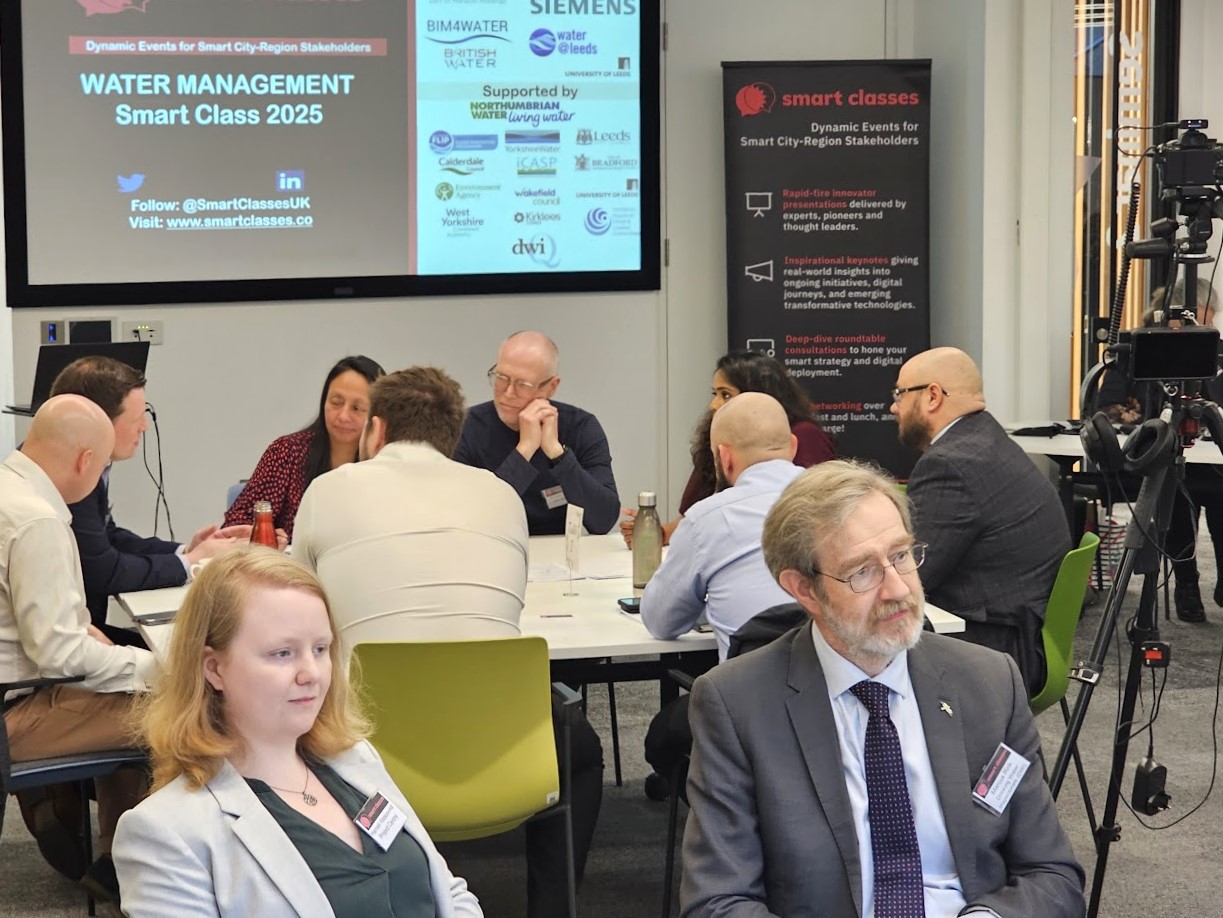
If you satisfy our regular delegate qualification criteria but were unable to join us in Leeds on April 2nd for the live in-person event at Nexus, CLICK HERE and complete the short “Download form” (located at the bottom of the post) to receive a unique link enabling free access to the presentation video recordings and slides (including the film footage and slides from Marcus’s keynote).
Those qualifying to receive the rich presentation content from this event include commissioning, procurement, innovation, trialling and partnering leads, senior influencers, strategic decision makers, environmental managers, policy makers and planners from UK water companies and utilities, wastewater and sewer operators, lead local flood authorities (unitary authorities and county councils), city/borough/metropolitan councils, district councils, combined authorities, internal drainage boards, regional flood & coastal committees, highways authorities, prime contractors, general insurers, large water consumers, national agencies, central governmental and regulatory bodies (e.g. Defra, DCLG, Ofwat, Environment Agency, DWI, SEPA), independent industry and consumer organisations (e.g. Water UK, CCW), river trusts, NGOs etc.