

At TRANSPORT Smart Class, Scotland 2024 we were delighted to welcome back Andrew Georgeson (Regional Director), Eduardo Martin-Moral (Associate) and Stacey Monteith Skelton (Principal Traffic Engineer) on behalf of Project Centre, part of Marston Holdings.
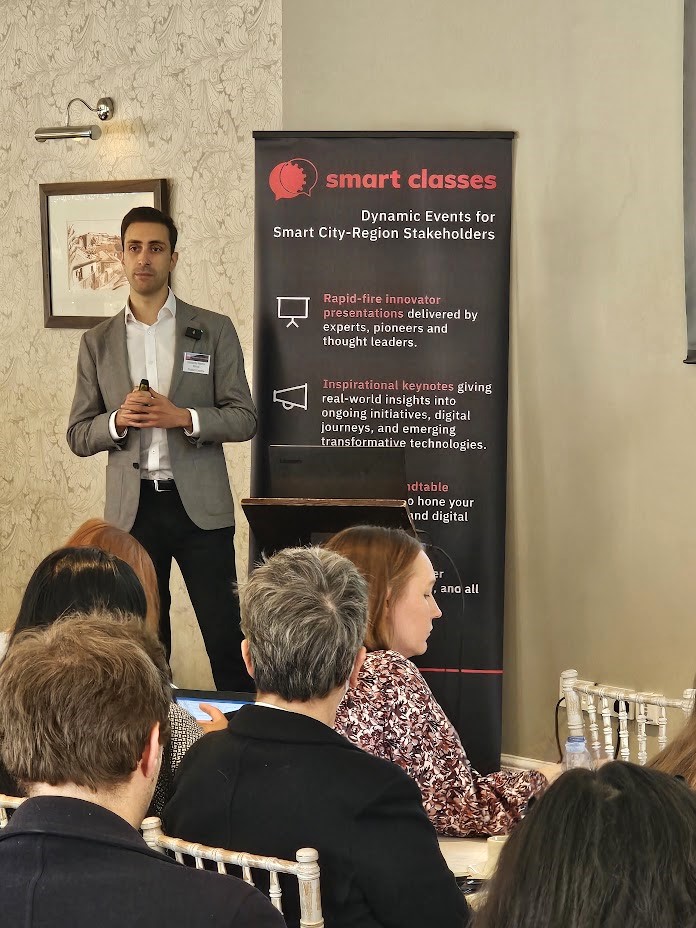
Eduardo’s presentation explored how data collection and the use of new technologies can help stimulate the behavioural change required to meet the decarbonisation targets across Scotland’s transportation sector by promoting a shift towards less pollutant modes of transport. He demonstrated how the obtainment of key information can inform decision making, implementation of thoughtful design interventions and enable authorities to plan better and make efficient use of their limited resources.
Andrew and Stacey subsequently added their expert knowledge during in-depth hosted roundtable consultations with each table of delegates.
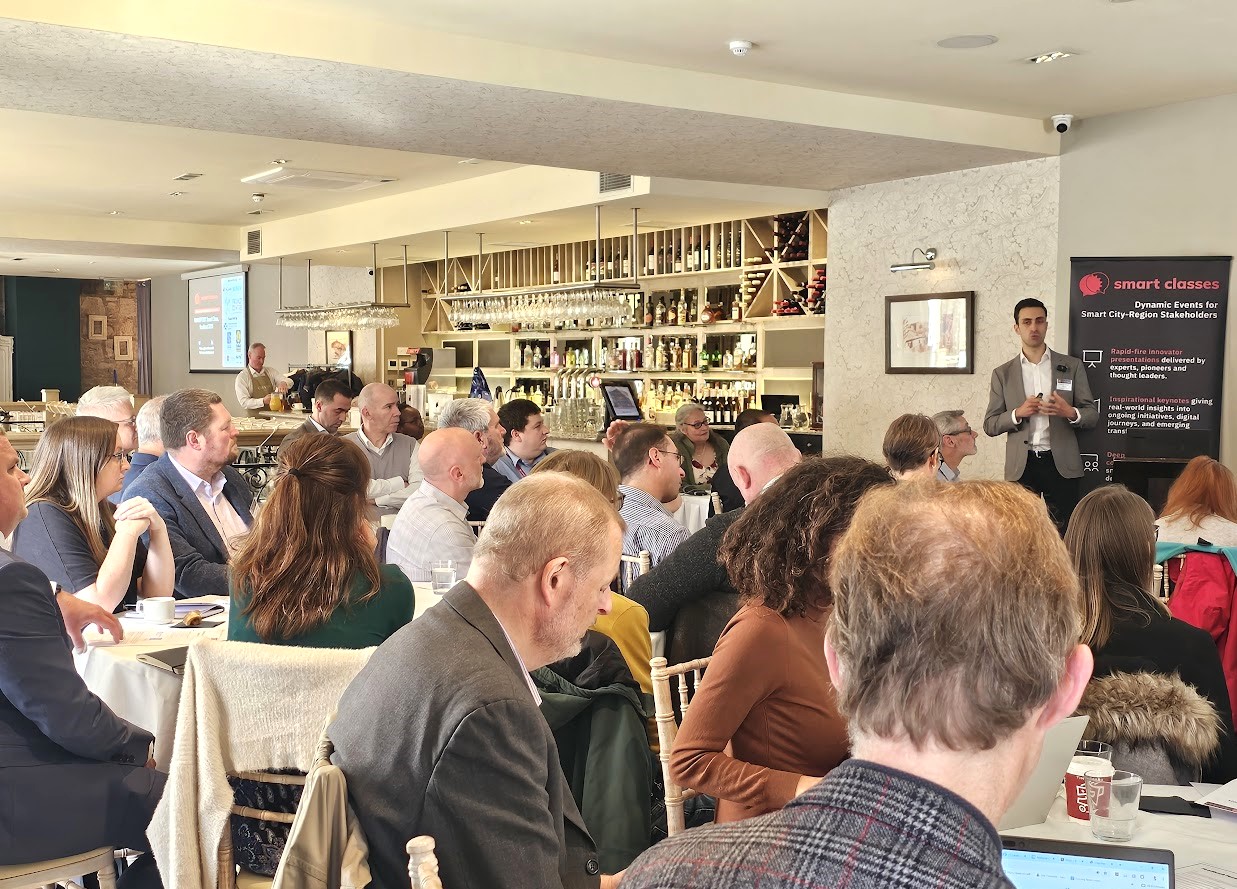
Presentation highlights:
- Decarbonising Scottish Transport…
- Mission Zero for transport – Net zero by 2045; 75% reduction between 1990 and 2030; 90% by 2040;
- In 2021, Transport Scotland commissioned a study to understand the magnitude of change required in Scotland to meet the climate change targets;
- Progress made towards Scotland’s transport emissions under Policy Scenario 3 – % reductions for Aviation (international and domestic), Marine (international and domestic), Rail, Bus and Coach, Trucks, Vans and Cars;
- Technological and societal behavioural changes will be required to meet those targets – The Climate Change Committee (CCC) noted that 59% of emissions reductions to reach net zero in Britain will involve some form of societal behaviour change;
- Driving the Behavioural Change…
- What behaviours are required in Scotland?
- 1) Use of public/active and shared transport between urban regions and satellite towns/villages 2) Walking as preferred mode for short journeys 3) Cycling (bikes & e-bikes) for urban and inter-urban journeys 4) Facilitation of excellent infrastructure that encourages the use of the above 5) Journey shortening and journey avoidance 6) Enhance accessibility to public transport network 7) Enhance accessibility to electric fuels (cost and charging points);
- How can we contribute to that behavioural change? What does make people shift to less pollutant modes of transport?
- We need to understand what would drive that behavioural change; DfT’s behaviour research in 2020 – “People have now multiple opportunities to change travel behaviour, but those travel decisions are driven primarily by convenience and cost, not environmental concerns”;
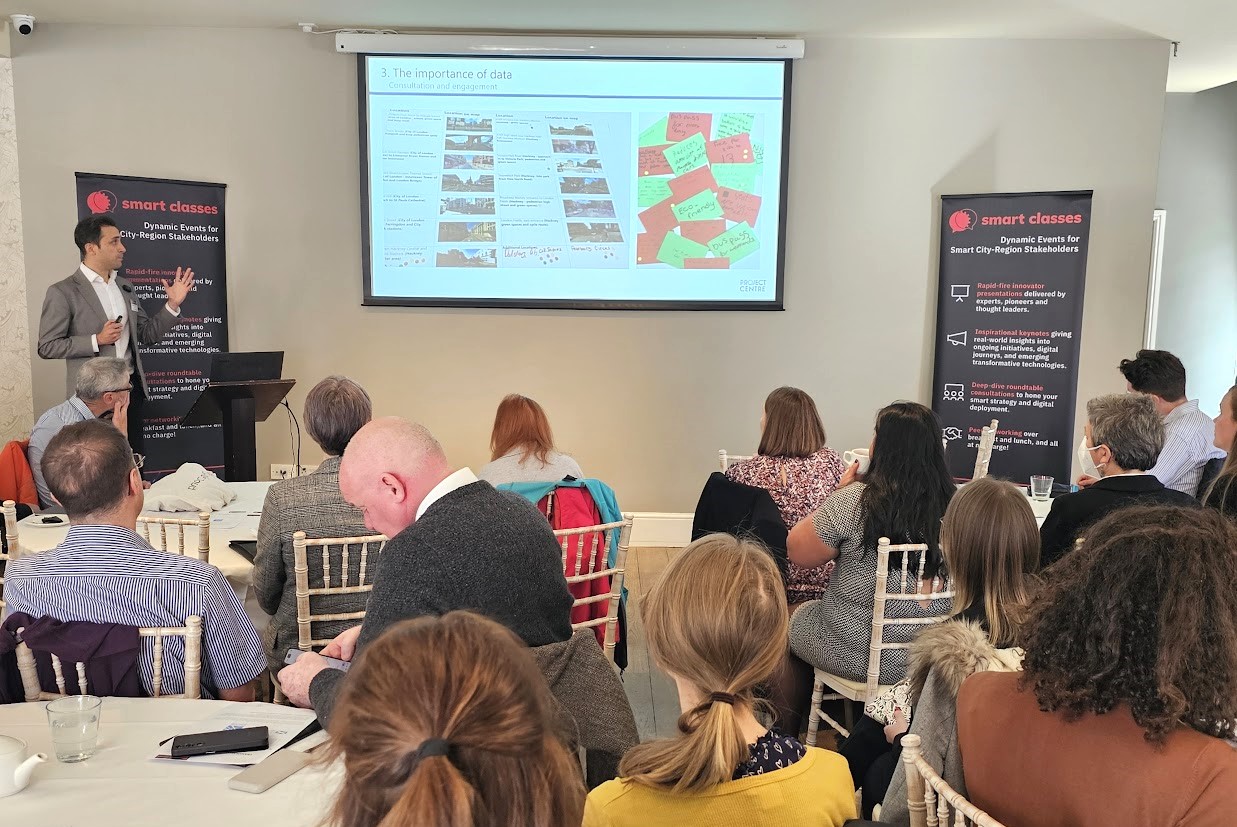
- Consultation and engagement – e.g. “Air Aware” (Hackney and City of London) – Starting healthy conversations about air quality and raising awareness about how you can protect yourself against air pollution by highlighting pedestrian high street and green spaces, cycle routes, footpaths, bus passes etc ;
- Design – Data helps to understand the problem (e.g. Pavement parking in Edinburgh) and design the adequate interventions – What are the blockers to behavioural change? Data Capture – Traditionally on site walkovers and one-off surveys; New technology: sensors, integration, real time; Data can be used to monitor and assess schemes; Convenient and accessible infrastructure plays a key role in modal shifting;
- Air quality – Air pollution affects people through their lifetime: Pregnancy – low birth weight; Children – asthma, slower development of lung function, more wheezing and coughs; Adults – asthma, coronary heart disease, stroke, lung cancer, diabetes; Elderly – asthma, lung cancer, diabetes, dementia, heart attack; Vortex sensors (e.g. in London Borough of Waltham Forest) measure air quality by time and gas pollutant, time and particulate matter, average NO2, average O3, average PM2.5, average PM10 etc;
- Camera technology – Videalert camera technology captures key information for better decision making, infrastructure design and assessment of interventions e.g. Vehicle speed, Traffic breakdown, Traffic counts, Identify desire crossing lines; The results from a larger sample will likely be closer to the true population parameter. Larger samples allow us to reduce the likelihood of finding results that are not actually true; New technology allows us to capture real-time data 24/7;
- Lewisham School Streets Case Study…
- The Challenge – Lewisham Council’s Transport Team embarked on an ambitious venture, to tackle their most traffic congested locations in the borough. Their aim was to reduce traffic volume outside schools by implementing a number of School Streets programmes across Lewisham. This involved using unattended CCTV technology during school start and finish times, and instead encouraged active travel including walking, cycling, or wheeling to school;
- The Process – Provided clear and consistent communication with the community, through consultation maps, online survey, and f2f conversations; Promoted a diverse and inclusive communication strategy; Engaged with teachers to help them communicate the value and importance of the programme; Installed 45 ANPR cameras; Introduced vehicle controls to reduce traffic volume and speed outside 22 schools; CCTV reviews;
- The Impact – 22 schools implemented + 45 cameras installed = Reduced 862,500 vehicle movements around school drop-off and pick-up times; In the Holbeach Primary School alone, vehicle movement decreased by 75%, meanwhile in the Rushey Green Primary School there was a 32% reduction in vehicle movements; “It’s been transformative. Much less traffic, many more kids riding to school, you can walk on the road…”;
- Data Coordination…
- Gathering of data to ensure we make the right choices on a local level – right design, right outcomes;
- Presentation of data in a way that’s easy to understand and analyse;
- Education – quick easy access to succinct information will continue to enable the change in behaviour at a local level;
- Won’t this just push the problem of air pollution somewhere else?
- This is a popular perception, but the evidence says it doesn’t happen. Following the Clean Air Neighbourhood trial to the east of Wandsworth Bridge Road, traffic fell by 12% on the main road because satnavs started routing drivers other ways. Of course, there will still be some initial disruption when the trial starts and it will take time for traffic and travel behaviour to adjust to the changes on the road network. But once the trial has settled in, and alongside the additional public realm improvements and traffic calming measures they are introducing in the area, Project Centre expect vehicle numbers to reduce on the main roads, as well as the side streets, as in other trial areas;
- Conclusions…
- The climate change targets will not be achieved without a societal behavioural change;
- Behavioural change should be driven by understanding the blockers and problems;
- Data underpins decision making and design interventions that encourage modal shifting;
- Existing technology can facilitate the obtainment of real time data that could be used to design, inform, educate and assess.
If you meet our regular delegate qualification criteria but were unable to join us at Citation, Glasgow, for the live in-person event on September 12th, CLICK HERE and complete the short “Download form” (located at the bottom of the post) to receive a unique link enabling free access to the presentation video recordings and slides (including the film footage and slides from Eduardo’s initial presentation).

Those qualifying to receive the rich presentation content from this event include commissioning, procurement, trialling, partnering and policy leads, senior influencers, strategic decision makers, programme managers and planners from local authorities (e.g. city, borough, metropolitan, district and county councils); public transport operators; regional transport partnerships, sub-regional transport bodies, combined authorities, integrated transport authorities and passenger transport executives; highways authorities and road operators; government and supporting national transport agencies; non-governmental organisations; fleet operators, parking operators, prime contractors etc.


