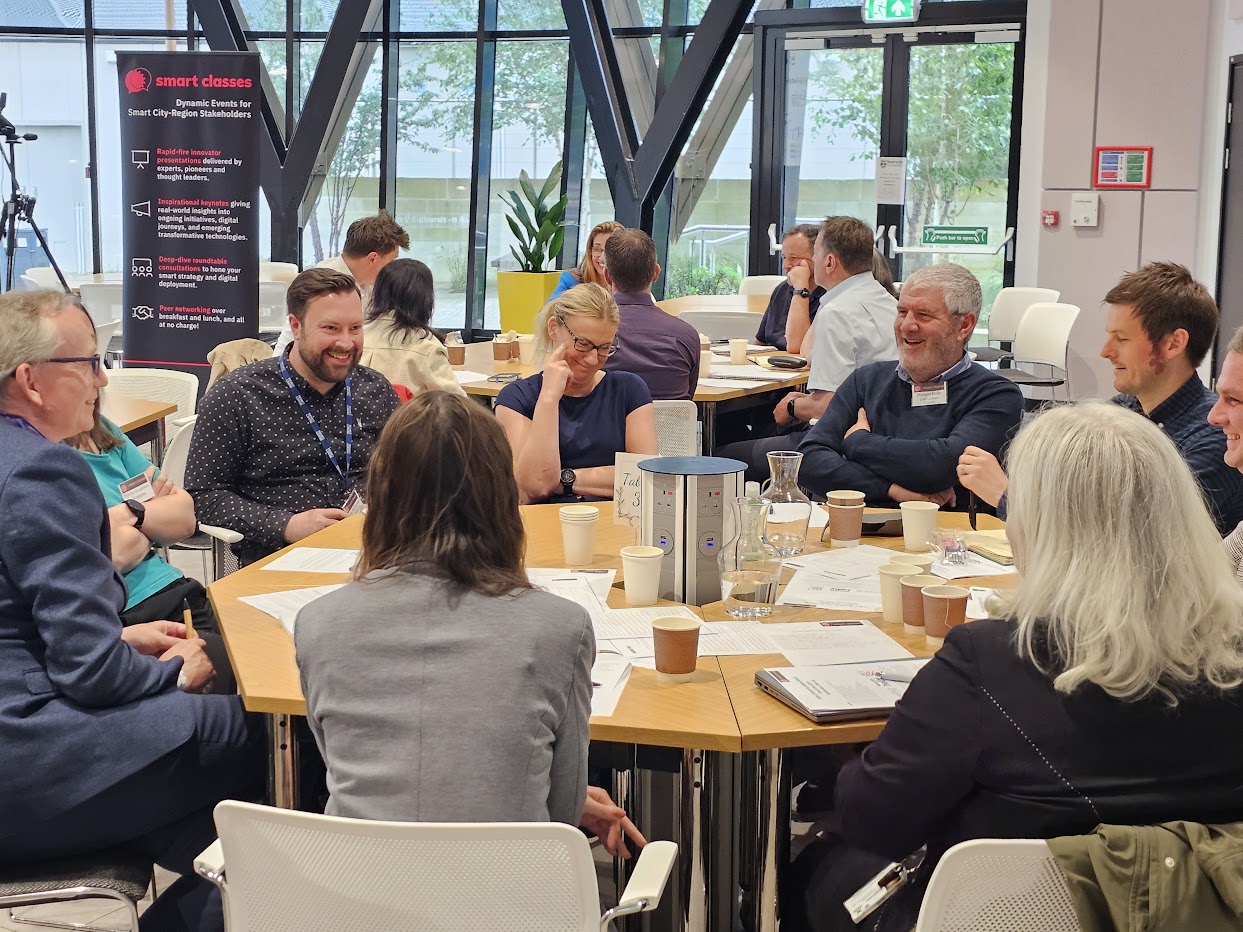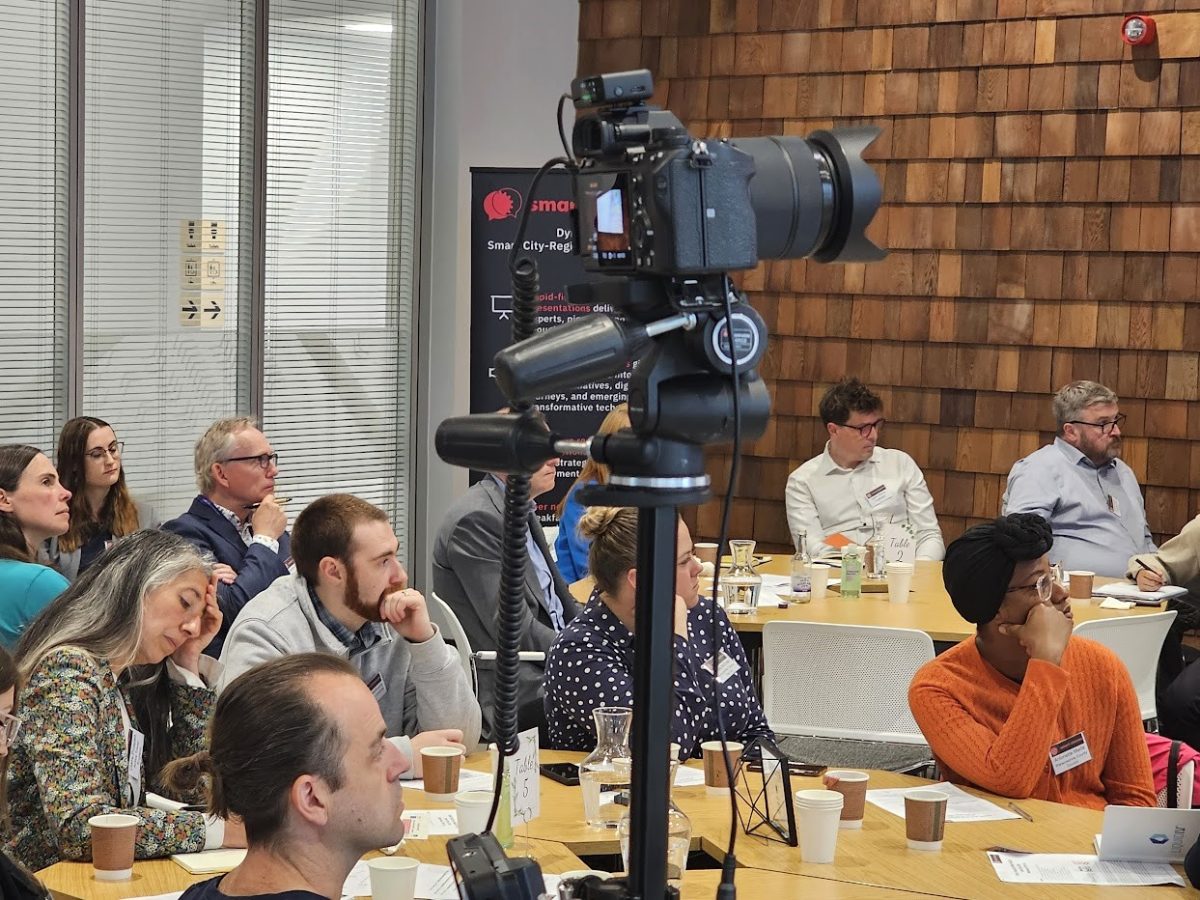
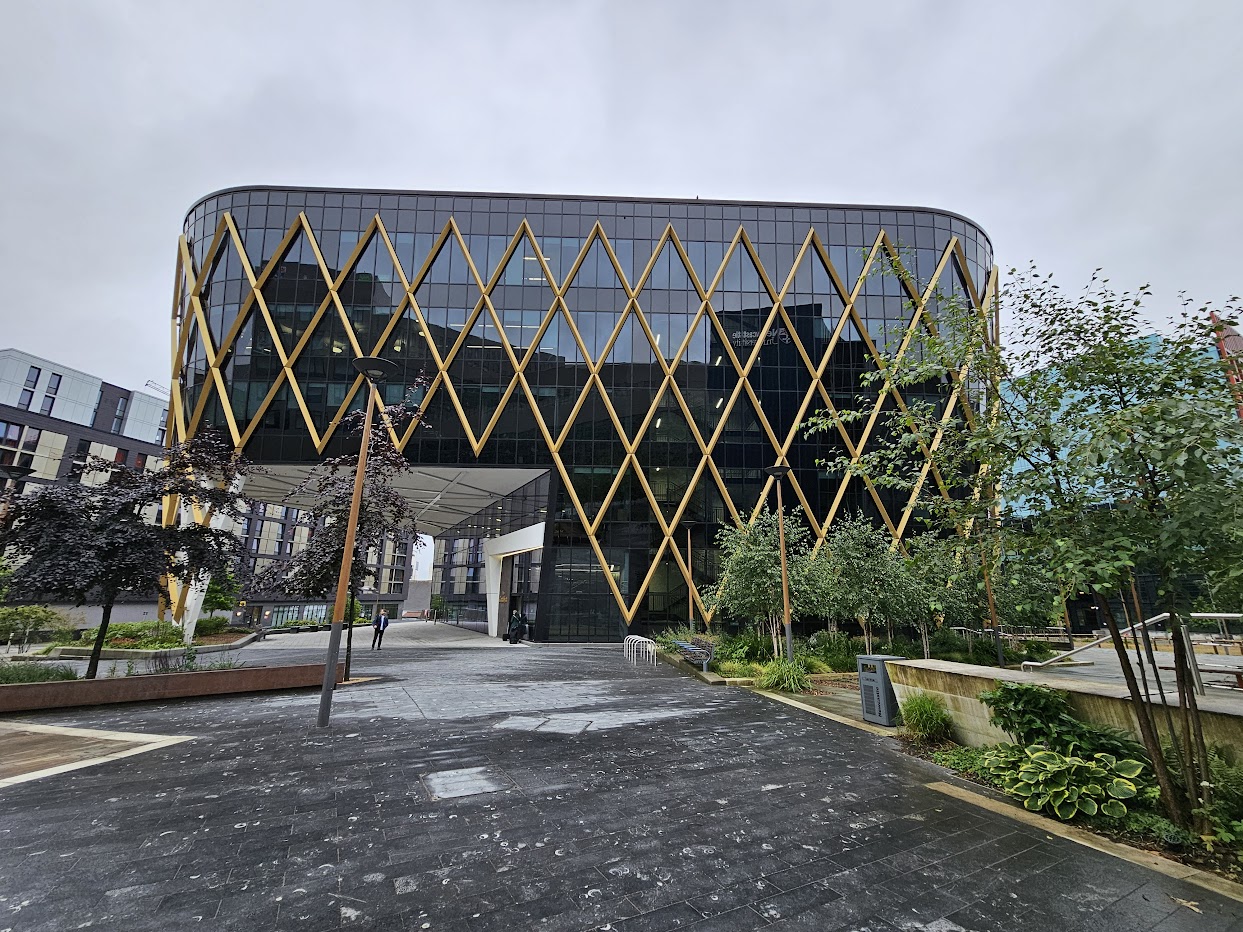
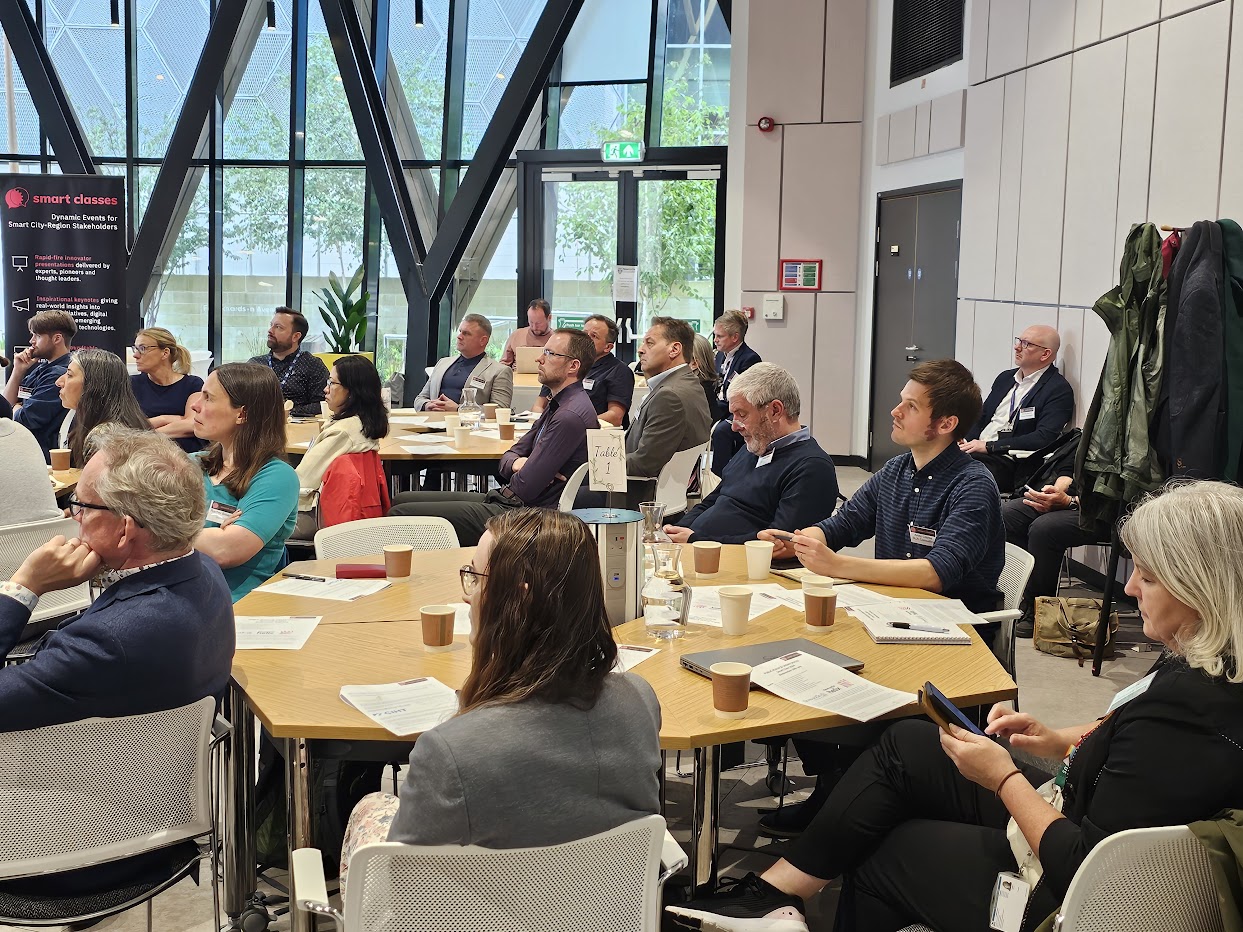
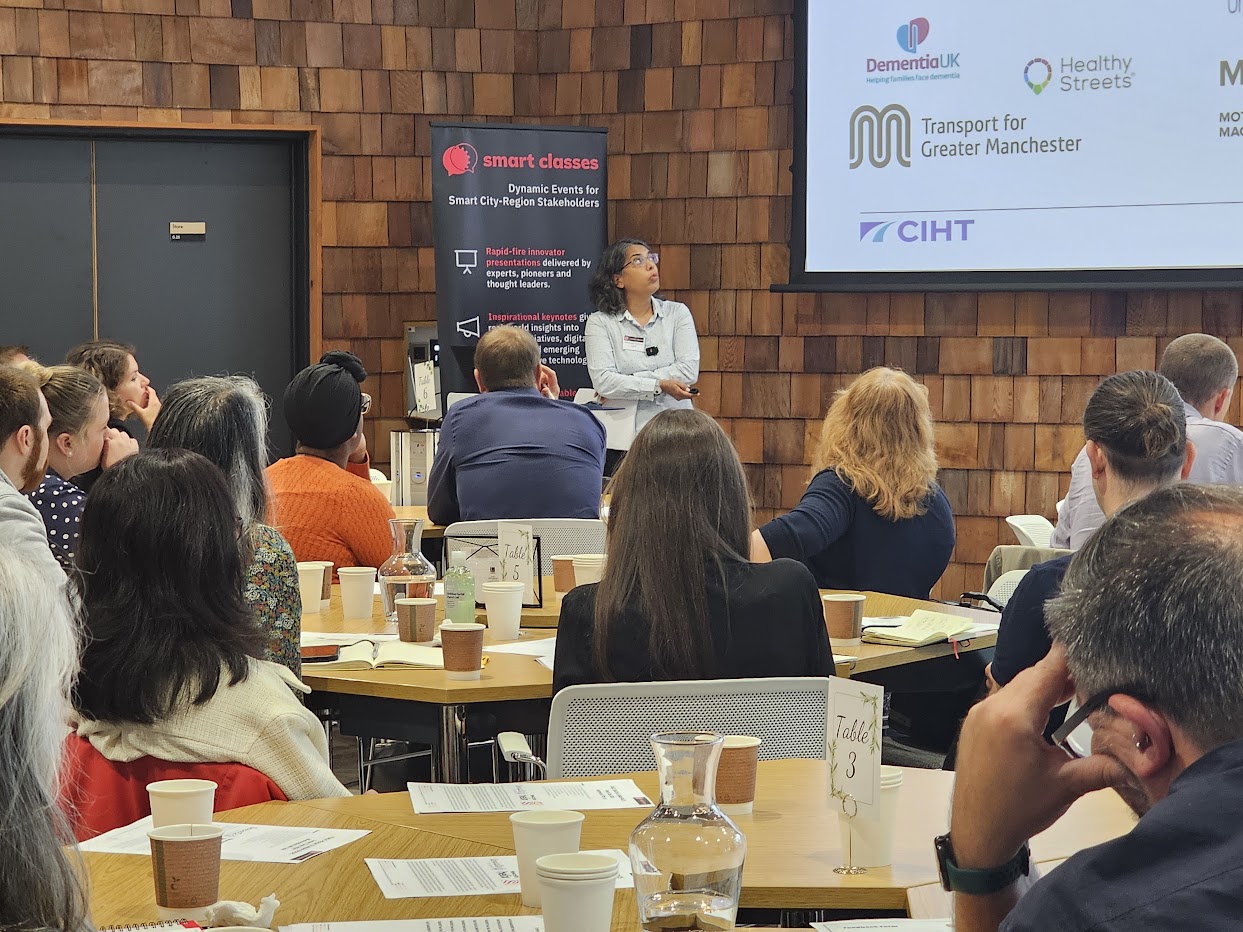
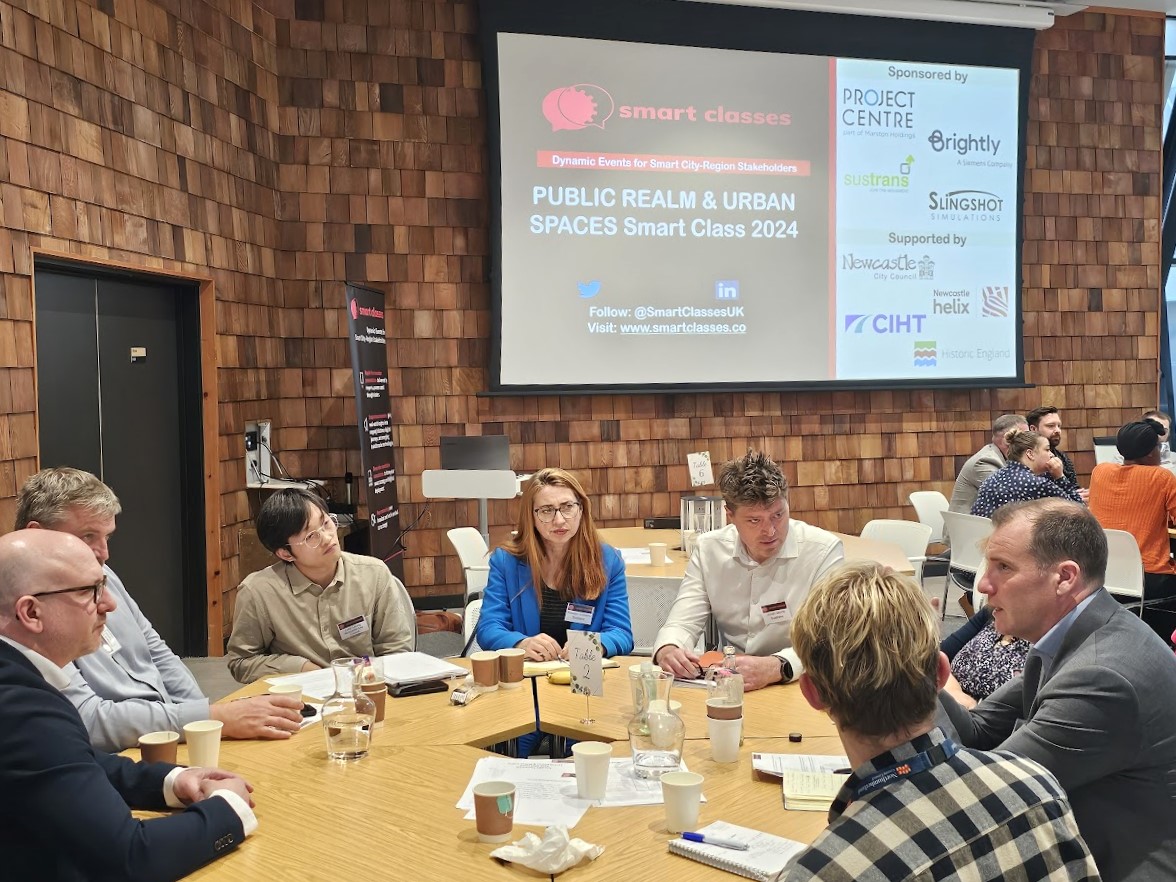
On July 10th we hosted PUBLIC REALM & URBAN SPACES Smart Class 2024 at The Catalyst, Newcastle. This Smart Class provided a fresh take on harnessing the latest technologies, data driven insights, innovative designs, policies and best practices to create the next generation of smarter spaces and places in our cities and regions.
Our film maker captured the keynotes and innovator presentations for additional stakeholders to enjoy post-event!
If you satisfy our regular delegate qualification criteria but were unable to join us on the day, just complete the short application form below and we’ll grant you free access to the presentation video recordings and slides.
Our inspirational keynote speakers included: Newcastle City Council’s Director of Investment and Growth, Michelle Percy; Newcastle Helix Estates Director, John Seager; CIHT Director of Policy and Technical Affairs, Antoneta Horbury; and Owain Lloyd-James, Head of Local Government and Communities at Historic England.
The Smart Class also featured insightful innovator thought leadership presentations, delivered by: Project Centre’s Luke McGuinness (Associate Landscape and Urban Designer); Rosslyn Colderley (England North Director) and Jonah Morris (Partnerships Manager for the North East and Cumbria) from Sustrans; Brightly’s Cherryanne Cooper (Account Director); and Steven Puetz (Head of Commercial Operations) on behalf of Slingshot Simulations.
The innovators expert teams – which, in addition to their speakers, also featured Andrew Georgeson (Regional Director for the North) and Tina Glover (Technical Director, North Region) from Project Centre, and Tim Woolven (Senior Consultant) from Brightly – subsequently hosted confidential, deeper dive, roundtable sessions with all delegates in attendance.
The live (in-person only) event also included thought provoking Q&As and further networking opportunities over breakfast, drinks and a cooked lunch.
Noteworthy contributions to these discussions were also made by influencers and decision makers from the likes of Active Travel England (ATE), Balfour Beatty, Broadoak, Chartered Institution of Highways and Transportation (CIHT), East Lothian Council, Historic England, Homes England, Human Stories, Integrated Transport Planning (ITP), Liverpool City Council, Newcastle City Council, Newcastle Helix, Newcastle University, Nexus (Tyne and Wear Passenger Transport Executive), The North East Combined Authority (NECA), Northumberland County Council, Perth & Kinross Council, SLR Consulting, Sustrans, Tyne & Wear Planning, Urban Foresight, Wardell Armstrong, Warwickshire County Council, WSP, and more!
Topic highlights included:
- How can places draw on their assets, ecosystem or expertise to make a new location for innovation work, discovery and job creation?
- Re-urbanising the innovation economy – Optimising how hubs of innovation (districts, neighbourhoods, corridors, or clusters of buildings) are physically configured and orchestrated in order to achieve economic and social outcomes for their community, city or region;
- A journey through the evolution of Newcastle Helix Innovation District – Originally conceived as a “science city”, more recently defined as a centre for Data, Ageing and Life Sciences with a vision to help people lead better lives; 3 National Innovation Centres, National Green Infrastructure Facility, Urban Observatory, Centre for Energy Systems Integration, Institute for Health and Care Research, Commercial Smart Buildings;
- Smart tech that makes Helix and the wider city of Newcastle one of the most measured and analysed locations in the UK – Open urban sensing network; Gait analysis; Feature detection (scooters, e-bikes, wheelchairs, prams); Understanding human scale interaction with infrastructure; Collecting long-term patterns of health and movement etc;
- How is all this data and research being put to the right use? How can it have a direct impact on public sector decision and policy making, and on investment decisions within the private sector?
- Continuing to be a sustainable and smart city – How does the Helix Partnership continue to ensure that the right onward investment and long term vision continues to be shared to deliver what it set out to achieve? At-scale experiments; ongoing research, maintenance and upgrading of sensors; Blue green strategy – urban resilience; CCTV and free public Wifi; UK 5G innovation region etc;
- Public realm’s unique role in the creation of multifunctional urban places that play their part in physical, mental, and social wellbeing, whilst fostering connections to nature and promoting active lifestyles;
- Health benefits of physical exercise (NHS studies) and Sports England guidance (walkable communities, activating spaces, flexible spaces, active buildings, activity infrastructure, connected active travel routes, multi-functional open spaces etc);
- Competing demands of the urban environment – Including vehicular movement, water management, services, access, maintenance, air quality and local microclimates
- Designing healthy places – Biodiversity net gain in development; Urban greening factor; 15-minute cities; Parklets; Liveable neighbourhoods; School streets;
- Long term benefits of liveable neighbourhoods schemes;
- Delivered people focussed public realm that includes elements of urban regeneration, SuDS & water management, vacant and derelict sites, school streets, low traffic neighbourhoods, active travel routes, placemaking and truly inclusive places – Case Studies: Transforming Gainsborough town centre; North Lanarkshire Council greenspace development; Re-imagining Islington’s Moreland Street Primary School in line with TfL’s healthy streets approach; Eastcote Town Centre rain gardens; Hammersmith Grove ‘light touch’ streetscape (parklets), EV charging points and kerb realignment; Dartford, Brewery Square; Worthing, Portland Road;
- Importance of involving local communities at an early stage of the design process;
- How close collaboration with wider technical teams helps create vibrant, attractive, thriving environments that create a sense of place and respect local context;
- Liveable cities and towns for everyone – What is a liveable city, town or place and how are Sustrans’ walking and cycling schemes, mobility hubs, low traffic neighbourhoods, healthy streets, and schools and workplace initiatives playing a key role in their creation?
- Paths for everyone – Acting as custodian of the national cycle network, making it accessible to all, providing convenient choices for everyday journeys, working with ATE and authorities on LCWIP’s and urban projects, and developing routes from concept, through design and feasibility to delivery;
- Five steps to improve our neighbourhoods, health and the economy;
- How the use of data and co-design can win the case for change in urban active travel projects;
- The Walking and Cycling Index (WACI) – The biggest assessment of walking, wheeling and cycling in urban areas of the UK and Ireland: What’s in the index and why is it important?
- UK messages from 2023 – People want governments to help them walk more;
- Children’s Index, School/parent engagement, pupil design workshops, out and about in the community and successful c0-designed schemes;
- The Index as an anchor project;
- The Disabled Citizens’ Inquiry – A pan-impairment approach to understanding what disabled people need to make walking and wheeling inclusive; Solutions – e.g. Helping shape decision making, creating a long-term dedicated pavement fund, stopping pavement parking and managing pavement clutter, improving walking and wheeling crossing points across roads and cycle paths, making wayfinding and journey-planning tools work for disabled people, improving off-road routes, integrating walking and wheeling with public transport, access to mobility aids etc;
- CIHT’s report on “Creating a Public Realm for All” – Helping transport professionals to identify and design the public realm for the everyday challenges faced by disabled people, people with temporary conditions such as pregnancy or sports injuries, older people, people with young children, or those encumbered by luggage or equipment;
- What is inclusive design?
- Incorporating the principles of inclusive design;
- Importance of “co-cultivation” with those of lived-experience, rather than high-level consultation on a scheme;
- Reducing barriers in the design stage – Consideration to how the space is used;
- Reducing barriers after implementation, including the importance of maintenance and reinstatement;
- Construction and roadworks – The need for safe and accessible alternative walking and wheeling routes during construction and other highway works;
- Bright and connected public spaces – How, through the use of IoT, councils are able to create connected systems which deliver better outcomes for the communities they serve;
- Managing, maintaining and optimising public realm assets with smart asset management – From street lighting, bus stops, carriageways, signs and CCTV to street furniture, gullies and drains, waste bins, parks and allotments;
- Leveraging strategic asset management for carbon reduction, carbon capture and ESG in the public realm;
- Carbon intensity data trends by type of work, highways activity and location;
- Green infrastructure’s positive contribution – Calculating the sequestered carbon of your tree stock; Managing pests and diseases; Making smarter woodland, hedgerow and shrub planting decisions; Recording flood-risk areas and defences; Improving air quality with EV charging;
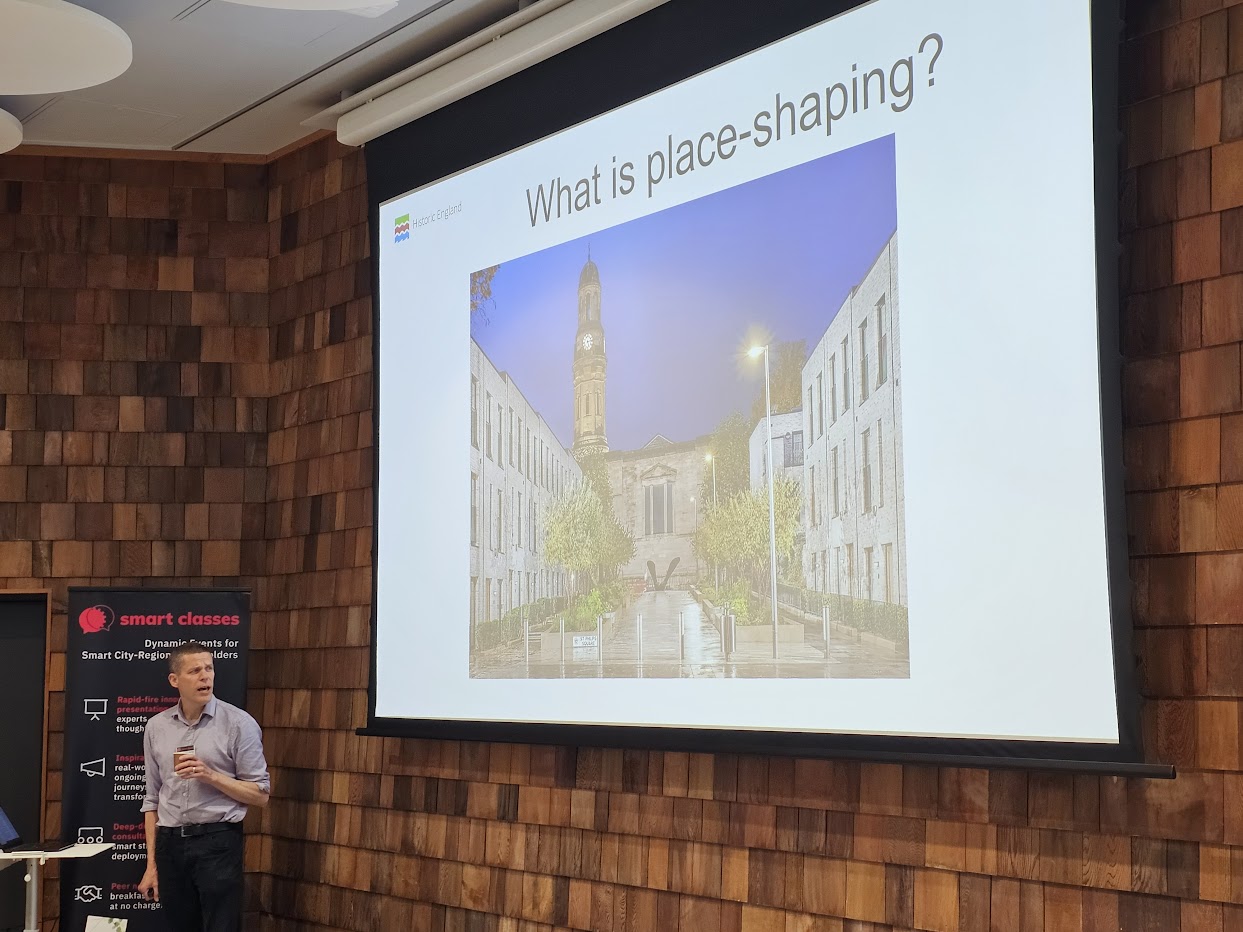
- Reviving high streets – Historic England’s approach to place-shaping;
- What is place-shaping, how does it differ from place-making and what do we mean by place?
- Why are vibrant high streets prioritised spaces in an urban environment, and why are vacancy rates up and dwell time and footfall down?
- Why are historic high streets so important and how does historic character bring people and investment to places?
- HE’s ground-breaking High Streets Heritage Action Zones programme – £95m invested into 67 English high streets, built on partnership and with a cultural programme alongside the capital works;
- HSHAZ objectives – Changing perceptions of heritage and high streets; Supporting sustainable economic and cultural growth; Restoring and enhancing local historic character;
- HSHAZ impact – Improving public realm, creating new commercial floor space, restoring/reinstating shopfronts and engaging communities in decision making and arts and heritage programme; Case studies from Tyldesley, Coventry and Wakefield;
- Lessons learnt and HSHAZ influence on how Historic England will continue to work with local partners to deliver sustainable heritage-led regeneration;
- Place-Based Decision Intelligence Technology – Digital solutions combining data, models and simulations, analytics, digital twins, AI and machine learning;
- Ability of PBDI to deliver a system level perspective of public realm and urban space strategic planning in the context of decarbonisation, energy, climate, air quality, regeneration, socio-economics and more;
- Critical barriers to adopting data-based decision making – How do we address these challenges?
- Real World PBDI Case Studies:
- Sunderland City Council – Integrated transport, carbon and regeneration planning;
- Greater South East Net Zero Hub and Essex County Council – Mobility hub techno-economic feasibility assessment tool;
- West Yorkshire Combined Authority – Bus performance assessment toolkit;
- Department for Transport – Network climate resilience assessment
Those qualifying to receive the presentation videos and rich media content from this event include commissioning, procurement, trialling, partnering and policy leads, senior influencers, strategic decision makers, planners, place makers, architects, green space managers, urban designers, communities & neighbourhoods, highways & street scene, transport & mobility and high streets & regeneration professionals from UK councils and local authorities (city, borough, metropolitan, district, county and combined); people and place partnerships; developers, landowners and creators of privately owned public spaces; prime contractors and city centre management companies; DfT, DEFRA, MHCLG, EA and supporting governmental bodies; transport authorities, highways agencies and public transport operators; civic organisations and community groups; and other key players from the public realm ecosystem with responsibility for managing, maintaining and operating our streets, squares, forecourts, parks, pathways, retail centres, car parks, airports, ports, travel hubs, hospitals, housing estates, campuses, communal gardens and the assets contained within these public or semi-public spaces.
Register your details via the “Download form” below to receive a unique link enabling complimentary access!