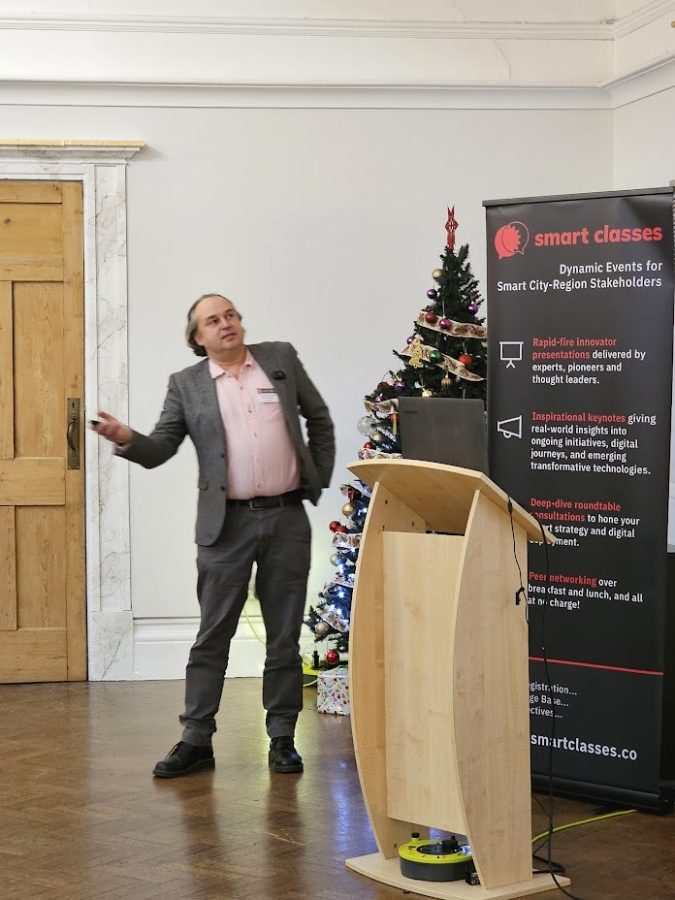
Charles Musselwhite is Professor and Head of Psychology at Aberystwyth University, Co-Director of the University’s Research Centre for Transport and Mobility (CeTraM), and incoming Chair for the UK wide Universities’ Transport Study Group from June 2025.
In his keynote at TRANSPORT Smart Class, Wales & West of England 2024, Charles discussed a person-focused approach to transport and shared valuable learnings from THINK (the Transport and Health Integrated Research Network), for which he is Principal Investigator. This Welsh Government funded project brought people together from different disciplines all working to solve transport issues and problems:
“Through a series of community based projects and knowledge-exchange events from Wales, the UK and across the globe, it revealed a need for more space for different sectors to work together. It taught us that we need to focus in on the concept that transport is fundamentally about people and the need to involve communities more in understanding and planning their own transport decisions. This reveals tensions but also potential solutions around transport equity and health inequalities, about urban/rural differences, and most crucially a need to bring together sustainability and public health agendas”.
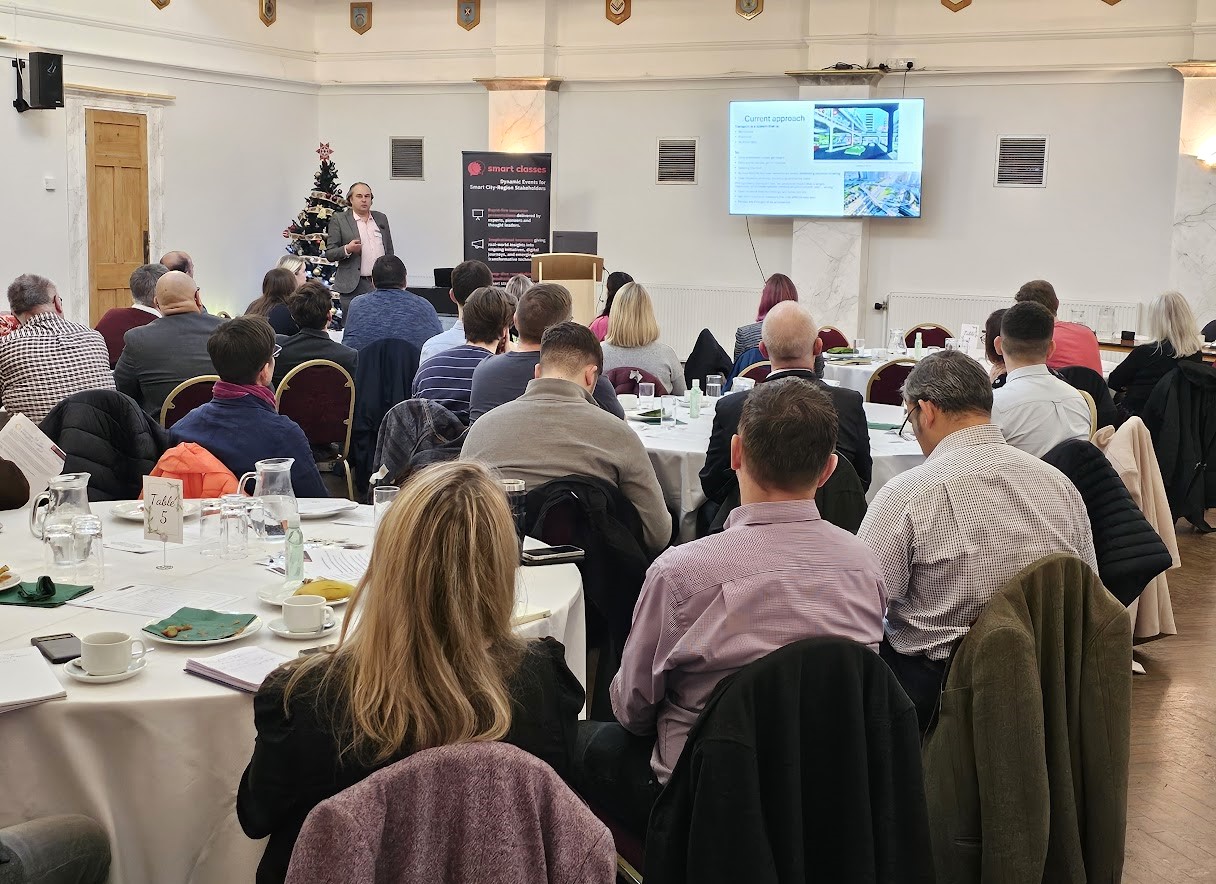
Summary of presentation highlights:
- Current approach…
- Transport is a system that is: Neoliberal, Positivist, Technocratic;
- So: Only dominant voices get heard; Only some people get to choose; Seeking the truth; Accountability but over reliance on proof, defending decision making; Over reliance on tools, models, quantitative data; transport has “an analytical toolkit that is bright, impressive, of unchallengeable intellectual achievement, and…wrong” (Phil Goodwin); Over reliance that technology will solve our ills; We don’t notice or measure the side effects very well; People are thought of as a nuisance;
- There is clear research evidence that reducing car travel delivers benefits to the climate and to public health – but there is political and public caution and scepticism. How can politicians lead rather than follow public opinion on the issue?
- People are a nuisance! They don’t behave like the models say they will…
- Humans not in system; When they are they’re aggregated, often based on assumed importance of mobility – inter-urban 9-5 work; Aggregation means we miss the outliers – People who don’t or can’t travel, Older people, The 22% of households without access to a car, People already marginalised (transport exclusion, health exclusion and social exclusion are all linked);
- People can make decisions irrationally and based on other premises – Environmental impact, personal health, personal safety, the ability to utilise the time for other activities, ability to use the mode of transport; Over 200 cognitive biases impacting on judgement (Watkins and Musselwhite 2025);
- We assume our models are good (enough) and use them as justification for planning and building our travel systems; O’Connell (2002) states the design and construction of the road and traffic system: “must not be based on an erroneous model of humans as abstract rational actors, isolated from their social context and operating on purely ‘objective’ criteria”;
- Motonormativity or Institutional Carism…
- How social norms hide a major public health hazard – Strongly Agree, Agree, Neutral, Disagree or Strongly Disagree percentages (%) for each of the following statements:
- “People shouldn’t smoke in highly populated areas where other people have to breath in the cigarette fumes”; “People shouldn’t drive in highly populated areas where other people have to breath in the car fumes”;
- “There is no point expecting people to drink alcohol less, so society just needs to accept any negative consequences it causes”; “There is no point expecting people to drive less, so society just needs to accept any negative consequences it causes”;
- “If someone leaves their belongings in the street and they get stolen, it’s their fault for leaving them there and the police shouldn’t be expected to act”; “If someone leaves their car in the street and it gets stolen, it’s their fault for leaving it there and the police shouldn’t be expected to act”;
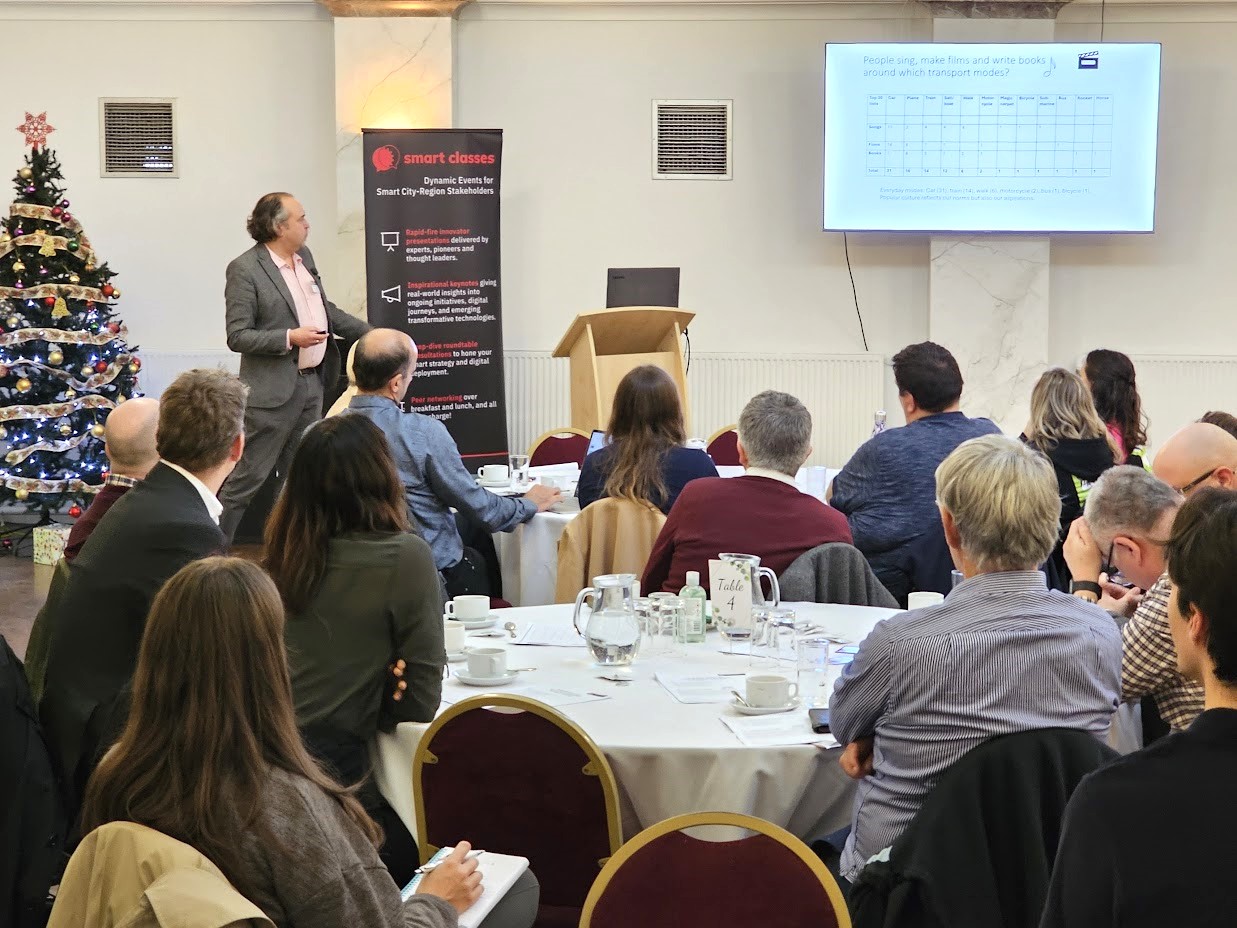
- People sing, make films and write books around which transport modes? Car, Plane, Train, Sail/boat, Walk, Motor-cycle, Magic carpet, Bicycle, Sub-marine, Bus, Rocket, Horse. Figures reveal that popular culture reflects our norms but also our aspirations;
- Disrupting the norms…
- Broken wrist and driving – 18% drove with their arm in a cast; More males than females – high milers; Attitudes to risk and affect with driving and the car = no effect; Motivation is utility/perceived necessity; 82% change their travel behaviour for around 5-6 weeks – Travel behaviour is flexible; But can’t wait to get back in the car? But who can?
- Giving-up driving – Examining the process of driving cessation in later life;
- Coronavirus – Restrictions on mobility due to the coronavirus Covid19: Threats and opportunities for transport and health;
- But…norms don’t have to be cars for some – Missing the bus: Impacts of loss of bus service on the wellbeing of older adults;
- How we communicate in this space/How we human this space…
- Disconnect between professions – Road safety, Transport planning, Health professionals, Public health professionals, Logistics and delivery; Space and resource to bring people together; A Planetary Health or One Health approach – Bring together sustainability and human and animal health; Training and educate across disciplines but bring it together – Towards transdisciplinary; Integrating social science with science – How do we do this with competing philosophies?
- The Transport and Health Integrated Research Network January 2022-present…
- THINK Participate – N = 210 network stakeholders: 42.6% research, 22.3% charities, 14.4% gov/policy, 6.4% business, 5.9% LA/councils; The THINK Foundry – Communities of Practice Hubs, Funded Research Development Groups, Unfunded Research Development Activity; The THINK Academy – Evidence-based reviews, Training, Podcasts, Conference and seminars, Blogs; Outputs – Journal articles, Research bids submitted, New research projects;
- Key Themes – Equality and transport justice; Community and Places; Healthier Active and Public Transport Choices; Rurality; Vehicle speeds;
- Public involvement and engagement Public Agenda Setting Workshops: Public transport – reduce cost, more services, better access, better public image; Active travel – more segregated bicycle lanes, more traffic free areas, space sharing issues; Transport justice – accessibility for all, reducing private car ownership;
- The Network Stakeholder Agenda Setting Workshops – Transport should be equitable and inclusive; Increasing opportunities to collaborate and improving collaboration as a practice; Raising awareness of the impact of transport on health; Identifying research opportunities, increasing and standardising data collection, and improving tools for decision-making;
- Equality and transport justice…
- New projects: 1) Gender+Bus Wales project – Tackling sexual harassment and violence against women for a gender-inclusive bus service in Wales. The Waterloo Foundation, 2022-3. Lead = Lucy Baker. Led to development of training bus companies, resource hub. 2) Datafication of cycling – tensions between cycling policy and mobility justice. ESRC, 2023-4. Lead = Peter Merriman. Sustrans and Aber Uni collaboration;
- Research Development Groups: Increasing Mobility of Young Girls by Giving Scooties – Led by Dr. Nashia Ajaz, Fatima Jinnah Women University, Pakistan;
- Community of Practice Hubs – Creating equitable and inclusive mobility and spaces;
- Educational Package – Designing highways and transportation for people with dementia with Andy Hyde, Go Upstream, Accredited Course for CIHT;
- Community and Places – From community transport to transport for the community…
- Travel behaviour – Need and importance of mobility, Barriers to mobility, Social aspects of mobility, Institutional carism or motor normativity; Inequalities – Missing out on accessibility to services and work, Poor transport for leisure; Health – Poor chances of Active Travel, Missed health appointments, Poor access to healthy food; Community Cohesion – Sharing and working together, Personal safety; Transport democracy – Turning solutions into reality, Transport traditionally undervalued, Upskilling community;
- Research Development Groups: Social inclusion through community-led transport – Led by Gemma Lelliott, CTA; Age Connects Morgannwg Transport Research – Led by Bethan Shoemark-Spear; Community Transport Initiatives – Volunteer Drivers (barriers to volunteering), led by Rhian Hathaway (Bridges Centre) and Andrea Charles;
- Communities of Practice Hubs – Standardising data collection and improving tools for decision-making in communities;
- Podcasts – More Than Just a Journey – Community Transport; Co-Production in Community Transport; Digital Futures in Community Transport; Wales and Community Transport; Access to Healthcare with Community Transport;
- Training – Introduction to Co-production and Citizen involvement with Co-production Lab Wales;
- Secondments opportunities – Health economist to be placed in Age Connect Morgannwg, cost benefit of transport provision;
- Healthier Active and Public Transport Choices…
- New Projects: 1) Making Age Friendly Railways 2) User perceptions of shared walking spaces;
- Research Development Activity: Encouraging Active Travel in Newtown (EAT IN) – Led by Ruth Stafford, Sustrans;
- Research Foundry – Improving walking standards for the UK in relation to new housing developments and also existing settlements; Steering group support for the Healthy Travel Charter authors in the Hywel Dda region; The role of TV and films in perpetuating car culture and how can these opportunities to engage the public help to support walking, cycling and public transport culture?; Poetry writing workshop for the public about transport stories;
- Evidence-based review – Advertisements in Wales and the UK: a need for transport and health integration to create healthier places; E-cycling opportunities for inclusion in active travel;
- Secondment opportunities – A data scientist placed within Sustrans, addressing Barrier Prioritisation & Removal;
- Rurality – Driving in rural areas: lower demand, lower anger, lower verbal anger, but higher risk taking…
- New projects – Improving road safety in rural areas: An examination of human factors contribution to traffic safety climate – Aberystwyth University Rural Futures Hub;
- Podcasts – Rural Health and the Importance of Connectivity;
- Research Development Groups: Exploring a Future Six Councils Community Electric Bus and Bikes; Exploring prospects of shared e-micro mobility in Rural India – Led by Dr. Anshuman Sharma, Indian Institute of Technology;
- Research Foundry Activity – The role of machine learning, sensors and other technology such as adaptable signage to empower pedestrian safety, especially in rural areas with no pavements;
- Secondment opportunities – A researcher placed within Rural Health and Care Wales, access to healthcare appointments;
- Vehicle speeds…
- New projects: 1) Governing Road Safety: Citizens, Speed and road user responsibility in Wales, ESRC Studentship with GoSafe as partner, 2023-6 – Led by Peter Merriman. 2) What do we really think about 20mph in Wales: An X (Twitter) Study – Lead = Burcu Tekes, Aberystwyth University;
- Evidence-based review – Noise harms health – and 20mph speed limits can reduce that harm (Transport Research Institute, Edinburgh Napier University); The Social Psychology of Speeding: attitudes to 20mph (THINK Academy); Can 20mph speed limits reduce community severance? (THINK Academy);
- Conclusion…
- Transport is about people. Bring them in to solve the transport issues!
- Space, resource and permission to bring people together is vitally important/Community based work;
- Bottom-up themes, so co-production and co-design important;
- Free vs Resource to focus around – Free works with strong leadership and less burdensome, less administration; Resource keeps work to task, but admin burden large esp. internationally and different sectors, different timetables;
- Secondments? Take a long time to set-up; Administrative issues again with payments – are they needed?
- Mini-projects – Worked really well, focused, create change;
- Training;
- Mentorship;
- Knowledge out – webinars, podcasts, blogs, evidence-reviews, academic papers;
- Where next? Capture what happens as a result of this work; Research activity – ready source of willing collaborators and bottom-up issues to explore; Continuity
If you meet our regular delegate qualification criteria but were unable to join us at Cardiff Masonic Hall for the live in-person event on December 5th, CLICK HERE and complete the short “Download form” (located at the bottom of the post) to receive a unique link enabling free access to the presentation video recordings and slides (including the film footage and slides from Charles’ keynote).
Those qualifying to receive the rich presentation content from this event include commissioning, procurement, trialling, partnering and policy leads, senior influencers, strategic decision makers, programme managers and planners from local authorities (e.g. city, borough, metropolitan, district and county councils); public transport operators; regional transport partnerships, sub-regional transport bodies, combined authorities, integrated transport authorities and passenger transport executives; highways authorities and road operators; government and supporting national transport agencies; non-governmental organisations; fleet operators, parking operators, prime contractors etc.