
Padam Mobility and Siemens Mobility joined us at TRANSPORT Smart Class, Scotland 2024 to cover the progression from small-scale Demand-Responsive Transport (DRT) services to comprehensive Mobility-as-a-Service (MaaS) platforms.
James West and Mario Gessner’s presentation focused on the steps required to create a seamless, integrated mobility journey for users. Particular highlights included:
- Changing views on New Mobility – Addressing the discussion and confusion around DRT and MaaS
- Switching from pilots to commitments – How technology and users are now ready to deliver new mobility projects at scale and how this can be effectively delivered vs smaller pilot operations
- Land, Expand, Deliver – A case study in how Padam Mobility Clients are working to make DRT stick
- A view from the Continent – What can the UK learn from Europe on how to implement these services?
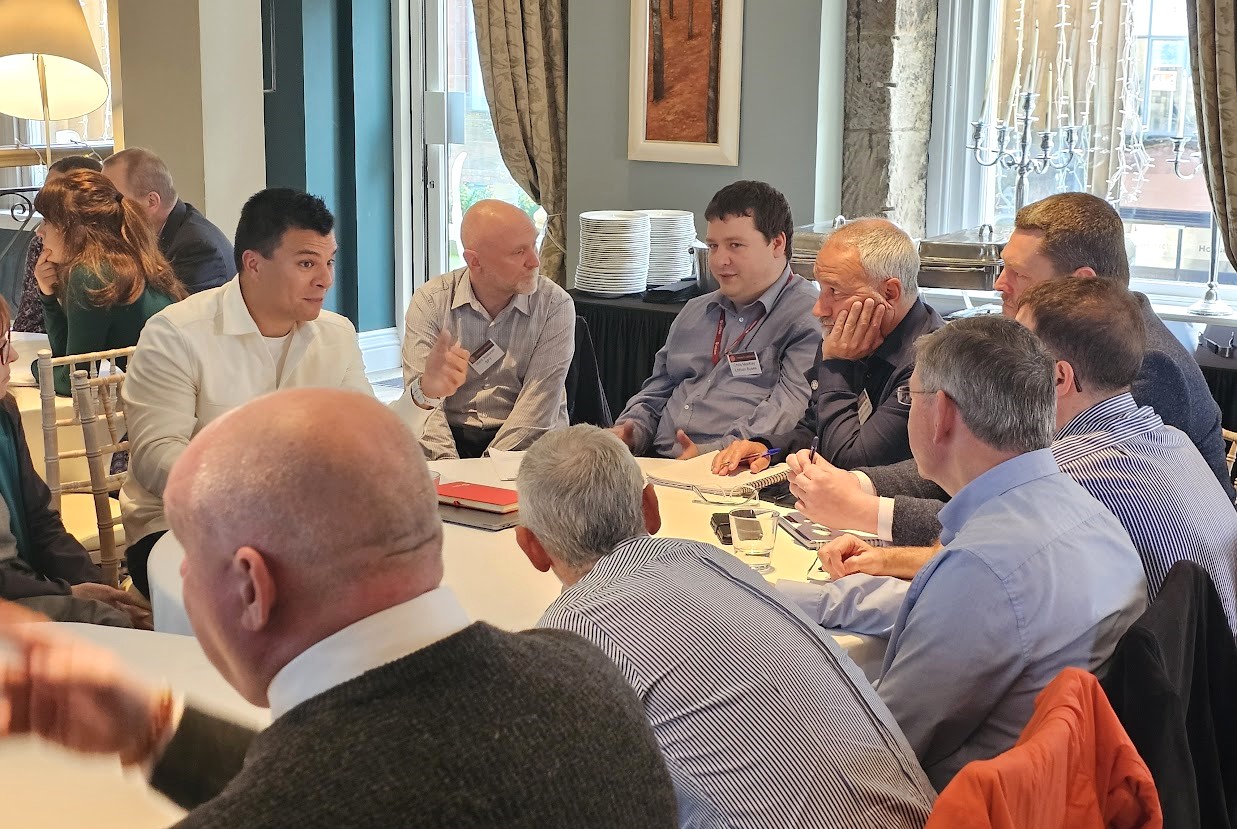
Delegates were subsequently able to delve deeper during James and Mario’s hosted roundtable sessions!
Presentation summary notes:
- With devolution powers and the Transport Scotland initiative, the scaling point is really relevant to Scotland – Scotland could have a special position with a journey planner that integrates all of the different options across the country;
- “We have put the Future of Mobility at the heart of our modern Industrial Strategy. With a long history of transport innovation, a world-class research base and many established technology leaders, the UK is well placed to harness its domestic expertise and to profit a growing market for cleaner, safer and more efficient transport” (UK Government Future of Mobility Urban Strategy, March 2019) – We stalled on this for a while but can be cautiously optimistic under the new UK Government that the next 5-10 years can be a new era for transport and that innovative modes such as DRT and MaaS can make transport more accessible to people, especially in more isolated regions;
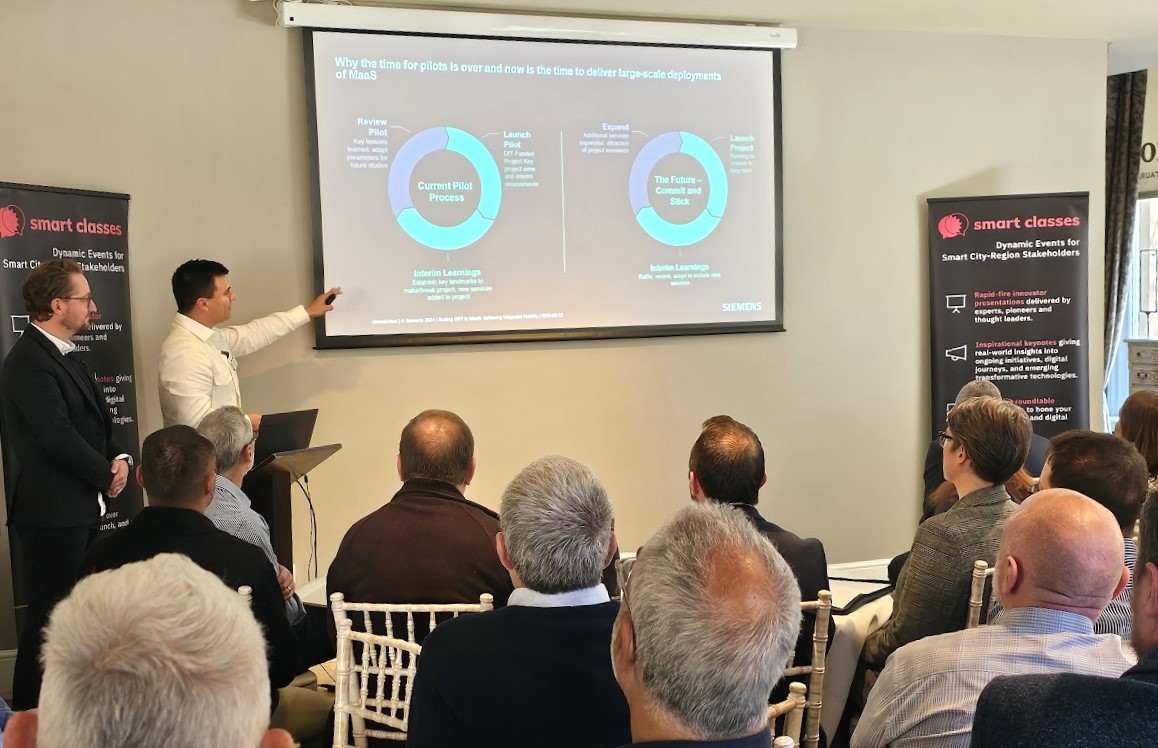
- Why is the time for pilots over and now the time to deliver large-scale deployments of MaaS?
- Current Pilot Process – 1) Launch Pilot – DfT funded project with key project aims and interim assessments 2) Interim Learnings (typically in the middle of a 12-18 month period) – Establish key landmarks to make/break project, new services added to project 3) Review Pilot – Key lessons learned, adapt parameters for future studies;
- We need to be bolder and stronger – When launching a MaaS initiative or services for DRT we need to make them “stick” to enable growth and see people migrating from short car journeys to taking integrated journeys e.g. involving an e-scooter for part of the journey, DRT the rest of the way and train travel further afield. To do this we need longer term commitments (3-5 years) where we can see tangible growth, real behavioural shift and understand what was successful each step of the way and what can be bolted on;
- Commit and Stick Approach for the Future – 1) Launch Project – Funding to commit to long term 2) Interim Learnings – Raffle, review, adapt to include new services 3) Expand – Additional services expanded, attraction of project increases;
- Scaling services – Taking a Pilot and Growing it: How can we do it and how can we make it work?
- Padam Mobility Interfaces for DRT – 1) Management interface for Operators – This is their eyes and ears and enables them to see where their vehicles and drivers are, whether passengers are where they need, and what impact on the service if late 2) Booking interfaces – Passengers can book via a mobile app (81-82% of all bookings across Padam’s UK client network are made through the mobile app, boosting digital inclusion), website (e.g. via PCs at home) or through a call centre/teleoperator (call centres are often provided by the local authority and many people using a call centre to make repeat bookings don’t own, and may never own, a smart phone) 3) Convenient navigation application for Drivers – This integrates with Google Maps, Waze etc to tell them who to pick up, where to pick them up and in what order;
- Land, Expand, Deliver: How Pilots can transition to solid services – Two Padam clients, Surrey and Hertfordshire, are successfully Scaling to make DRT stick. They’ve gone from small, 1-2 vehicle, services to expanding County wide (250-300 square miles), growing service and increasing patronage;
- Surrey Connect: A Case Study of Incremental Growth Achieving Better Coverage – Surrey is a region that is on the border of TfL limits, where the frequency of regular bus services drops from every 10 minutes to every 1 or 2 hours. The growth of Surrey Connect has been achieved via a stepwise iteration of service areas and success is partly due to the ambition of the local authority. Starting with 1 vehicle pilot in Leatherhead serving hospital visits (2021), additional vehicles were added in North Mole Valley, then (by 2022) across all of Mole Valley, and (by 09/2023) across six operating areas. Key attractors outside the initial zone include health sites, supermarkets, train stations and bus interchanges. DDRT zones are now (2024) served by 25 vehicles. The process involved engagement with the local population (as well as the LA) to get them on board with a new type of service that enables travel from a virtual stop (as opposed to a fixed piece of bus infrastructure) to destinations that were previously not accessible to them via public transport (creating significant social value);

- MaaS and DDRT both have their Stepwise approaches to delivery…
- DDRT can exist in isolation but a single platform for multiple integrated transport modes can help deliver for authorities in challenging times:
- No Resource Pooling – You start with all of your different service types run by different fleets working independently; Then you start trying to pool them together using the same IT software solution for separate DRT and dial-a-ride services; Step up to a Shared fleet serving separate routes e.g. conventional DRT during certain hours and taking people to day centres at other times; Fully merged DRT & dial-a-ride – At this level these services can be switched and are completely interchangeable; Integrating SEND, NEPT and all other services (“Horizon approach”), to maximise optimization (and cost savings) and as well as deliver a better user experience – For example, a fleet of 60 vehicles which can fulfil all services at the same time, instead of 5 different fleets with 20 vehicles for each service;
- Level 1-4 MaaS Integration can also benefit in the same manner, through increased integration, features and available services. However, payment needs to be key, and data and file standards (GTFS & GTFS-Flex) are also important. The more integration steps that are taken, the better the service options and user experience:
- Journey Planning Only; Integrated Bus and DDRT options; Integrated Ticketing; Micromobility integration (e.g. adding e-scooters); RDG Ticketing (addition of train tickets for further afield);
- Enabling MaaS – “It’s not super-complicated but there are some barriers that you may have to think of”…
- Integration – Many Mobility Service Providers have already been integrated into Siemens’ solution to enable the user to make use of all of the service possibilities out there. This journey planning takes into consideration micromobility (e.g. bikes and e-scooters), a DRT service, taxis, trains and other public transport. It also takes into account traffic and weather conditions, and includes payment options. From the same app, you can plan your journey with a click and pay for the whole journey (including parking) in advance, without having to register to different mobility providers;
- Scaling is Crucial – Across Europe, as in the UK, many operators do want to start small/explore what the options are and ascertain whether the travellers are making use of it. To enable these strategies, Siemens have developed a solution which is completely scalable as per the growing requirements of the regional operator and their travellers:
- Essential Journey Planning Suite (Trip Planner); Intermodal Planning Suite; Integrated Planning & Ticket Booking Suite; Full MaaS Planning & Booking Suite (MSP Booking as well as Ticket Booking);
- The UK is piloting in various regions, other countries in mainland Europe are rolling out full MaaS systems:
- Case Studies from Continental Europe – Renfe in Spain; Rivier in Amsterdam; RMV in Frankfurt; Deutsche Telekom in Germany;
If you satisfy our regular delegate qualification criteria but were unable to join us in Glasgow on September 12th for the live in-person event at Citation, CLICK HERE and complete the short “Download form” (located at the bottom of the post) to receive a unique link enabling free access to the presentation video recordings and slides (including the film footage and slides from James and Mario’s initial presentation).
Those qualifying to receive the rich presentation content from this event include commissioning, procurement, trialling, partnering and policy leads, senior influencers, strategic decision makers, programme managers and planners from local authorities (e.g. city, borough, metropolitan, district and county councils); public transport operators; regional transport partnerships, sub-regional transport bodies, combined authorities, integrated transport authorities and passenger transport executives; highways authorities and road operators; government and supporting national transport agencies; non-governmental organisations; fleet operators, parking operators, prime contractors etc.


