Christoph Tellkamp is an expert in digital mobility and urban development, particularly in relation to the digitalisation of bus operations. He has supported several communities, especially in the British and Irish markets, to implement innovative projects that promote the use of digital technologies to improve the efficiency and range of services offered by public transport.
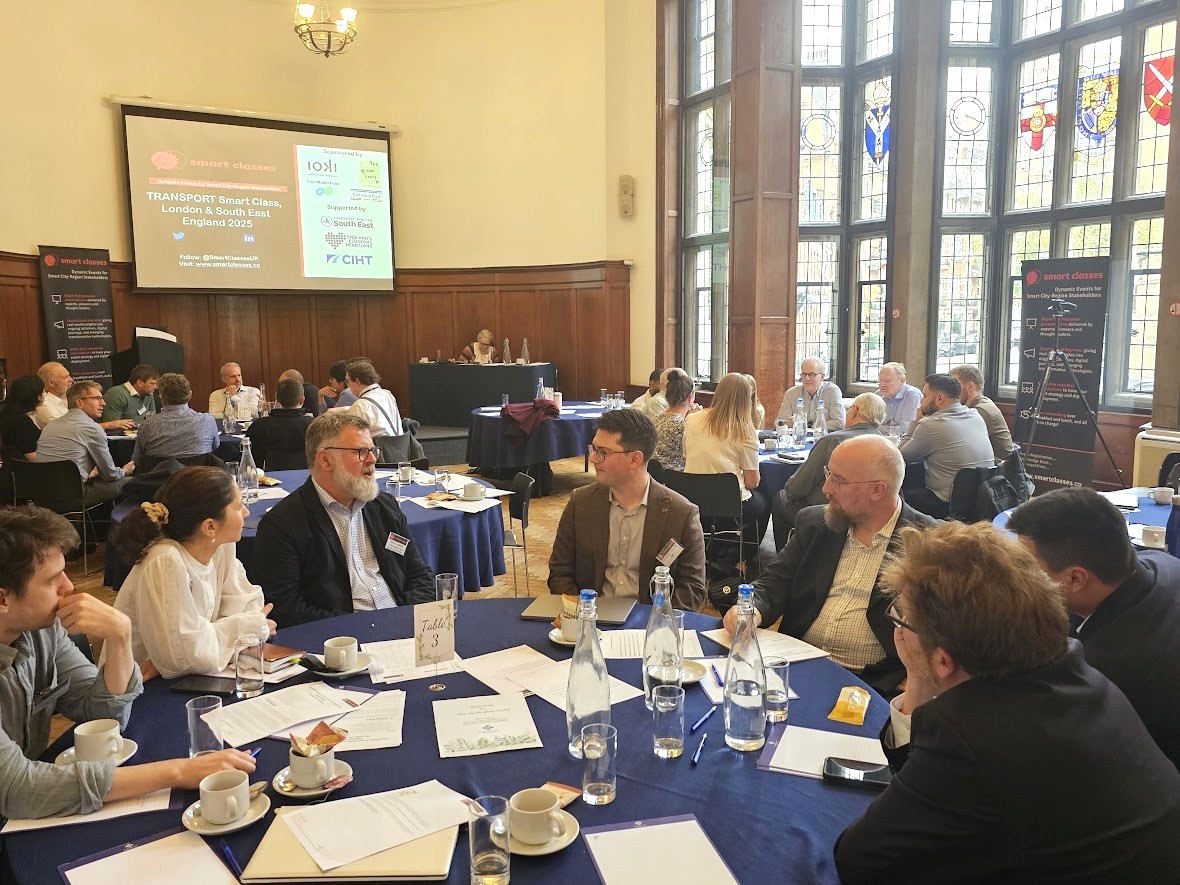
In an absorbing presentation on behalf of ioki (an independent company of Deutsche Bahn AG) at TRANSPORT Smart Class, London & South East England 2025, Christoph explored how digital technologies can help transport authorities and operators address today’s pressing challenges, from rising operational costs to workforce shortages. Through concrete examples, he demonstrated how smart route management reduces training time for new drivers and improves service reliability.
Christoph also discussed how digital platforms and demand responsive transportation can streamline daily operations, optimise resources, and support better decision-making. Looking ahead, he examined opportunities such as autonomous ride-pooling and their role in creating more flexible, sustainable networks.
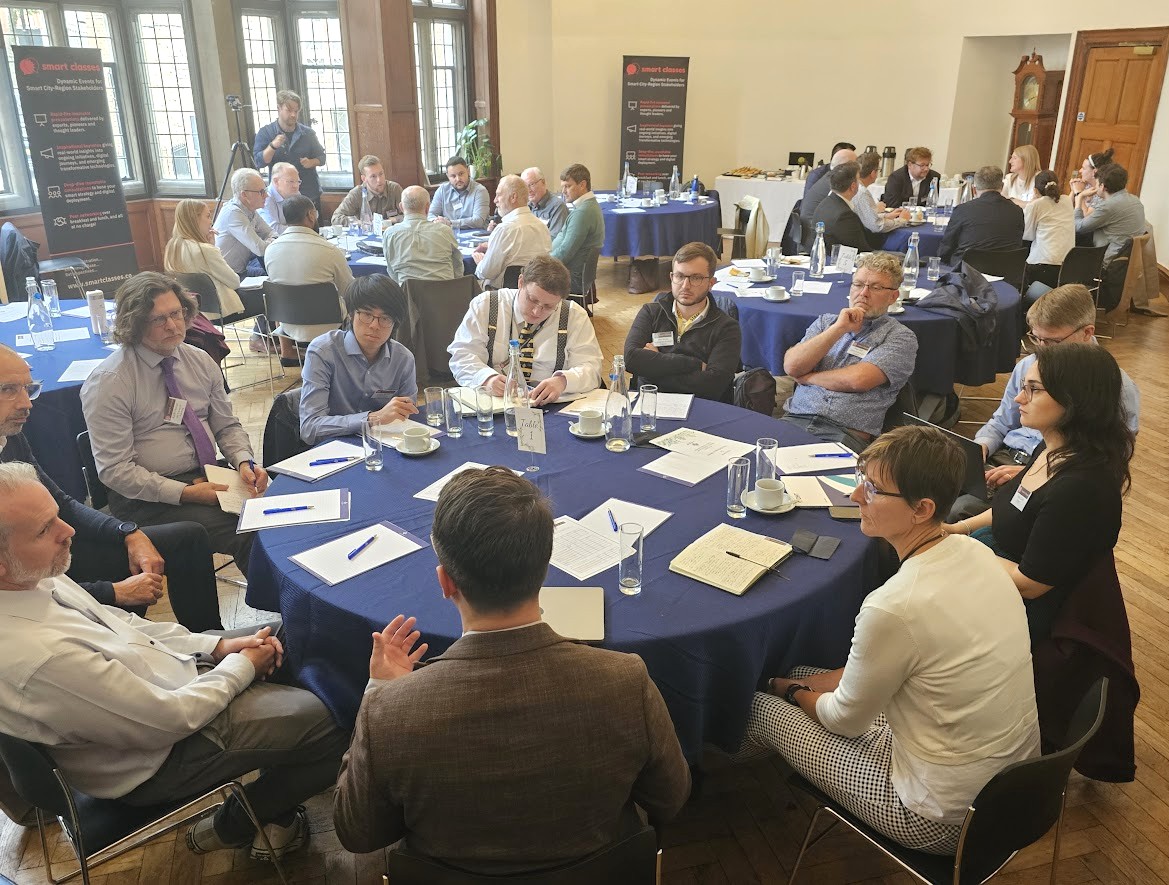
His subsequent deep dive roundtable sessions provided delegates with further practical insights into how digital solutions can deliver efficiency for operators while improving passenger experience and ensuring better value for communities.
Presentation highlights and notes:
- Introducing ioki – Technology partner for public transport…
- Around 190 services with the ioki DRT platform; Over 200 mobility analyses in Europe and abroad; Market leader for on-demand software in the region of Germany, Austria and Switzerland; More than 8 million passengers on the platform; Mobility solutions on the market in 11 countries;
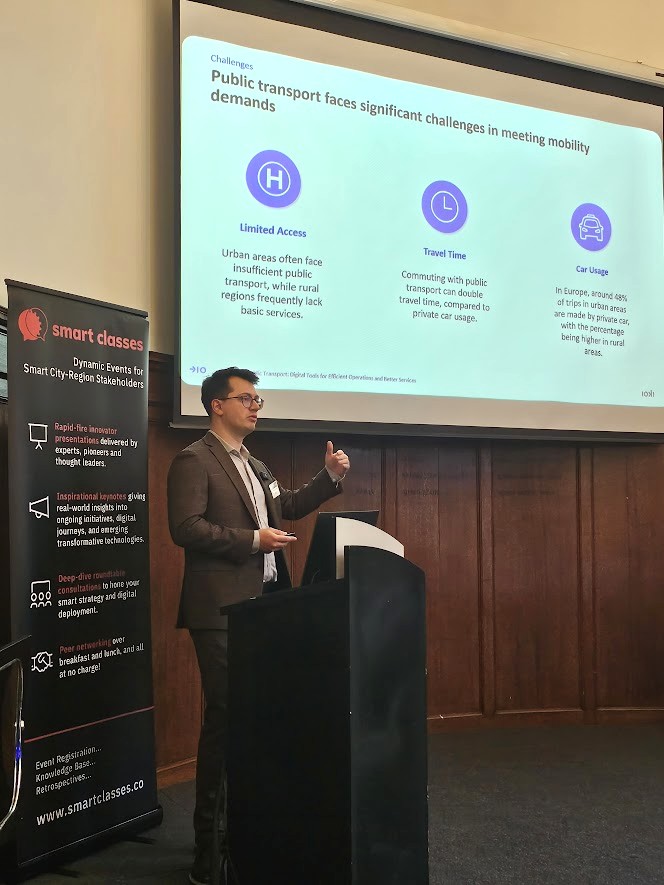
- Public transport faces significant challenges in meeting mobility demands…
- Limited Access – In Europe, there’s a significant gap in public transport access between urban and rural areas; For instance, only 63% of the rural population in Germany has sufficient public transport connections, compared to 90% in urban areas; This limited access to public transport disproportionately affects rural regions, leaving many residents without reliable transportation options;
- Travel Time – Using public transport can significantly increase travel time compared to private car usage; On average, public transport journeys to key services take over an hour, while the same journey by car takes just over half an hour; This disparity in travel time discourages public transport use, especially for individuals with time-sensitive commitments;
- Car Usage Preference – As a result of limited access and longer travel times, car usage remains high in both urban and rural areas; Around 48% of trips in urban areas across Europe are made by private car, with an even higher percentage in rural regions; Despite the environmental and congestion-related concerns, many individuals find car usage more convenient and time-efficient due to inadequacies in public transport infrastructure;
- Empty Buses – Inefficient services lead to high operational costs per passenger due to poor asset utilization;
- Revenue Decline – Current inefficiencies in route planning can lead to underutilization and missed revenue opportunities;
- Ecological Impact – Insufficient services lead to more private car use and emissions, hindering sustainability goals;
- Addressing the challenges: 1) Smart route management – Build on past achievements 2) DRT as an operational efficiency multiplier – Optimising present operations 3) Autonomous vehicles – the future of ride pooling? Anticipating future developments;
- How smart route management improves bus operations…
- Tackling one challenge at a time: bus navigation – 1. Onboarding – Route familiarisation: Training drivers in navigating unfamiliar routes 2. Deviations – Route modifications due to roadwork necessitate timely and effective communication with bus drivers 3. Operational stability – Missing a bus stop or experiencing a delay can cause significant disruptions to bus operations and inconvenience
passengers 4. Anxiety of drivers – Unfamiliar routes and language barriers can lead to stress and uncertainty for drivers and also affect passengers 5. Accidents – Newly trained bus drivers are at a higher risk of accidents, with over 50% experiencing a collision within their first six months on the job; - Benefits for the operations centre – 1. Digital and flexible planning and management of existing and new bus routes 2. Temporary routes can be easily created and managed 3. Fast and easy access via the web browser 4. Real-time communication to drivers in case of roadworks or closures 5. Location-based warnings inform the drivers when they need it;
- Overview – Management of lines, routes, stops, warnings; Import of data (Interface or file upload); Short-term editing of routes, stops (e.g. relocating a stop, adding a replacement stop, route diversion due to a closure or roadworks); Transfer of changes to the app in real-time;
- Line details – Activating and deactivating routes; Planning new routes or diversions; Overview of operational trips;
- Route details – Easily add, replace, or remove stops; Copying and modifying routes; Individual determination of the routing;
- Warnings – Location-specific communication with the driver through warnings; Display the warning in the app within the specified
radius; Customisable warning text and icon; Vehicle-specific warnings, e.g. for double-deckers on bridges; Other use cases include danger spots, instructions for specific driving style (speed, lane) and much more;
- Using demand responsive transportation as an operational efficiency multiplier…
- Inflexible Bus Routes – One major issue with the current public transport system is the rigidity of bus schedules and routes; These fixed schedules fail to accommodate the dynamic travel needs of modern commuters; As a result, many people are discouraged from using public transport, opting for more flexible travel options;
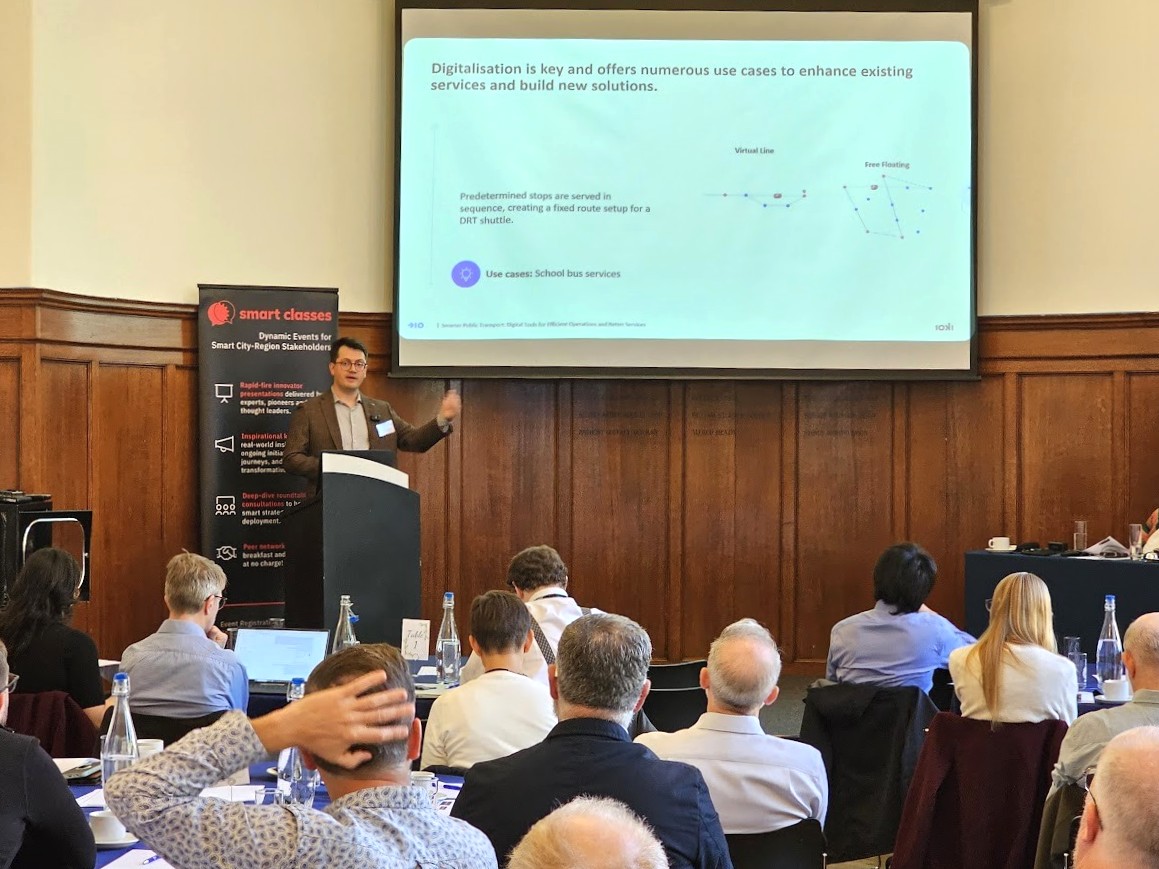
- Digitalisation is key and offers numerous use cases to enhance existing services and build new solutions:
- Virtual Line – Predetermined stops are served in sequence, creating a fixed route setup for a DRT shuttle; Use cases: School bus services;
- Free Floating – A flexible setup allows passengers to be picked up from any location and dropped off in a specific area without time constraints; Use cases: Social services;
- Feeder – A feeder is a service that connects passengers from a major hub, such as a train station, to various stops within a designated
zone. Pre-bookings are available, allowing passengers to schedule their rides in advance for added convenience; Use cases: Airports & hospitals; - Multimodal – Multimodal is a service that lets passengers book a train and a DRT shuttle in one app, providing seamless and convenient travel planning; Use cases: Tourism;
- Three steps to a new mobility solution: 1) Mobility analysis – Foundation for optimising operations, identifying the actual mobility needs of the population, providing information about possible shortcomings in today’s public transport services 2) Service concept – Examination of various options, taking into account transport-specific characteristics, mapping of all solutions, e.g. bus and train connections, on demand shuttles, e-scooters, etc. 3) Operations simulation – Digital blueprint for road operations, taking into account operating parameters such as fleet and vehicle size, service area boundaries, expected customer behaviour, etc;
- One operating system for digital mobility – Suitable for the cross-modal digitisation of all forms of transport; Enables the integration of demand-oriented forms of mobility into both existing public transport systems and new systems; Coverage of the entire mobility ecosystem without using three individual applications; Improves customer satisfaction; Streamlines digital operations;
- Autonomous vehicles – the future of ride pooling?
- How will the market react to autonomous services? Scenario 1 – Private providers flood the cities with autonomous shuttle services; Scenario 2 – Public transport asserts itself as the main AV service provider; Scenario 3 – Autonomous services fail;
- Preparing your operations centre for autonomous services: Key points – Access to a reliable and scalable platform is paramount. It has to be adaptable and easily integrate with various local needs. It should work alongside and improve existing public transport systems. Feature recommendations – High-performance routing and pooling algorithm solution; Ticketing integrations & intermodal journeys; Vehicle repositioning; Blacklisted routes & restricted areas; Serial booking; Customer communications & marketing automation; Parallel rides prevention;
- Intuitive user experience: Key points – Passenger experience should be seamless, whether they use driver-based, autonomous fleets, or a combination of both. To support this, customized solutions and features that optimize operations for hybrid fleets and improve autonomous ride functionality in passenger-facing systems should be available. Feature recommendations – Multiple booking options; Autonomous rides onboarding; Self-service vehicle unlock & check-in;
- More efficient operations: Key points – Optimising the economics of fleet operations is a key driver behind adopting autonomous vehicles. To enable this, an advanced incident management system tailored to support operators with real-time guidance and alerts is necessary, ensuring seamless operations and rapid response to any disruptions. Feature recommendations – Integrated incident and task management system; Scalable autonomous vehicle supervision & coordination; Role-Based notifications and workflow automation;
- Autonomous services can only be the future of ride pooling and DRT operations, let alone all of public transportation, if appropriate tools are adopted early and extensively.
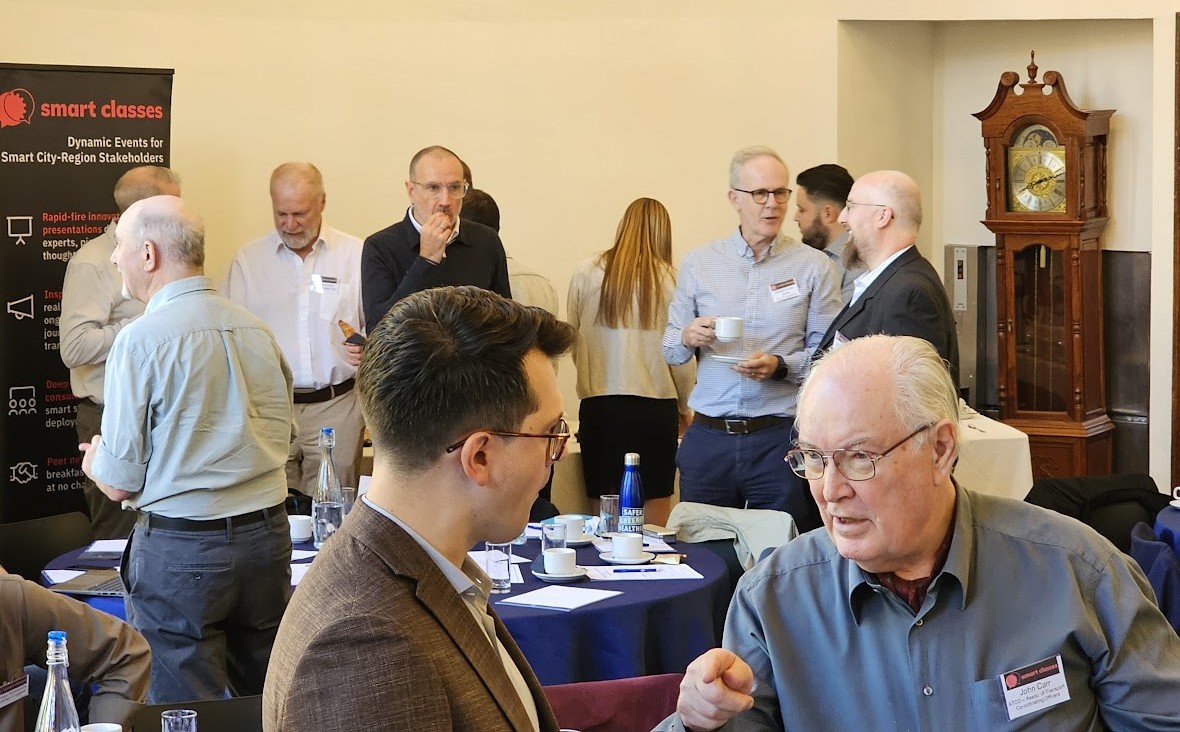
If you satisfy our regular delegate qualification criteria but were unable to join in Westminster on October 9th for the live in-person event at The Wellington Hotel, CLICK HERE and complete the short “Download form” (located at the bottom of the post) to receive a unique link enabling free access to the presentation video recordings and slides (including the film footage and slides from Christoph’s initial presentation).
Those qualifying to receive the rich presentation content from this event include commissioning, procurement, trialling, partnering and policy leads, senior influencers, strategic decision makers, programme managers and planners from local authorities (e.g. city, borough, metropolitan, district and county councils); public transport operators; regional transport partnerships, sub-regional transport bodies, combined authorities, integrated transport authorities and passenger transport executives; highways authorities and road operators; government and supporting national transport agencies; non-governmental organisations; fleet operators, parking operators, prime contractors etc.