At EMISSIONS & AIR QUALITY Smart Class 2025, we discovered from Integrated Transport Planning how innovative travel planning initiatives can successfully promote behaviour change and a shift to more sustainable options.
Giles Lipscombe (Principal Consultant) and Louise Twining (Transport Planning Consultant) shared insights from ITP’s work in Nottinghamshire, East Midlands Gateway, and Edgbaston Stadium, showcasing how co-design and comprehensive outreach are key to achieving impactful results.
Delegates also learned how greenhouse gas and air pollution savings can be calculated, to demonstrate progress in reducing environmental impacts!
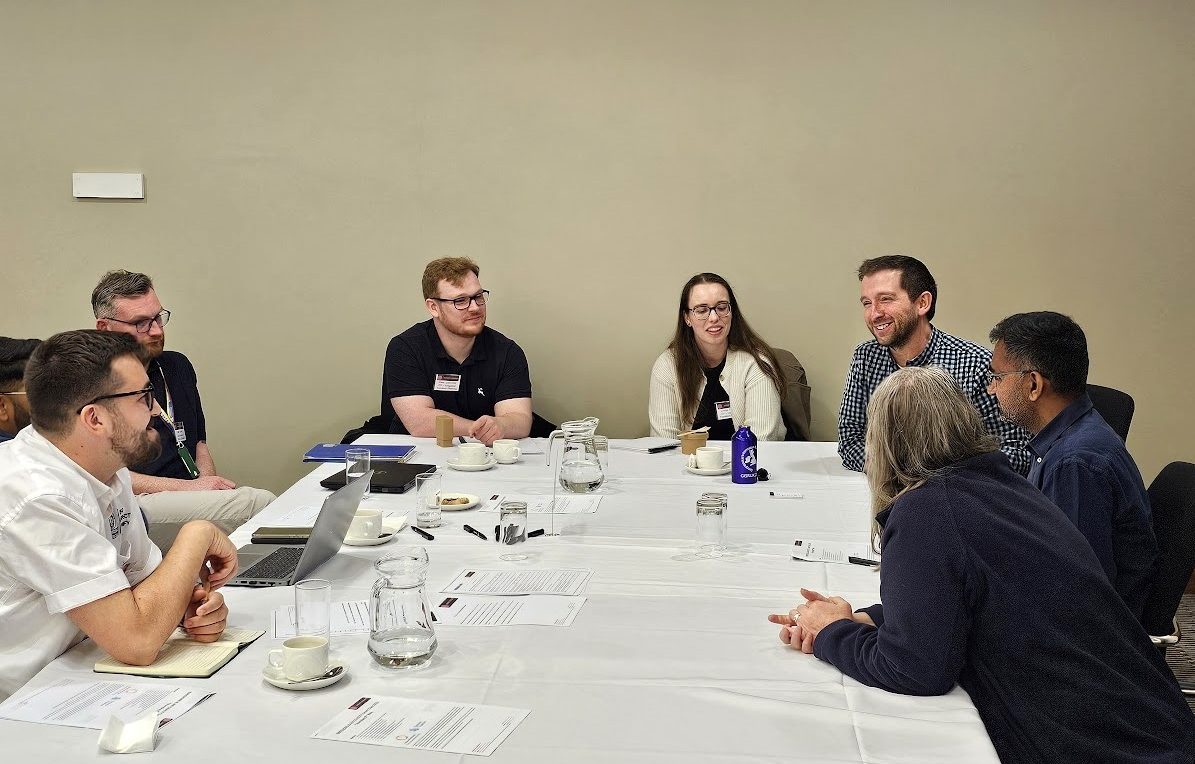
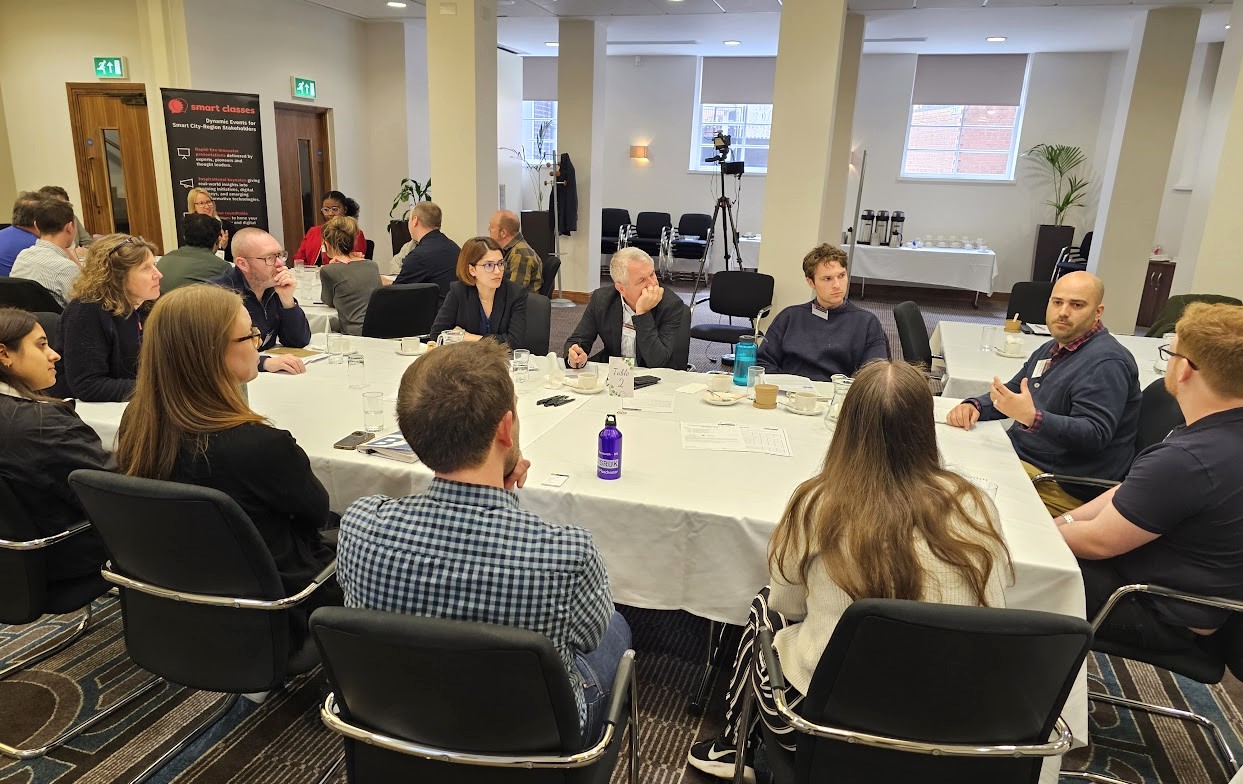
Dr Mark Dimond (Associate) joined Giles and Louise after their presentation to help host deeper dive roundtable discussions with all in attendance.
Presentation highlights and notes:
- What is Behaviour Change?
- Research > Design > Deliver > Evaluate;
- What is TripSwitch?
- An Innovative travel planning service; Helps organisations reach Net Zero targets by reducing greenhouse gas emissions; Uses a bespoke package of tools. Combines Audience Assessment, Modal Optioneering, Co Design Workshop and Carbon Calculator…
- Audience Assessment: Bespoke survey – understand needs and motivations; Groups respondents into segments based on their potential and willingness to change (Convertible Users, Maintainable Users and Unconvertible Users); Map the data to understand transport accessibility;
- Modal Optioneering: Identifies practical opportunities to travel sustainably; Auditing – on-site facilities, existing policies & measures, wider context & support; Helps to prioritise new initiatives;
- Co Design Workshop: They know their people better than anyone; Better buy-in from stakeholders; Make the process fun and engaging e.g. “Dream Team” exercise;
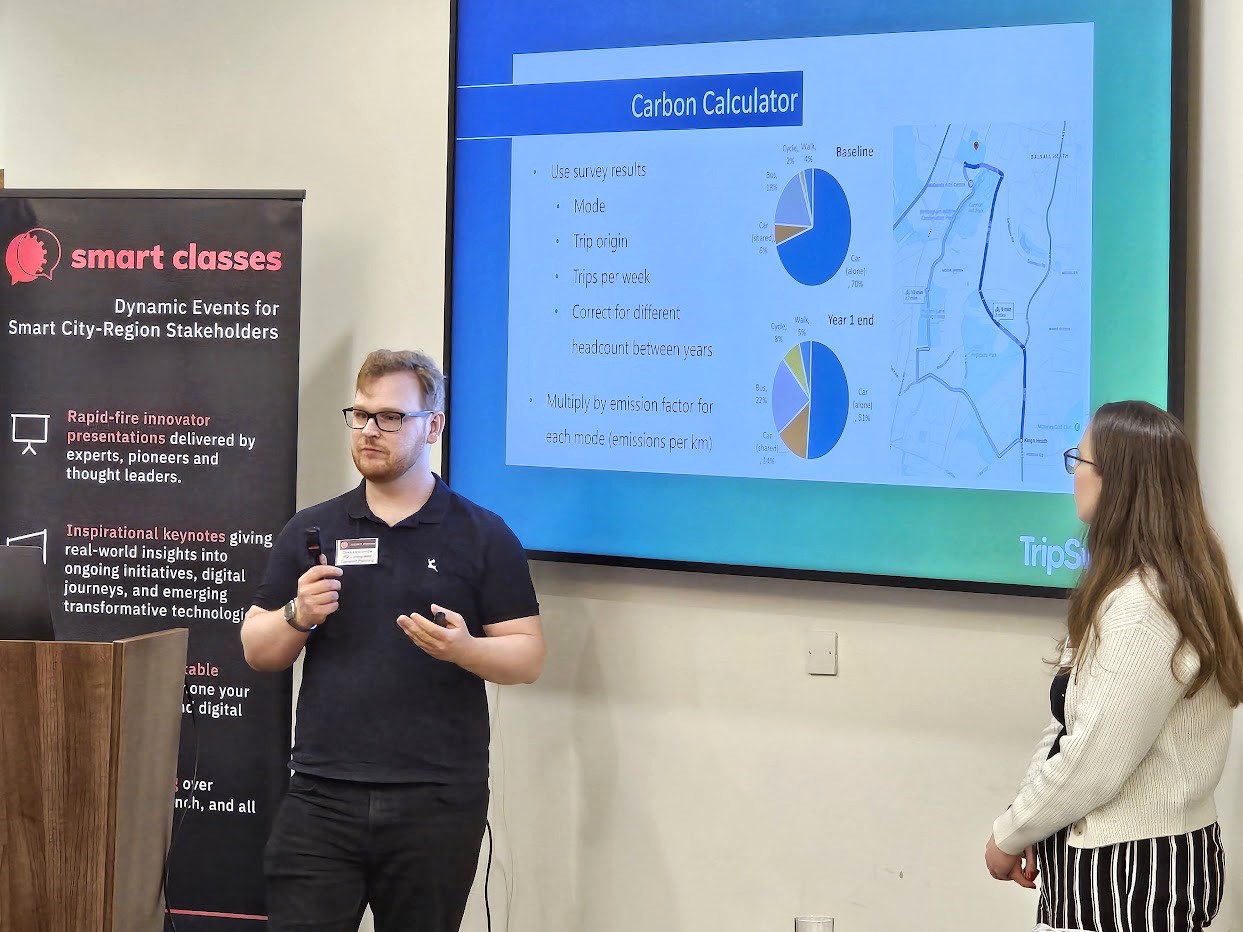
- Carbon Calculator: Put the result into numbers – share your success, track your progress, update your targets for next year; Make them suitable for company GHG reporting – GOV.UK DESNZ GHG Conversion Factors; Breakdown emissions by Scope 1, 2 and 3; Direct + indirect emissions (well-to-wheel); Use survey results – Mode (e.g. Car alone, Car shared, Bus, Cycle, Walk), Trip origin, Trips per week, Correct for different headcount between years; Multiply by emission factor for each mode (emissions per km);
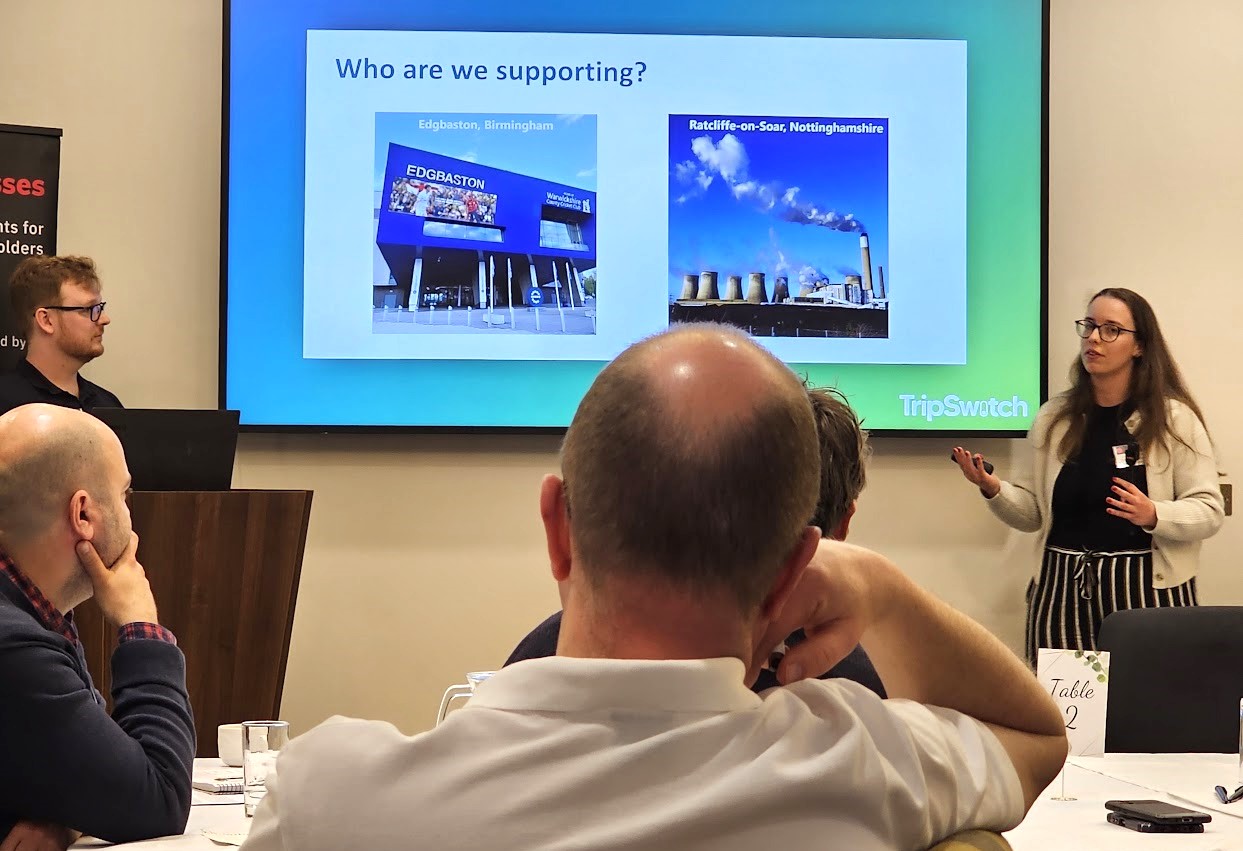
- Who is being supported?
- Edgbaston Stadium, Birmingham;
- Ratcliffe-on-Soar Power Station, Nottinghamshire;
- East Midlands Gateway Rail Freight Terminal and Intermodal Freight Centre;
- How much CO2 can be saved?
- From 2019-2024 at East Midlands Gateway, travel planning saved 5,352 tonnes of CO2 – Equivalent to replacing 3,100 petrol cars with electric cars;
- Relevance for the public sector…
- Work with companies on behalf of the local authority;
- Meeting planning requirements – e.g. for large developments such as warehousing;
- Meeting local plans – e.g. Local Transport Plan, BSIP. NB. “One Year of Travel Well – Transforming Active Travel in Nottingham”;
- Work towards other objectives – Economic development/access to jobs, Health, Congestion etc
If you satisfy our regular delegate qualification criteria but were unable to join us in Leicester on May 8th for the live in-person event at City Hall, CLICK HERE and complete the short “Download form” (located at the bottom of the post) to receive a unique link enabling free access to the presentation video recordings and slides (including the film footage and slides from Giles and Louise’s initial presentation).
Those qualifying to receive the rich presentation content from this event include commissioning, procurement, trialling, partnering, policy and programme leads, senior influencers, strategic decision makers, environmental managers, climate/sustainability/transport/public health officers and planners from local authorities (e.g. city, borough, metropolitan, district and county councils); public and private transport operators/service providers; sub-regional transport bodies, combined authorities, integrated transport authorities and passenger transport executives; freight and logistics operators; airports and port operators; vehicle manufacturers; energy providers; potential partners from industry (e.g. retail, construction, manufacturing and waste management sectors) and healthcare; DfT, Defra, EA, BEIS, DHSC, UKHSA and other and supporting national agencies; prime contractors; academia etc.