
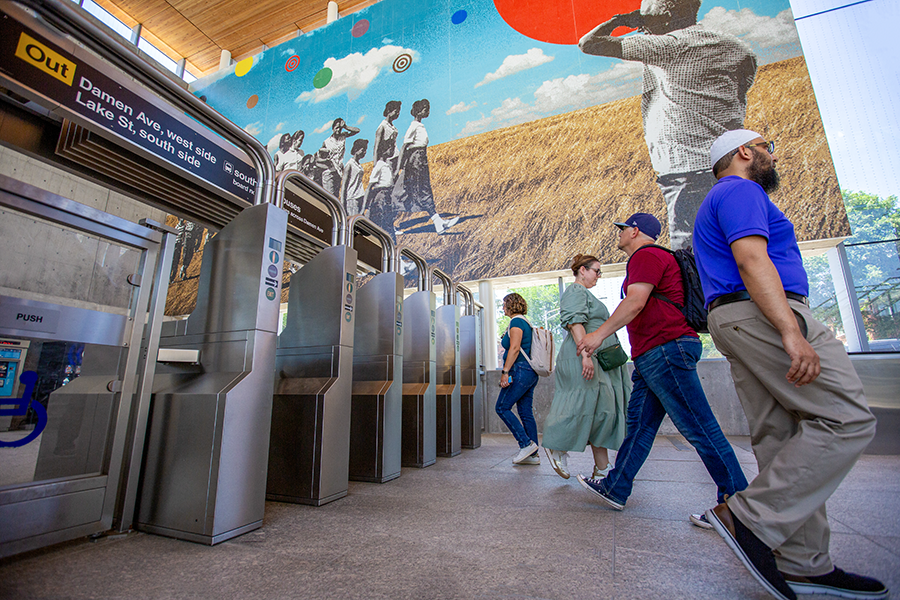
Barcelona Sants station. World Cup 2030. Instead of relying on a static fare policy, imagine a system that recognizes surging ridership demand, adjusts fares within policy limits, identifies higher-risk fare evasion behavior, deploys inspectors where they’re needed, and guides fans who may have forgotten to pay fares before anyone in the control room intervenes.
This may sound unreal today, but technology is moving toward a stage to enable transit systems to act on their own within clear governance frameworks.
For more than a decade, artificial intelligence (AI) and machine learning (ML) have helped fare payment systems, from rule-based and smart cards to mobile and contactless ticketing systems, become faster, more reliable, and more secure. They have improved fare revenue protection, transaction processing accuracy, and the overall rider experience. Serving as an advisor, it identifies risks, recommends actions, and provides insights while transit staff remain responsible for making the final decisions.
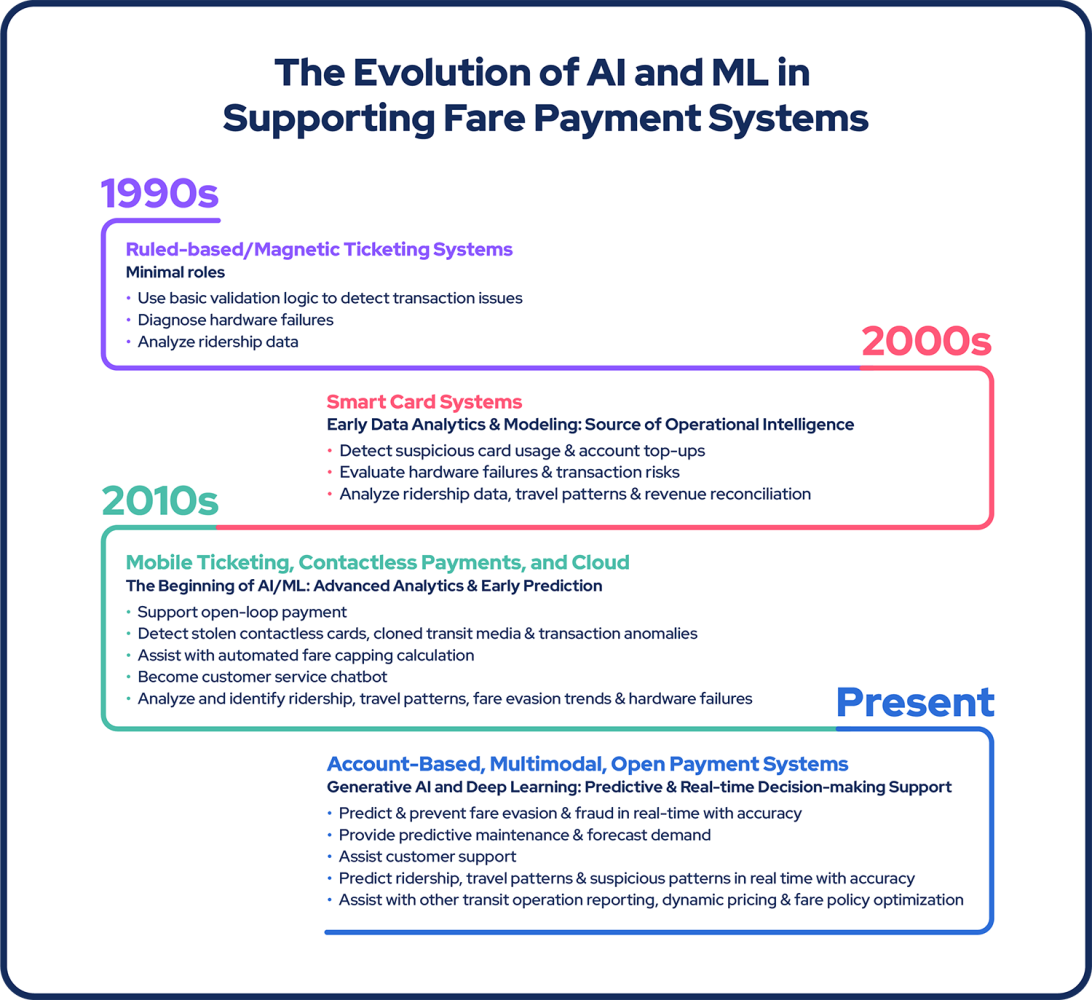
But something more significant is now happening. AI/ML is no longer simply making existing fare collection processes more efficient. As models become more accurate, adaptive, and capable of acting in real time, they evolve from optimizing human decisions into making routine operational decisions on their own. They’re bending the operational curve in transit.
The Shift from Decision Support to Autonomous Transit Operations
Nowadays, every tap, scan, and fare payment transaction generates information that helps operators reconcile payments, understand rider behavior, detect fraud, and optimize operations. And AI/ML is part of many critical transit operational functions.
Yet these systems still operate in a familiar way: AI/ML recommends, humans decide.
The next phase is one where AI/ML doesn’t simply support transit operations. It executes them within clearly defined governance frameworks. Human oversight remains essential, but day-to-day operational decisions can shift from manual control to setting policy, monitoring performance, and ensuring accountability.
An example is dynamic fare policy, where the system can evaluate travel patterns, ridership demand, and large events to recommend or automatically apply fare adjustments within fare policy limits.
Fare Revenue Protection in A New Lens
Fare revenue protection is not just about stopping revenue loss; it is about changing how the mechanism works.
Traditional approaches depend mainly on inspections, fines, and deterrence. While these remain important, they are inherently reactive, labor-intensive, and can create friction for riders.
Self-running fare systems introduce a different approach—one focused on continuous orchestration rather than periodic enforcement. By analyzing travel behavior, historical patterns, location, and time of day, AI/ML can predict fare evasion behavior more precisely. As a result, the system continuously monitors millions of transactions in real time, identifying subtle ticketing fraudulent activities that would be impossible for humans to detect manually.
Additionally, the system can remind a passenger to complete a tap or introduce additional verification only when potential fraud risk is detected. Human detectors are only deployed where they will have the greatest impact.
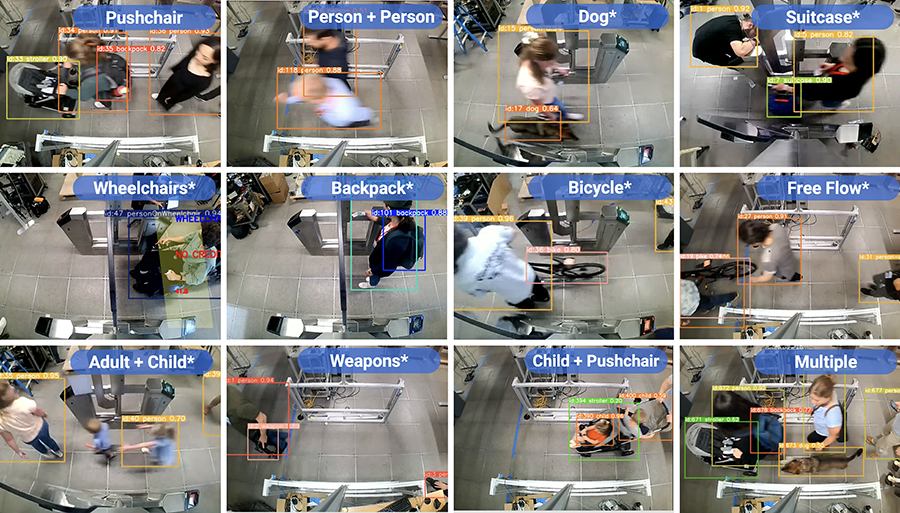
FEnX fare gate is an example where fare compliance is shaped through experience design rather than punishment. It detects and assists riders to pass through gates efficiently while detecting early potential fare payment frauds using AI and FLARE proactively rather than penalizing them retroactively.
FLARE, an AI-powered fare evasion detection tool, can identify and address fare compliance issues in real time while keeping service moving and not adding friction to the rider experience.
The core value is to create a fare revenue protection system that is less visible enforcement to riders and more embedded protection behind the scenes.
The Challenge is Governance
The building blocks for autonomous fare collection already exist. Fare technology, validators, payment integrators, data ecosystems, and advanced ML models provide much of the technical foundation required.
The bigger challenges are organizational rather than technological. That is where the transition becomes more complex.
As AI/ML takes on greater responsibility, accountability becomes increasingly important. If an autonomous system adjusts fares, flags suspicious activities, or intervenes in a customer journey, operators must be clear about who remains responsible for those decisions and how that responsibility is governed.
Riders need confidence that these AI/ML decisions are transparent and respectful of privacy. Agencies need to clearly define an automation policy framework and be aligned with public policy objectives.
Will the Transition Happen Overnight?
No, and not every city will move at the same pace. Autonomy is likely to emerge in stages, with mobility back-office functions such as fraud detection, reconciliation, and analytics automating first. As AI/ML assumes greater operational responsibility, mature transit systems will be more automated within clearly defined governance and regulatory frameworks.
What makes this different is that generative AI and ML continue to learn and improve after deployment, further bending the curve between human efforts and transit operational performance.
The real question is no longer whether fare collection systems will become increasingly autonomous; the technology is already moving in that direction. It is whether transit agencies, regulators, and riders are ready to trust AI/ML to manage critical transit operations at scale.
Lalit Singh is Chief Operating Officer at Cubic Transportation Systems
This blog was originally published in Cubic Exchange on 25th August 2026
Feature Image Source: Cubic Exchange