The West Midlands Combined Authority (WMCA) is transitioning to a bus franchising system, aiming for full implementation by the end of 2029. Restoring public control will allow Transport for West Midlands (TfWM) to set routes, fares, and service standards, and see WMCA purchase key bus depots and vehicles to support the new, competitive network.
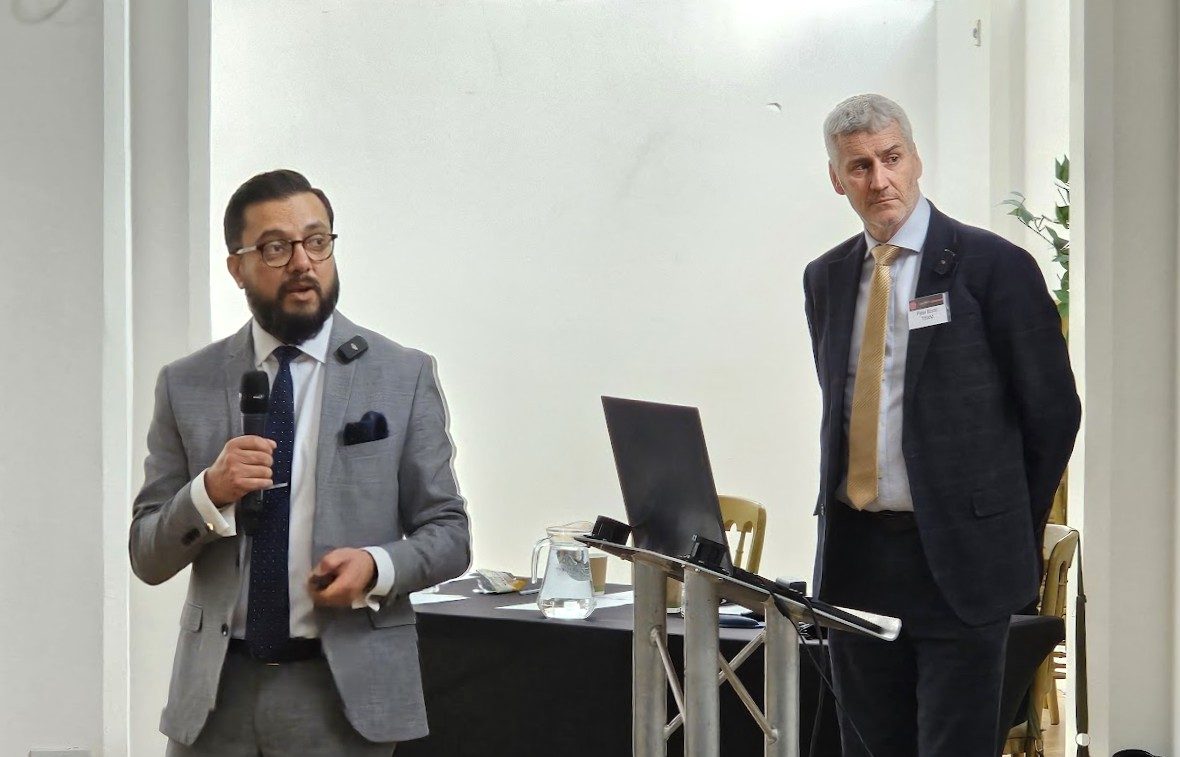
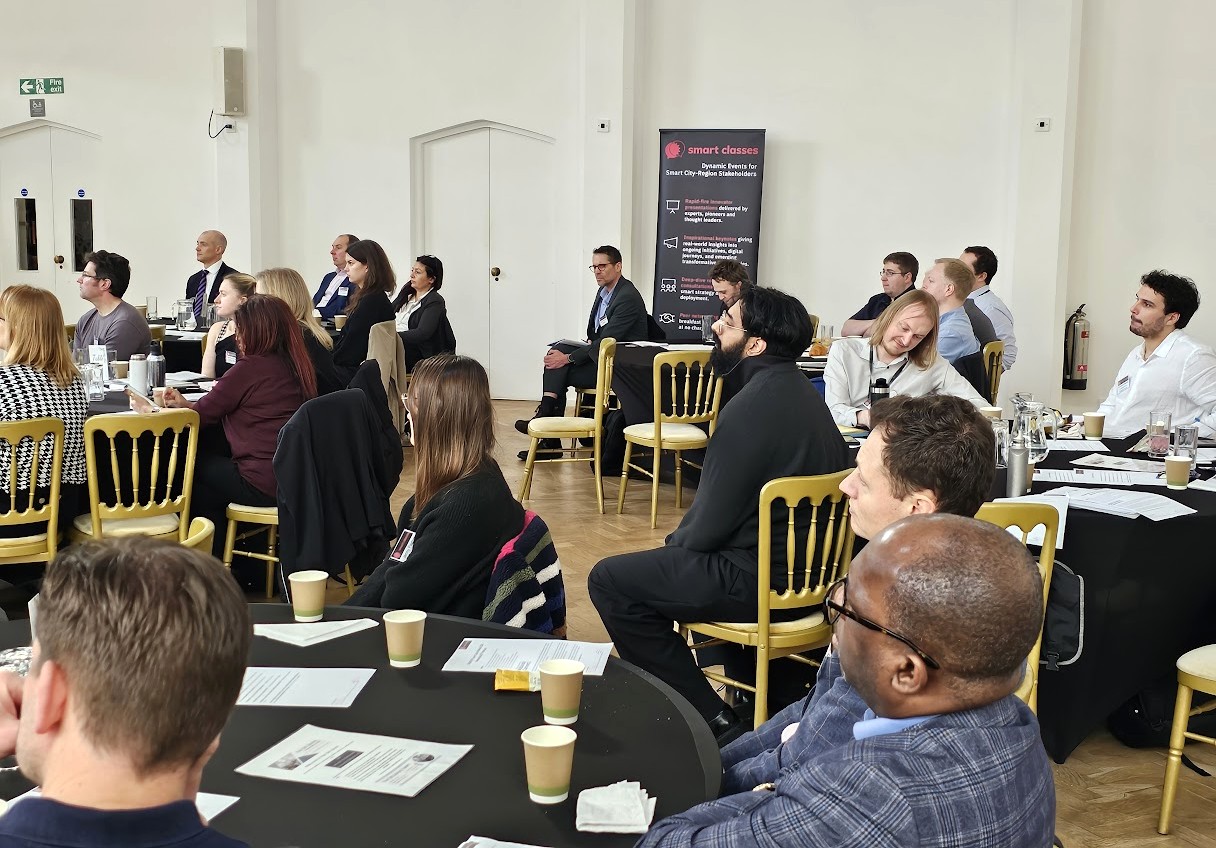
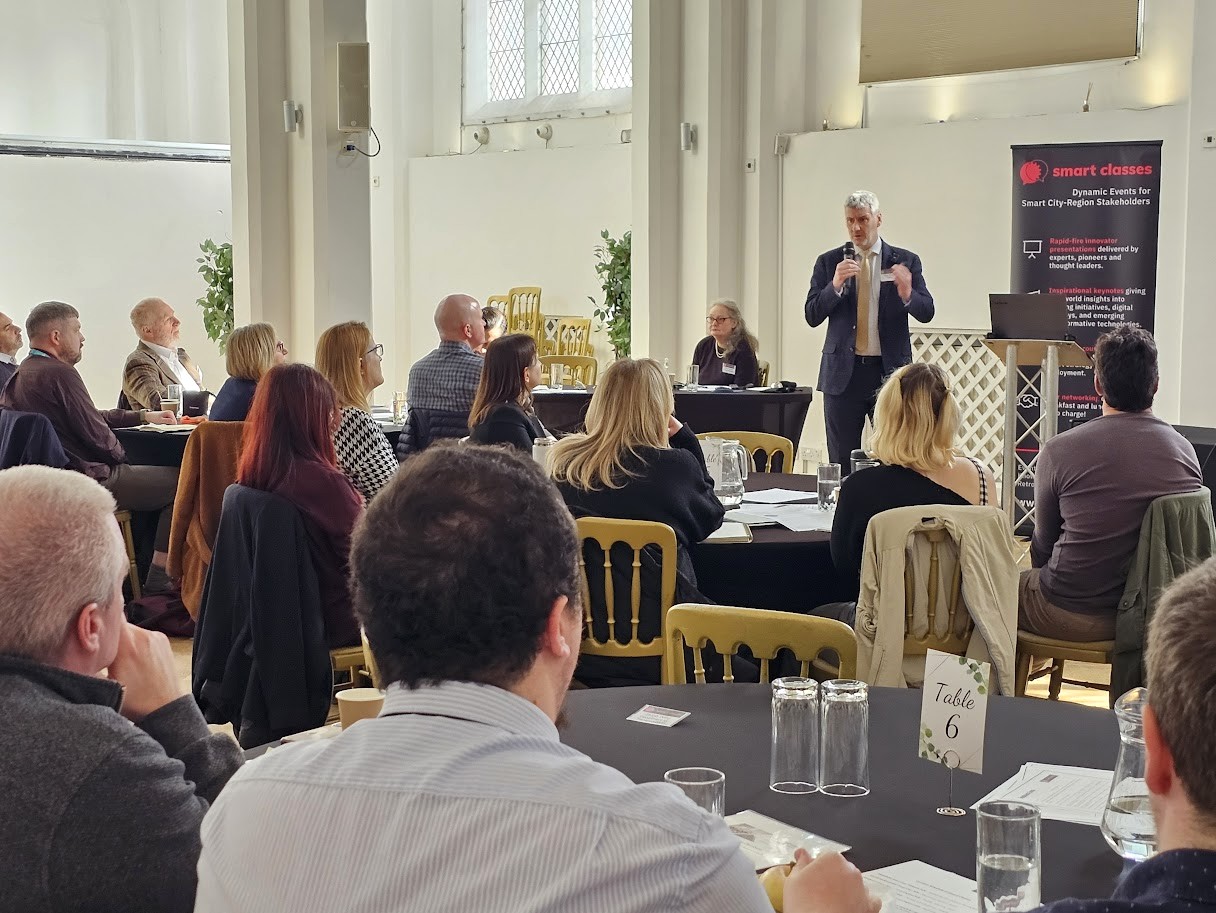
Sandeep Shingadia (Executive Director, TfWM) and Pete Bond (Director, Integrated Transport Services, TfWM) joined us at TRANSPORT Smart Class, Midlands 2026 to delve into the backdrop, process and benefits of bus franchising for the West Midlands region, including the primary goals stated by Mayor Richard Parker to improve service reliability, better integrate transport, and make fares more affordable.
Their joint keynote explored:
- Transport as a key enabler of the WM Growth Plan and TfWM’s key role in delivering the LTP Core Strategy vision (‘Journeys for Everyone’);
- Why franchising? Local transport outcomes, the importance of buses, how services work now, and addressing accountability;
- Franchising approach and principles;
- Approach to fleet, depots and lotting contracts, and provisional lotting strategy;
- Timeline to date, proposed phasing, and Bus Franchising Programme delivery;
- Sprint – A transformational BRT system for the Walsall to Solihull corridor;
- And more!
Summary of presentation highlights with notes:
- Introductions…
- Sandeep Shingadia – With over 25 years’ experience in the transport sector, Sandeep is responsible for leading the development of strategic partnerships at regional, national and international levels to facilitate the development of integrated transport programmes ready for delivery; He works strategically with partners to deliver the right transport solutions that benefit a wider investment, economic growth, creating great vibrant places and supporting residents and business with greater connectivity through sustainable and clean transport options; Sandeep is a board director for Colmore Business Improvement District and Black Country Innovative Manufacturing Organisation (BCIMO); Alongside this, he is Vice-President of METREX (The Network of European Metropolitan Regions and Areas);
- Pete Bond – Leads the operational delivery of the region’s bus network and plays a pivotal part in developing both formal and informal partnerships, including the award‑winning West Midlands Bus Alliance; With a strong focus on creating an innovative, reliable, and customer‑centred transport network, Pete oversees a wide portfolio spanning Customer Services, bus station and interchange operations, operational assets, and delivery of capital projects including the new Interchange at Dudley; His responsibilities also include the transformation of the West Midlands Bus On Demand service for the region’s most vulnerable residents, supporting the transition of bus fleets toward zero‑emission cleanliness, and driving the development of new cross‑city bus routes that strengthen community connectivity and create a more seamless, integrated network for passengers; Pete was instrumental in the region’s full franchising assessment;
- WM Region – Includes Wolverhampton, Dudley, Walsall, Sandwell, Birmingham, Solihull, and Coventry;
- WM Economy – 3rd biggest city-region in UK with 107,400 active businesses generating £77bn; But £25,437 gross domestic product per capita compares to UK average of £37,151, and large differences across the region; £38,457 pay gap between Castle Vale and Dorridge;
- Growth Plans…
- WMCA published WM Growth Plan in July 2025 – A strategy for growth aligned with the government’s modern industrial strategy; Regional vision is for “Higher living standards in all parts of the West Midlands”; Transport is a key enabler of the WM Growth Plan;
- Growth Plan forms part of the region’s strategic policy framework together with: Local Transport Plan (LTP); Spatial Development Strategy (SDS); Mayor’s Investment Prospectus and ongoing Rosewell Review;
- SDS is a core part of implementing the Growth Plan and LTP – Distribute housing need; Identify enabling infrastructure for strategy implementation inc. KRN; Enable economic growth; Protect or restore the natural environment;
- Regional Leadership – Mayor of West Midlands is Richard Parker and his vision combines the following strategies: ‘Jobs for Everyone’ – Investing in jobs, skills, training and apprenticeships and reducing youth unemployment and ensuring everyone has a job that pays well; ‘Homes for Everyone’ – Building social and affordable homes and creating vibrant communities so that everyone will have a place to call home; ‘Growth for Everyone’ – Helping businesses grow, supporting innovation and creativity and making sure everyone benefits, and the environment is protected; ‘Journeys for Everyone’ – Connecting communities and making travel easier, safer and more affordable for everyone;
- Growth Corridors – Wolverhampton-Walsall Growth Cluster, Black Country Growth Corridor, Birmingham and North Solihull Gateway, Coventry Growth Arc; Note from map the Motorway, Railway Lines, West Midlands Metro Line, West Midlands Metro Line Expansion, HS2 Line and Indicative Mass Rapid Transit across the corridors;
- Who are Transport for West Midlands (TfWM)?
- Part of the West Midlands Combined Authority (WMCA), “Our purpose is to ensure there are journeys for everyone and together we are making the West Midlands the best place to work, live and visit”;
- What does TfWM do?
- Plan: “We work across the WMCA, with local authorities and their communities to help the region secure powers and funding to develop strategies and solutions that not only address current needs but pave the way for the future, ensuring that we consistently stay one step ahead”;
- Build: “From metro extensions to priority bus routes to new rail stations to world-class ticketing solutions, we are working with partners to build a transport system that delivers for the everyday needs of the West Midlands”;
- Operate: “And once its built, we make sure that we continuously improve it to the meet the changing demands of the traveling public. As well as what we build, we also manage activities and schemes to ensure the transport experience lives up to expectations”;
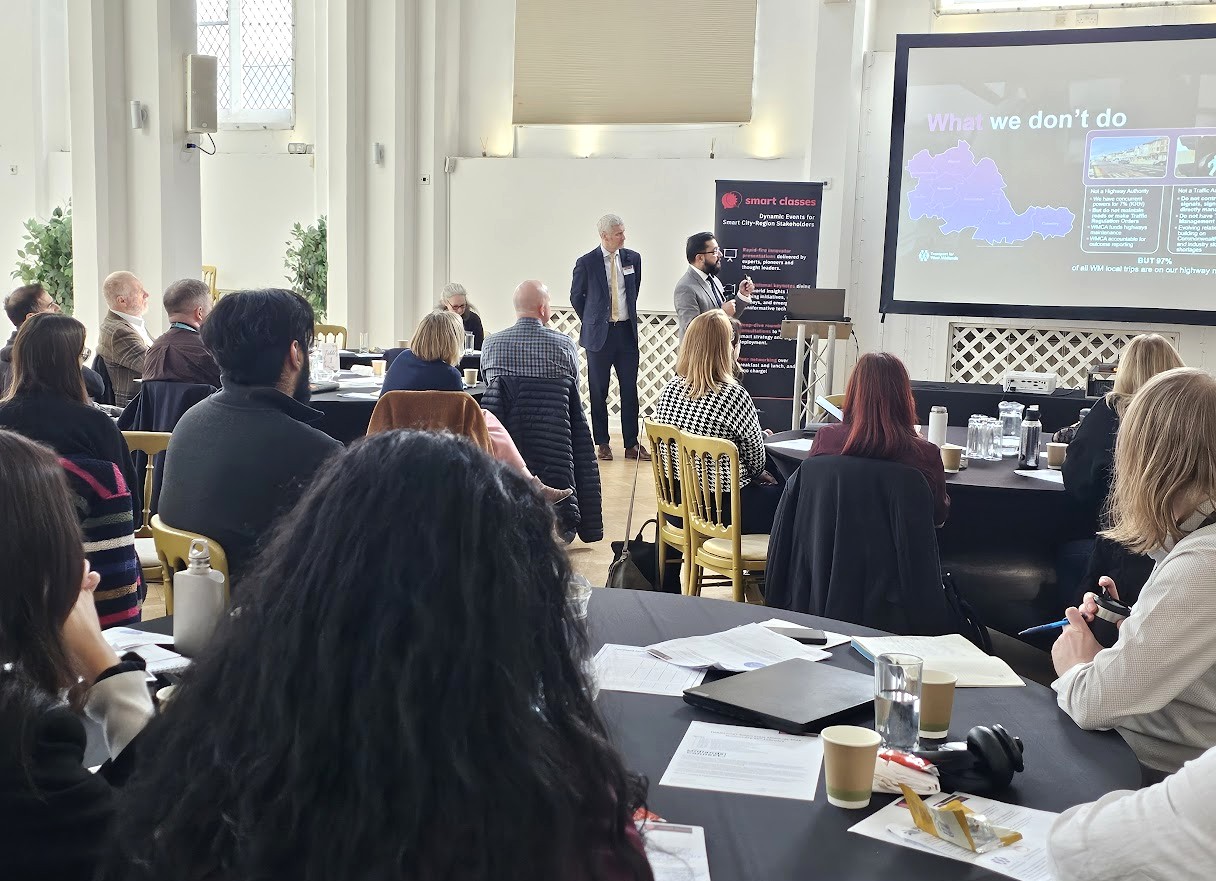
- What don’t TfWM do?
- Not a Highway Authority: TfWM have concurrent powers for 7% (KRN); But do not maintain roads or make Traffic Regulation Orders; WMCA funds highways maintenance; WMCA accountable for outcome reporting;
- Not a Traffic Authority: Do not control traffic signals, signage or directly manage traffic; Do not have Traffic Management Duties; Evolving relationships building on Commonwealth Games and industry skills shortages;
- “BUT 97% of all WM local trips are on our highway network”;
- Why do TfWM do it?
- LTP Core Strategy vision: 50% of trips made by sustainable modes by 2035;
- 45 Minute Region – The “45-minute region” concept is a strategic ambition to ensure that residents can access a wide range of essential destinations including; work, education, healthcare, leisure, and social opportunities – within 45 minutes of travel without needing a car;
- Local Connected Communities – Connected Communities are a concept aimed at creating more liveable, sustainable, and inclusive communities; The idea is that residents should be able to access essential services and amenities within a short round trip journey by walking, wheeling, cycling, or scooting from their home;
- Local Transport Plan “Big Moves” – Six thematic areas of region-wide policy built on the Core Strategies principles: 1) Behaviour change 2) Walk, wheel, cycle and scoot 3) Accessible and inclusive places 4) Public transport and shared mobility 5) Safe, efficient and reliable network 6) Green transport revolution;
- These provide a framework for the measures and actions that the region can take to improve and manage the transport system; This will deliver the LTP vision for travel enabling equitable economic growth;
- TfWM Partnerships that deliver change;
- Why Franchising?
- “We want the West Midlands to be the best place to live, work and visit. Transport is key to enabling this and creating inclusive growth”…
- Why change? Sustaining economic success; Tackling the climate emergency; Creating a fairer society; Becoming more active; Supporting local communities and places;
- To achieve this we need to: Improve accessibility, Reduce traffic, and Electrify transport; Carbon is a key theme for the LTP to address but not the only one and consideration needs to be given to how trade offs are made; LTP is called ‘Journeys for Everyone’;
- TfWM’s Local Transport Outcomes – Improve accessibility to key amenities through public and active transport; Reduce transport’s contribution towards harmful emissions; Reduce traffic and improve safety and security across the transport system;
- Buses are important!!!
- 240m bus journeys in the West Midlands in 2024; Over 25% of households in West Midlands do not have a car; Bus is crucial in connecting people to work, education, shops, leisure; Bus supports objectives to reduce congestion, emissions and ensure transport affordability; 2024 KPMG study (for CPT) showed bus is worth £4.4bn per year to the West Midlands economy;
- Success factors – All local destinations reachable; One ticket (all services including drt/new mobility solutions); Easy-to-understand network; Easy transfer between all services; One brand; Reliable speed; Easy to access the vehicle; Accessible and comfortable; Network efficiency and affordability; Public feedback and customer care; Passenger safety, security and health;
- “Collectively, we’re falling short” – “We’ve been falling short on most of the success factors identified” (see slide for Alignment with best practice and Current Situation Assessment)…”Bus patronage has been falling by circa 2% per year over a prolonged period”;
- How services work now – National Express are the primary operator with c.94% of passengers; Stagecoach, Diamond and Arriva also run services, with half a dozen or so much smaller operators; Around 10% of the network is subsidised and operated under contract; Recent cost increases and reduced passenger numbers post-covid have created significant impact on the financial viability of the bus market; Ongoing requirement for c.£50m in funding to maintain levels of network we have today – to maintain the commercial network; Mayor, backed CA Leaders, made the decision in May 2025 to take local control of buses services (through Franchising);
- Addressing accountability: “I was waiting in a dirty bus shelter for a Stagecoach bus. It turned up 20 minutes late because it was stuck at some broken traffic lights. When it arrived, the driver was rude and wouldn’t accept the ticket which I bought on a National Express bus earlier in the day when I asked for a multi-operator day-ticket” – Who do I complain to about this experience?!
- TfWM’s Franchising principles: Clear accountability is crucial so that customers ‘trust’ us – They shouldn’t care who is responsible for what, just be assured they are being looked after at all stages of the journey; Strong brand recognition that the region can be proud of; Build excellent partnership working and ensure that incentives stretch beyond ‘just turning up for work’; Evolution, not revolution – The act of Franchising won’t make much difference to customers from day one;
- TfWM’s Franchising approach: We design routes, specify hours of operation, services standards and awards contracts following competitive procurement; TfWM takes revenue risk (i.e. keep/reinvest the fares); Operators retain operational staff (e.g. drivers, engineers); Opportunity to consolidate functions currently shared between TfWM and Operators (e.g. customer services, marketing, network planning); Consolidation of data and systems – important there is ‘one version of the truth’ both for customers and performance management purposes; TfWM continue to manage infrastructure (e.g. bus stops, bus stations, information provision); Local Councils continue to manage highways;
- TfWM’s approach to Fleet & Depots: To achieve best value for money, it is important there is strong competition for contracts; To enable this, we are planning that WMCA acquire Fleet and Depots and lease these to operators as part of the service contracts; Operators will be responsible for day-to-day management and maintenance; The Assessment assumes borrowing will be used to fund fleet and depot purchase, paid back through future fares revenue; The public sector has access to lower borrowing costs, so this is also cheaper than requiring operators to acquire assets, plus reduces the risk that operators will build into contract prices, given that fleet and depot lifespan is longer than the proposed contract lengths;
- TfWM’s approach to Lotting contracts: 9 zones – Based upon both the geography of the region, number and size of current depots, and how to best ensure appropriate competition; Each with one ‘large lot’ – Each lot based around either an existing large depot, or a ‘working assumption’ for a future site NB. These assumptions are critical to whether a specific proposal is viable, and TfWM responsibility for these depots; And 1 to 3 ‘small lots’ – Designed to be attractive to SMOs in their scale, with 5 to 20 vehicles catering for two broad groups of services 1) Specific , ‘unique’ services types (such as school services or those with specific fleet requirements e.g. minibuses) 2) Secondary routes operating at lower frequencies, particularly where they cannot be accommodated within the ‘large lot’ depot NB. Operator responsibility for these depots;
- Lotting Strategy (provisional) – Wolverhampton 196 vehicles, Walsall 220 vehicles, Pensnett 139 vehicles, West Bromwich 164 vehicles, Perry Barr 159 vehicles, Birmingham South 181 vehicles, Birmingham East 167 vehicles, Acocks Green 167 vehicles, Coventry 160 vehicles; Depot sites illustrated likely to be mix of existing and new-build depending on suitability/availability;
- Timeline to date – Feb 2020: Outline Assessment commenced; July 2024: Franchising Assessment concluded for CA Board consideration, with approval to commence Audit; October 2024: External Audit concluded (as required by legislation – 3 months); December 2024: CA Board approval to commence consultation; Jan – March 2025: Statutory Consultation; May 2025: Decision to proceed;
- Proposed Phasing (provisional) – Round 1: Coventry, Walsall, North Birmingham (contracts commence 24 October 2027); Round 2: Sandwell, Dudley, Wolverhampton (contracts commence 23 July 2028); Round 3: S/E B’ham, West B’ham, Solihull (contracts commence 25 March 2029);
- Delivery programme – Next key milestones: Development of Operating Model | Currently; Pre-market engagement with operators | Early 2026; Fleet Strategy | Jan 2026 (WMCA Board); Branding approach | March 2026 (Key decision point); Tranche 1 Invitation to Tender | May 26;
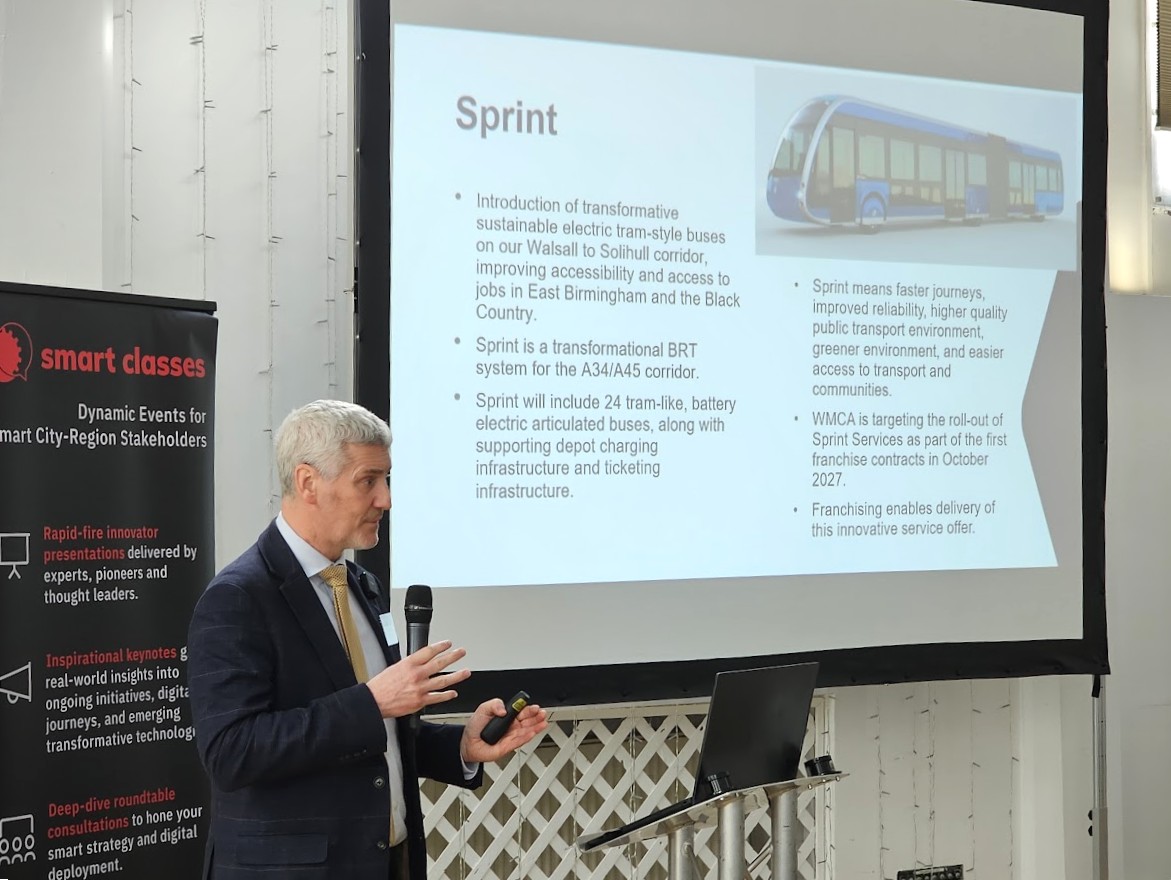
- Sprint – Introduction of transformative sustainable electric tram-style buses on Walsall to Solihull corridor, improving accessibility and access to jobs in East Birmingham and the Black Country; Sprint is a transformational BRT system for the A34/A45 corridor; Sprint will include 24 tram-like, battery electric articulated buses, along with supporting depot charging infrastructure and ticketing infrastructure; Sprint means faster journeys, improved reliability, higher quality public transport environment, greener environment, and easier access to transport and communities; WMCA is targeting the roll-out of Sprint Services as part of the first franchise contracts in October 2027; Franchising enables delivery of this innovative service offer;
- The importance of Brand – As part of the franchised bus model, TfWM will own the brand of the network. This will allow them to: Build trust; Make the system easier to use; Signal integration; Strengthen public and political support; Compete with private mobility options; Encourage ridership growth; Ensure a unified user experience;
- User research – Roughly 1000 residents in the West Midlands participated in an online user research, providing feedback on: Brand sentiments for TfWM and modal brands; Relationships and connections between brands and network; Feelings on refreshing how buses look visually; Colours, words, themes and iconography people associate with the West Midlands; Colour the buses in the West Midlands should be and why;
- Key Findings – Brand Trust ranges from 56%-63% depending upon logo colour; When shown logos, 60% believe there is a connection between TfWM and the modal brands; But, when shown livery images 64% of the above, disagreed that there was a connection between liveries; 73% of all respondents believe there is no visual connection between buses, trains and trams;
- What this means – Franchising is a change to how buses are run; Customers want a change; And they need to see it, feel it and believe it; Branding makes change visible (perception); Operations make change real (the truth); Consistency makes change trusted (repeat journeys).
If you meet our regular delegate qualification criteria but were unable to join us The Old Library, Birmingham, for the live in-person event on February 25th, CLICK HERE and complete the short “Download form” (located at the bottom of the post) to receive a unique link enabling free access to the presentation video recordings and slides (including the film footage and slides from Sandeep and Pete’s keynote).
Those qualifying to receive the rich presentation content from this event include commissioning, procurement, trialling, partnering and policy leads, senior influencers, strategic decision makers, programme managers and planners from local authorities (e.g. city, borough, metropolitan, district and county councils); public transport operators; regional transport partnerships, sub-regional transport bodies, combined authorities, integrated transport authorities and passenger transport executives; highways authorities and road operators; government and supporting national transport agencies; non-governmental organisations; fleet operators, parking operators, prime contractors etc.