With the impacts of a changing climate increasingly testing the infrastructure and communities of the UK, innovation and collaboration are key factors in successfully increasing the climate resilience of the Yorkshire region.
The West Yorkshire Flood Innovation Programme is intended to make the region more resilient to flooding and climate change. The project is led by five local authorities, as well as a number of key partners including The Environment Agency and West Yorkshire Combined Authority, local stakeholders, academic partners, community based groups, Third Sector organisations and Yorkshire Water.
Jonathan Moxon is Leeds City Council’s Executive Manager – Flood & Climate Resilience, and WYFLIP Programme Manager. Earlier this month, he joined us at WATER MANAGEMENT Smart Class 2025 to discuss how this collaborative programme came to be, how it is funded, the successes and challenges to date and its plans for the future.
Highlighting the importance of clear governance and finding new ways to fund and resource collaborative multi-organisational projects and programmes, Jonathan’s opening keynote on behalf of the WYFLIP Board explored their first 3 years of partnership working to develop a programme based on key themes, clear and open governance and flexibility.
The programme was born out of an unsuccessful FCRIP bid, but a change in approach and learning from elsewhere has helped it develop from a solid base to now have a growing and sustainable future.

Summary of presentation highlights:
- WYFLIP Overview…
- The West Yorkshire FLIP is a collaborative programme between the five lead local flood authorities (Bradford, Calderdale, Kirklees, Leeds and Wakefield), EA and WYCA, enabling it to work at catchment level across administrative boundaries. It has support from local stakeholders including academia, community based groups, third sector organisations and Yorkshire Water;
- The WYFLIP focuses on innovation, exploring new ways of working, including bringing together people who do not normally work together to ensure a holistic approach and other benefits for our communities. It uses the latest research to embed climate change;
- WYFLIP has been kick-started with 2 years of funding from the Yorkshire Regional Flood and Coastal Committee, which it will use to attract more funding to deploy projects and sustain the programme into the future;
- Five key themes:
- 1) Integrated water management solutions
- 2) Nature-based solutions
- 3) Property flood resilience
- 4) Community and voluntary sector
- 5) Enhanced flood warning systems
- Why do we need WYFLIP?
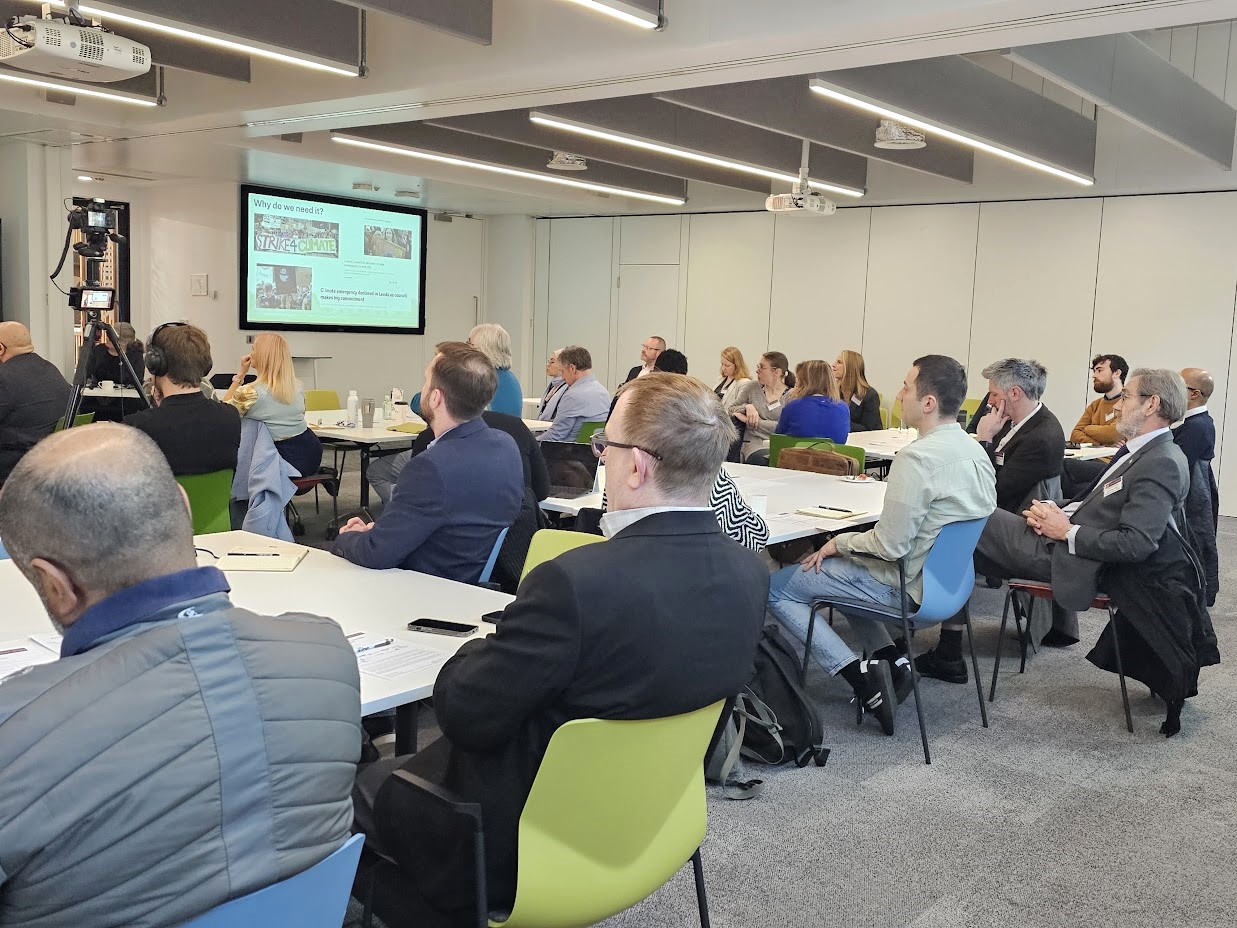
- Innovation needs collaboration; Local agencies need to innovate and adapt but are capacity and resource strapped; Flood risk is the biggest climate risk for Leeds; Climate Emergency was declared in Leeds in March 2019, with big council commitment; Youth strikes;
- Where did it begin?
- Flood and Coastal Resilience Innovation Programme > Yorkshire Regional Flood & Coastal Committee > WYFLIP;
- Collaborative foundation of the roadmap;
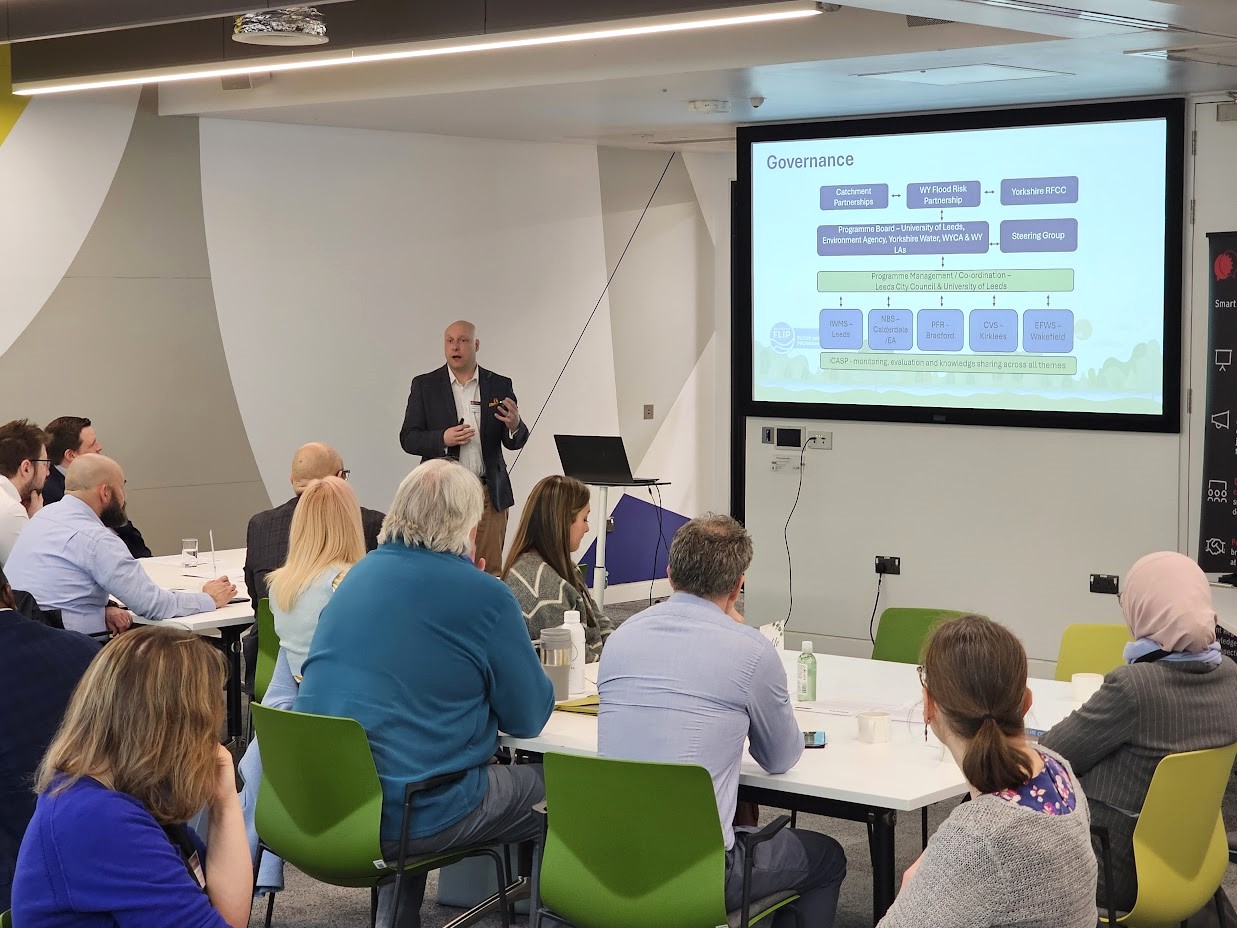
- Governance…
- The programme is directed by a programme board and steering group, and the day to day management and running of the programme is led by Leeds City Council and iCASP;
- All West Yorkshire local authorities have a key delivery role, each leading a theme of the programme;
- iCASP provides monitoring and evaluation support, ensuring the latest science is integrated into the programme and knowledge is being exchanged;
- Sustainable model of governance;
- What do we get up to?
- Scoping opportunities; Developing projects; Developing relationships and making connections; Overcoming initial challenges – Awareness, Engagement, Embedding ways of working, Acceptance;
- WYFLIP timeline 2023/4-2026 and beyond – Active projects; Under review; Under development;
- Successful funding total to March 2025 = £1,310,000; Funding sources – Local levy, UKSPF, Impact Acceleration Account, Research England, Digital Discovery;
- WYFLIP What’s New?
- New funding secured from YRFCC for trailblazing projects to improve Mental Health of people at high risk of flooding;
- Developing Meanwood Valley Urban Farm as a demonstrator site for Sustainable Drainage Systems (SuDS) after a successful stakeholder workshop;
- Applying for funding to make Yorkshire Sports Pitches more resilient – Very active working group;
- Blue Green Infrastructure Training Programme – Moving onto training phase after skills audit;
- Property Flood Resilience – More surveys planned to protect residents and businesses;
- Digital Smart Flood Warning System (LoRaWAN) – Successful in obtaining funding for next phase;
- Accelerator – 6 Work Packages nearly complete, including Green Social Prescribing;
- What key challenges might a WYFLIP-style partnership address?
- Energy production; Integrated water management; Innovations; Sewage in freshwater; INNS; Extreme weather; Moorland fires; Sustainable transport; Integration; Engagement; Shared goals; Water quality; NBS programmes; Risk communication; Smart (city) digital; Water resources; Mass transit; Interoperability; Social prescribing; Funding; Inertia; Investment programme priorities; Fire etc;
- What next for WYFLIP or others?
- 1) Enhance Cross-Sector Collaboration – Strengthen partnerships between academia, industry, and local government
- 2) Develop Smart Resilience Strategies – Implement data-driven approaches to flood prediction and response
- 3) Empower Communities – Create accessible educational programs and funding opportunities for total resilience initiatives
- 4) Secure Long-Term Funding – Explore blended finance models to sustain resilience efforts over time
- If you have any questions about the programme, project ideas, or would like to get involved – email wyflip@leeds.ac.uk or iCASP@Leeds.ac.uk
If you meet our regular delegate qualification criteria but were unable to join us at Nexus Leeds for the live in-person event on April 2nd, CLICK HERE and complete the short “Download form” (located at the bottom of the post) to receive a unique link enabling free access to the presentation video recordings and slides (including the film footage and slides from Jonathan’s keynote).
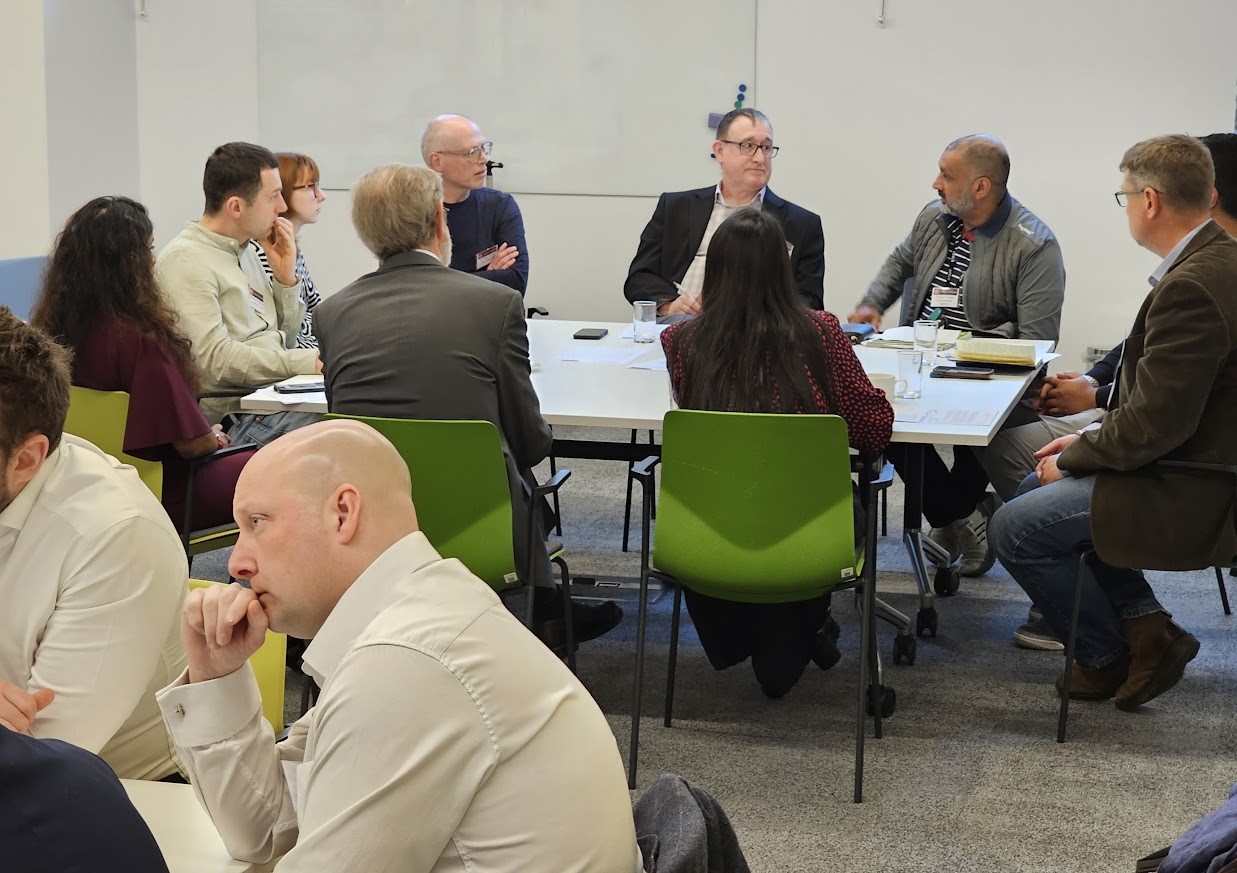
Those qualifying to receive the rich presentation content from this event include commissioning, procurement, innovation, trialling and partnering leads, senior influencers, strategic decision makers, environmental managers, policy makers and planners from UK water companies and utilities, wastewater and sewer operators, lead local flood authorities (unitary authorities and county councils), city/borough/metropolitan councils, district councils, combined authorities, internal drainage boards, regional flood & coastal committees, highways authorities, prime contractors, general insurers, large water consumers, national agencies, central governmental and regulatory bodies (e.g. Defra, DCLG, Ofwat, Environment Agency, DWI, SEPA), independent industry and consumer organisations (e.g. Water UK, CCW), river trusts, NGOs etc.