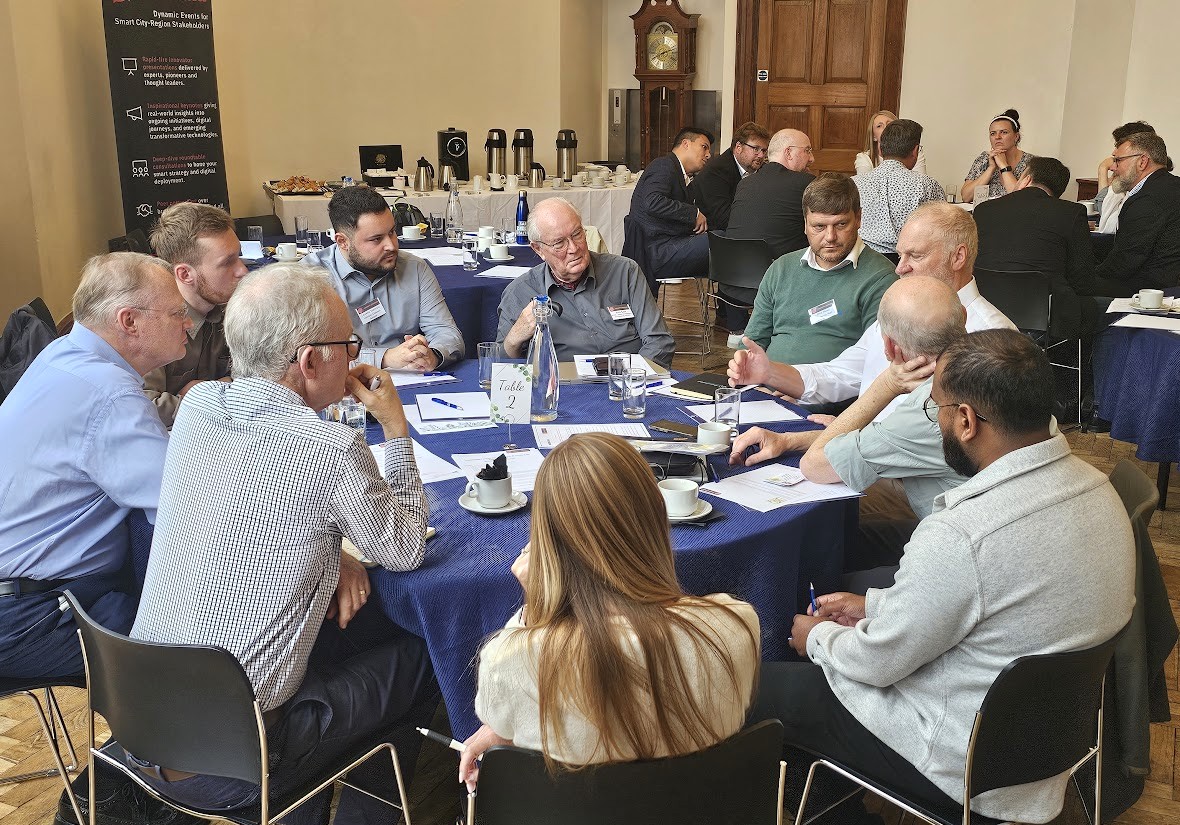
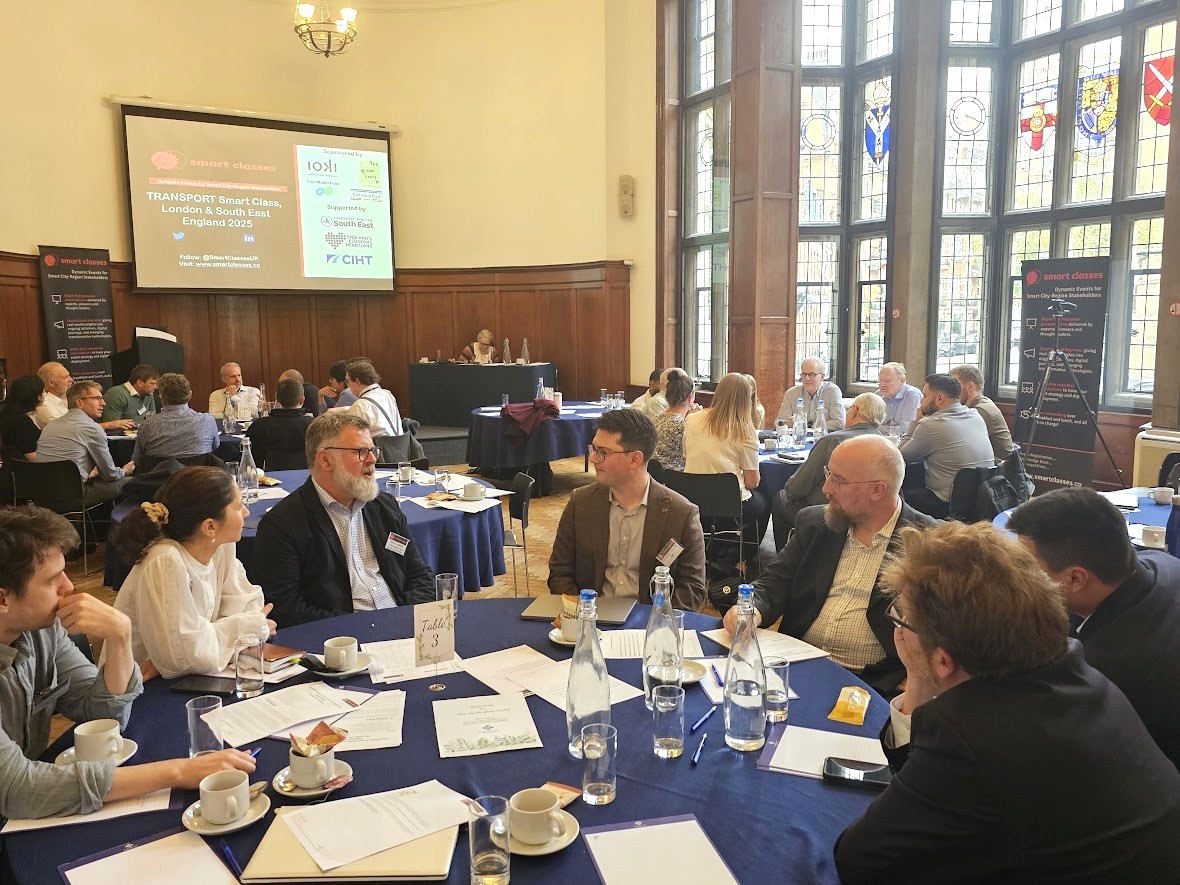
On October 9th we travelled to Westminster to host TRANSPORT Smart Class, London & South East England 2025 at The Wellington Hotel by Blue Orchid, located on leafy Vincent Square. This Smart Class provided a fresh take on deploying the latest digital technology-enabled solutions, data-driven strategies, policies, programmes and best practices to tackle transport and mobility challenges faced by London, its hinterland, burgeoning smart city-regions of the South East and East Anglia, and beyond, and deliver a transport system that will allow passengers and citizens to travel efficiently, safely and with minimal impact on the environment.
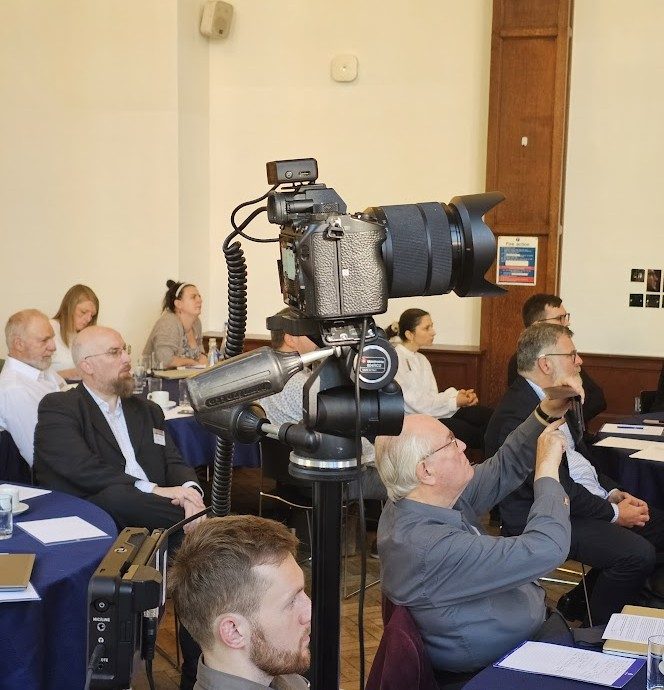
Our film maker captured the keynotes and innovator presentations for additional stakeholders to enjoy post-event!
If you satisfy our regular delegate qualification criteria but were unable to join us on the day, just complete the short application form below and we’ll grant you free access to the presentation video recordings and slides.

Our inspirational keynote speakers included: Mark Valleley, Head of Strategy at Transport for the South East (TfSE); England’s Economic Heartland’s (EEH) Head of Decarbonisation and Innovation, James Golding-Graham, alongside Integration Project Lead, James West; and Sara Zuin, Senior Policy Advisor at the Chartered Institution of Highways & Transportation (CIHT).
The Smart Class also featured insightful innovator thought leadership presentations, delivered by: Christoph Tellkamp (Sales & Business Development Manager) from ioki – a Deutsche Bahn company; Inter Modal Flow’s Steve Evans (Director); and on behalf of Living Streets, Joanne Page and Zoë Lynch (Project Coordinators).
The innovators expert teams subsequently hosted confidential, deeper dive, roundtable sessions with all delegates in attendance. Steve was accompanied by Phil Read, CEO of Varamis Rail, an IMF field trials partner.
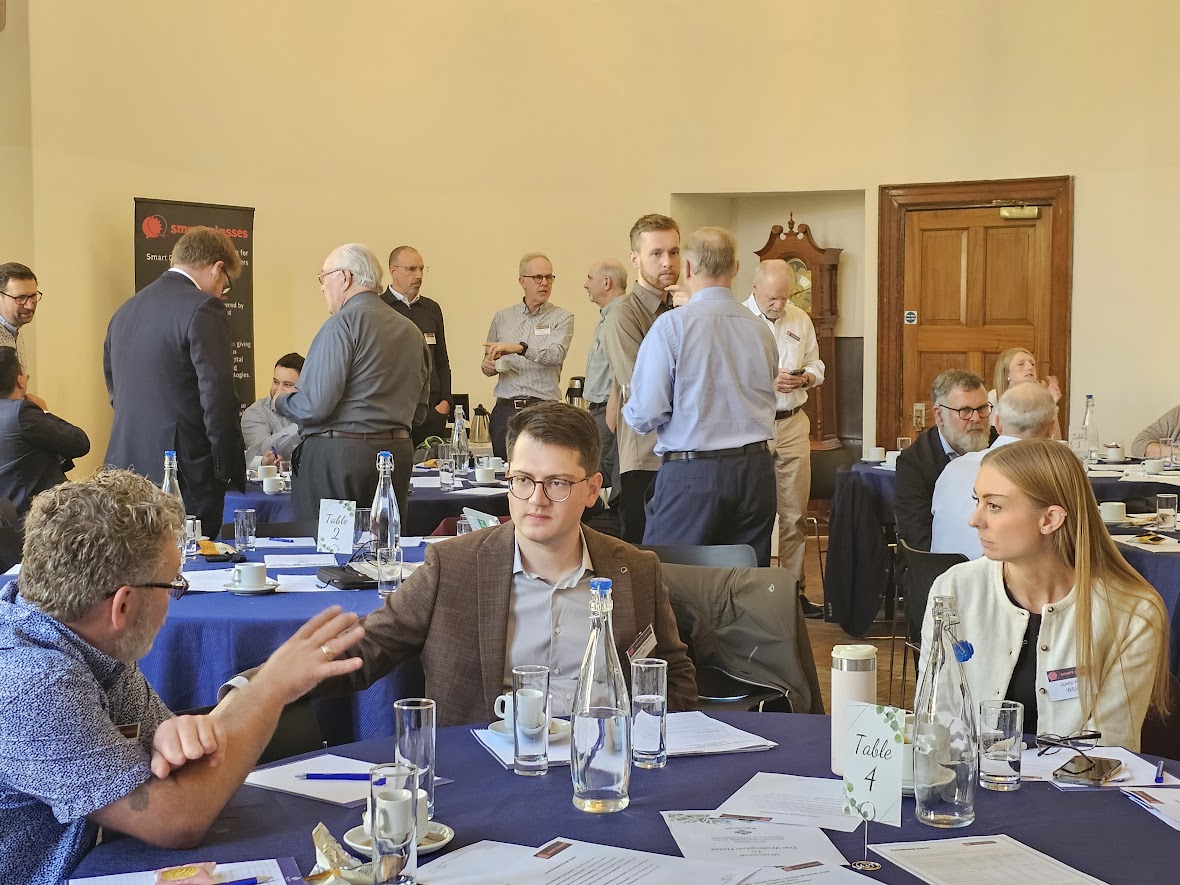
The live (in-person only) event also included thought provoking Q&As and further networking opportunities over breakfast, drinks and a cooked lunch.
Noteworthy contributions to all these discussions were made by influencers and decision makers from the likes of: Association of Transport Co-ordinating Officers (ATCO), Brighton & Hove City Council, Bus Rapid Transit UK, Camden Council/London Borough of Camden, Chartered Institution of Highways & Transportation (CIHT), Community Works – Brighton & Hove Transport & Travel Partnership, Dartford Borough Council, Eagle Nine, England’s Economic Heartland (EEH), Great Western Railway (GWR), Hackney Council/London Borough of Hackney, ioki – a DB company, Inter Modal Flow, Living Streets, London Gatwick Airport, MM Transport Planning, Mott MacDonald, National Transport Authority (NTA), Serenova Projects, SLJ Consultants, Thames Gateway Tramlink/KenEx Tram, Tootbus – part of RATP Group, Tower Transit Group – part of the Kelsian Group, Transport Focus, Transport for London (TfL), Transport for the South East (TfSE), Transport Initiatives, Transport Planning Society, Varamis Rail, Walk Wheel Cycle Trust (Sustrans), Waterman Group, Wokingham Borough Council, WSP, and more!
Presentations included:
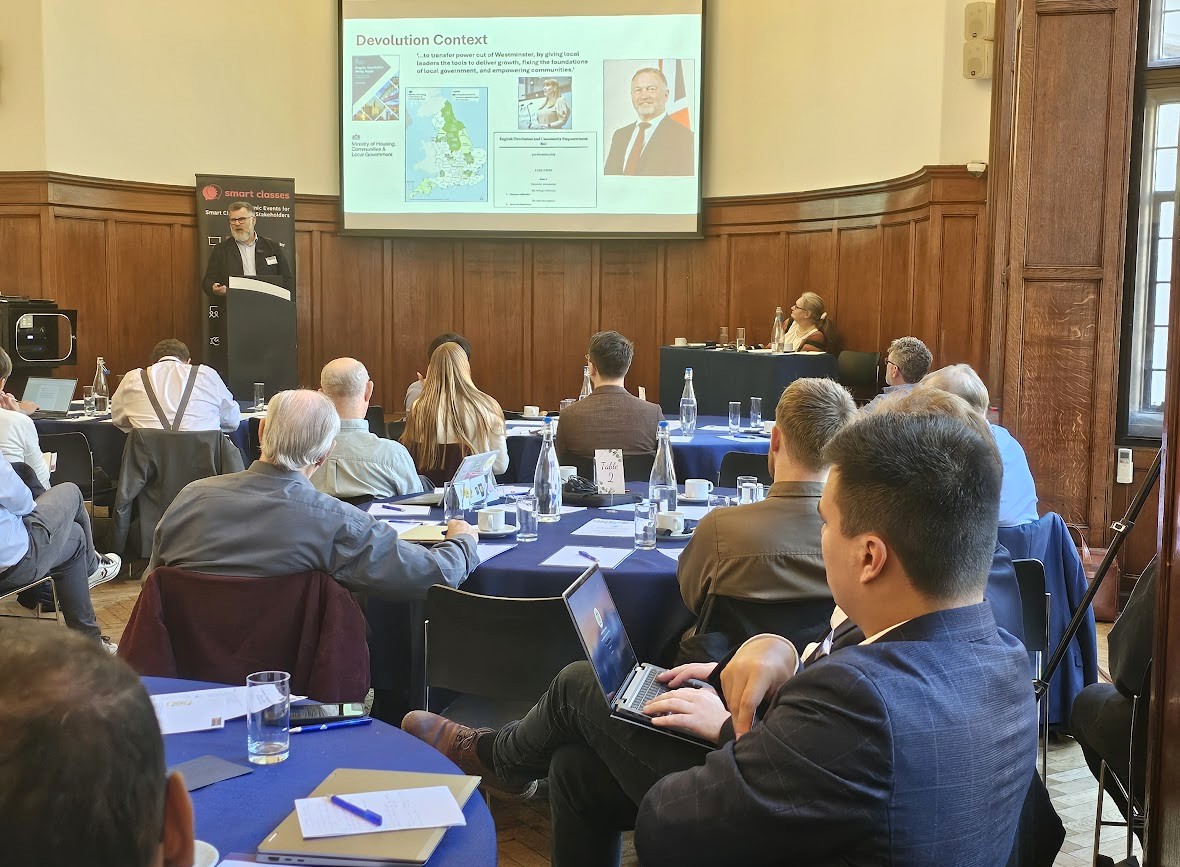
Shifting Powers, Changing Journeys: What Devolution Means for Local Transport and the Management of Bus Services – Devolution and local government reorganisation have shifted responsibility for transport policy and delivery closer to local areas, giving councils and combined authorities greater influence over planning, funding, and service design.
Transport for the South East is the Sub-national Transport Body for the South East of England, covering the six Berkshire authorities, Kent, Medway, Hampshire, the Isle of Wight, Portsmouth, Southampton, Surrey, East Sussex, West Sussex and Brighton & Hove. Mark Valleley is Transport for the South East’s Head of Strategy and has overall responsibility for a number of areas of the technical work programme including the development of TfSE’s transport strategy and their work on freight and logistics, active travel, decarbonisation, future mobility and electric vehicle charging infrastructure.
With the South East primed to welcome the introduction of two new strategic combined mayoral authorities in Sussex and Hampshire, Mark outlined some of these changes and assessed their impacts on both transport users and policy makers.
Drawing on work recently undertaken for TfSE about devolution’s impact on how local transport authorities manage bus service provision in their area, key themes covered in this opening keynote included changes to governance structures, the balance of responsibilities between different tiers of government, and the opportunities for improvements to the way in which bus services are managed.
Smarter Public Transport: Digital Tools for Efficient Operations and Better Services – Christoph Tellkamp is an expert in digital mobility and urban development, particularly in relation to the digitalisation of bus operations. He has supported several communities, especially in the British and Irish markets, to implement innovative projects that promote the use of digital technologies to improve the efficiency and range of services offered by public transport.
In this presentation on behalf of ioki (an independent company of Deutsche Bahn AG), Christoph explored how digital technologies can help transport authorities and operators address today’s pressing challenges, from rising operational costs to workforce shortages. Through concrete examples, he demonstrated how smart route management reduces training time for new drivers and improves service reliability.
Christoph also discussed how digital platforms can streamline daily operations, optimise resources, and support better decision-making. Looking ahead, he examined opportunities such as autonomous ride-pooling and their role in creating more flexible, sustainable networks. Attendees gained practical insights into how digital solutions can deliver efficiency for operators while improving passenger experience and ensuring better value for communities.
The Power of Integration – Why Think Pan-Regionally? – Government’s development of the Integrated National Transport Strategy (INTS) is an exciting opportunity to put people at the centre of transport policy in a way which is ambitious and innovative. Integration of systems, modes, data and joined-up decision making are all key to ensuring journeys across the transport network are easy, reliable and convenient.
England’s Economic Heartland is the Sub-national Transport Body for the region stretching from Swindon and Oxfordshire across to Hertfordshire and Cambridgeshire. With DfT’s publication of the INTS forthcoming, EEH’s James Golding-Graham (Head of Decarbonisation and Innovation) and James West (Project Lead, Integration) explained in this keynote presentation, why – “for a polycentric, largely rural region like EEH” – a regional approach to delivering integrated transport solutions, whilst tricky, is strategically imperative to meeting the needs of their local communities. For example, as part of their response to the INTS ‘call for ideas’ EEH outlined that it is vital that major infrastructure projects, including key schemes in the region such as East West Rail, have integration and ‘door to door’ solutions built in from the beginning of the project.
James and James then moved on to some of the more practical approaches/solutions and opportunities they are working on delivering for the region. EEH’s work has integration embedded across its entire approach. They are already undertaking technical activities that address or accelerate specific integration opportunities. This, for example, includes their work on mobility hubs which considers how modes (public transport, active travel, and shared mobility) can be integrated at points of interchange.
Inter Modal Logistics – Unlocking Urban Deliveries through Containerisation – Freight is one of the biggest sources of urban emissions. Today, only around 10% of urban deliveries are made by cargo bike — but with containerisation, the potential rises to 50%.
Pre-packed units can transfer seamlessly from rail into city centres, cutting out vans and depots while scaling capacity. Steve Evans, Director of Inter Modal Flow, explored in this presentation how this model can transform zero-emission logistics across UK cities.
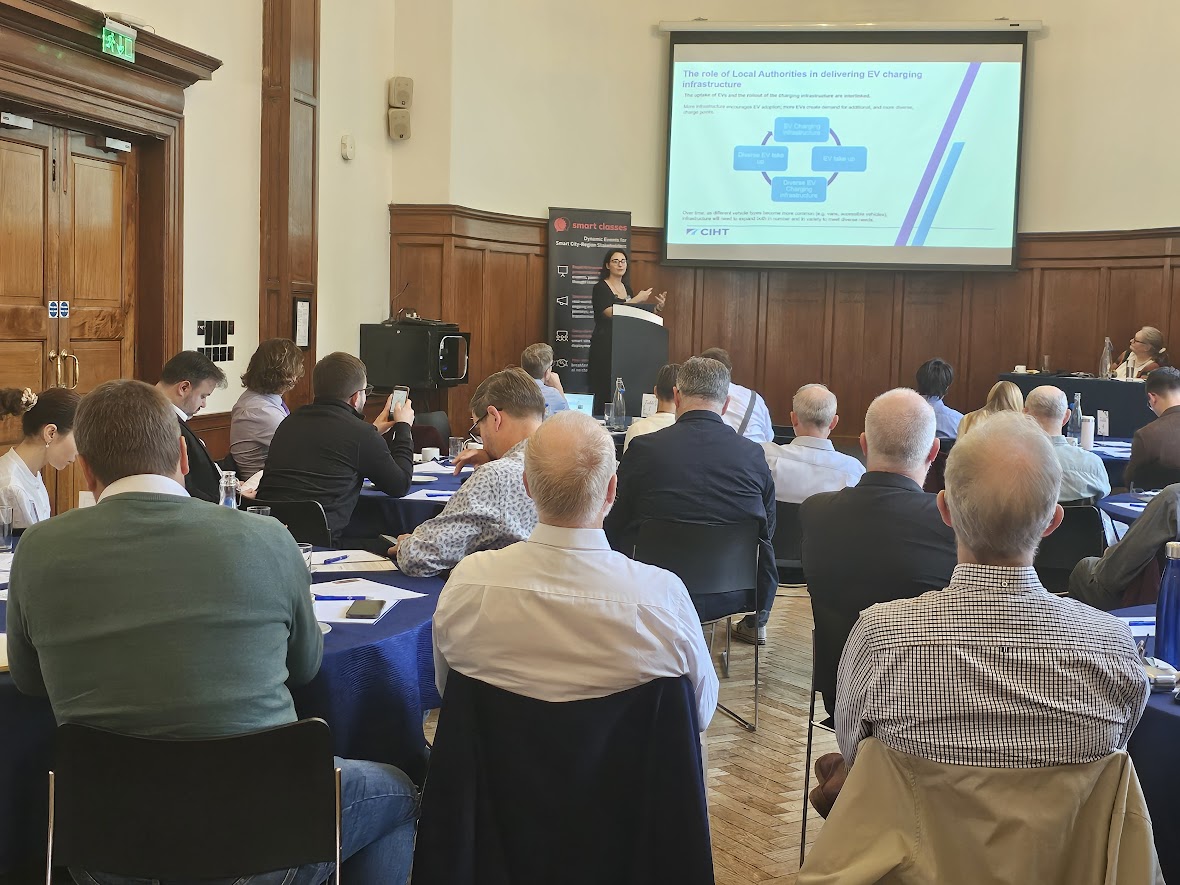
Rolling out the Electric Charging Infrastructure – Advice for Local Authorities – This keynote on behalf of the Chartered Institution of Highways & Transportation focused on their recent report, “Rolling out the Electric Charging Infrastructure – advice for local authorities”.
Sara Zuin (Senior Policy Advisor at CIHT) addressed:
- How Local authorities have a central role in shaping the roll out of the charging infrastructure, stimulate private investments and ensure accessibility for all
- A series of principles and guidelines for local authorities to consider when rolling out their public charging infrastructure
- Key issues to be considered in site selection, implementation and post implementation of charging points
Powering Positive Change: Supporting Sustainable Transport Goals through WOW – The Year Round Walk to School Challenge – Joanne Page and Zoë Lynch are Project Coordinators working in Essex for Living Streets, the innovative UK charity for everyday walking.
In this presentation Jo and Zoë demonstrated how engagement and digital technology are helping to deliver behaviour change and climate action in Essex.
Working with local authority and transport partners, WOW – with the award-winning interactive Travel Tracker – is making a positive impact with communities across the county to help achieve modal shift from cars to active journeys.
Those qualifying to receive the presentation videos and rich media content from this event include commissioning, procurement, trialling, partnering and policy leads, senior influencers, strategic decision makers, programme managers and planners from local authorities (e.g. city, borough, metropolitan, district and county councils); public transport operators; regional transport partnerships, sub-regional transport bodies, combined authorities, integrated transport authorities and passenger transport executives; highways authorities and road operators; government and supporting national transport agencies; non-governmental organisations; fleet operators, parking operators, prime contractors etc.
Register your details via the “Download form” below to receive a unique link enabling complimentary access!