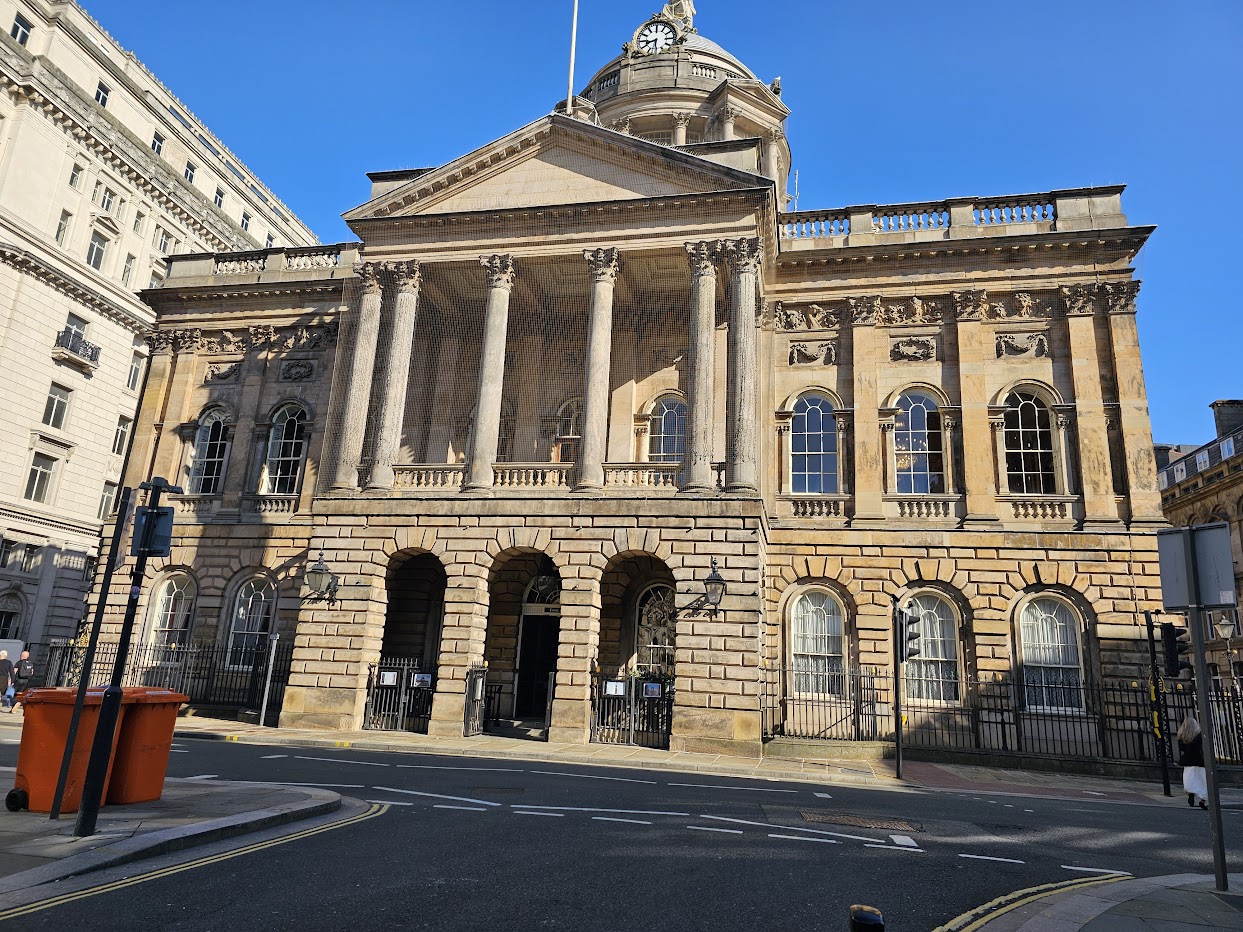
On July 3rd we hosted TRANSPORT Smart Class, North of England 2025 at beautiful Liverpool Town Hall. This Smart Class provided a fresh take on deploying the latest digital technology-enabled solutions, data-driven strategies, policies, programmes and best practices to tackle transport and mobility challenges faced by city-regions of the Northern Powerhouse, and beyond, and deliver a transport system that will allow passengers and citizens across the North to travel efficiently, safely and with minimal impact on the environment.
Our film maker captured the keynotes and innovator presentations for additional stakeholders to enjoy post-event!
If you satisfy our regular delegate qualification criteria but were unable to join us on the day, just complete the short application form below and we’ll grant you free access to the presentation video recordings and slides.
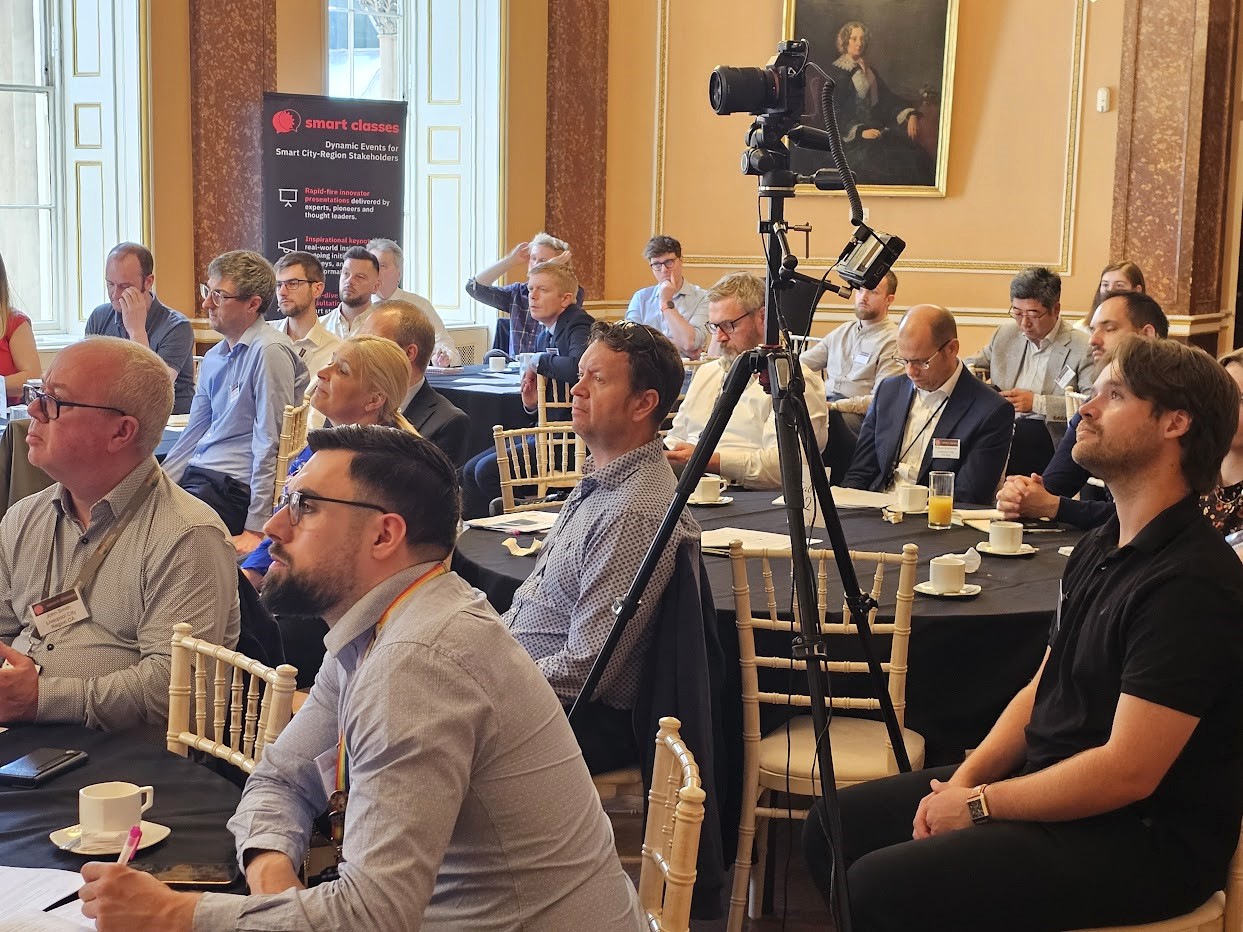
Our inspirational keynote speakers included: Andrew Mollon, Director of Sustainable Transport, Highways and Parking at Liverpool City Council; Simon Finnie, Head of Network Performance for Liverpool City Region Combined Authority (LCRCA); Peter Cole, Head of Policy, Strategy and Research at Transport for the North (TfN); and Katherine Bavage, Policy Manager for the West Yorkshire Combined Authority’s (WYCA) Mass Transit Programme.
The Smart Class also featured insightful innovator thought leadership presentations, delivered by: Chris Harrison (Regional Director) from Project Centre, part of Marston Holdings; Siemens Mobility’s Mario Gessner (Sales Director – MaaS) and Padam Mobility’s James West (UK Business Development Lead); and on behalf of Sustrans, Jonah Morris (Growth and Partnerships Manager – England North), Alix Gunn (Principal Urban Designer) and Carol Latham (Senior Project Manager – Connected Neighbourhoods).
The innovators expert teams subsequently hosted confidential, deeper dive, roundtable sessions with all delegates in attendance.
The live (in-person only) event also included thought provoking Q&As and further networking opportunities over breakfast, drinks and a cooked lunch.
Noteworthy contributions to all these discussions were made by influencers and decision makers from the likes of: Birmingham Airport, Cheshire West and Chester Council, First Bus, Lancashire County Council, Liverpool City Council, The Liverpool City Region Combined Authority (LCRCA), Liverpool John Moores University, Mott MacDonald, Merseytravel, National Express Bus, Padam Mobility, Project Centre, Rotherham Metropolitan Borough Council, Siemens Mobility, SNC-Lavalin Atkins Transport Planning, Stockport Metropolitan Borough Council, Stoke-on-Trent City Council, Sustrans, Transport for Greater Manchester (TfGM), Transport for the North (TfN), Transport for West Midlands (TfWM), The West of England Mayoral Combined Authority, The West Yorkshire Combined Authority (WYCA), WSP, and more!

Topic highlights included:
- Making Liverpool a ‘Net Zero City’ by 2030;
- Transport’s contribution to Liverpool’s emissions and carbon footprint;
- ADEPT Live Labs 2 – Local authority led (DfT funded) projects to decarbonise local highways infrastructure and assets;
- Importance of carbon management and key pillars of decarbonisation;
- Liverpool core collaboration and Liverpool City Council’s ‘Ecosystem of Things’ – A scalable and transferrable systems mapping and optioneering approach at city-level to introduce innovations offering the greatest impacts within individual schemes;
- Liverpool Live Labs 2 highlights – Procurement tool kit, trialling lower carbon alternative materials using PF configurator, trialling alternative plant and equipment, carbon analysis, light emitting marking, solar roads etc;
- Decarbonising Liverpool roads – Challenges and reasons for optimism;
- How can local authorities and transport consultants harness data, digital innovation, and people-centred design to create smarter street corridors that prioritise bus services, improve air quality, and support active, inclusive travel?
- How can technology be integrated into design strategies to enhance road safety, enable digital enforcement for better traffic flow and compliance, and incorporate air quality as a key factor in route planning and mode choice?
- Kerbside pressures (bus lanes, cycle lanes, crossing points, SuDs, parking), dynamic kerbsides and kerbside management strategies;
- Bus priority case study – Prince Regent Lane, Newham;
- Air quality monitoring case study – Coulgate Street, Lewisham;
- Testing the feasibility of adopting an adaptive lighting policy;
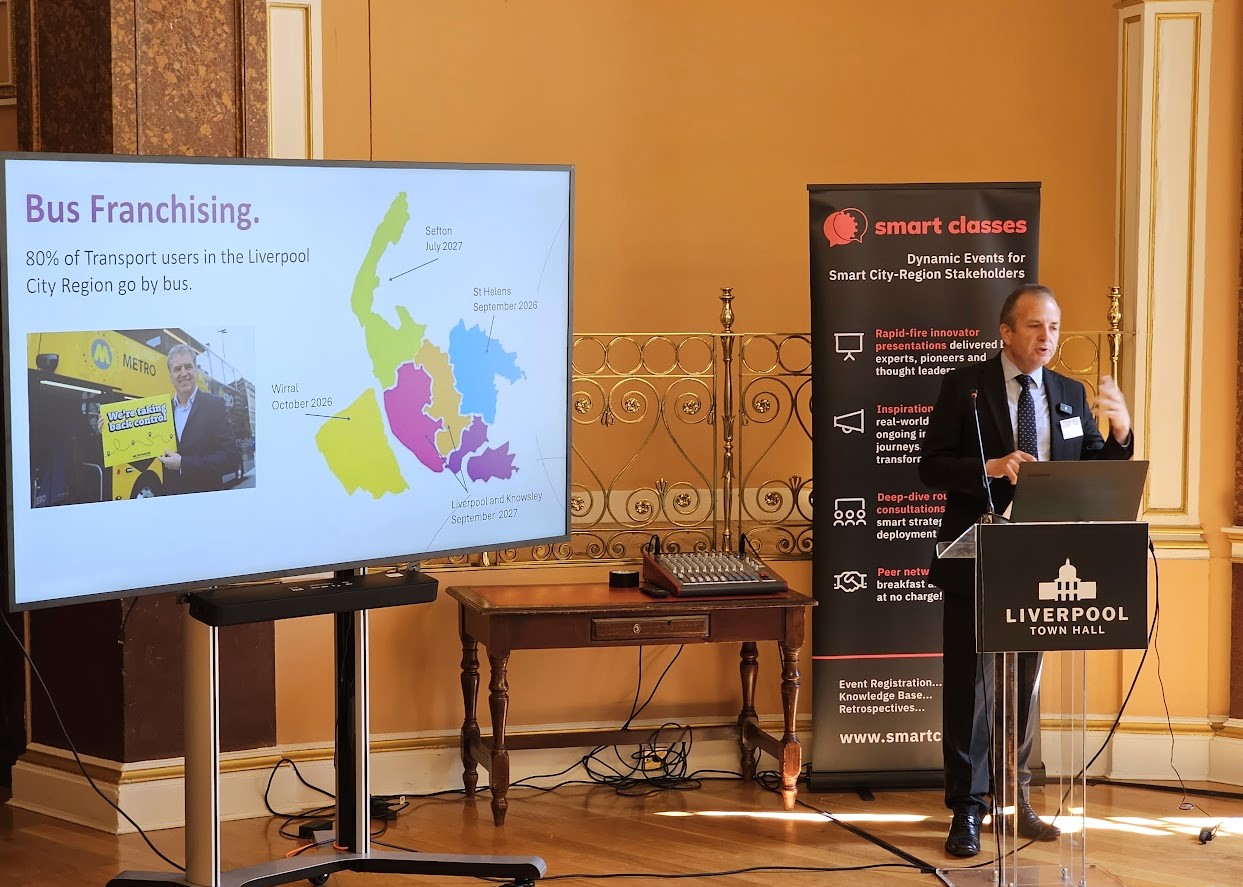
- Delivering Mayor Steve Rotherham’s plans for a fully integrated, London-style public transport network that is faster, cheaper, cleaner and better connected, and drives growth and opportunity for the Liverpool City Region;
- Reaching new communities – Revolutionary battery trains that permit network extension;
- Bus franchising for Liverpool, Knowsley, Sefton, St Helens and Wirral;
- A data driven approach to managing and powering Merseytravel and the LCR network – Integrated ticketing, network performance management, contract management system/revenue and passenger trends, on-board customer information, centralised digital control centre, ASDO, IPEMU, rolling stock passenger count system, tracking scheduled mileage in real time etc;
- How does the introduction of the Integrated National Transport Strategy provide the UK with an opportunity to embrace a more ‘European’ approach to transport?
- Enabling regional control over demand responsive transport (DRT) and bus networks to improve access for residents;
- The case for regional MaaS – Addressing UK mobility challenges;
- Key enablers for success – Collaboration & partnership, open ecosystems & data sharing, supportive policy & regulation, long-term vision & commitment;
- Regional MaaS in practice – The Renfe Spain example;
- Shifting the focus from competition between providers to delivering convenient, integrated journey offerings tailored to regional needs;
- Pilot schemes to explore models for rural bus franchising;
- Service configurations – Zonal configurations, fixed line and virtual line;
- Addressing integration on a national level – Public transport, CT/dial-a-ride, health transport, school transport, private funding;
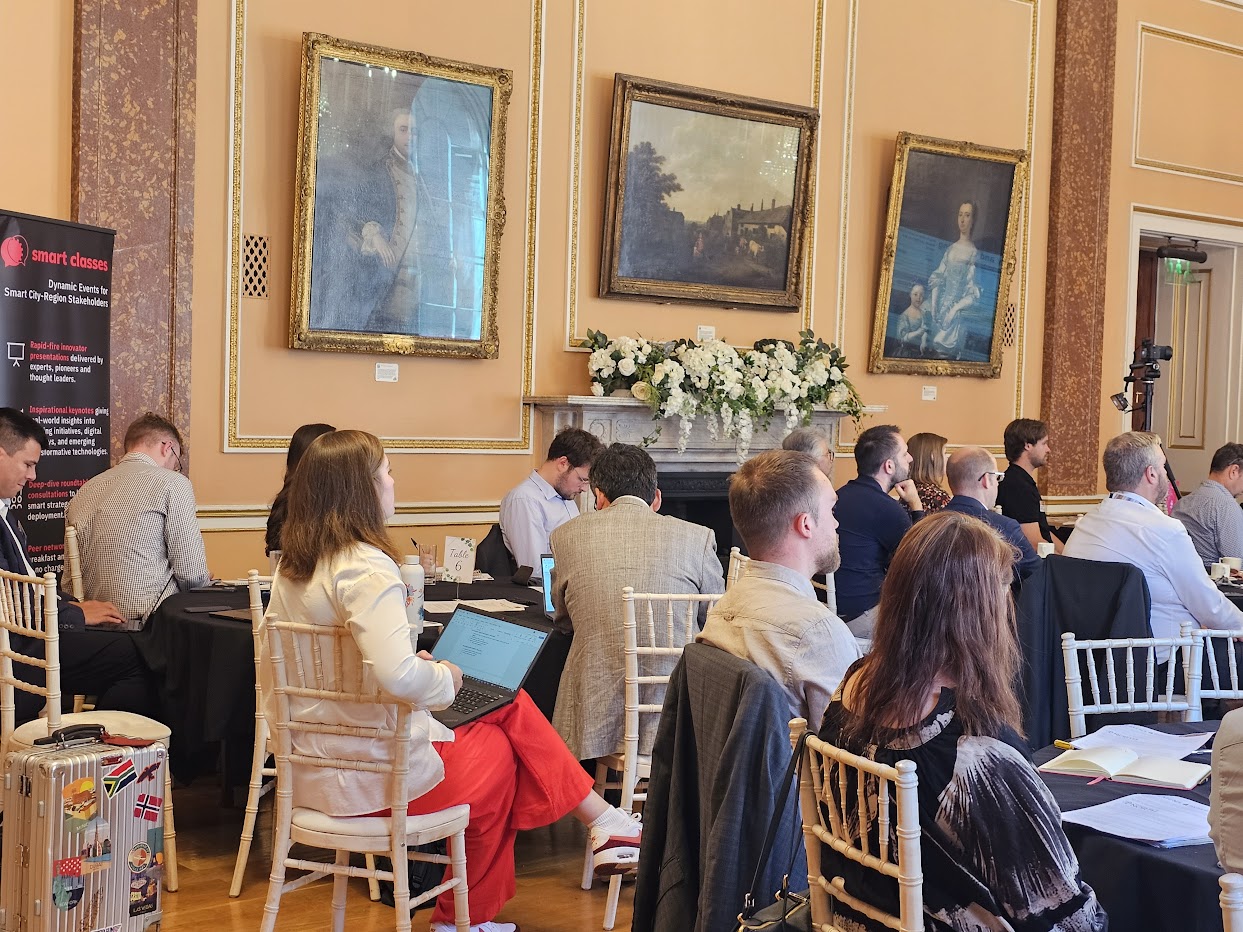
- Transport for the North’s Strategic Transport Plan – Setting out the region’s shared pan-regional transport ambitions and policy priorities;
- Operationalising the evidence and data underpinning TfN’s STP to help local partners to achieve the shared transport ambitions and objectives – Advocacy, convening and technical support;
- Transport issues that limit full and meaningful participation in society;
- Supporting local prioritisation: Investing for social inclusion – Cheshire West and Chester DRT service expansion;
- Northern Appraisal Playbook (NAP) – Strengthening business cases in the North;
- TfN’s climate change vulnerability assessment of their strategic transport network;
- TfN carbon tools and their adoption by all of the STBs;
- Evaluating progress – STP monitoring and evaluation dashboard;
- Sustrans’ new strategy and strategic priorities: The National Cycle Network and “connected neighbourhoods” priorities – Safer school neighbourhoods and active journeys, better connected new developments, and integrated active and public transport;
- What is the Walking and Cycling Index?
- Key messages from the bespoke Children’s Index and the focus on schools;
- What is a school neighbourhood and why can these projects use the school journey as an entry point for neighbourhood-wide walkability improvements?
- Initiatives which marry school-based travel behaviour change with urban design and public realm improvements;
- Working in partnership with local authorities to reflect school and community issues and priorities;
- North Park School Neighbourhood case study – A child centred approach to journey mapping, behaviour change and design;

- The West Yorkshire context and transport infrastructure – Bradford, Leeds, Calderdale, Kirklees and Wakefield;
- What is West Yorkshire mass transit and how can trams be transformational?
- Phase one route options – Leeds and Bradford tram lines;
- How is the West Yorkshire Combined Authority planning to strategically integrate placemaking, housing, and regeneration into the case for a regional mass transit system?
- WYCA’s vision for stops and stations to become focal points of community activity which celebrate built and natural environment;
- Local growth plan ‘Corridors of Opportunity’ for West Yorkshire – Maximising agglomeration benefits by connecting major urban centres and areas of economic strength;
- Leveraging recent changes to the Green Book and appraisal processes to unlock long-term economic and social value for West Yorkshire
Those qualifying to receive the presentation videos and rich media content from this event include commissioning, procurement, trialling, partnering and policy leads, senior influencers, strategic decision makers, programme managers and planners from local authorities (e.g. city, borough, metropolitan, district and county councils); public transport operators; regional transport partnerships, sub-regional transport bodies, combined authorities, integrated transport authorities and passenger transport executives; highways authorities and road operators; government and supporting national transport agencies; non-governmental organisations; fleet operators, parking operators, prime contractors etc.
Register your details via the “Download form” below to receive a unique link enabling complimentary access!