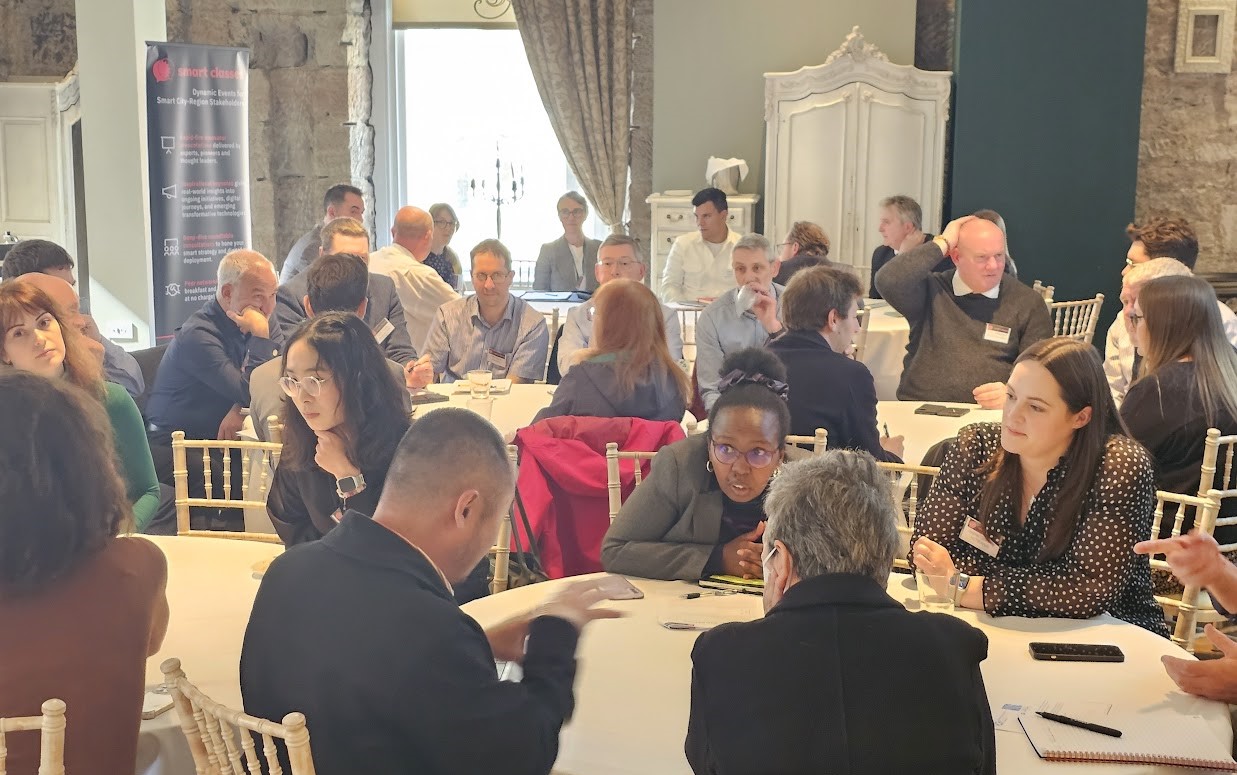
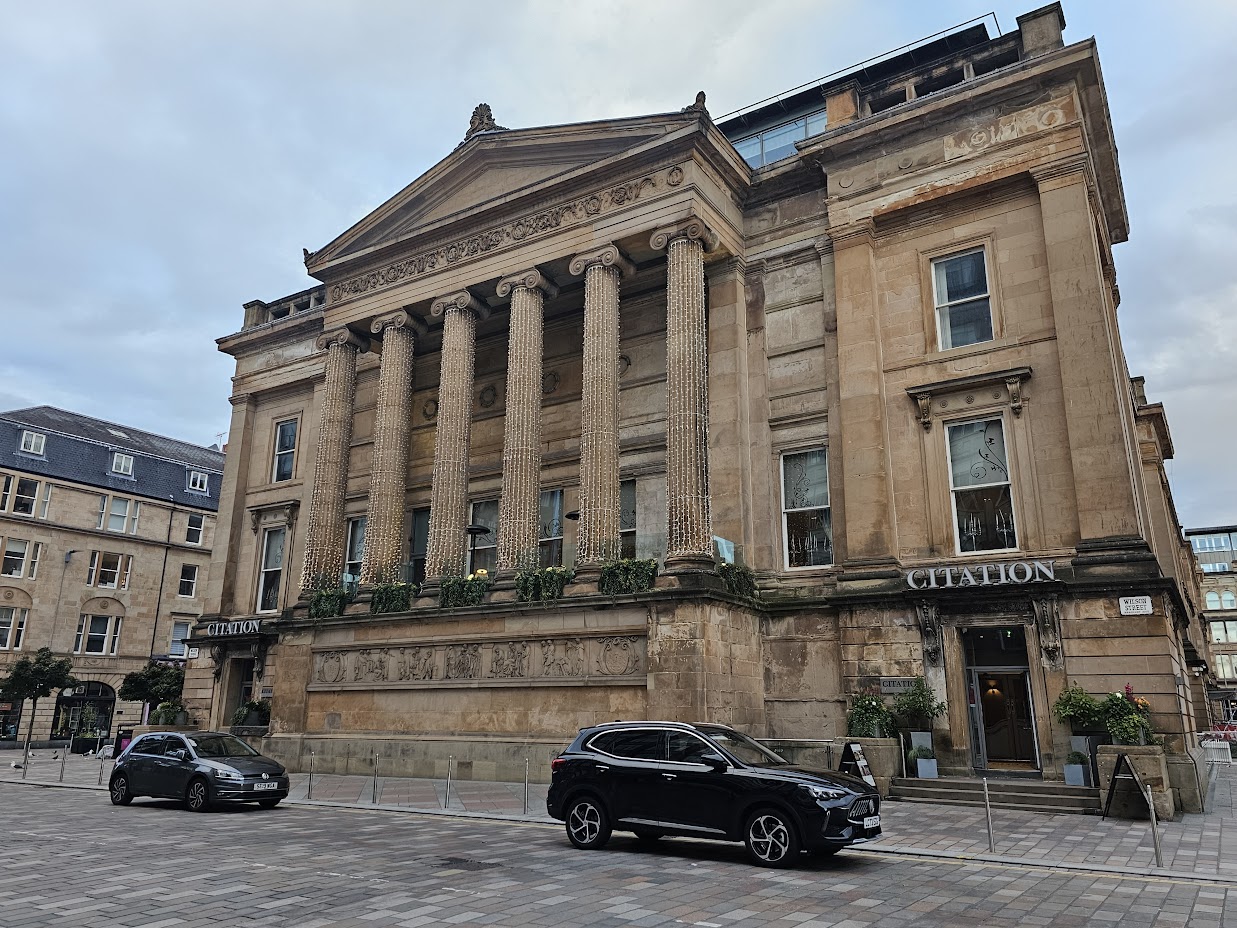
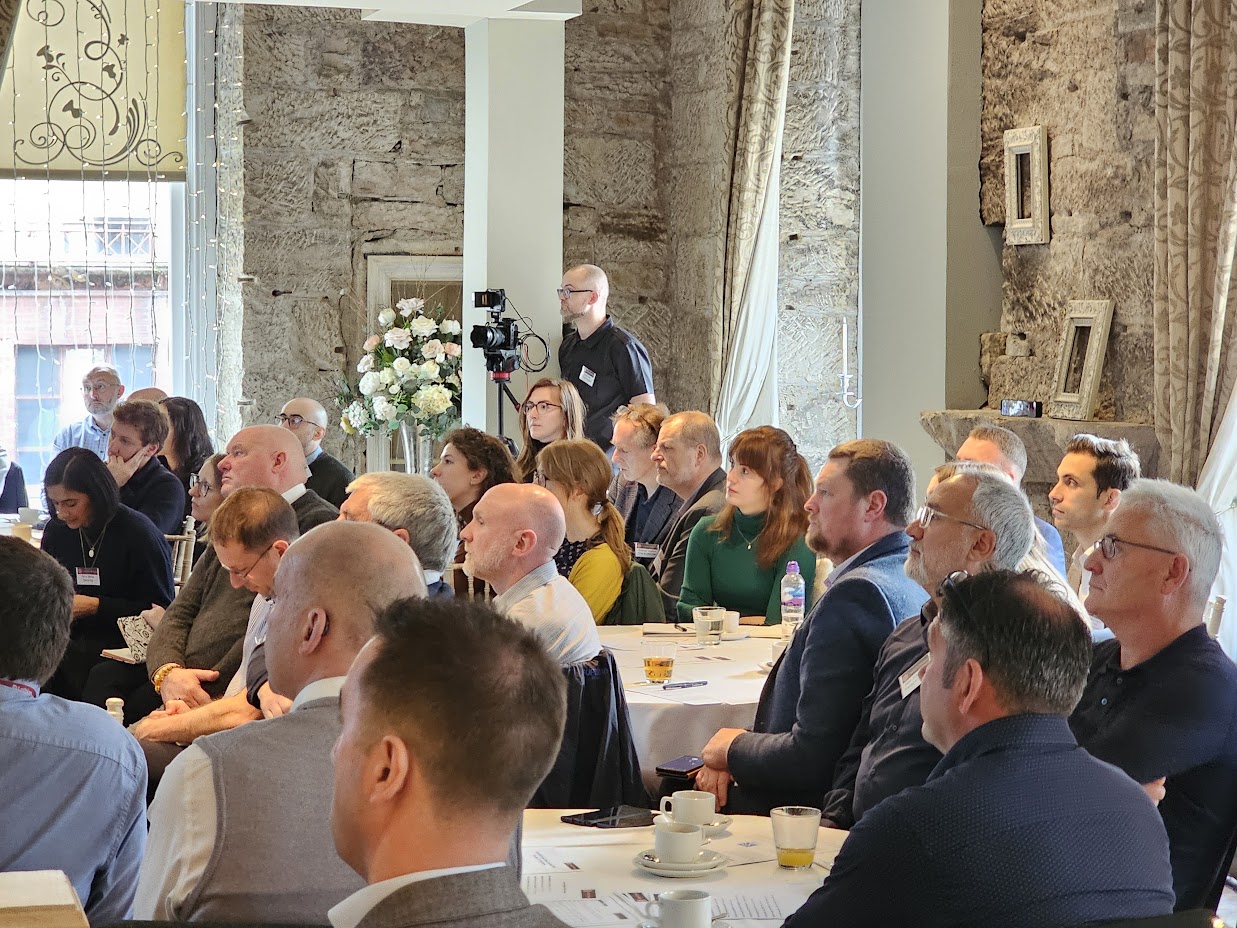
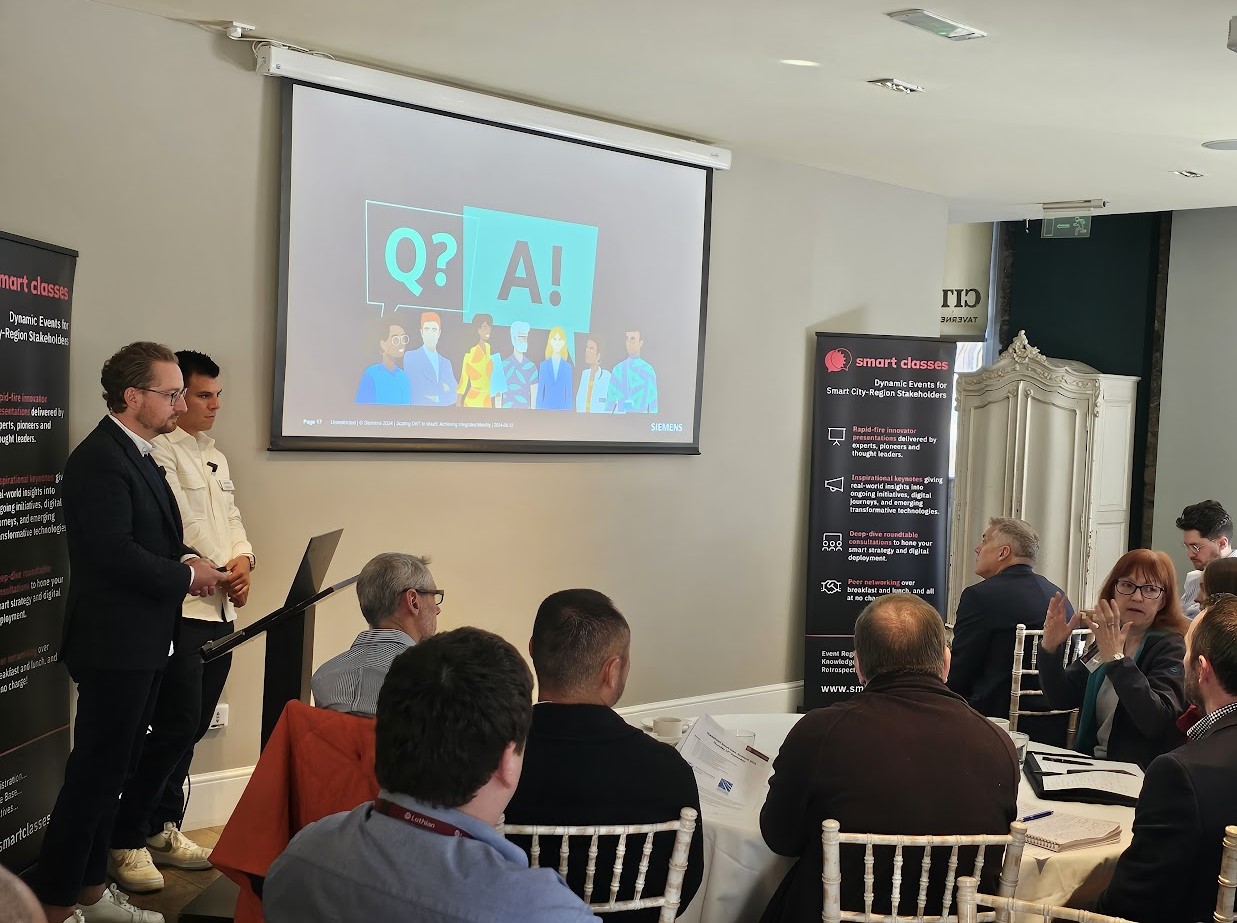
On September 12th we hosted TRANSPORT Smart Class, Scotland 2024 at Citation, Glasgow. This Smart Class provided a fresh take on how to deploy the latest digital technology-enabled solutions, data-driven strategies, policies and best practices to tackle transport and mobility challenges faced by the city-regions of Glasgow & Clyde Valley, Edinburgh & South East Scotland, Stirling, Tay, Aberdeen, Inverness & Highlands, and beyond, and deliver a transport system that will allow passengers and citizens across Scotland to travel efficiently, safely and with minimal impact on the environment.
As usual, our videographer captured the keynotes and innovator presentations on film for additional stakeholders to enjoy post-event!
If you meet our regular delegate qualification criteria but were unable to join us on the day, just complete the “Download form” at the bottom of this page and we’ll give you complimentary access to the presentation video recordings and slides.
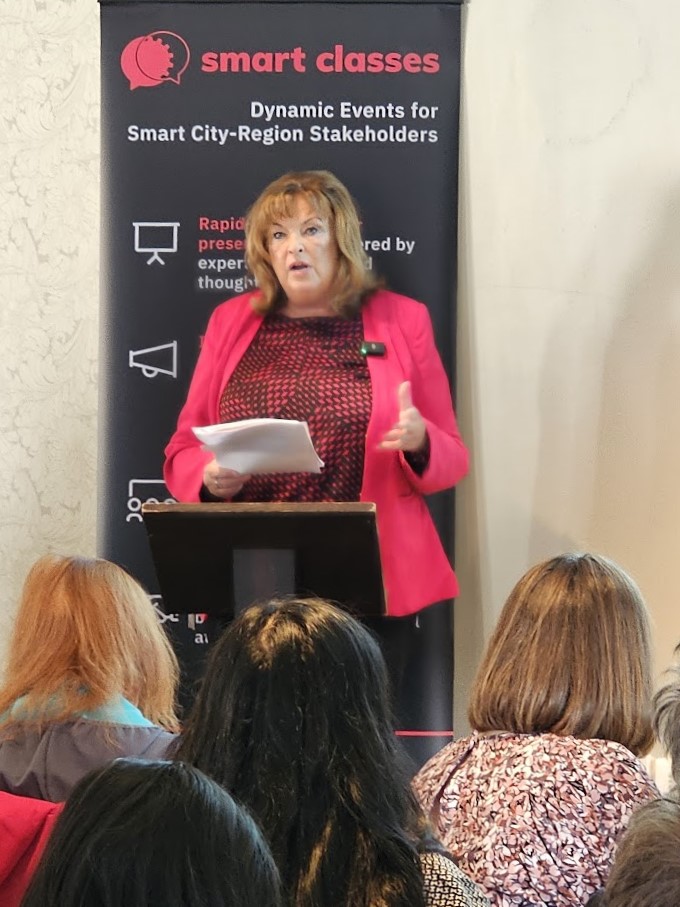
Our inspirational speakers included: Fiona Hyslop MSP/BPA, the Scottish Government’s Cabinet Secretary for Transport/Rùnaire a’ Chaibineit airson Còmhdhail; Glasgow City Council’s Data and Innovation Manager, Stephen Sprott, alongside Traffic Engineering Officer, Brian Davidson; Jayne Golding, the SATE Programme Manager at HITRANS (The Highlands and Islands Transport Partnership); Padam Mobility’s James West (UK Business Development), alongside Mario Gessner (International Sales Manager) from the Siemens Mobility Software Business Unit; VivaCity’s Anna Luiza Kooij (Business Development Manager); and Eduardo Martin-Moral (Highways Associate) from Project Centre – part of Marston Holdings.
The Smart Class also featured thought provoking Q&As and engaging roundtable sessions hosted by the innovator teams which, in addition to the speakers, included the expert contributions of Vitor Kono (UK & Ireland Marketing Manager at VivaCity), Andrew Georgeson (Regional Director, Project Centre) and Stacey Monteith-Skelton (Principal Traffic Engineer, Project Centre). Further networking was facilitated over breakfast, drinks and lunch.
There was invaluable delegate input into these discussions on behalf of key stakeholders such as Transport Scotland, The Scottish Government, Strathclyde Partnership for Transport (SPT), The South East of Scotland Transport Partnership (SEStran), The Highlands and Islands Transport Partnership (HITRANS), Argyll and Bute Council, East Lothian Council, Falkirk Council, Glasgow City Council, The Highland Council, Lancashire County Council, Midlothian Council, North Lanarkshire Council, Perth & Kinross Council, South Ayrshire Community Transport, Lothian Buses, McGill’s Bus Group, Stagecoach Group, Sustrans, Transform Scotland, Transport Focus, AtkinsRéalis, Craighorn Consultancy, Dentons, Pell Frischmann, SCP, and more!
Topic highlights included:
- National Transport Strategy vision for a sustainable, inclusive, safe and accessible transport system across Scotland;
- Steps the Scottish Government is taking to support this vision and the vital contributions that technology and innovation can and will make in realising Scotland’s long term transport ambitions;
- Funded MaaS pilot projects covering the Highlands & Islands, Central Tayside and South East Scotland – Key learnings, benefits and challenges;
- Tackling payment issues and making it easier for people in Scotland to travel by public transport through improvements in Smart Ticketing;
- Extending free bus travel to young people and modernising concessionary ferry travel;
- Real-time passenger information, Traveline Scotland and open data for third party journey planners;
- Connected and Autonomous Vehicles and their potential to bring transformative changes – Unlocking the benefits and opportunities, Project CAVForth and a CAV roadmap for Scotland;
- Traffic Scotland – Evolving Scotland’s national traffic and travel information service;
- Scotland’s AI strategy and integrating AI into the transport sector;
- Zero emission buses (ZEBs), supporting infrastructure (SULEBS) and upgrading mid-life vehicles to be compliant with LEZs in Scotland’s cities;
- Route map to 20% car use reduction and embedding sustainable travel behaviour;
- Progressing from small-scale Demand Responsive Transport to comprehensive Mobility-as-a-Service platforms;
- Steps required to create a seamless, integrated mobility journey for users e.g. Fully merged DRT & dial-a-ride, integrating SEND & NEPT, integrated bus and DDRT options, integrated Ticketing, Micromobility integration, RDG Ticketing etc;
- Changing views on New Mobility – Addressing negative thoughts around DRT, and removing complexity and confusion around MaaS;
- Switching from pilots to commitments – How technology and users are now ready to deliver new mobility projects at scale and how this can be effectively delivered vs smaller pilot operations;
- Making DRT stick – Case Studies from Surrey and Hertfordshire;
- A view from the Continent – What can the UK learn from mainland Europe on how to implement dynamic DRT and roll out full MaaS systems?
- Scotland’s ambitious mission to tackle Vision Zero and Net Zero;
- Active Travel and Road Safety challenge landscape in Scotland and England;
- How active travel can be significantly boosted by AI and computer vision technologies, in order to harness and maximise high quality transport data;
- Why safer roads are essential to encourage more people to walk, cycle and wheel, and pave the way for modal shift;
- Liverpool City Region Case Studies – Modal shift in action;
- Building an evidence base for active travel delivery across your network through scheme monitoring;
- Rise of the machines – How the city of Glasgow is using artificial intelligence and data capabilities to improve transport operations and support decision making across the local road network;
- Capturing live and historic traffic data for later re-use;
- Turning CCTV images into data insights with AI;
- Integrating people movement data – Footfall, subway passengers, bus departures, train passengers, station footfall, road traffic, tourist arrivals etc;
- LEZ monitoring;
- Case Studies of enhancing travel experiences through innovation – Shawlands Bike Bus, Embedded AI Buchanan Street, Embedded AI Clyde Arc, Project EVA, SCOOT adaptive control of traffic signals, Bus priority and NOVUS, Bluetooth journey times;
- Visualising multiple data sources about vehicle and people movement in Glasgow and sharing insights with citizens and city partners;
- Decarbonising the Scottish transport sector – Transport Scotland’s 2021 study to understand the magnitude of change required to meet the climate change targets;
- What societal, technological and infrastructure behaviours are needed in Scotland?
- What makes people shift to less pollutant modes of transport?
- How can data collection and the use of new technologies help drive a behavioural change that promotes a modal shift?
- The importance of data – Consultation and engagement, data capture/obtainment of key information (e.g. understanding the blockers to behavioural change) to inform decision making, implementation of thoughtful design interventions, air quality measurement and affects, camera technology for 24/7 real-time data, and data coordination;
- Lewisham School Streets Case Study;
- SATE – Aspiring to be become the UK’s centre of excellence for sustainable regional aviation, trialling and showcasing innovation for real-world potential scenarios;
- HITRANS region – Challenges, transport opportunities and RTS themes;
- How can emerging sustainable aviation technologies aid connectivity across the Highlands and Islands and support the region’s goal of net zero aviation by 2045?
- Sustainable aviation technology strands – Regional and sub-regional low or zero emission passenger aircraft (hydrogen electric & hybrid electric); Hybrid air vehicles (Airlander); Advanced air mobility (electric vertical or short take-off and landing); Heavy lift drones (conventional and vertical take-off and landing);
- Core associated use cases – Regional and inter-island movement of passengers; Heavy cargo transportation; Offshore & tourism applications; Air taxi and MaaS applications; Logistic & mail deliveries; Firefighting, surveillance & monitoring etc
Those qualifying to receive the presentation videos and rich media content from this event include commissioning, procurement, trialling, partnering and policy leads, senior influencers, strategic decision makers, programme managers and planners from local authorities (e.g. city, borough, metropolitan, district and county councils); public transport operators; regional transport partnerships, sub-regional transport bodies, combined authorities, integrated transport authorities and passenger transport executives; highways authorities and road operators; government and supporting national transport agencies; non-governmental organisations; fleet operators, parking operators, prime contractors etc.
Register your details via the “Download form” below to receive a unique link enabling complimentary access!