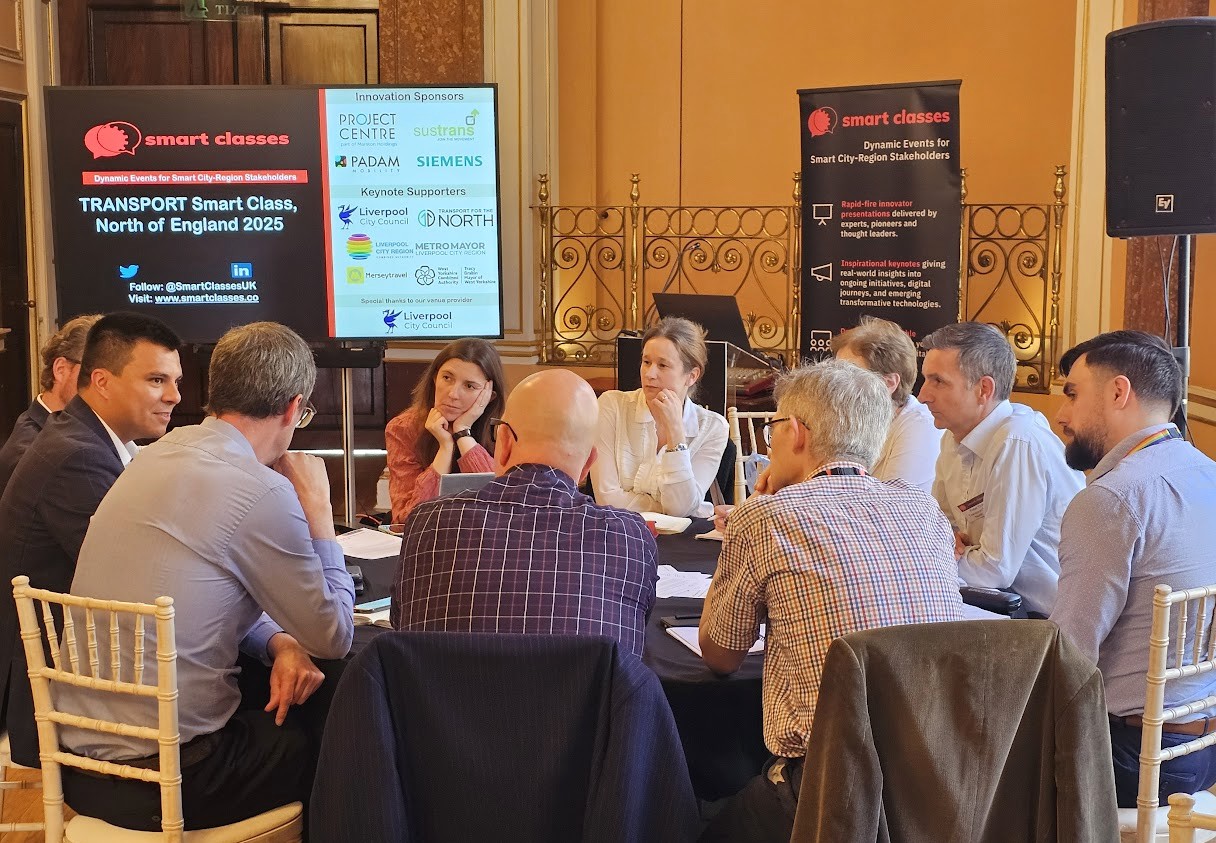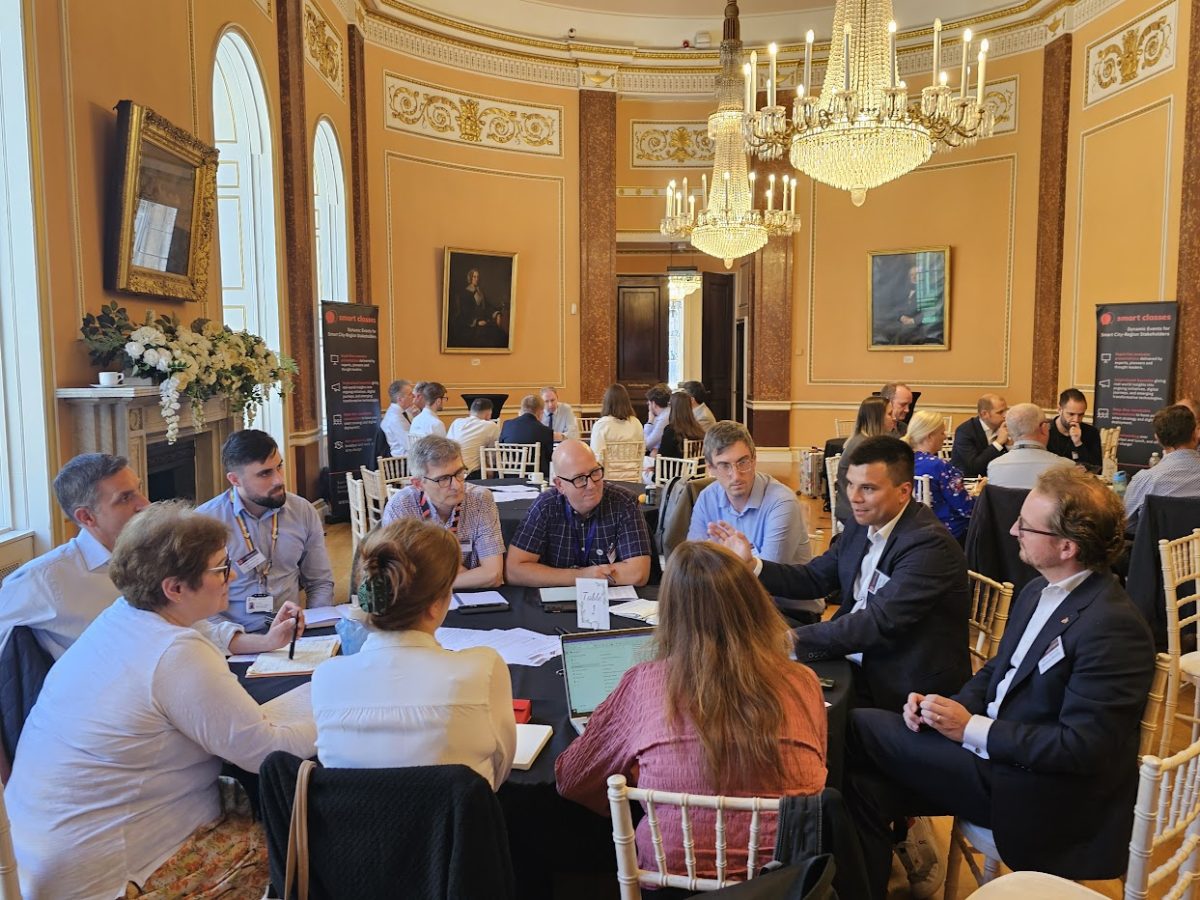
In their joint presentation on behalf of Siemens Mobility and Padam Mobility, Mario Gessner and James West demonstrated at TRANSPORT Smart Class, North of England 2025 how the introduction of the Integrated National Transport Strategy provides the UK with an opportunity to embrace a more ‘European’ approach to transport.
By enabling regional control over services like Demand-Responsive Transport (DRT) and bus networks, this strategy can improve access for residents. The focus will shift from competition between providers to delivering convenient, integrated journey offerings tailored to regional needs.
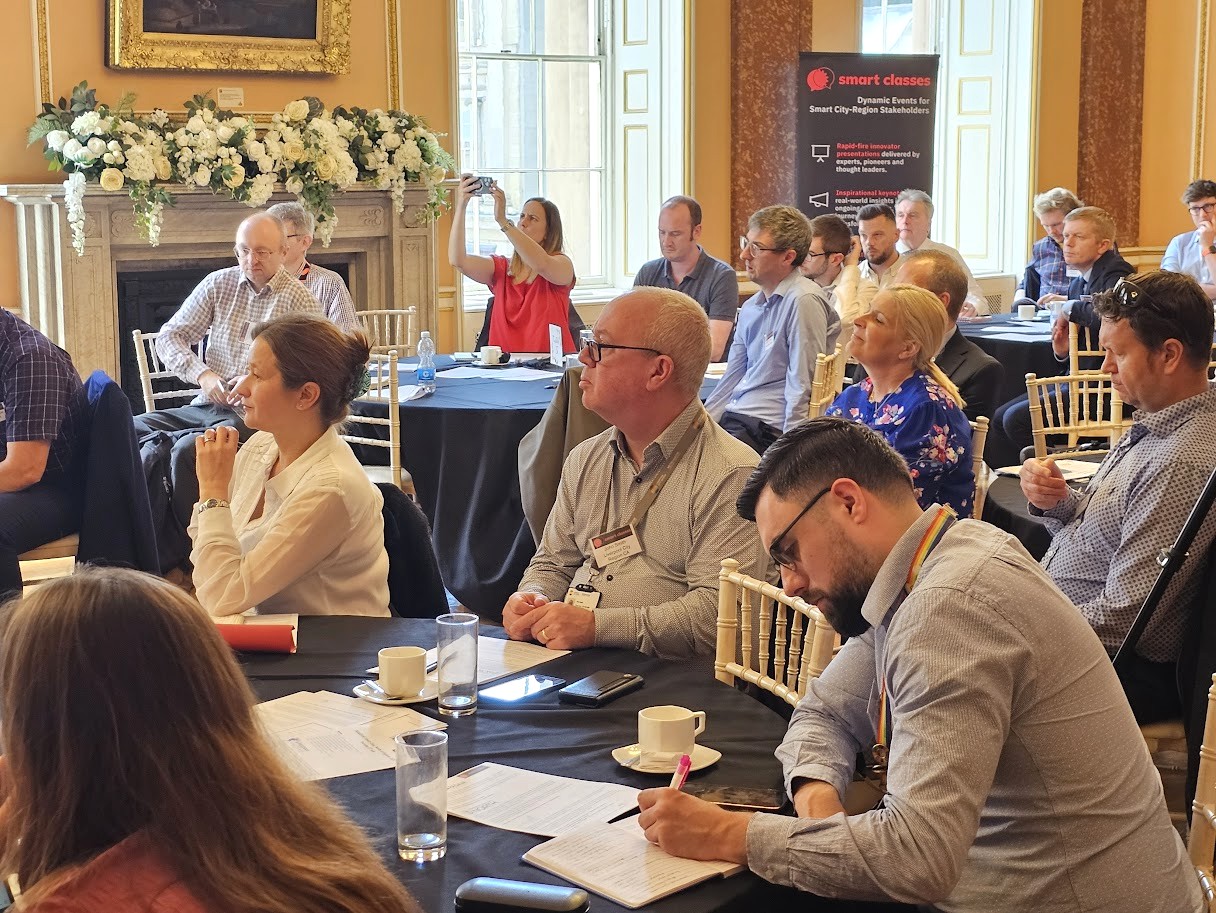
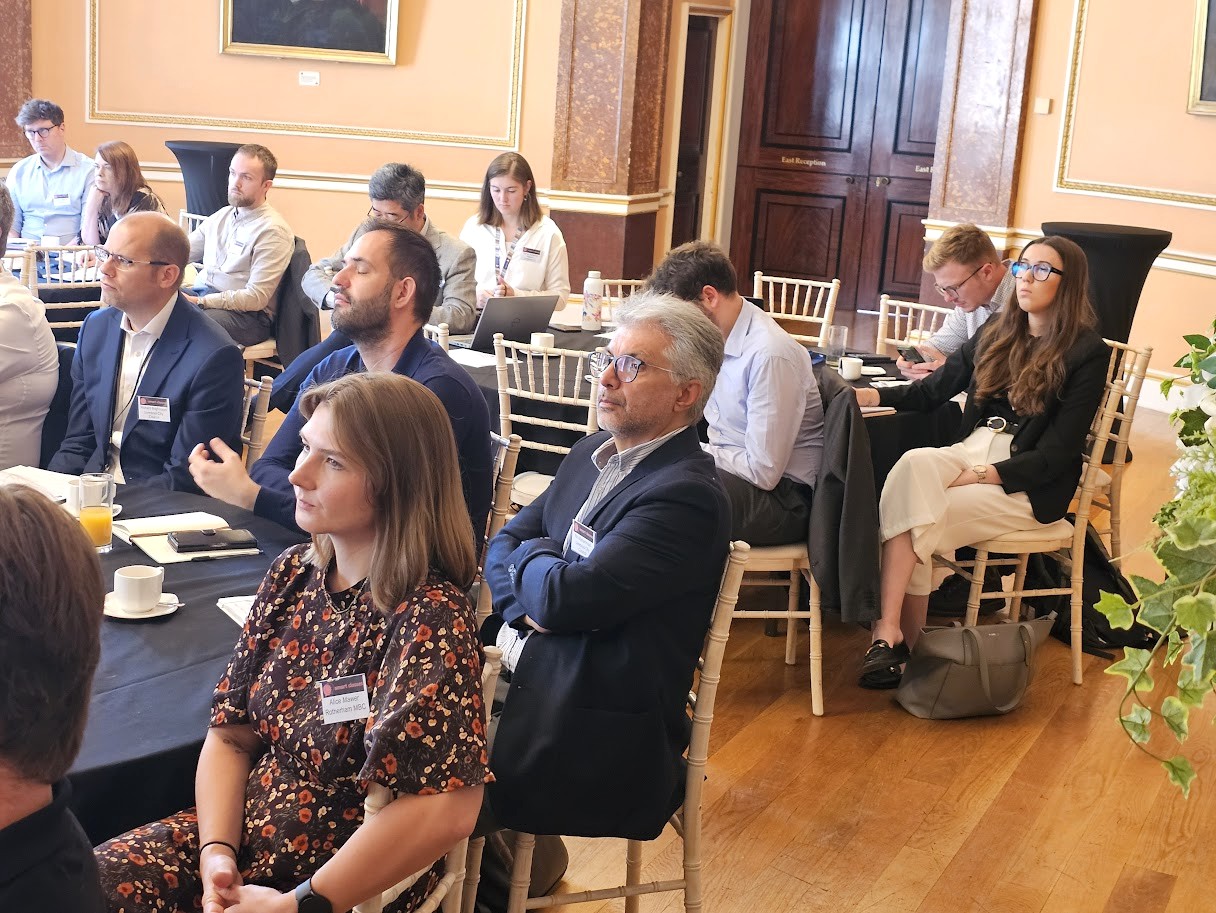
Following the presentations and Q&As, Mario and James hosted deeper dive roundtable discussions with each table of delegates.
Presentation highlights and notes:
- The UK’s Integrated National Transport Strategy – A new Chapter…
- The Integrated National Transport Strategy marks a significant shift in the UK’s approach to mobility. For years, the focus has often been on competition between providers, with fragmented networks and a patchwork of services. The INTS is changing that by putting people first and empowering local leaders to shape transport in ways that best serve their communities;

- This strategy is about devolving real decision-making power to regional and local authorities. It recognises that the needs of a city like Liverpool or Manchester are different from those of rural Cornwall or suburban Kent. By enabling regions to control services such as bus networks and demand-responsive transport, the INTS supports solutions tailored to local realities;
- What’s especially promising is the move toward collaboration – encouraging public, private, and technology partners to work together, rather than in silos. The strategy is inspired by best practices from across Europe, where integrated, multimodal journeys are the norm and users benefit from seamless connections, simple ticketing, and reliable information. The UK now has the opportunity to adopt and adapt these approaches, creating a transport system that is more convenient, inclusive, and future-ready;
- The Case for Regional Maas: Addressing UK Mobility Challenges…
- The current landscape – In the UK, nearly 80 percent of trips longer than one mile are still made by private car. Public transport, while essential, is often fragmented – requiring multiple tickets, different apps, and little coordination between modes. This complexity is a major barrier to broader public transport use and makes it difficult for people to choose sustainable options. There are rural and peri-rural gaps and the user experience suffers due to a lack of real-time information, integrated planning, and easy payment options;
- Regional MaaS as a solution – Regional MaaS addresses these challenges head-on. By unifying planning, booking, and payment in a single digital environment, MaaS makes it easy for users to combine trains, buses, demand-responsive transport, and even micro-mobility options like bikes or scooters. The result is a seamless, door-to-door journey that’s tailored to individual needs, regardless of geography or mobility level. Regional MaaS also enables local authorities to tailor services to regional needs and respond dynamically to demand; supports social inclusion by making mobility accessible to all, including those without private vehicles; and drives modal shift, helping regions meet sustainability and decarbonisation goals;
- This isn’t just about technology – It’s about removing friction and making sustainable travel the obvious, convenient choice. When people can see all their options, compare prices and times, and book everything in one place, public and shared transport become much more attractive. For regions, MaaS offers the flexibility to design services that reflect local demand, supporting both urban and rural mobility needs;
- Experience & Lessons from Europe…
- Siemens Mobility have a long track record of delivering MaaS and demand-responsive transport solutions across Europe. Working with partners like Hacon and Padam Mobility, they’ve implemented platforms in countries such as Germany, France, and Spain – serving millions of users and processing thousands of journeys every day;
- Their projects have shown that success depends on more than just technology. It’s about building systems that are truly inclusive—accessible to people with disabilities, available in rural areas as well as cities, and easy to use for all age groups. Their platforms offer real-time journey planning, dynamic routing, and digital ticketing, all within a single, user-friendly interface;
- Siemens Mobility have also learned the importance of scalability and adaptability. For example, in Germany, their solutions support both large metropolitan regions and smaller towns, allowing each to customise services to their unique needs. Focusing on open ecosystems and interoperability helps to avoid the pitfalls of fragmentation – ensuring that new mobility services add value rather than complexity;
- Regional MaaS in Practice – The Renfe Spain Example…
- Renfe is Spain’s national railway company and set out to transform itself from a traditional rail operator into a provider of door-to-door mobility. Siemens Mobility was selected to deliver a nationwide MaaS platform that now covers 27 cities, including all major metropolitan areas;
- This platform integrates not just trains, but also metro, buses, bicycles, car-sharing, and scooters – offering users a single app to plan, book, and pay for their entire journey. Whether someone is traveling from a rural village to the city centre or making a quick urban trip, they have access to all available modes, with real-time information and simple, unified ticketing;
- The scale of this project is significant: it demonstrates how MaaS can work across diverse regions, supporting both urban and rural mobility needs. It also shows the power of partnership – Renfe, Siemens Mobility, and local operators working together to create a truly user-centric system. This is a model that aligns closely with the UK’s ambitions and provides a blueprint for what regional MaaS can achieve when supported by the right strategy and technology;
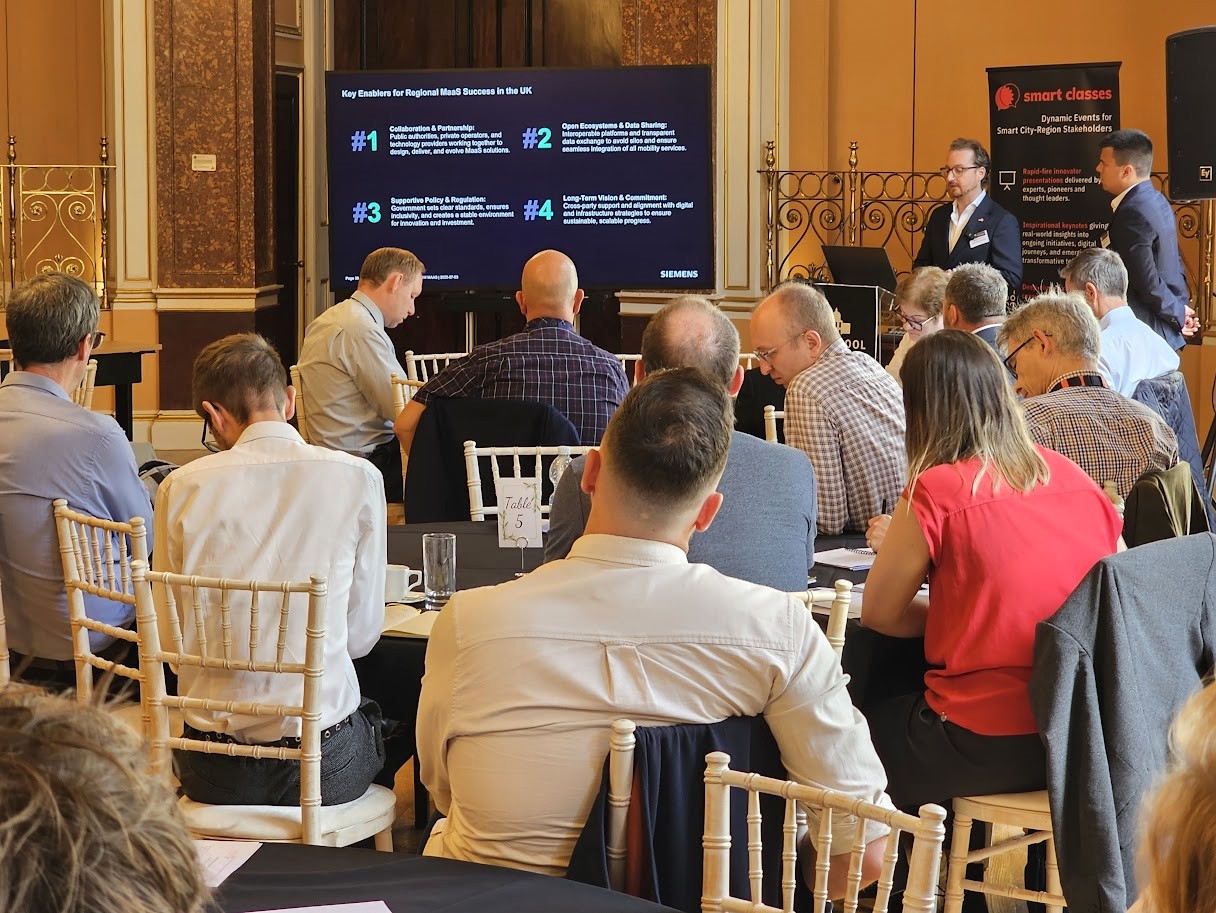
- Key Enablers for Regional MaaS Success in the UK…
- So, what does it take to make regional MaaS a success in the UK?
- 1) Collaboration & Partnership – Public authorities, private operators, and technology partners must work together to design, deliver, and evolve MaaS solutions – sharing data and aligning on standards to avoid silos and fragmentation;
- 2) Open Ecosystems and Data Sharing – Interoperable platforms and transparenet data exchange to avoid silos and ensure seamless integration of all mobility services. By ensuring interoperability and data sharing, we can create a joined-up network that’s greater than the sum of its parts;
- 3) Supportive Policy & Regulation – Government needs to set clear standards, protect inclusivity, and encourage innovation, while also providing the stability and funding needed for long-term planning;
- 4) long-Term Vision & Commitment – Cross-party support and alignment with digital and infrastructure strategies to ensure sustainable, scalable progress. MaaS is not a quick fix, but a strategic transformation that requires consistent support, cross-party commitment, and integration with broader digital and infrastructure strategies;
- By focusing on these enablers, the UK can build a transport system that is resilient, adaptable, and truly centred on the needs of its people;
- “As we look ahead, Siemens Mobility is committed to supporting the UK’s journey toward integrated, regional MaaS. We’re ready to share best practices from our European projects, co-develop solutions tailored to the unique needs of UK regions, and support pilot programs that can be scaled nationally. We invite you to engage with us – whether you’re a local authority, an operator, or a technology partner. Let’s discuss how we can work together to realise the full potential of MaaS under the Integrated National Transport Strategy. Our goal is to help every region, urban or rural, deliver better journeys for all”;
- Padam Mobility’s Demand-Responsive Transport (DRT) and Paratransit solutions are currently deployed in over 200 territories…
- In the UK this includes Cheshire West and Cheshire (iTravel, 2022), Gloucestershire (The Robin, 2022), Hertfordshire (HertsLynx, 2021, HCC Dial-a-Ride), Somerset (DRT, 2023), Surrey County (Surrey Connect, 2021), Solent Transport FTZ (Isle of Wight FYT Bus and SCiA Dial-a-Ride, 2023), Heathrow Airport (Go2Gate, 2023) and Buckinghamshire (Aylesbury, Village Connect, 2024); Lincolnshire County (Call Connect, 2021) and Bristol (Slide, 2016) have also previously been served;
- Further afield, multiple existing or former deployments in Spain, Italy, Germany, France and Switzerland, as well as Belgium, Denmark, Sweden, Finland, Canada, Morocco, Hong Kong/China, Malaysia etc;
- Services currently in deployment range from Regional Mobility, Off-Peak Hours, and First & Last Mile, to Activity Areas/Corporate, Periurban/Rural and Paratransit;
- Why Integration? Buses are being brought back under public control in Liverpool, the West Midlands, West Yorkshire etc; Pilot schemes are set to explore models for rural bus franchising;
- Service configurations – Zonal configurations e.g. Free-floating, Multi-Zones, Feeder, Divergent; Fixed line; Virtual line;
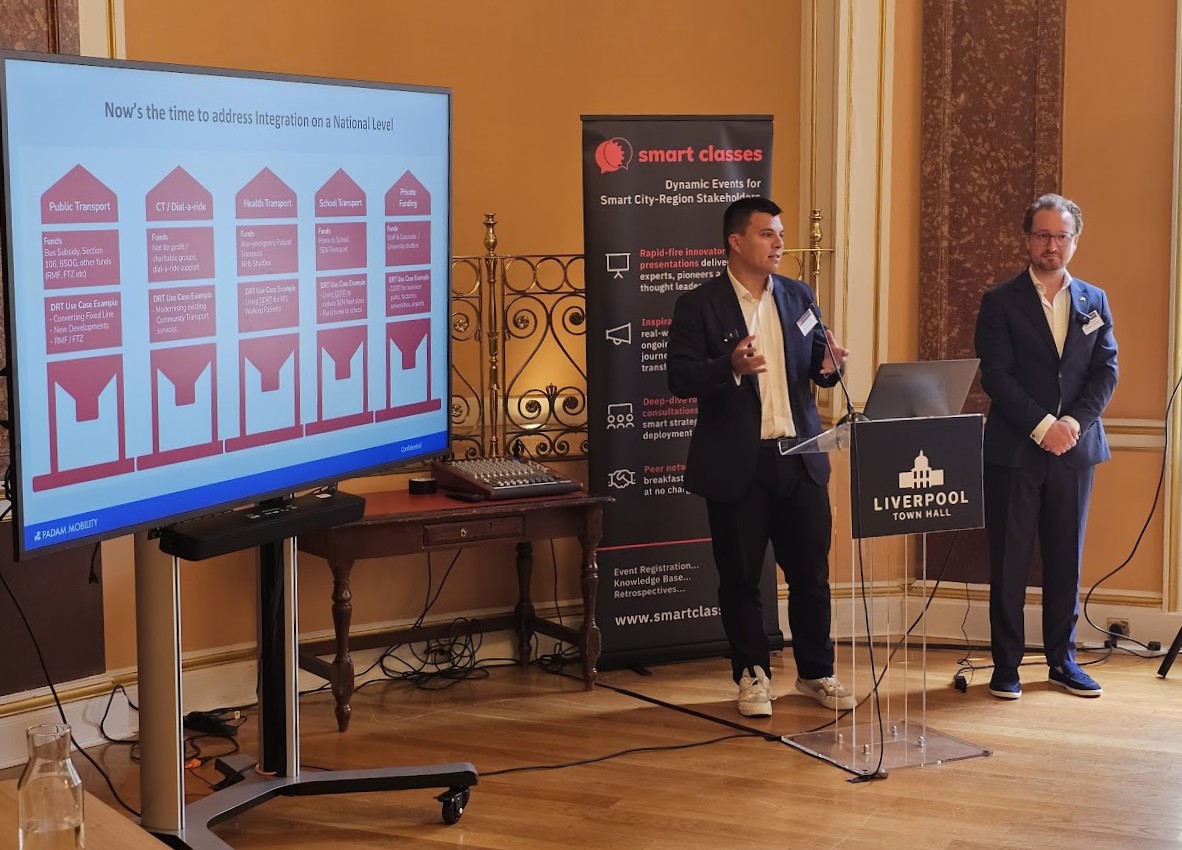
- Now’s the time to address Integration on a National Level…
- Public Transport: Funds – Bus Subsidy, Section 106, BSOG, other funds (RMF, FTZ etc); DRT Use Case Example – Converting Fixed Line, New Developments, RMF/FTZ;
- CT/Dial-a-ride: Funds – Not for profit/charitable groups, dial-a-ride support; DRT Use Case Example – Modernising existing Community Transport services;
- Health Transport: Funds – Non-emergency Patient Transport, NHS shuttles; DRT Use Case Example – Using DDRT for W1 Walking Patients;
- School Transport: Funds – Home to School, SEN Transport; DRT Use Case Example – Using DDRT to reduce SEN fleet sizes, Rural home to school;
- Private Funding: Funds – Staff & Corporate/University shuttles; DRT Use Case Example – DDRT for business parks, factories, universities, airports;
- Summary – We are reaching a key point in the UK Public Transport Lifetime; Franchising can be in multiple forms, but represents a key opportunity to control regional networks; DRT Services are an enabler and a cog in this ecosystem, but need other modes to feed into; DRT can help ‘attract’ public transport demand in areas that are transport deserts and improve regional transport coverage; Branding and Identity creates trust amongst a customer base; Consistency of offer and journey information for DRT services is key.
If you satisfy our regular delegate qualification criteria but were unable to join us at Liverpool Town Hall on July 3rd for the live in-person event, CLICK HERE and complete the short “Download form” (located at the bottom of the post) to receive a unique link enabling free access to the presentation video recordings and slides (including the film footage and slides from James and Mario’s initial presentation). We look forward to further insights from Siemens Mobility and Padam Mobility at our TRANSPORT Smart Class, Scotland 2025 event in Edinburgh next month!
Those qualifying to receive the rich presentation content from this event include commissioning, procurement, trialling, partnering and policy leads, senior influencers, strategic decision makers, programme managers and planners from local authorities (e.g. city, borough, metropolitan, district and county councils); public transport operators; regional transport partnerships, sub-regional transport bodies, combined authorities, integrated transport authorities and passenger transport executives; highways authorities and road operators; government and supporting national transport agencies; non-governmental organisations; fleet operators, parking operators, prime contractors etc.