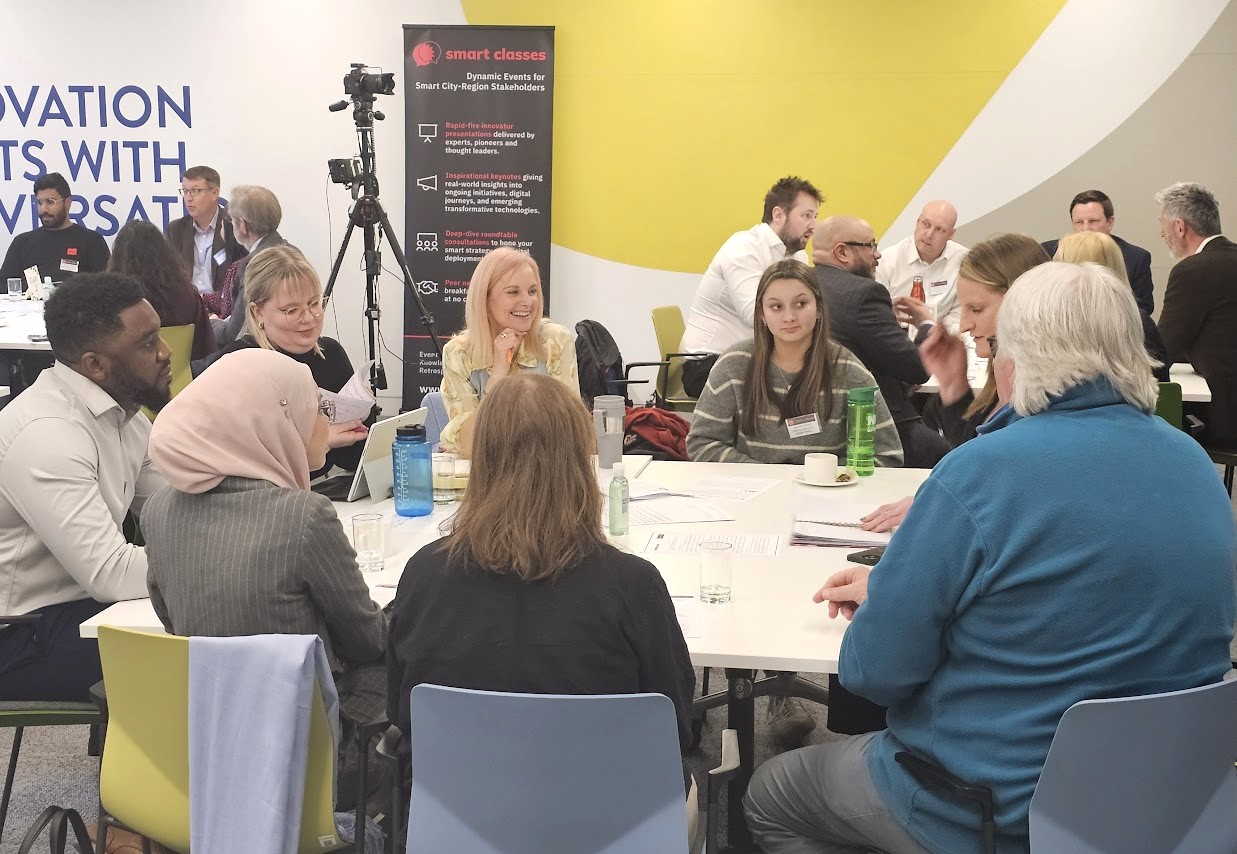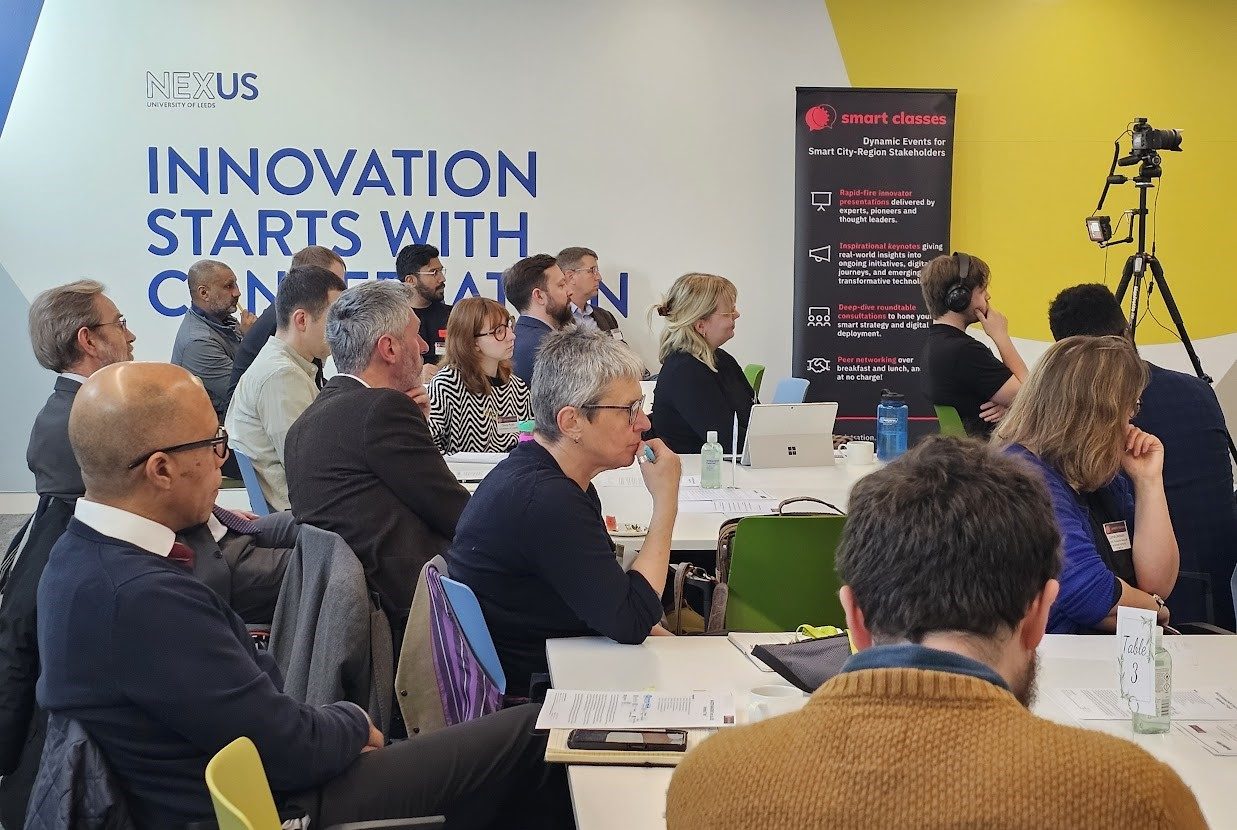
On April 2nd we hosted WATER MANAGEMENT Smart Class 2025 at Nexus, Leeds. This Smart Class provided a fresh take on deploying the latest digital technology-enabled solutions, data-driven strategies, policies and best practices to manage the distribution and management of water resources across our cities and regions, and help utilities and authorities to improve efficiency and service, whilst reducing water scarcity and supporting the drive towards a net zero future.
Our film maker captured the keynotes and innovator presentations for additional stakeholders to enjoy post-event!
If you satisfy our regular delegate qualification criteria but were unable to join us on the day, just complete the short application form below and we’ll grant you free access to the presentation video recordings and slides.
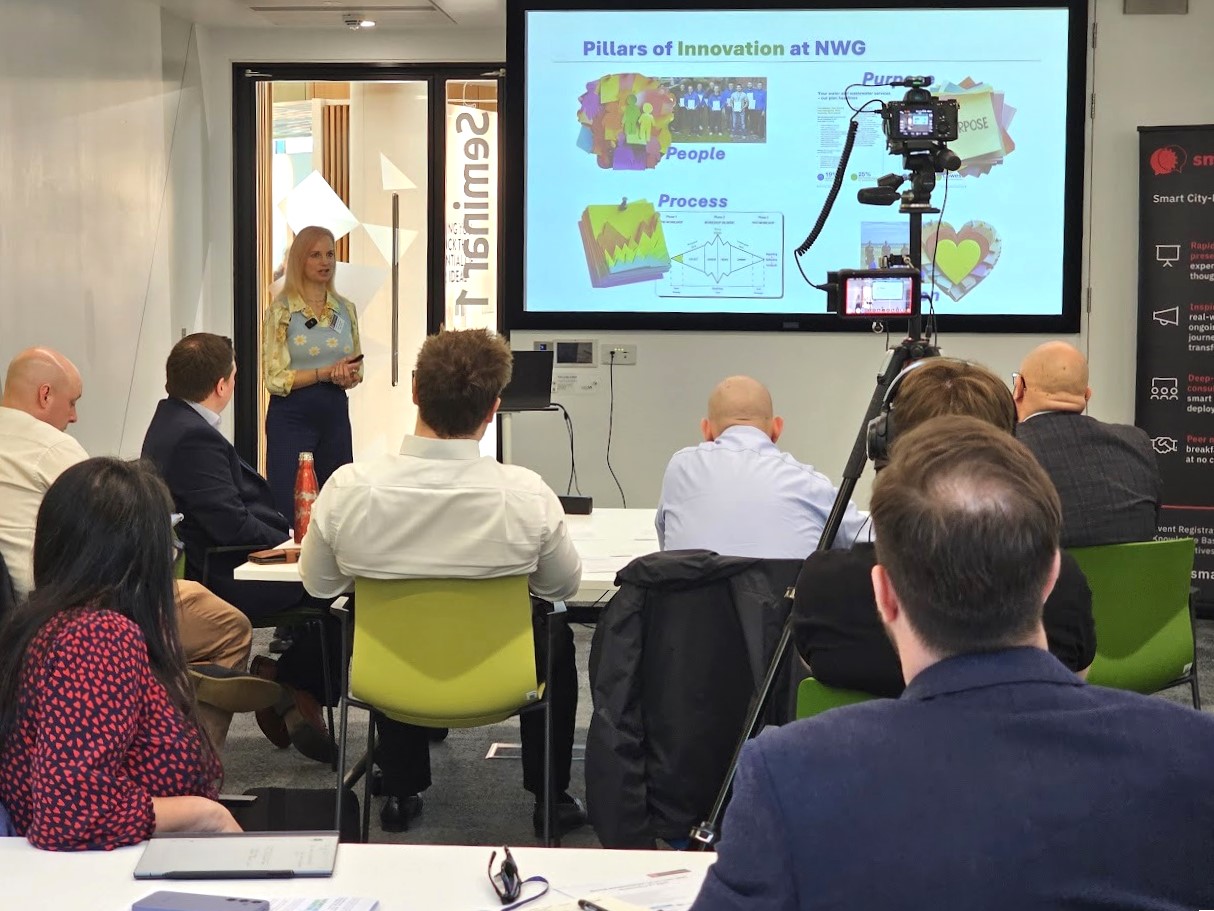
Our inspirational keynote speakers included: Jonathan Moxon, WYFLIP Programme Manager and Executive Manager – Flood & Climate Resilience at Leeds City Council; Dr. Angela MacOscar, Head of Innovation at Northumbrian Water (NWG); and Marcus Rink, Chief Inspector at the Drinking Water Inspectorate (DWI).
The Smart Class also featured insightful innovator thought leadership presentations, delivered by: David Chapman (Associate Director) and Hannah Watson-Hill (Assistant Flood Risk Engineer) from Project Centre, part of Marston Holdings; Jamie Mills (Chair – Water Data Taskforce, BIM4Water & Global BIM Manager, Xylem) and Rodrigue Kemgne (Chair – Beyond 4D Task Group, BIM4Water & Senior BIM Coordinator on HS2, SCS JV) on behalf of BIM4Water at British Water; Brightly Software’s Hannah Winstanley (General Manager & UK Country Lead), supported by Dr Adam Cartwright (Industry Strategy Director: Water and Wastewater Software) from Siemens/Siemens Smart Infrastructure; and Dr Gabriela Lopez-Gonzalez (Head of water@leeds), Dr Dylan Young (Research Fellow) and Dr Devakunjari Vadibeler (KTP Associate & Environmental Engineer) from water@leeds, University of Leeds.
The innovators expert teams – which, in addition to their speakers, also featured Project Centre’s Luke McGuinness (Associate Director for Landscape and Urban Design) and guest representative from Andel (a water@leeds partner) – subsequently hosted confidential, deeper dive, roundtable sessions with all delegates in attendance.
The live (in-person only) event also included thought provoking Q&As and further networking opportunities over breakfast, drinks and a cooked lunch.
Noteworthy contributions to all these discussions were made by influencers and decision makers from Aire Rivers Trust, Aire Resilience Company (ARC), Andel, Arcadis, BIM4Water, Brightly, Calder Rivers Trust, Connected by Water, Drinking Water Inspectorate (DWI), Environment Agency (EA), Humber & Yorkshire Climate Commission, Kent County Council, Leeds City Council, Leeds Climate Commission, Northumbrian Water Group (NWG), Ofwat, Pennon Group, Project Centre, Siemens/Siemens Smart Infrastructure, Skanska Costain STRABAG Joint Venture, South West Water, South Yorkshire Mayoral Combined Authority (SYMCA), Staffordshire County Council, Sustrans, University of Leeds, water@leeds, Waterman Aspen, West Yorkshire Combined Authority (WYCA), West Yorkshire Flood Innovation Programme, Yorkshire Water, Xylem, and more!
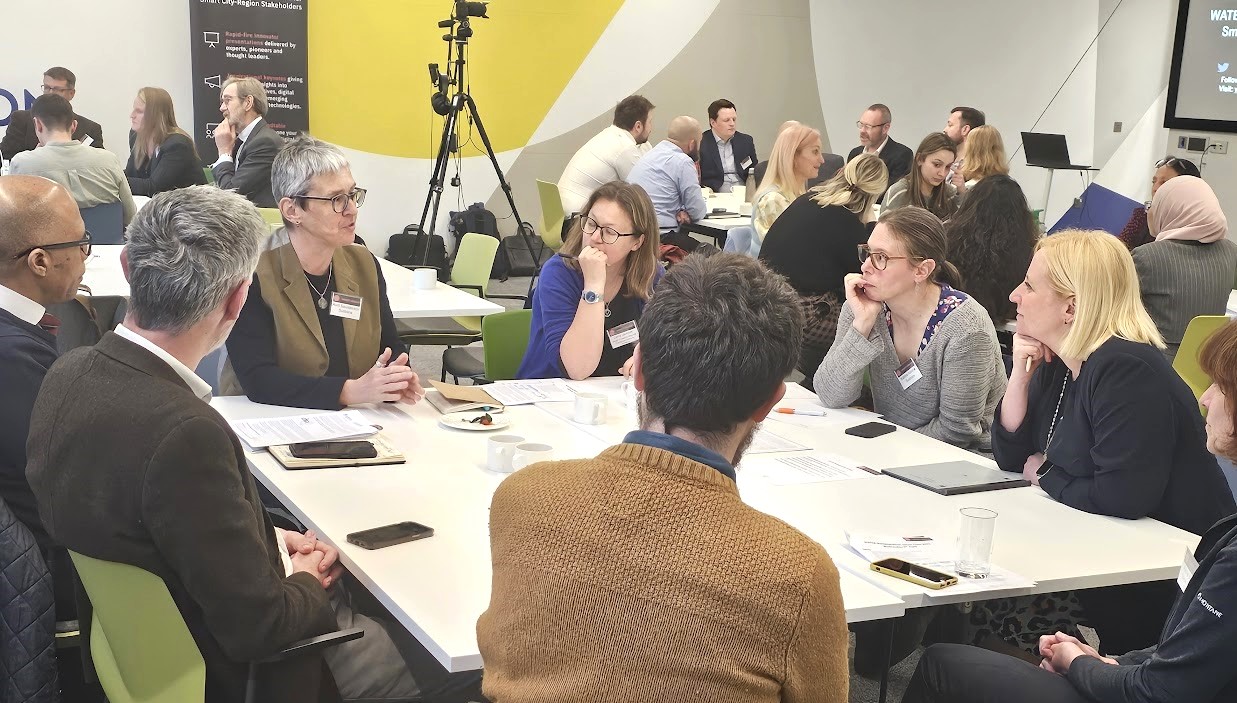
Topic highlights included:
- The West Yorkshire Flood Innovation Programme – Providing a collaborative framework for innovation;
- Five key WYFLIP themes, each led by a West Yorkshire local authority – 1) Integrated water management solutions 2) Nature-based solutions 3) Property flood resilience 4) Community and voluntary sector 5) Enhanced flood warning systems;
- iCASP – Providing monitoring and evaluation support, and ensuring the latest science is integrated into the programme and knowledge is being exchanged;
- Importance of clear governance and finding new ways to fund and resource collaborative multi-organisational projects and programmes;
- Foundations of the roadmap and WYFLIP governance – A sustainable model;
- What’s new? YRFCC funding, Meanwood Valley urban farm SuDS demonstrator site, resilient sports pitches, blue green infrastructure training, surveys, digital smart flood warning system (LoRaWAN), green social prescribing etc;
- What key challenges might a WYFLIP-style partnership address?
- What’s next for WYFLIP or others?
- Enhancing flood resilience in urban neighbourhoods through small-scale interventions;
- Sustainable drainage systems – Mimicking natural drainage processes to offer multifunctional solutions for stormwater management;
- Urban landscape design – Complementing SuDS by incorporating green infrastructure into the built environment;
- Integrating permeable pavements, rain gardens and swales to reduce flood risks, enhance biodiversity, and improve urban aesthetics;
- Leveraging other highway schemes, including traffic calming, to maximise SuDS benefits;
- Importance of community engagement – Ensuring holistic, locally driven solutions through collaboration among local governments, planners, landscape architects, engineers, and residents;
- Case studies from Waltham Forest, Ealing, Hillingdon and Newham – How integrated, nature-based solutions can deliver both climate resilience and meaningful co-benefits;
- Driving digital transformation of the water sector in support of the National Digital Twin Programme;
- BIM, information management standards and the BIM4Water journey to date;
- Water Data Taskforce – Facilitating secure and resilient open data sharing, both across the water sector and between sectors;
- Beyond 4D Task Group – Supporting the water sector in its adoption of visualisation;
- BIM level 2 vs 3D modelling;
- What are 4D BIM/4D digital twin and 4D BIM/5D digital twin?
- 4D BIM software, collaboration and pre-requisites;
- How is 4D BIM executed and what are the benefits, deliverables and applications?
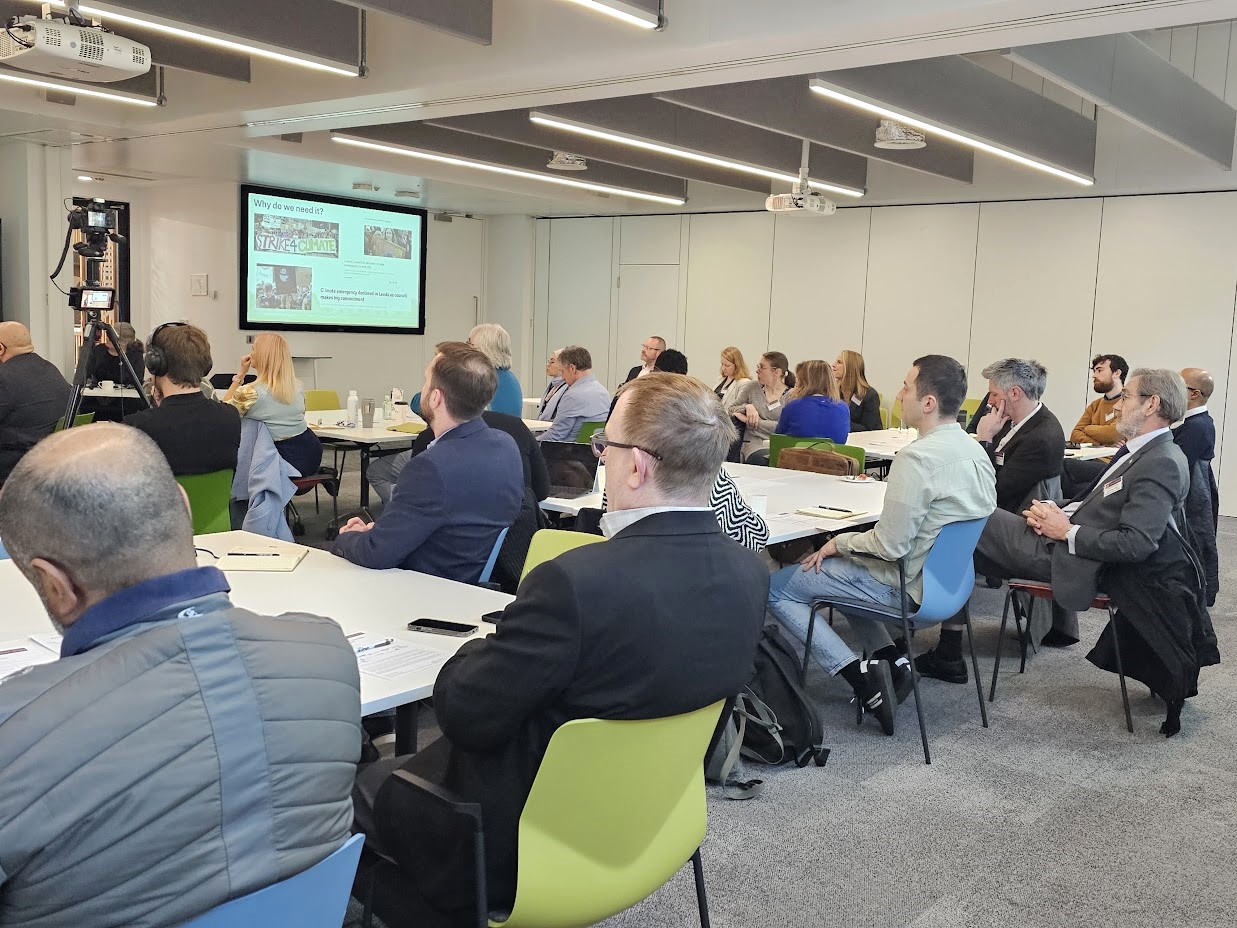
- Riding the innovation wave – Northumbrian Water’s approach to driving transformational change;
- Four key challenges – 1) Climate change 2) Ageing assets 3) Changing expectations 4) Increased demand;
- Key principles and enablers that embed a successful innovation culture within an organisation;
- Pillars of innovation at NWG, the ‘Hub & Spoke’ innovation approach, and changing how innovation is done with the Northumbrian Water Innovation Festival;
- National Underground Asset Register – Transforming infrastructure management through industry-wide data sharing;
- Water Cookbook – An asset design standardisation initiative that will enable AMP8 to be more cost effective and faster at deployment;
- Generative AI for chemical dosing – Harnessing cutting-edge AI to optimise treatment processes and reduce environmental impact;
- Smart skies for healthier rivers – Using satellite and drone technology to monitor and improve river water quality;
- Additional game changing NWG projects, exemplifying the power of collaboration and technological advancement e.g. Alexa Skill, Moss Tree, Power of Z, FairWater, Treatment 2 Tap, Tipping Point, No Dig, River Deep Mountain AI etc;
- Challenges of scaling innovation, overcoming barriers, securing stakeholder buy-in, fostering effective partnerships across sectors, role of the Ofwat Innovation Fund, and growing importance of international collaboration in shaping the future of water innovation;
- Combining the real and digital worlds to act flexibly and sustainably;
- Increasing your resilience with smart infrastructure asset management and enterprise asset management;
- Installing sensors, MCerts inspections and monitoring MCerts certifications – Providing the data and the means to be proactive and optimise work schedules and maintenance;
- Using rainfall predictions, weather event data, AI and IoT sensor data to identify potential blockages in drainage networks and pinpoint where damage or blockages already exist;
- Ensuring high quality and sufficient drinking water through risk-based technical regulation;
- Introducing the Drinking Water Inspectorate (DWI) and the work of the scientists, analysts and engineers who oversee our drinking water supply arrangements from source to tap;
- Drinking water regulation objectives, regulatory delivery and active surveillance;
- What are the successes of water industry regulation since 1990? Drinking water quality compliance in England and Wales – Public vs Private supplies; Overall compliance and lead (Pb) compliance;
- How does the UK water supply compare to the rest of the world? Environmental performance index for drinking water;
- Is there more to do? Drinking water risk dashboard; Drinking water response to PFAS; Addressing quality, sufficiency, operational technology, security and cyber security using data driven risk strategy to target regulatory priorities and the outcomes of water companies;
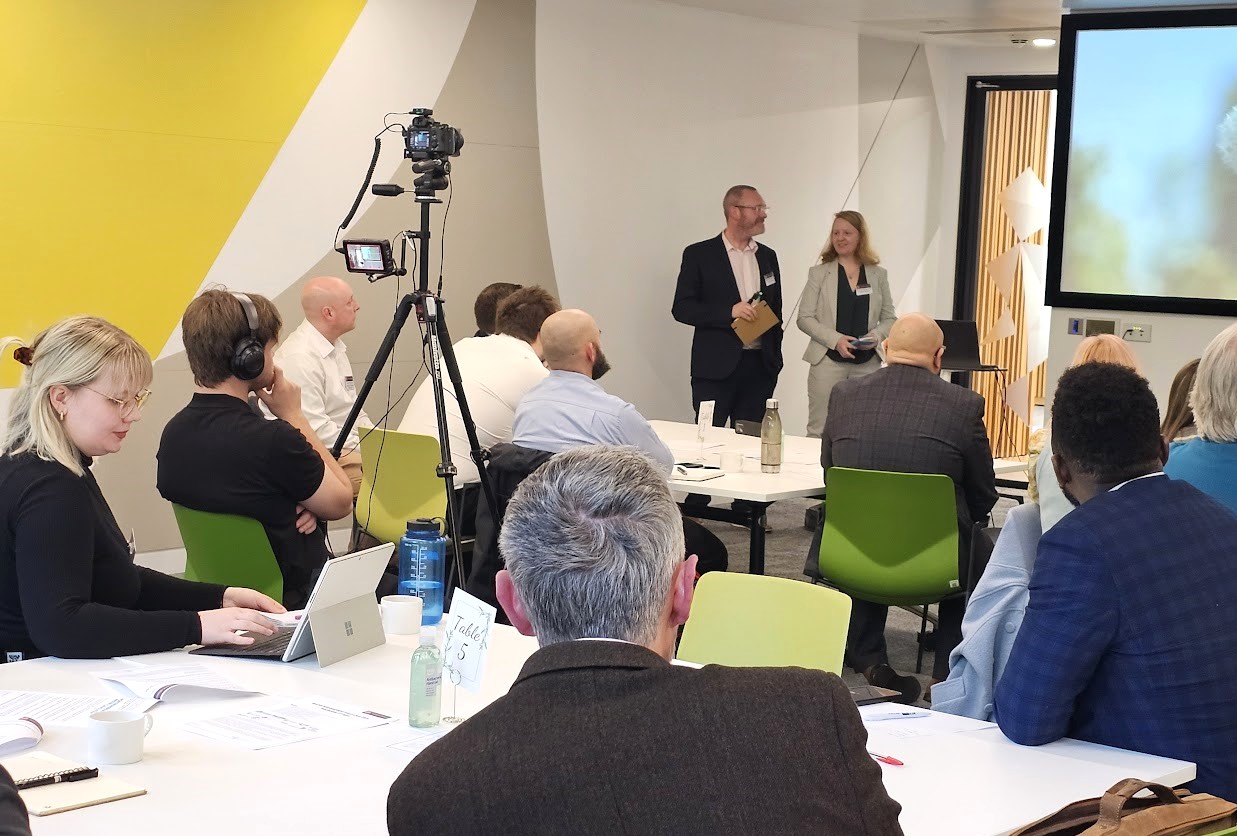
- Translating research into water solutions ;
- water@leeds’ journey from horizon scanning to innovative solutions and the importance of an interdisciplinary approach;
- How do we identify priority water research questions?
- water@leeds research strategy, knowledge co-production and research translation;
- Addressing the challenges and benefits of collaborations with interdisciplinary research centres;
- Managing water for carbon storage in peatlands – Hydrological modelling for effect of restoration; Ecosystem modelling – Effect of climate on peatland carbon stocks;
- Optimising flood resilience with Andel’s FloodWall – A site-specific data driven installation approach etc
Those qualifying to receive the presentation videos and rich media content from this event include commissioning, procurement, innovation, trialling and partnering leads, senior influencers, strategic decision makers, environmental managers, policy makers and planners from UK water companies and utilities, wastewater and sewer operators, lead local flood authorities (unitary authorities and county councils), city/borough/metropolitan councils, district councils, combined authorities, internal drainage boards, regional flood & coastal committees, highways authorities, prime contractors, general insurers, large water consumers, national agencies, central governmental and regulatory bodies (e.g. Defra, DCLG, Ofwat, Environment Agency, DWI, SEPA), independent industry and consumer organisations (e.g. Water UK, CCW), river trusts, NGOs etc.
Register your details via the “Download form” below to receive a unique link enabling complimentary access!