Urban freight transport is a major contributor to UK pollution, with road vehicles accounting for 91% of domestic transport emissions, primarily from heavy goods vehicles (HGVs) and vans, says a GOV.UK report. In urban areas, light goods vehicles (LGVs) create up to 30% of nitrogen oxides (NOx) and fine particulate matter, with freight causing over 30% of NOx in London, reports Impact on Urban Health and ScienceDirect.
Steve Evans is the founder of XeroE, the UK’s first multi-modal sustainable delivery company, which pioneered the use of bikes, cargo bikes and electric vehicles to clean up urban air. Under his leadership, XeroE became the first UK delivery business to achieve B Corp certification, expanded operations across major cities, and completed over a million zero-emission deliveries.
Steve is now Director of Inter Modal Flow, where he is pioneering the next step in sustainable logistics: the use of containerised cargo bikes within inter-modal supply chains. By standardising and pre-packing cargo bike containers for seamless transfer between rail, river and road, Steve believes this approach has the potential to increase cargo bike coverage from today’s 10% of urban deliveries to 50%, while eliminating the need for vans and urban depots.
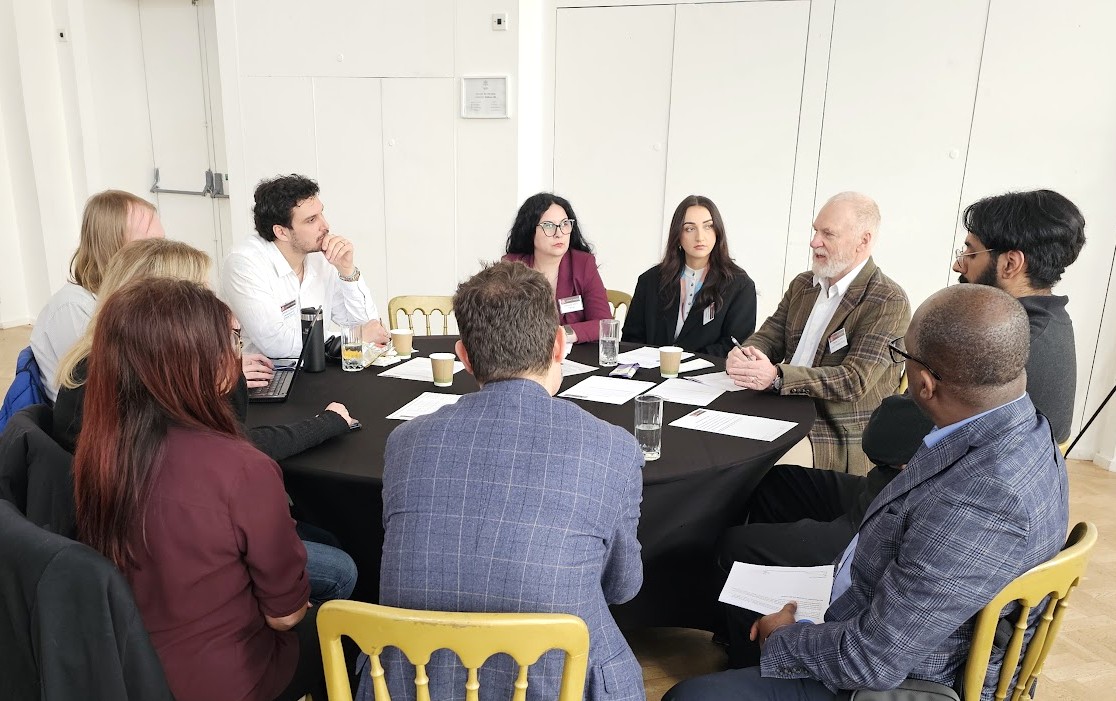
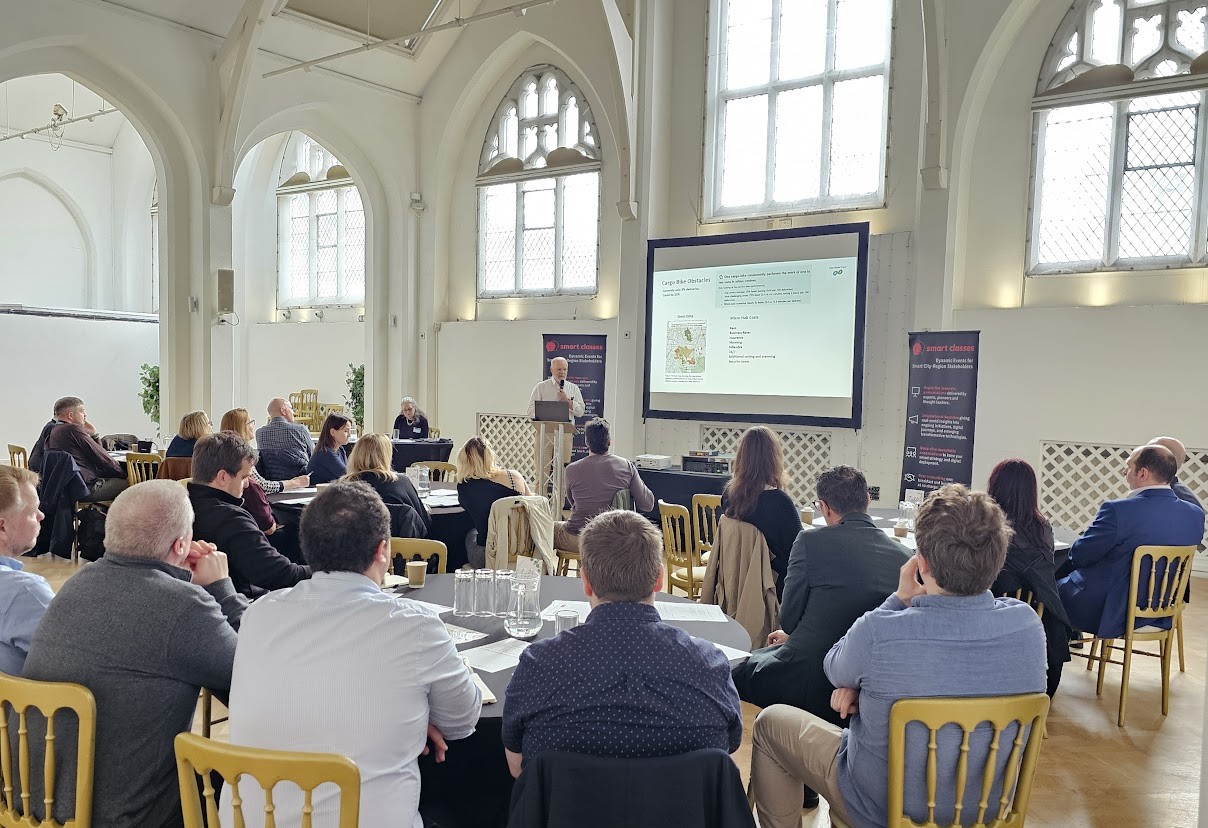
In his presentation and roundtable sessions at last month’s TRANSPORT Smart Class, Midlands 2026 event, Steve explored how this model can transform zero-emission logistics across UK cities.
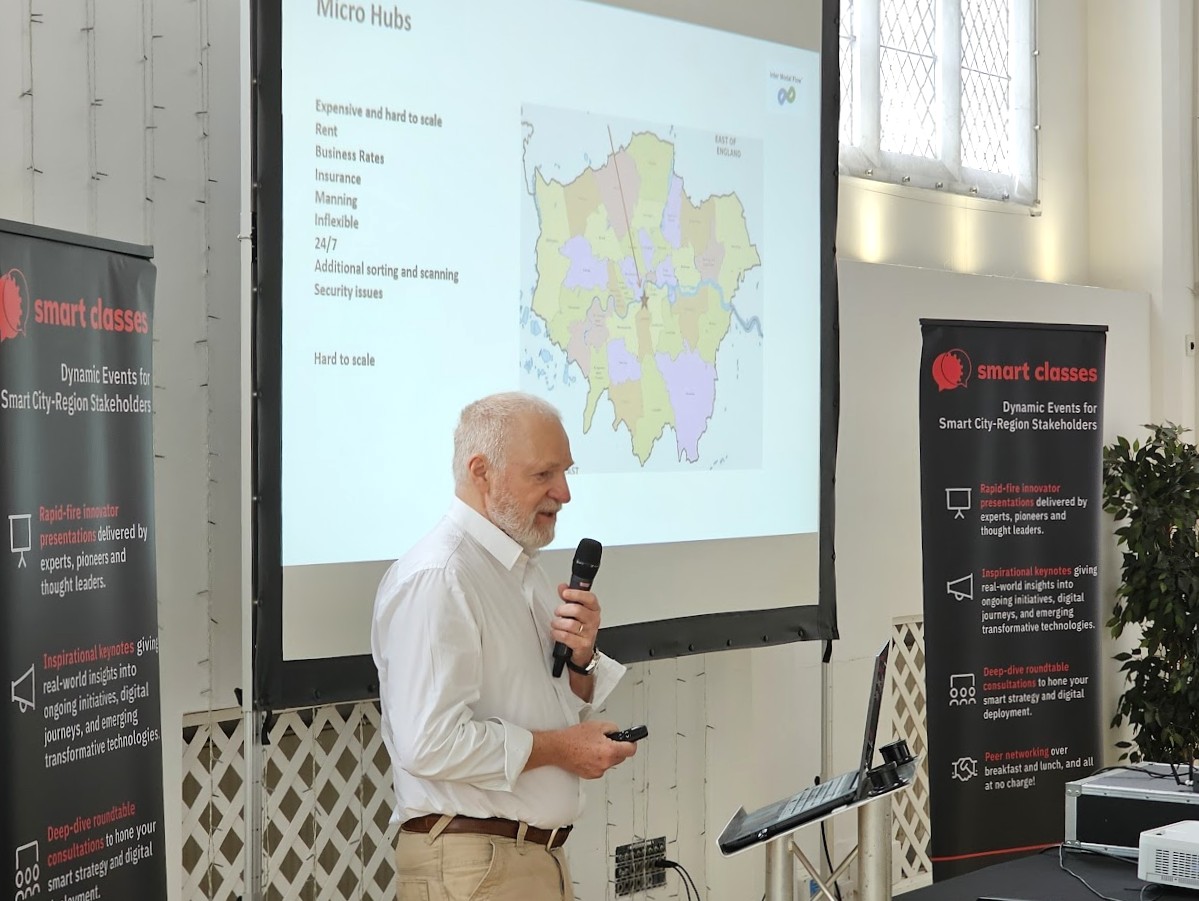
Presentation highlights and notes:
- XeroE Multi modal Sustainable Deliveries – ‘Bikes, Cargo Bikes, E Vans, E Scooters, and Cars’;
- The Middle Mile Problem – Range of EVs, Cost, Vehicle size;
- The Micro Hubs Problem – Expensive to run and hard to scale: Rent, Business Rates, Insurance, Manning (for something that may only be used 3 hours per day), Inflexible (overhead fixed for the year), 24/7, Additional sorting and scanning, Security issues etc; to expand, 12-13 micro-hubs would have been required to cover London alone which equates to considerable capital expenditure;
- Two Innovations have developed in the last couple of years which could solve both of these problems:
- 1) Rail Freight by Varamis Rail – Using former passenger carriages converted to carriages that are capable of replacing HGVs; and currently operating as a very fast service between Birmingham and Glasgow (half the time of regular rail);
- 2) Cargo Bike containerisation – Enables the use of this facility; Boxes produced by companies in Germany and France (RYTLE, ONO, KLEUSTER, FlexiModal) – All are slightly different but Steve was able to use one of them for a trial that enabled a sustainable delivery service from pick-up right to the consumer’s door…
- Delivery Now – Customer makes an order > Shipper takes the order > Van goes to that Shipper and takes delivery to a Local Depot > Delivery then goes to a Regional Sort Centre which might be in the Midlands, West of the Country or South East of England, for example > From there it’s sorted and then goes to a Local Depot which is invariably located just on the outside of an urban area > Van then drives into the middle of that urban area, causing congestion to make that delivery;
- Delivery Trial – Wanted to pick up delivery at the Shipper, bring it to the station, put it on the train and get it to the Customer’s door entirely sustainably; Were able to do this by using the train and the containerisation – that container was pre-packed with the route so that the cargo bike rider could pick it up and go straight to the first delivery;
- End to end sustainable Delivery Chain (including video) – This trial, working with Varamis Rail from Birmingham to Glasgow, was funded by Department for Transport and the client was Whistl;
- Findings?
- Standardisation – Shipping containers have been around for about 180 years but only really took off when it was decided what the standards should be; This included the size (20ft and 40ft), the joints either end of the containers, and how they work on all the inter modal facilities e.g. cranes, ships, trailers and lorries; During the trial, when the box was originally put into the van it wouldn’t fit (despite all of the dimensions that had been advised) due to locks at the top of the doors, so an alternative was found at the last minute;
- Impact – The impact was that one HGV per carriage would save 61 tonnes of CO2 per annum;
- Cargo Bike Obstacles…
- Currently only 3% of deliveries are made by cargo bike, but this figure could be 33%;
- One cargo bike consistently performs the work of one to two vans in urban areas. Only looking at the service time performance – City centre average: 30% faster (saving 1h30 per 100 deliveries). Most challenging areas: 75% faster (2.4 vs 4.2 minutes, saving 3 hours per 100 deliveries). Worst-case scenarios: Nearly 3x faster (5.8 vs 14.5 minutes per delivery);
- But cargo-bikes are efficient only if they can reduce stem time from the micro hub to their first delivery – “this is why expansion in London required e vans and e scooters”;
- Survey in Brussels earlier this year showed that cargo bikes are much more efficient than vans and therefore less expensive: Stem time – Cargo bike deliveries per hour (with stem)/Heat-map showing the operational efficiency (delivery/hour) of cargo-bikes across different areas, including the stem distance;
- Virtual Hubs – Trialled before but cannot have sorting outdoors e.g. due to weather, security, tracking. Containerised cargo bikes
remove these issues and costs; - Bristol Trial – Rather than having a micro hub, all that was really needed was a space (e.g. 3 car parking spaces) for an hour a day; This trial, as video demonstrates, showed that containers could be brought from the outskirts of Bristol into the centre of town and then be successfully picked up and delivered straight through by cargo bike;
- What’s next?
- Varamis Rail are extending their network so that containers pre-packed at depots can be taken into city and town centres. e.g. in the case of London: Unloading directly off the train onto the platform at Liverpool Street, Kings Cross or Waterloo and then into the back of cargo bikes, to serve those dense urban areas without the need for a costly micro hub
- Thames Trial – Significant net zero target at Canary Wharf and ambition to stop vans coming in. One way to do this is using Thames Clipper and an electric freight boat will be introduced next year. Steve working on a trial to pick up containers in Erith, bring them down the river, drop them off close to Canary Wharf straight onto containerised cargo bikes and then into the city sustainably. Duration: 4 weeks; Volume: 7 containers/day; Throughput: 100 deliveries per cargo bike per day. Total 14000. Routes: Depot → Barking or Dartford Riverside →Trinity Buoy Wharf →Canary Wharf;
- How can your organisation help?
- LTNs don’t (in Steve’s opinion) reduce traffic, but replacing vans with cargo bikes does. We need to encourage the use of virtual hubs and this inter modal system that we can develop in order to maximise their usage. So, if you’re designing LTNs, clean air zones, pedestrianised shopping areas or traffic limited estates, “please speak to the people in the business to see how you can set this up so that sustainable deliveries can work”;
- There’s lots of under used council land (e.g. free car parking spaces) which, with quick permissions, could be used to make it easier to accelerate zero-emission logistics using containerised cargo bikes;
- Station platform access – If you’re in the railway business, try to make it easier to bring containers into passenger stations for roll on-roll off onto cargo bikes;
- Conclusion – “Shipping standardisation took 150 years but once it was there it led to globalisation. Cargo bike containerisation will take less time and can lead to localisation: localisation of last mile delivery using cargo bikes”.
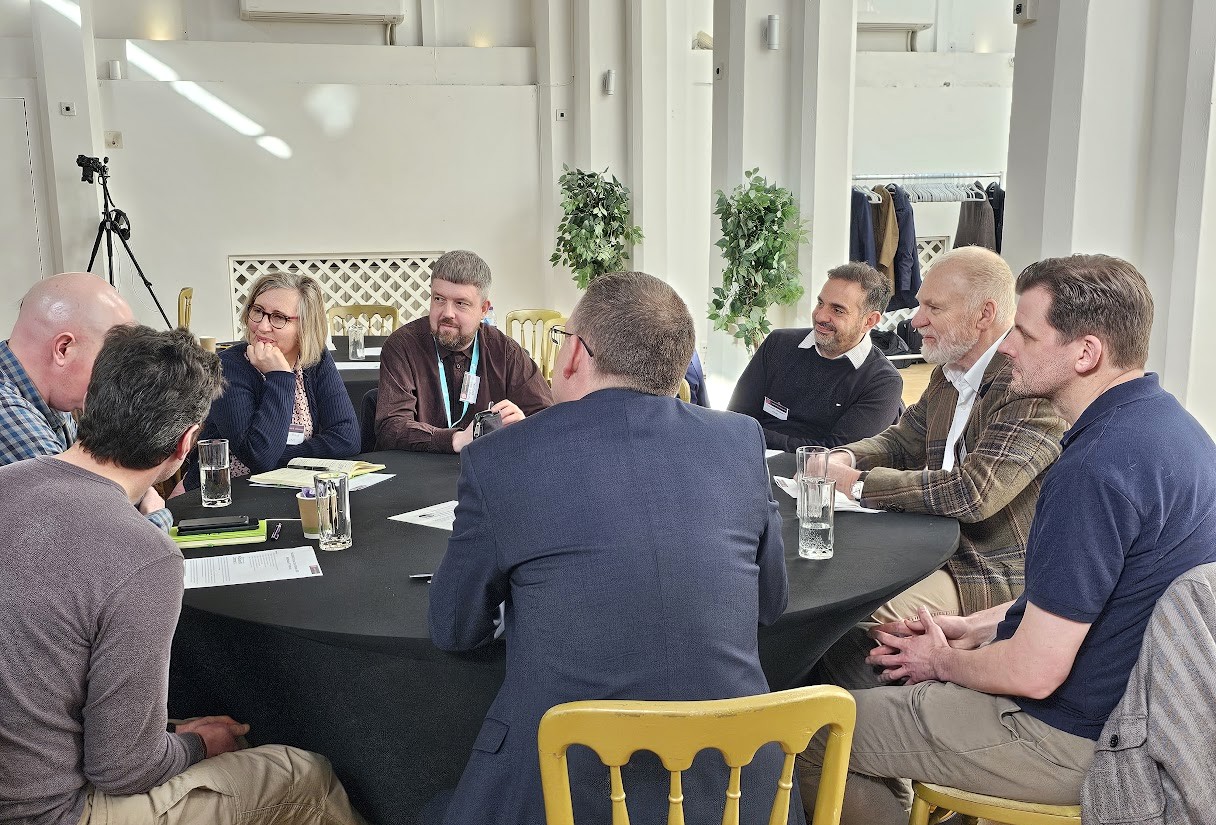
If you satisfy our regular delegate qualification criteria but were unable to join in Birmingham on February 25th for the live in-person event at The Old Library, CLICK HERE and complete the short “Download form” (located at the bottom of the post) to receive a unique link enabling free access to the presentation video recordings and slides (including the film footage and slides from Steve’s initial presentation).
Those qualifying to receive the rich presentation content from this event include commissioning, procurement, trialling, partnering and policy leads, senior influencers, strategic decision makers, programme managers and planners from local authorities (e.g. city, borough, metropolitan, district and county councils); public transport operators; regional transport partnerships, sub-regional transport bodies, combined authorities, integrated transport authorities and passenger transport executives; highways authorities and road operators; government and supporting national transport agencies; non-governmental organisations; fleet operators, parking operators, prime contractors etc.