
The Chartered Institution of Highways and Transportation (CIHT) represents and qualifies professionals who plan, design, build, manage, maintain, and operate highways, transport infrastructure, and services.
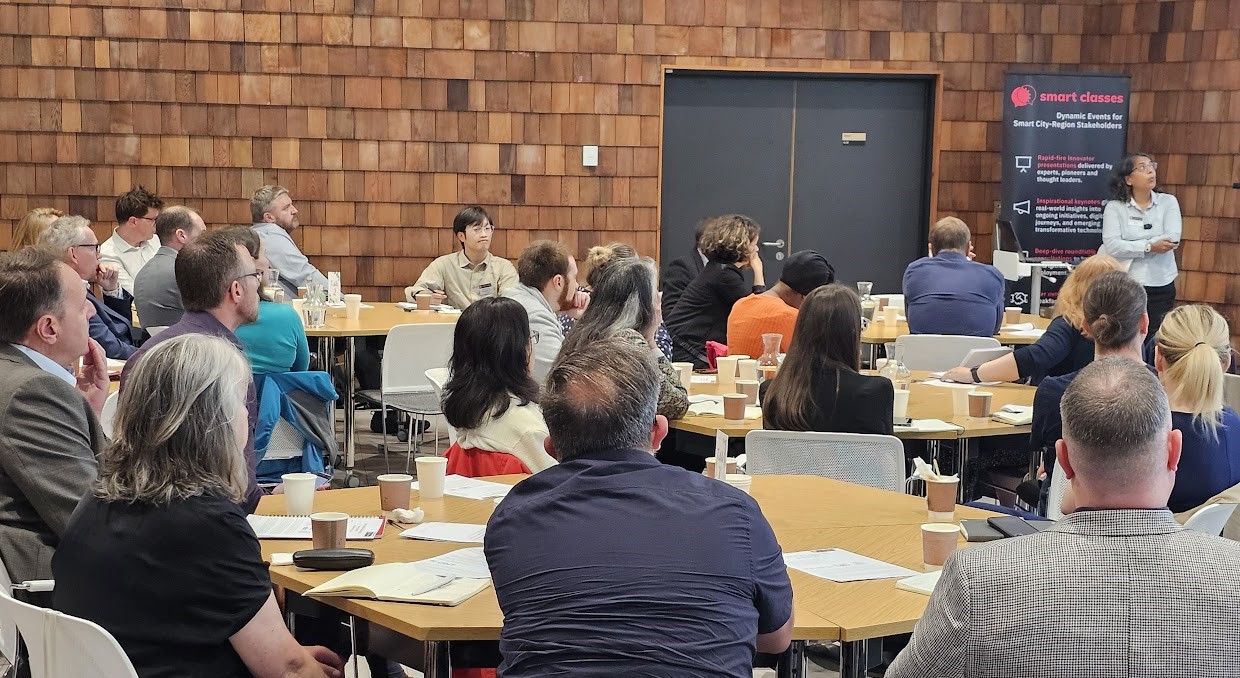
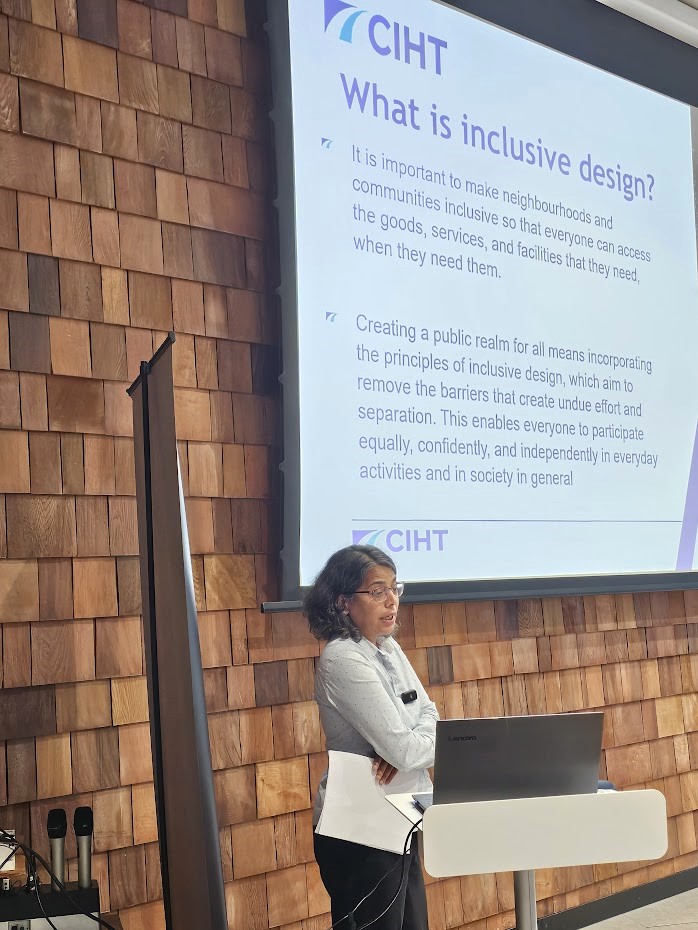
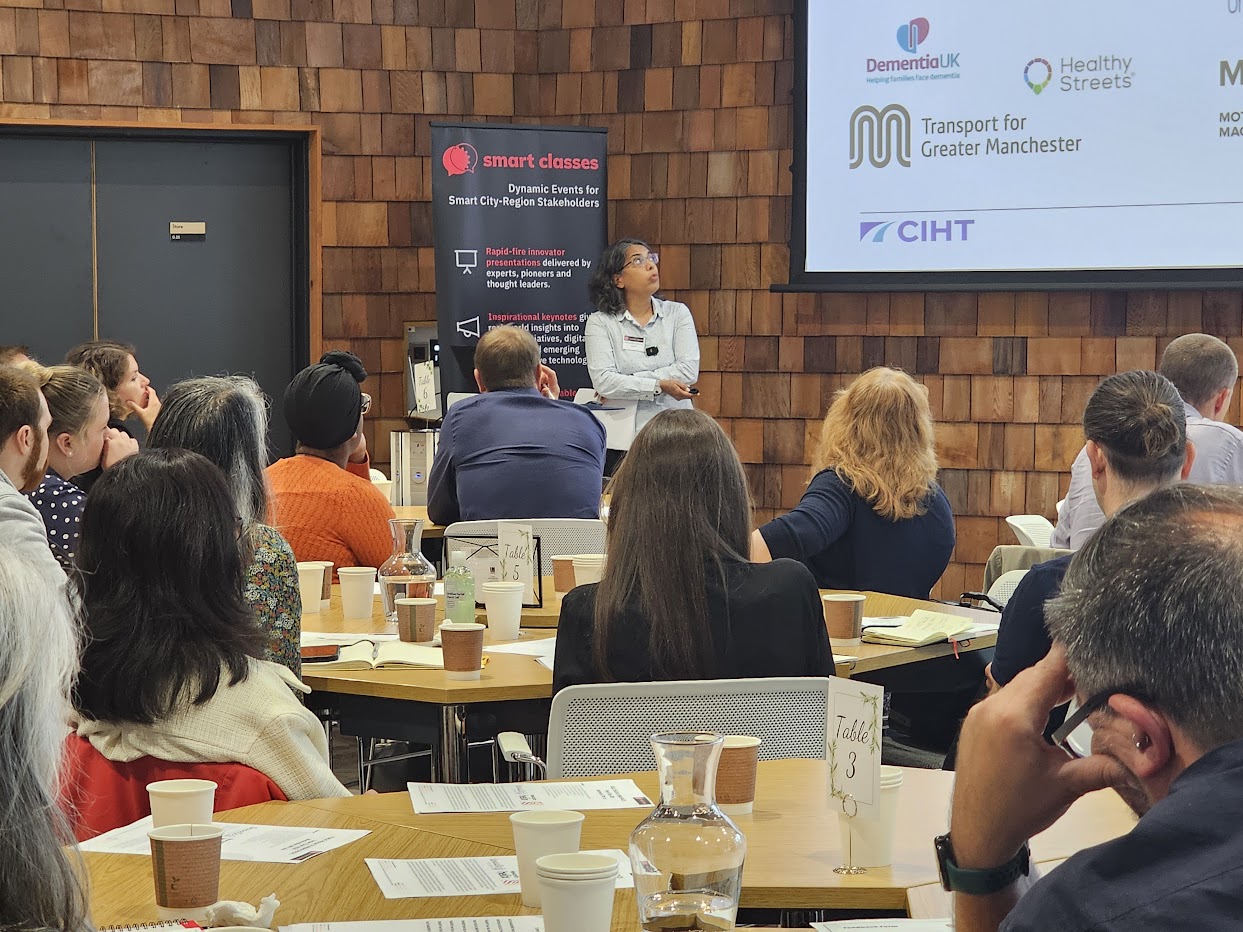
In her keynote presentation at PUBLIC REALM & URBAN SPACES Smart Class 2024, CIHT Director of Policy and Technical Affairs, Antoneta Horbury, highlighted the key points from the CIHT’s recently published report on “Creating a Public Realm for All” (now freely available from www.ciht.org.uk/publicrealm).
Antoneta explored the importance of proper engagement with those who could potentially use a scheme. She also addressed reducing barriers in the design stage, the difficult decisions which need to be made and how best to make them, and reducing barriers after implementation, including the importance of maintenance and reinstatement.
Summary notes from Antoneta’s keynote:
- About CIHT – A charity, learned society and professional membership body; home for everyone working in highways, transportation and infrastructure; has 12 UK Regions and Nations, plus several international groups; has a Partnerships Network, which includes 100 Corporate Partners, as well as academic institutions and public sector bodies; was awarded a Royal Charter in 2009;
- CIHT Strategy 2022+ has three Strategic Aims – 1) Climate Action 2) Professionalism 3) Equality, diversity and inclusion;
- Why this project? CIHT believe in working to improve EDI across the highways, transportation, and infrastructure sector. There is a significant overlap between social inclusion and our physical and mental health and wellbeing, so ensuring equitable opportunities for everyone to travel is essential. The “Creating a Public Realm for All” report helps transport professionals to recognise and respect people’s differences. We must be inclusive – in how we design, build, and maintain the public realm. This report does not have all the answers but will help you ask the right questions;
- Aims of the report – The report aims to help transport professionals to identify and design the public realm for the everyday challenges faced by some people, such as disabled people (with physical, sensory, cognitive, or intellectual impairments or differences, which may be readily apparent or non-visible), people with temporary conditions such as pregnancy or sports injuries, older people, people with young children, or those encumbered by luggage or equipment;
- Chair of Project Professor Nick Tyler CBE FREng, FCIHT – Founded the Accessibility Research Group and invented the Pedestrian Accessibility and Movement Environment Laboratory (PAMELA) at UCL, which enables detailed study of person-environment interactions; Created PEARL – the Person-Environment-Activity Research Laboratory – where the whole human experience of interacting with the constructed environment can be studied so that we can make the environment more understanding of people’s needs;
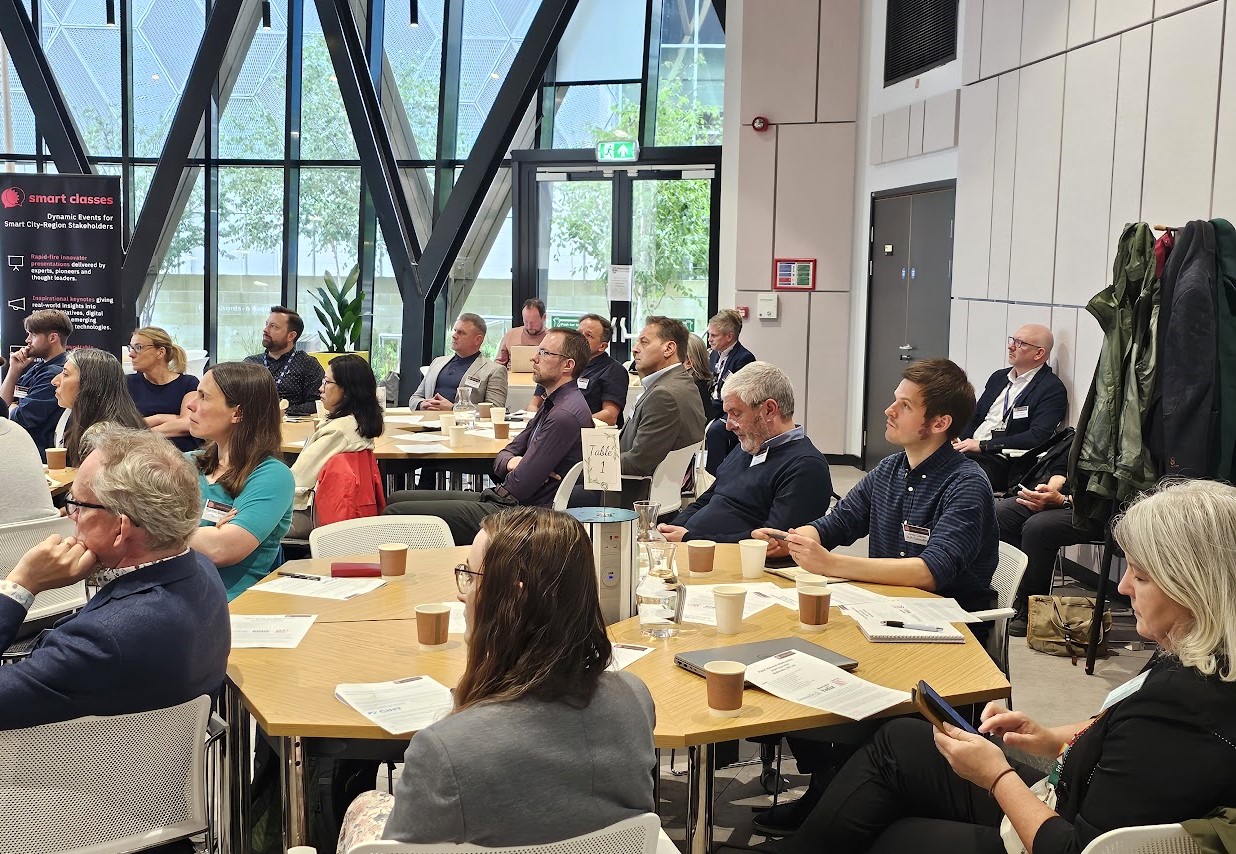
- How CIHT undertook the project: Scoping workshop (Jan 2024) – Involved men and women from a range of ethnic backgrounds and included people with lived experience of health conditions or impairments, representatives from disability groups, urban planners, highway engineers, researchers, inclusive design professionals and other experts in the field; Call for evidence – 42 responses to the call for evidence…held a workshop session ay CIHT Council meeting in Feb 2024; Webinar – Webinar on draft findings of report in March 2024 so CIHT members and partners could feed back their comments; Review of draft – The report was then shared with all those individuals who contributed to it for review in April 2024; Co-cultivation (more later!);
- Acknowledgements – SWECO, Jacobs, Action Disability Kensington & Chelsea, AtkinsRealis, BURO HAPPOLD, Costain, Transport for the North, Lambeth Council, BDP, University of Greenwich, Coventry University, SoRSA, Sight Loss Councils, Dementia UK, Healthy Streets, Mott MacDonald, Thomas Pocklington Trust, RB Kensington and Chelsea, Transport for Greater Manchester, Anne Frye Ltd, Arup, Bert Bailie, Kris Beuret, Natasha Trotman;
- The project – Celebrating diversity and working towards inclusion should be central to how we design, build and maintain our infrastructure and in doing so will help move towards creating a public realm for all. This report looks at the challenges involved in achieving accessible transport infrastructure in the public realm and: Identifies existing challenges and barriers that people can face when using the public realm; Highlights good practice – both in the UK and worldwide; Provides a comprehensive literature review of work done in this area;
- Key messages – When we say creating a public realm for all we mean all; The accessibility of the public realm is therefore a matter for the whole of society;
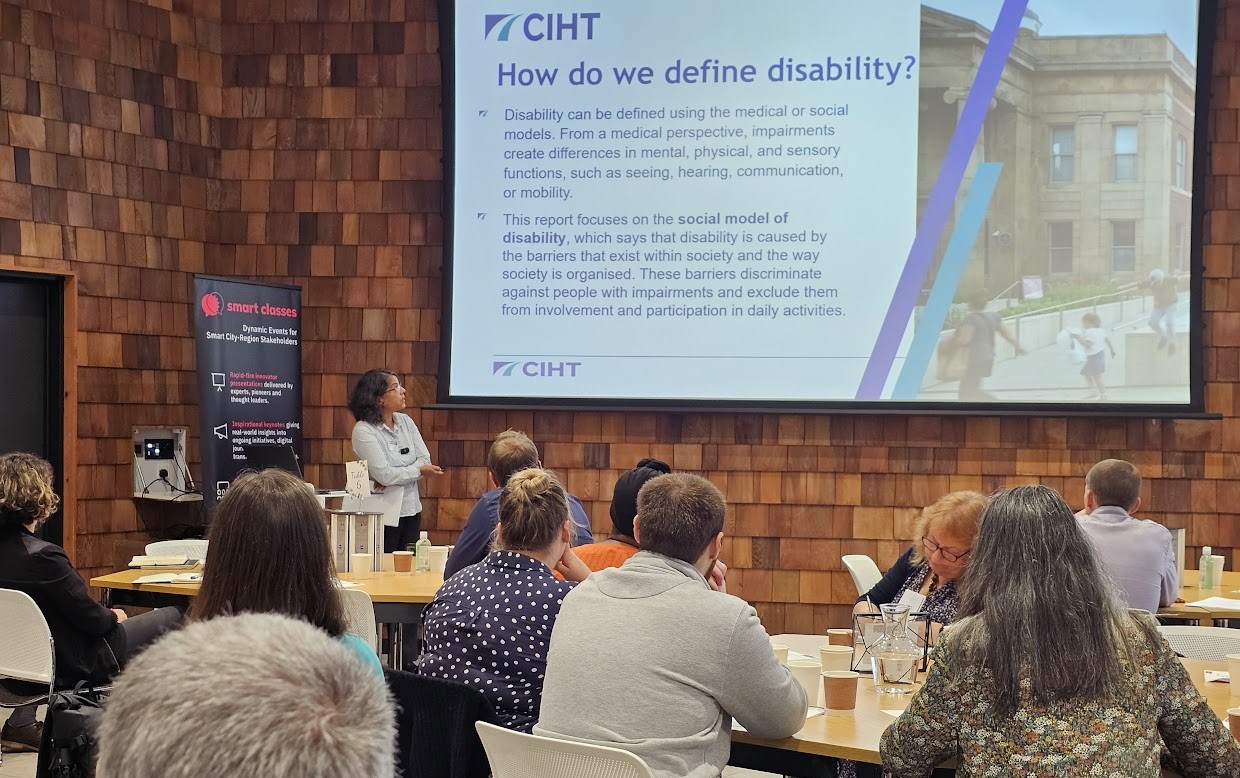
- How do we define disability? Disability can be defined using the medical or social models. From a medical perspective, impairments create differences in mental, physical, and sensory functions, such as seeing, hearing, communication, or mobility. This report focuses on the social model of disability, which says that disability is caused by the barriers that exist within society and the way society is organised. These barriers discriminate against people with impairments and exclude them from involvement and participation in daily activities;
- What is inclusive design? It is important to make neighbourhoods and communities inclusive so that everyone can access the goods, services, and facilities that they need, when they need them. Creating a public realm for all means incorporating the principles of inclusive design, which aim to remove the barriers that create undue effort and separation. This enables everyone to participate equally, confidently, and independently in everyday activities and in society in general;
- Two fundamental issues – 1) Guidance only provides for the bare minimum 2) The only people who really know whether somewhere is accessible are the people for whom it presents a barrier;
- Co-cultivation – A key feature of the report is the importance of “co-cultivation”;
- Coverage of the report:
- Reducing barriers in the design stage – Consideration should be given to how the space is used;
- Conflicts – A barrier to one group of disabled people may be an enabler for another group of disabled people;
- Reducing barriers after implementation – Consideration should be given to the safety of people during construction, maintenance, and operation of a scheme, as how the space is used also affects its accessibility;
- Maintenance and reinstatement – Maintenance is a key component of making the public realm accessible for all;
- Construction and roadworks – There need to be safe and accessible alternative walking and wheeling routes during construction and other highway works, especially as these can continue for significant periods of time and be a barrier to people accessing the local neighbourhood;
- Recommendations – Aim for co-cultivation rather than high-level consultation on a scheme; Those with lived experience are best placed to advise on how infrastructure can negatively impact them and how things can be improved; The UK government should fund disability equality awareness training for all local authority personnel designing and changing the public realm;
- Conclusion – It is important to get the basics right – everyone should be able to walk or wheel to the local shops, schools, and services; Good access is not only about physical accessibility; it is also an ethos of inclusion for everyone; There is no one-size-fits-all solution to designing public realm infrastructure so co-cultivation is essential;
- CIHT resources; Where to find out more; Reasons to join CIHT.
If you satisfy our regular delegate qualification criteria but were unable to join us in Newcastle on July 10th for the live in-person event at The Catalyst, CLICK HERE and complete the short “Download form” (located at the bottom of the post) to receive a unique link enabling free access to the presentation video recordings and slides (including the film footage and slides from Antoneta’s keynote).
Those qualifying to receive the rich presentation content from this event include commissioning, procurement, trialling, partnering and policy leads, senior influencers, strategic decision makers, planners, place makers, architects, green space managers, urban designers, communities & neighbourhoods, highways & street scene, transport & mobility and high streets & regeneration professionals from UK councils and local authorities (city, borough, metropolitan, district, county and combined); people and place partnerships; developers, landowners and creators of privately owned public spaces; prime contractors and city centre management companies; DfT, DEFRA, MHCLG, EA and supporting governmental bodies; transport authorities, highways agencies and public transport operators; civic organisations and community groups; and other key players from the public realm ecosystem with responsibility for managing, maintaining and operating our streets, squares, forecourts, parks, pathways, retail centres, car parks, airports, ports, travel hubs, hospitals, housing estates, campuses, communal gardens and the assets contained within these public or semi-public spaces.


