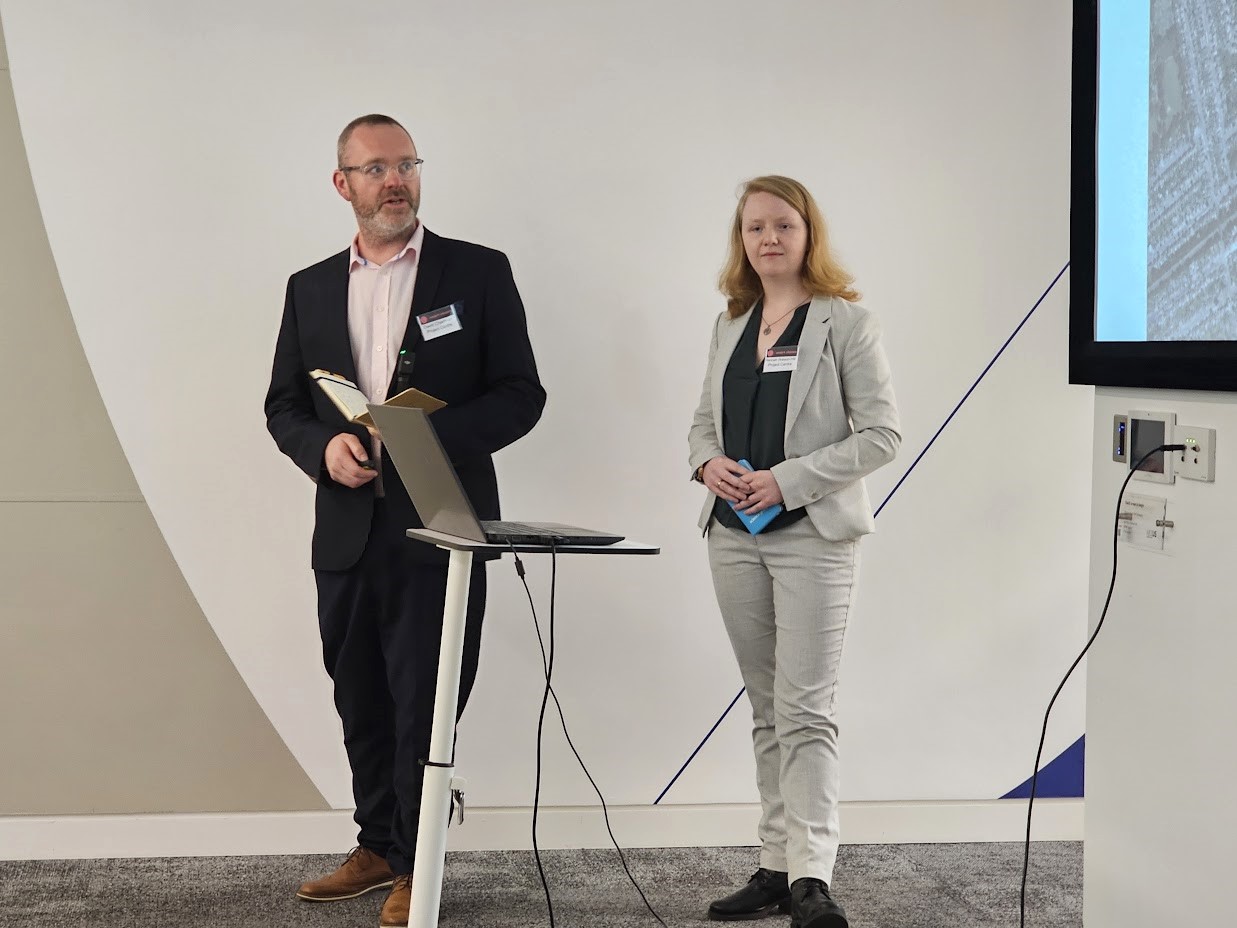
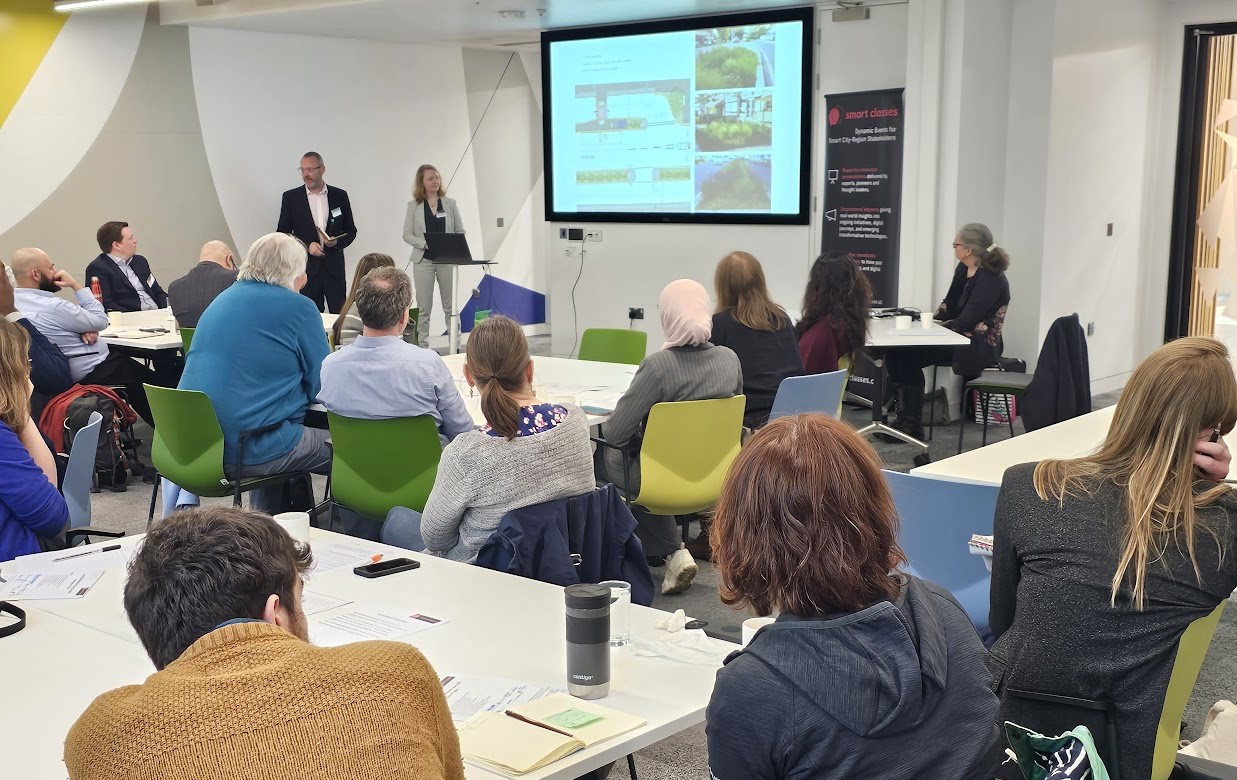
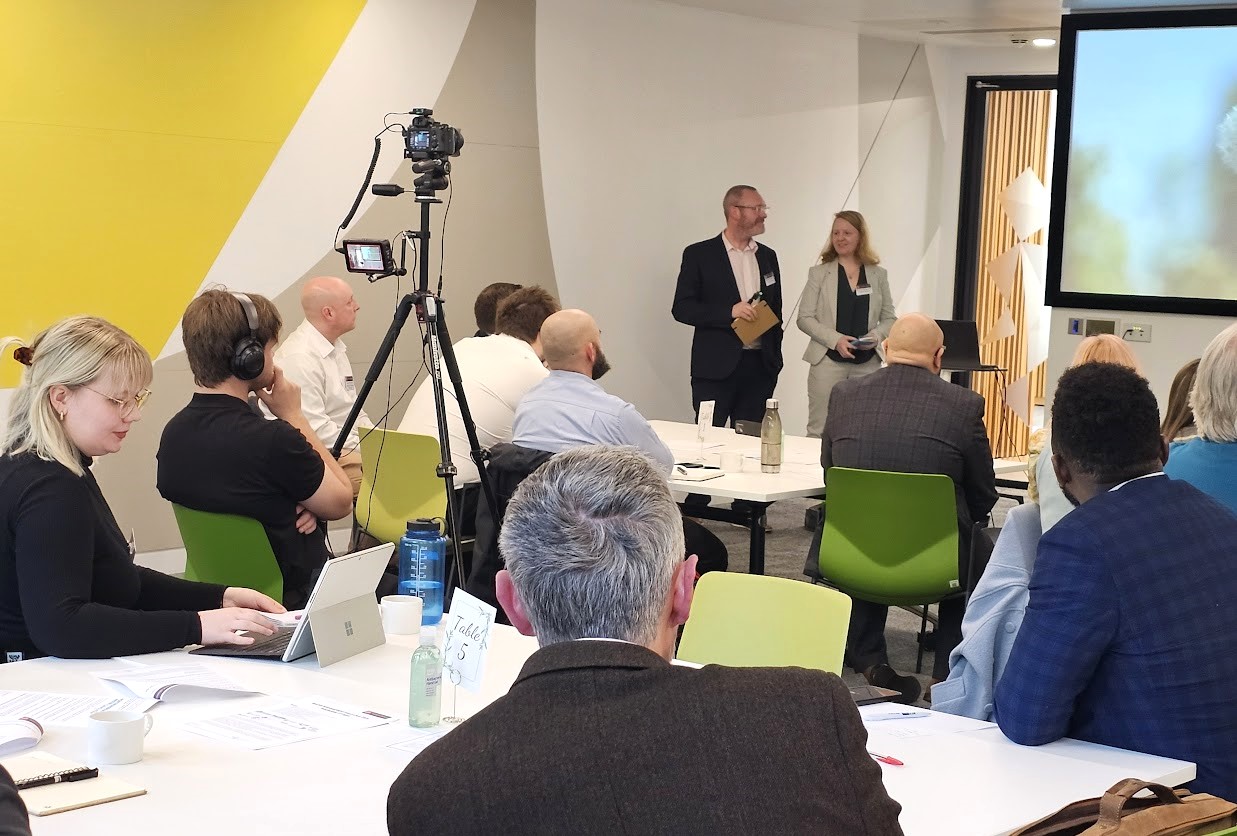
At WATER MANAGEMENT Smart Class 2025, Project Centre’s David Chapman (Associate Director) and Hannah Watson-Hill (Assistant Flood Risk Engineer) teamed up at the podium to explore the role of Sustainable Drainage Systems (SuDS) and urban landscape design in reducing local flood risks.
SuDS, designed to mimic natural drainage processes, offer multifunctional solutions to manage stormwater. By integrating features like permeable pavements, rain gardens, and swales, communities can reduce flood risks, enhance biodiversity, and improve urban aesthetics.
Urban landscape design complements SuDS by incorporating green infrastructure into the built environment. Vegetated swales and rain gardens manage stormwater, reduce urban heat islands, improve air quality, and create recreational spaces.
Dave and Hannah explained how these interventions can be tailored for different urban settings, leveraging other highway schemes to maximise SuDS benefits, even with a focus on traffic calming.
They also highlighted the importance of community engagement, demonstrating how collaboration among local governments, planners, landscape architects, engineers, and residents ensures holistic, locally driven solutions.
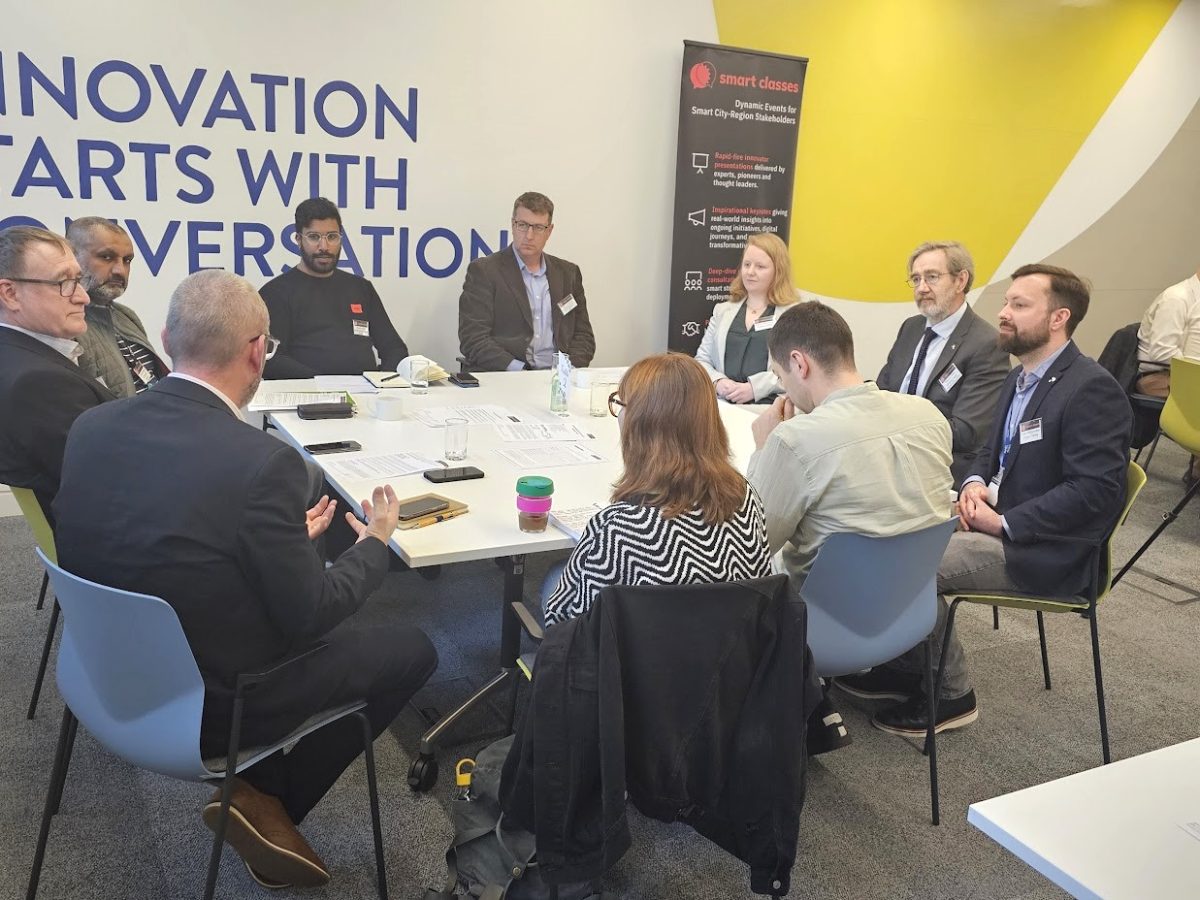
Luke McGuinness (Project Centre’s Associate Director for Landscape and Urban Design) added his expert knowledge during the subsequent roundtable discussions.
Presentation highlights and notes:
- Designing Spaces for Climate Resilience;
- Multidisciplinary Approach…
- Landscape and Urban Design;
- Behaviour Change and Engagement;
- Transport Planning and Consulting;
- Traffic Reduction and Road Safety;
- Parking and Kerbside Management;
- Flood and Water Management;
- Civil Engineering;
- Structures;
- Design Led Multidisciplinary Approach – SuDS, Parks, Town Centres, Masterplanning, Gardens, Squares, Play Areas, Street Scape;
- How can integrated, nature-based solutions deliver both climate resilience and meaningful co-benefits?
- Memorial Park, Waltham Forest: ‘Before and After’ Case Study – Community engagement; 3 Basins wetlands; Thames Water bypass; Cut and fill balance; Storage volume; Landscape (e.g. Amenity, Seating and picnic areas, Stepping stones); Biodiversity; Water quality improvement; Carbon footprint;
- Belvue Park, Ealing: ‘Before and Proposed’ Case Study – Floods yearly; Attenuation basins – Volume and Accordance with existing trees and park setting; Landscape; Biodiversity (e.g. Wetland planting, Wildflower meadow, Introduction of new species and habitat);
- Eastcote Road, Hillington: ‘Before and After’ Case Study – 15 Rain gardens; Capacity for back up to 50 cubic metres; Flood resilience up to 30MM;
- Royal Docks Corridor, Newham: ‘Before and After’ Case Study – Rain gardens with new tree planting; Copenhagen crossing; Segregated cycle lane; Planting beds below DLR structure; Informal play area below DLR structure; Furniture zone incorporated within rain gardens; Floating bus stop;
- Green Infrastructure & Improved Amenity Value;
- Sustainability Design Expertise;
- Biodiversity & Habitat Creation;
- Built Projects Track Record;
- Assistance with Funding Applications etc
If you satisfy our regular delegate qualification criteria but were unable to join us in Leeds on April 2nd for the live in-person event at Nexus, CLICK HERE and complete the short “Download form” (located at the bottom of the post) to receive a unique link enabling free access to the presentation video recordings and slides (including the film footage and slides from Dave and Hannah’s initial presentation).
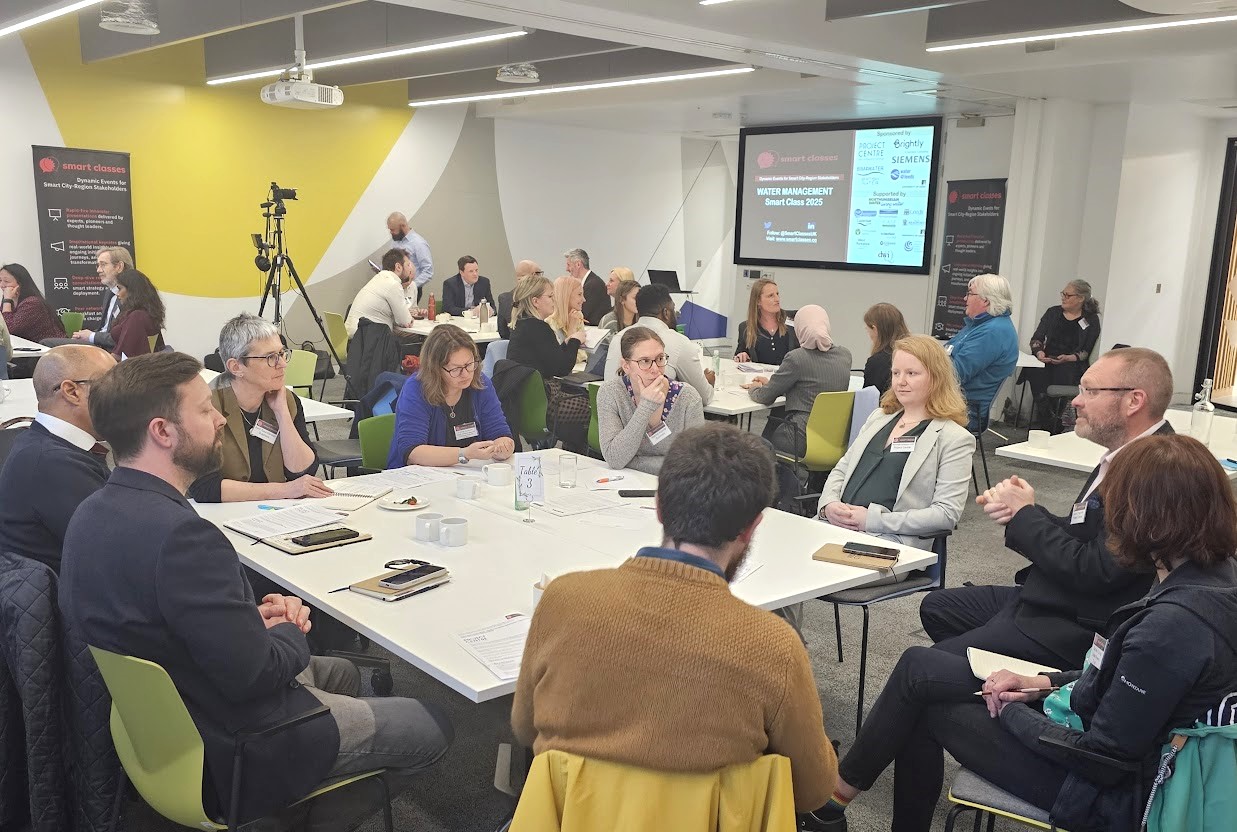
Those qualifying to receive the rich presentation content from this event include commissioning, procurement, innovation, trialling and partnering leads, senior influencers, strategic decision makers, environmental managers, policy makers and planners from UK water companies and utilities, wastewater and sewer operators, lead local flood authorities (unitary authorities and county councils), city/borough/metropolitan councils, district councils, combined authorities, internal drainage boards, regional flood & coastal committees, highways authorities, prime contractors, general insurers, large water consumers, national agencies, central governmental and regulatory bodies (e.g. Defra, DCLG, Ofwat, Environment Agency, DWI, SEPA), independent industry and consumer organisations (e.g. Water UK, CCW), river trusts, NGOs etc.