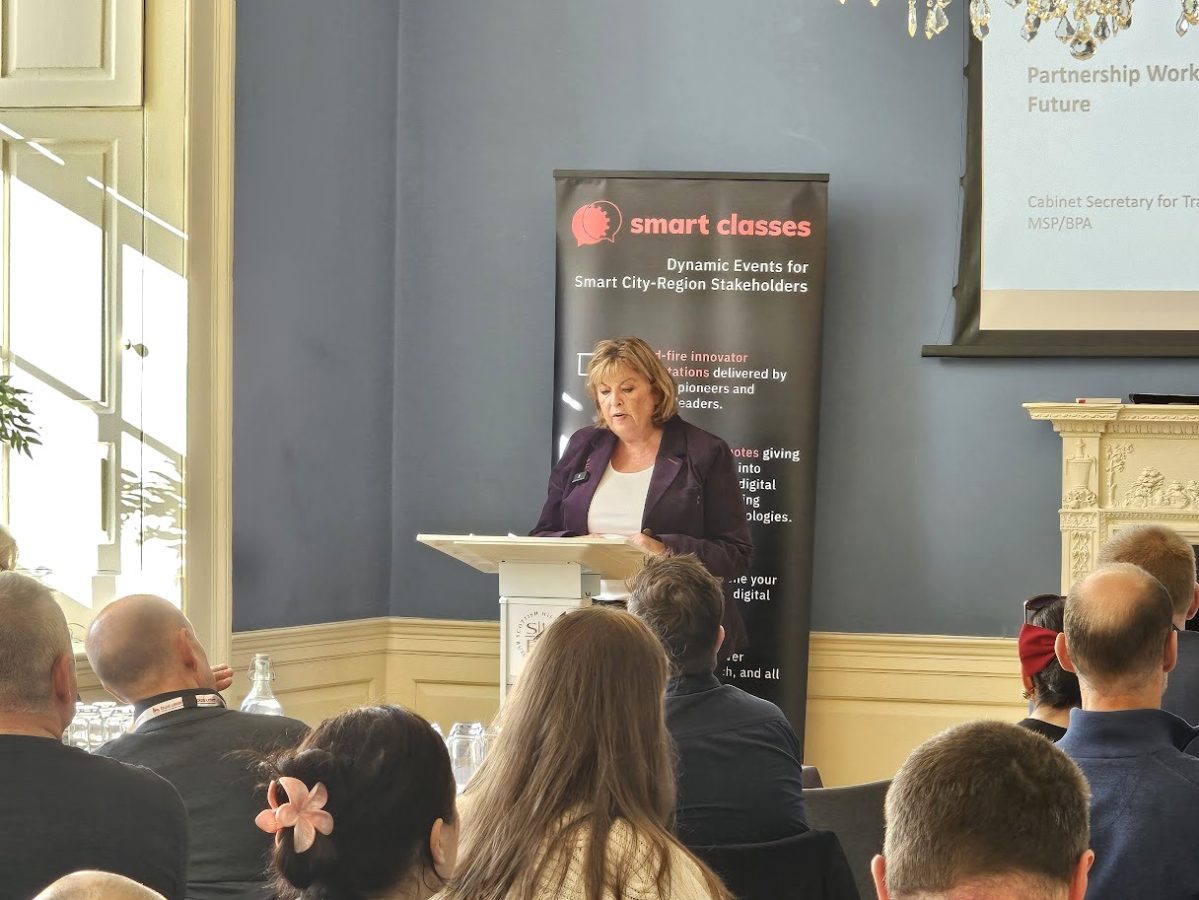
Fiona Hyslop MSP/BPA was reappointed as the Scottish Government’s Cabinet Secretary for Transport in May 2024.
We were delighted to welcome her back at TRANSPORT Smart Class, Scotland 2025 earlier this month, to present – for the third year running – the opening keynote.
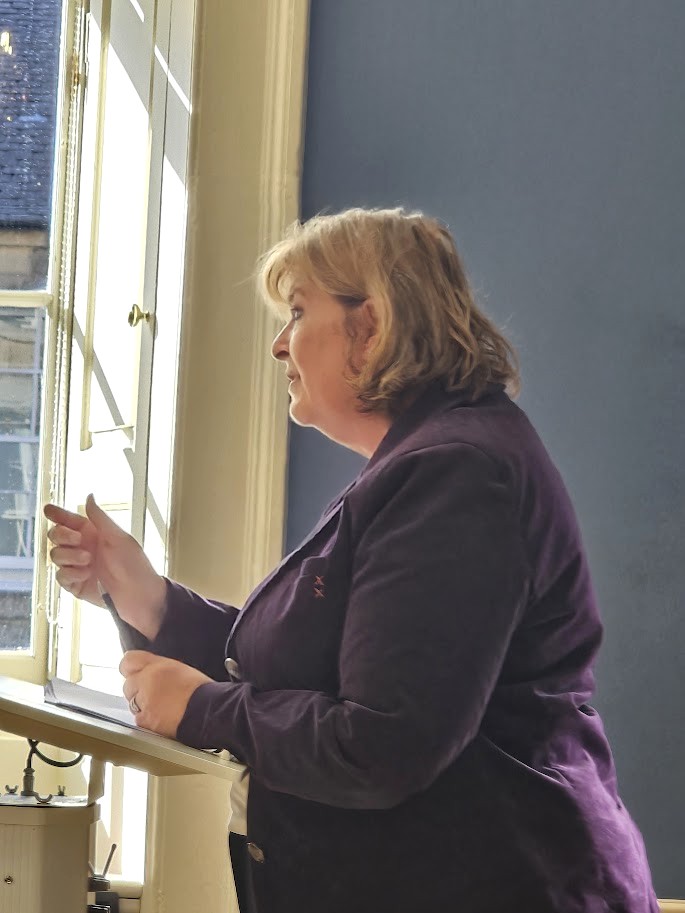
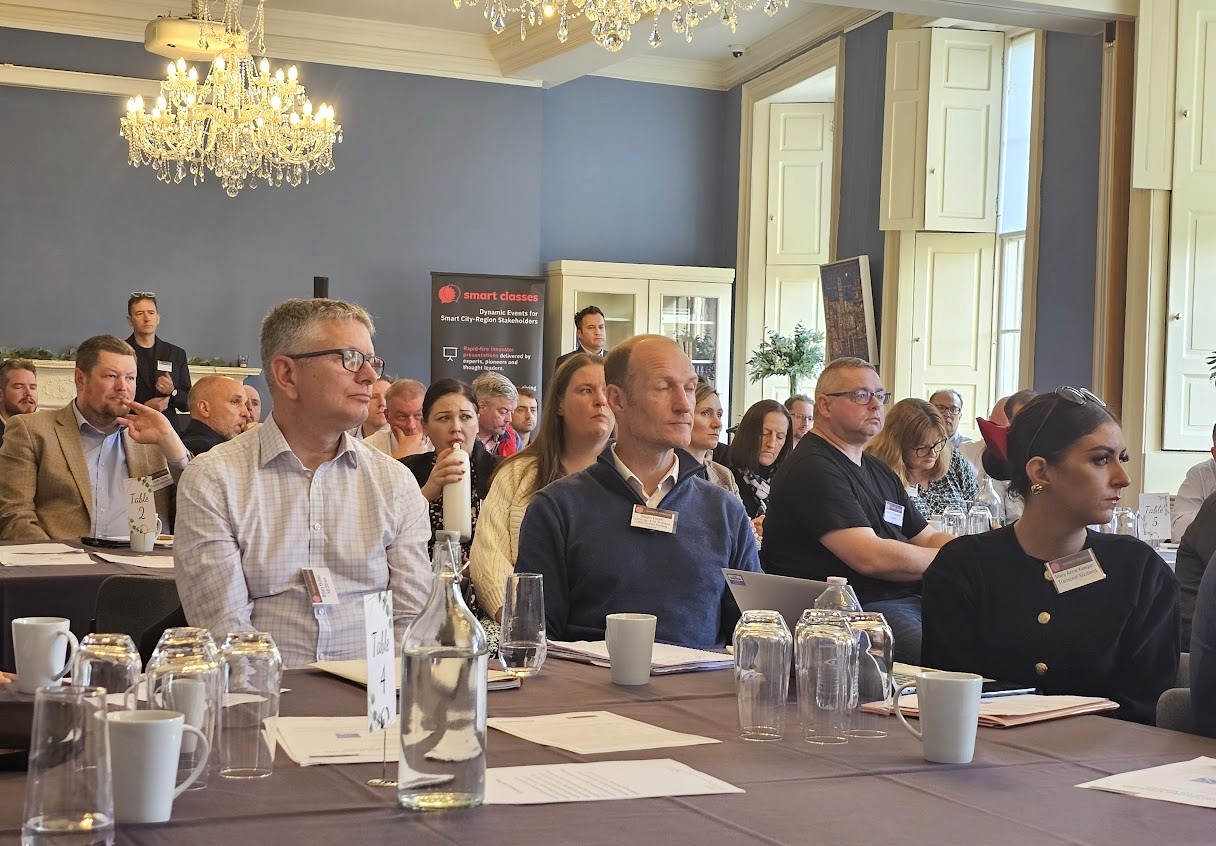
Setting the scene for wider discussion across the day, Ms Hyslop reflected on “how we are working collectively to improve transport through the use of technology and innovation”, looking at recent successes and highlighting new projects that are “helping us to travel smartly and more efficiently across our networks”. She also engaged with delegates during the breakfast networking and took the time to accommodate an audience Q&A at the end of her presentation.
We were also grateful to have Transport Scotland’s Smart Policy Manager, Mary Anne Keegan, and Sustainable Travel Policy Lead, Laura McCaig, in attendance as the Minister’s official event support. Mary Anne and Laura were on hand to address further questions during the mid-morning break, roundtable sessions and lunch networking, and provided Ms Hyslop with feedback and key learnings from all of our discussions.
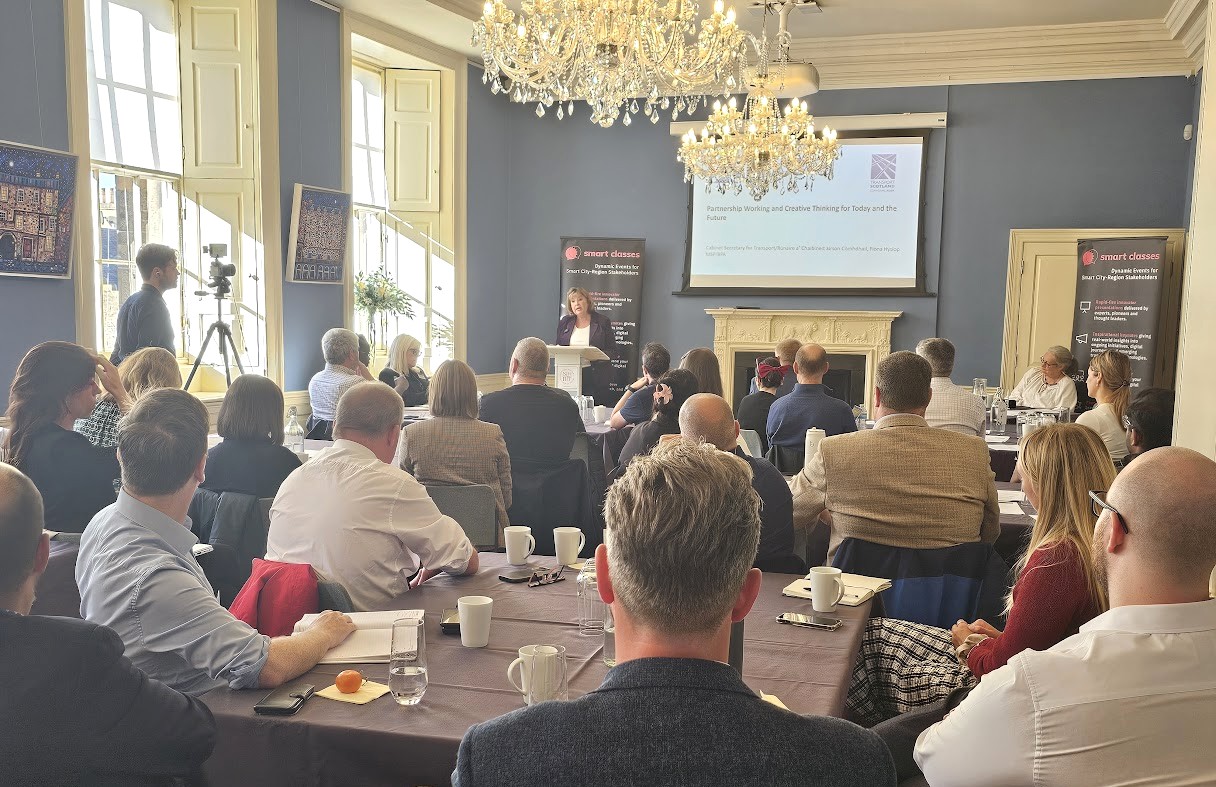
Summary notes from Ms Hyslop’s opening keynote speech:
- Previewing some of the day’s themes – We’ll learn about the latest digital innovations and how these can address challenges related to transport and mobility across Scotland, including focusing on collaboration and implementing those transformative projects to enable solutions in the sector. We’ll also hear about street design guidance in Edinburgh to enhance mobility, regional transport strategy developed by SEStran, and promoting Mobility as a Service, as well as looking at data tools and AI to better understand traffic patterns and build better bus networks;
- Through such technological innovations and digital solutions, the Scottish Government (SG) and Transport Scotland are taking steps towards their shared vision for a sustainable, inclusive, safe, and accessible transport system across Scotland, as set out in the national transport strategy;
- This work is vital in helping people to navigate the transport system with more confidence in the digital age – From new digital tickets for integrated travel to the use of artificial intelligence at bus stops, as well as drone technology to deliver services and alternative road building materials to reduce carbon;
- Information is key to how we all plan our next journey and it enable us to consider weather conditions, switching or alternative modes, or making faster connections, whether it’s short notice or longer multimodal journeys;
- We all need the ability to plan, book and pay for journeys, and joining up modes of transport in a seamless way is central to this – With digital services such as travel apps, like Travel Line Scotland, or Mobility as a Service, open data is the key element of this work;
- Provision and marketing of travel information is also powerful in raising awareness of the great opportunities available to us, such as Tap on-Tap off payments, and smart ticketing options, or promoting the benefits of active travel for our everyday journeys;
- As Cabinet Secretary for Transport, Ms Hyslop oversees the Scottish Government’s commitment to sustainable, inclusive, and forward-looking transport policy and investment, and key to this work is integration and working collaboratively with each other;
- Encouraging progress has been made this year – From reaching SG’s electric vehicle charging target ahead of schedule, publishing draft implementation plan to deliver the vision for Scotland’s public EV charging network, and working collaboratively with councils to appoint a private sector partner to jointly invest in EV charging, to the opening of several popular active travel routes;
- Back in June, Ms Hyslop delivered the keynote speech at the Scottish Transport Awards, which was a fantastic opportunity to celebrate the successes and achievements of the people and the sector over the past year, and to highlight several innovative transport projects undertaken by a range of partners – Some of these included: the creation of an interactive space for people at Hamilton Rail Station, engaging with disabled groups through Edinburgh’s Accessibility Commission, Bus safety initiatives in Lothian, infrastructure projects like the Kincardine viaduct replacement, and the trialling of pop-up travel hubs across the country;
- Recently a new pilot scheme has been introduced in East Lothian, Renfrewshire and Perth & Kinross to make electric vehicles accessible to more households without traditional off-street parking – The results from this pilot, which is backed by a quarter of a million pounds of SG funding and delivered by the Energy Saving Trust, will feed into the development of national guidance on cross pavement charging;
- SG will also provide up to £4 million to increase the shift of freight from road to rail through the Freight Facilities Grant, and a first round of funding for the HGV sector to explore investment and decarbonised vehicles charging and fuelling options is happening as well;
- More needs to be done to deliver the other major milestones outlined in the Programme for Government – The sector needs to continue harnessing creative thinking for our ambitions and aspirations for the future, to ensure that Scotland’s transport system contributes to the government’s priorities;
- On eradicating child poverty through important work in reimagining bus policy – Over 240 million journeys have been made through the Young Persons’ Free Bus Travel scheme and more safe routes to school are in place to help to encourage more children to walk wheel and cycle;
- Ms Hyslop was recently in Hawick, where P3 pupils are getting scooters to help them with their balance and mobility, and to help encourage them to tell their parents that they want to scoot to school rather than taking the car;
- To support economic growth – We need to future proof how transport can support the demands and employment opportunities to begin from the renewables energy sector, on and offshore. What does this mean for ports, harbours and rail?
- On reaching net zero – The SG are are taking forward work on rail decarbonisation, climate change mitigation, and adaptation work across a number of modes, and Ms Hyslop announced a further electrification for Fife from Borders Railway just last week; The SG remains committed to reducing people’s car use alongside our transition to electric vehicles to help reduce emissions and realise wider societal benefits, and will revise their existing car use reduction target, informed by the advice of the Climate Change Committee and other relevant evidence to help develop a new and longer term target;
- As well as taking steps to build Scotland’s economic future, SG will support the businesses that create jobs and wealth today, ensuring the conditions are right for them to thrive and grow;
- To help keep Scotland moving SG will provide nearly £2.5 billion to support public transport in 2024-2025, which is the amount they also invested the previous year; and £1 billion is being invested to ensure Scotland’s motorway and trunk road network is safe, resilient, and efficient;
- SG want all local transport authorities to be able to improve all of the bus services within their areas – Through the Transport Scotland Act, local authorities have been given powers for partnership working, franchising, and to run their own services;
- Key areas in smart ticketing and bus open data have also been strengthened; and through Mobility as a Service, SG and TS continue to investigate how they can change the way people plan their travel, and provide access to accurate and timely digital travel information so that we can be better informed about different ways to undertake our journeys; This concept can then be expanded to allow people to also book and pay for their journey digitally;
- Five MaaS pilot projects have previously been funded (through the MaaS Investment Fund) in the Highlands and Islands, Central Tayside and South East of Scotland regions – These projects help to identify the issues that are specific to Scotland and have taught us about how a global concept could translate and adapt to Scotland’s unique transport requirements; the new MaaS working group has been tasked in creating a National Evaluation Framework as well as a Scottish MaaS code of practice;
- Longer term, there will be a focus on defining governance and delivery structures, as well as reviewing legislative requirements and developing a national MaaS platform specification;
- We must continue to collaboratively use and improve upon the information and the data available to make one true source of travel data for Scotland that can be used by all;
- To make it easier for people to travel by public transport through improvements in smart ticketing and payments – SG/TS have worked with transport authorities and operators to deliver universal smart cards, modernize concessionary Ferry travel, extend free bus travel to young people and bring contactless payment to 99% of Scotland’s bus services;
- The Travel Line Scotland website and app includes open data for third party journey planners to further improve the way people access and plan their journeys online – The project improves the way open transport data is managed and controlled, ensuring the best quality travel information is provided for traditional, new and emerging modes of transport;
- By working with the National Smart Ticketing Advisory Board, momentum is continuing to build to deliver legislation and activities to improve the integration of contactless and digital ticketing between operators; The smart ticketing delivery Strategy, which was published last August, outlines the program for the next 5-10 years, including exploring options for a new national integrated ticketing system;
- Another interesting area where technology is developing quickly is the increasing availability of connected and autonomous vehicles (CAVs) – This work is a vital part of mobility for the future and we need to ensure policy can keep pace with advances in technology and what is a fast changing market; Research and development being undertaken to create these solutions is important; We must keep pace to ensure we are well placed to unlock assisted opportunities; Autonomous vehicles also need a robust regulatory framework to provide certainty for innovators and investors, and to give people confidence that the technologies can work in their interests; the SG welcomed the Automated Vehicles Act, which received Royal Ascent in the UK last May;
- Work is also being prioritised to evolve the national traffic and travel information service at Traffic Scotland, to take best advantage of emerging technology, data and connectivity options – This includes the collection, analysis and communication of rich data from connected vehicles to improve the effectiveness of how critical travel information is captured and community communicated to transport users; In relation to climate change, Ms Hyslop commended Traffic Scotland’s success in keeping us safe (through good communications at the time) during Storm Floris;
- Artificial intelligence will undoubtedly play a part in all of our futures and research shows that the integration of AI technologies into the transport sector can be transformative and support efficiency and sustainability – We need to continue to invest in Scotland’s AI ecosystem and Edinburgh is world class in that regard, with involvement of universities, research institutions and technology businesses; Scotland’s AI strategy seeks to help Scotland to maximise the potential economic and social benefits of AI by working closely with industry innovators and educators to build the best environment to encourage growth and investment;
- We need to plan for changes in the future, deliver change in how we travel, so that we do it more sustainably and are helping to cut emissions, and transport must play its part in helping Scotland achieve its climate change targets;
- Bus already provides a climate friendly way to travel and decarbonising to zero emissions further increases the benefits of bus as a transport choice – Since 2020, the SG has supported operators to acquire 548 zero emission buses supporting infrastructure through various bus schemes; 14% of Scotland’s buses are now electric compared to 8% in the rest of the UK, and SG have further ambitions in this area; £21 million in grants have been awarded to enable bus and coach operators to upgrade over 1200 mid-life vehicles to be compliant with low emission zones in Scottish cities;
- The SG is looking to simplify funding for post-school education and skills through legislation that will bring responsibility for securing and funding all forms of post-school learning into one place – This is hugely important as investment in the future for transport and for a changing transport environment, as skills and training are going to be absolutely crucial in this area. e.g. to ensure that colleges can be in advance of the EV switch for apprentices and engineers of today and the future; In the transport sector, understanding skills is vital in the context of transition to net zero; In the 2024-2025 academic year, SG provided £2,400 uplift to the higher education student support packages and made sure that students from the lowest income households are particular supported;
- While taking these actions forward, we cannot ignore the significant challenges created by one of the most difficult public spending environments this devolved parliament has ever seen;
- Closing words – “But we will work through it. We remain open and honest about these challenges and how they might affect the industry and the transport users. And we are going to try and be able to identify a route through this next period. I hope I’ve been able to set out some of the significant and indeed pioneering progress that we continue to make collectively in Scotland to achieve our ambitions by embracing technology and innovation and data so that everyone across Scotland can benefit. And creative thinking and partnership and collaboration is most certainly the way that we can make sure that we can drive forward, get pace, get momentum, and get this agenda moving in the way we want to“.
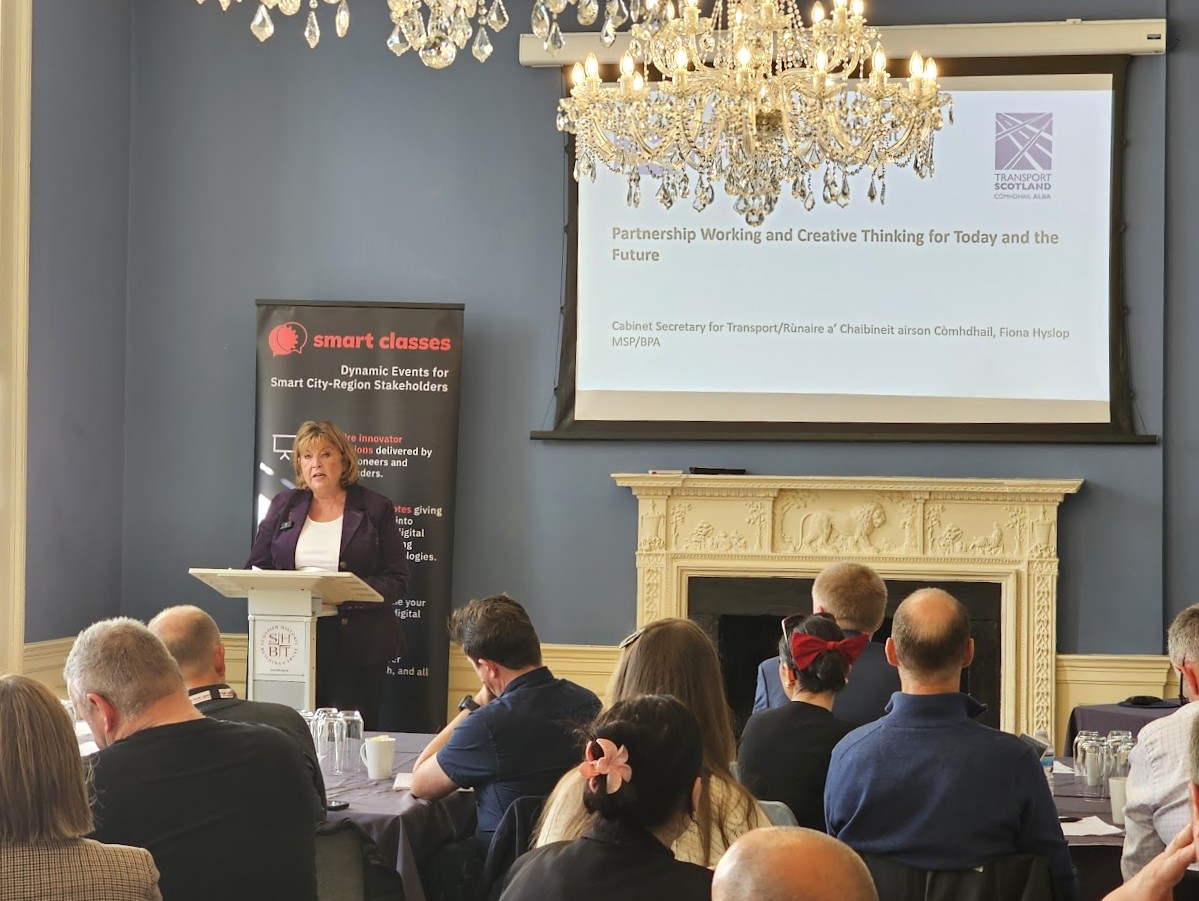
If you meet our regular delegate qualification criteria but were unable to join us Riddle’s Court, Edinburgh, for the live in-person event on September 11th, CLICK HERE and complete the short “Download form” (located at the bottom of the post) to receive a unique link enabling free access to the presentation video recordings and slides (including the film footage from Fiona Hyslop’s opening keynote).
Those qualifying to receive the rich presentation content from this event include commissioning, procurement, trialling, partnering and policy leads, senior influencers, strategic decision makers, programme managers and planners from local authorities (e.g. city, borough, metropolitan, district and county councils); public transport operators; regional transport partnerships, sub-regional transport bodies, combined authorities, integrated transport authorities and passenger transport executives; highways authorities and road operators; government and supporting national transport agencies; non-governmental organisations; fleet operators, parking operators, prime contractors etc.