
With over 25 years of expertise, Brightly, a Siemens Smart Infrastructure Company, empowers organisations to optimise operations, cut costs, and build sustainable futures through innovative, user-friendly asset management solutions trusted by over 12,000 clients across diverse industries.
At PUBLIC REALM & URBAN SPACES Smart Class 2024 we were delighted to welcome back Account Director, Cherryanne Cooper, and Senior Consultant, Tim Woolven, and discover how, through the use of IoT, councils are able to create connected systems which deliver better outcomes for the communities they serve.
Cherryanne’s initial presentation explored the key role smart asset management can play in managing, maintaining and optimising a wide range of public realm assets, from street lighting, bus stops, litter bins and CCTV, to street furniture, carriageways, trees and greenspaces; and also demonstrated how strategic asset management can be leveraged for carbon capture and ESG in the public realm, helping enable the development of truly sustainable communities.
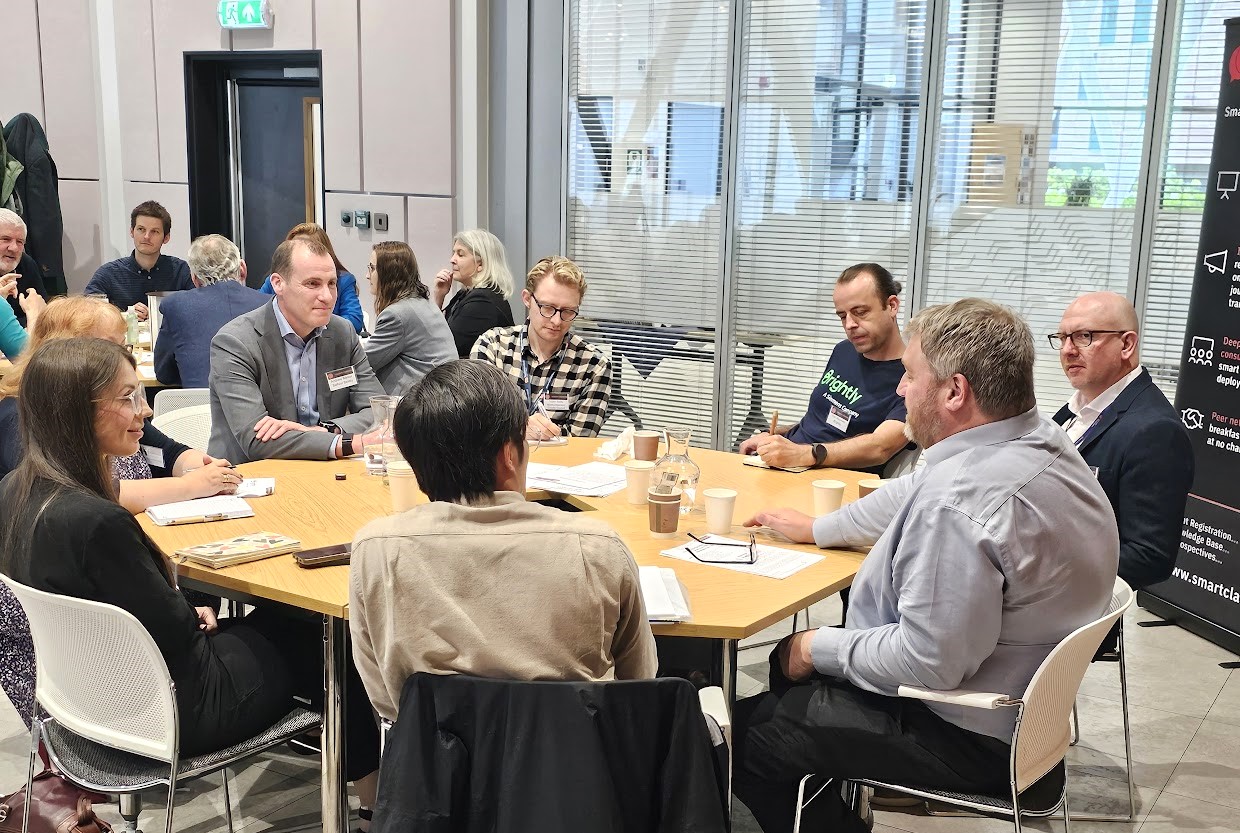
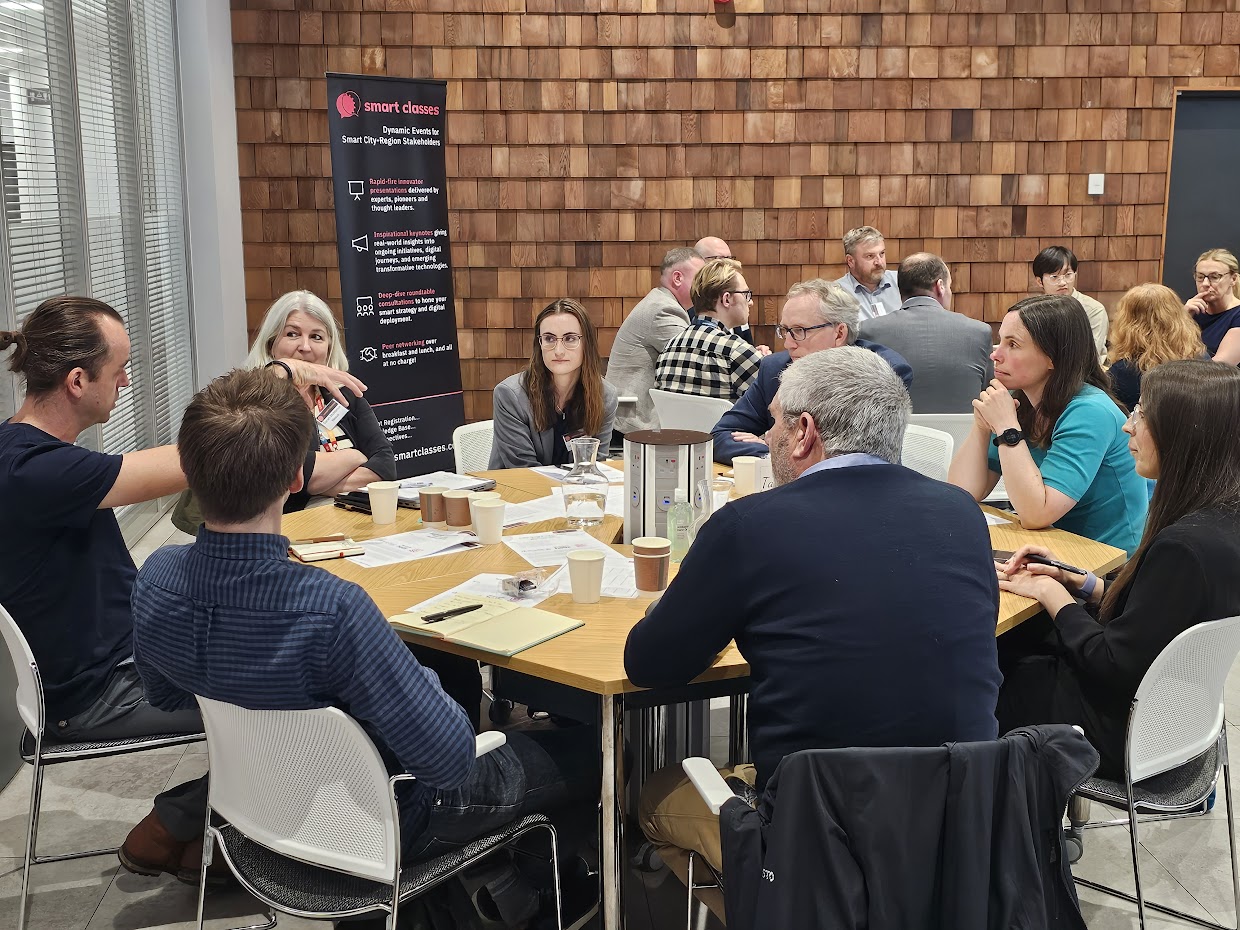
Tim added his specialist knowledge during subsequent roundtable sessions with all delegates in attendance.
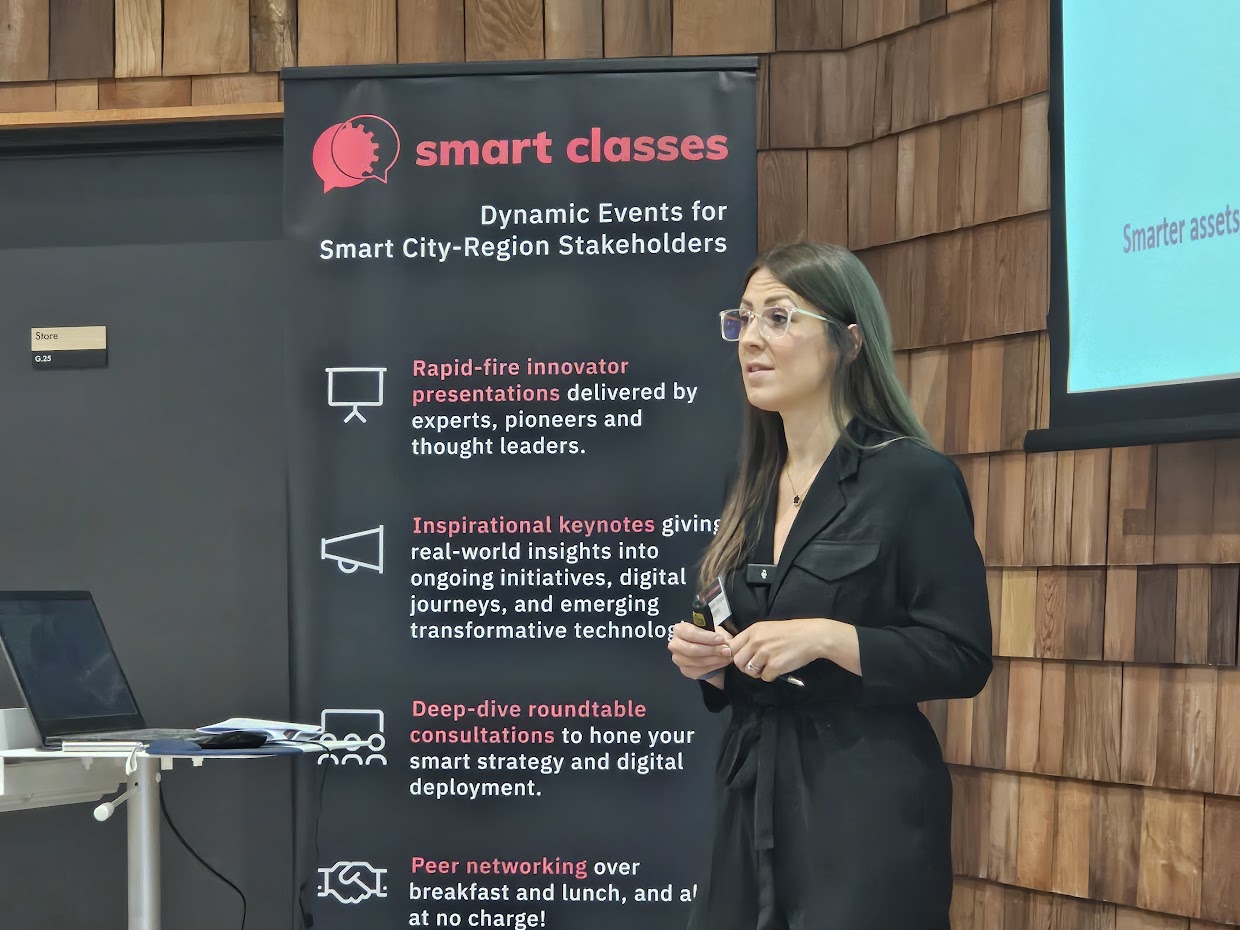
Presentation highlights:
- Typical Public Realm Assets – Parks & Grounds, Green Spaces, Pipes, Carriageways, Traffic Signals, Streetlights, Bollards, Signs, Verges, Grit Bins, Buildings, Bus Stops, CCTV, Fencing & Barriers, Bridges & Structures, Street Furniture, Waste Bins, Cycle Ways, Trees, Play Areas, Light Rail, Footways, Allotments, Gullies & Drains, Cemeteries, Road Markings;
- Smart Asset Management – A complete 360 view of operations and assets; Robust intelligence and predictive insights;
- Strategic Asset Management – The Optimisation Layer: From Asset Information (“Know Your Inventory”) and Tactical Asset Management (“Improve Operations”) to long-term Strategic Asset Management (“Optimize & Plan”);
- Asset Valuation, Asset Lifecycle Modelling and Capital Planning;
- What is one of the biggest priorities in the UK over the next 25 years? Carbon Reduction;
- Smart Lighting (IoT) in Action – Identifying broken lights with Automatic Health Status Monitoring; Reporting and prioritising the issue with the Service Provider; Temporary fix (Remote Control); Fixing the light (Engineer);
- Client Engagement;
- Community Engagement – Channel shift to expectation of ‘digital-first’ community services; Alignment of community interaction to asset-centric processes improves perception and outcomes; Proactively presenting real-time information reduces failure demand; Harnessing channel-shift and aligning processes reduces cost and duplication of effort;
- Carbon Capture;
- Environment, Sustainability & Governance – Embedding ESG in asset implementation, maintenance and lifecycle planning; Supporting sustainable maintenance operations with reports and dashboards; Insights to inform long-term investment planning and development; Asset performance benchmarking across ESG to inform opportunities for improvement;
- Data Trends – Carbon intensity data trends by type of works, highways activity and by location can be shown in real-time dashboards; Metrics aligned to FHRG guidance note to provide benchmarking data of emissions per mile and per £ spent on highways services; Better understand your greatest contributors and where policy change can make an impact i.e. reduce response time to reactive works for better planning; Carbon Intensity per Job Type – pavements/paved areas, drainage & service ducts, traffic sign/road marks, road restraint system, lighting; Carbon Intensity per Highways Activity – reactive maintenance, inspections, routine maintenance, planned works;
- Green Infrastructure – Positive Contribution: Managing Tree Assets and Green Space – Calculating sequestered carbon of tree stock, offsetting operational activities; Managing pests and diseases like Ash Dieback; Making smarter woodland, hedgerow and shrub planting decisions e.g. best species in which locations; Flood-risk areas and defences (reservoirs); Improving air quality with EV charging.
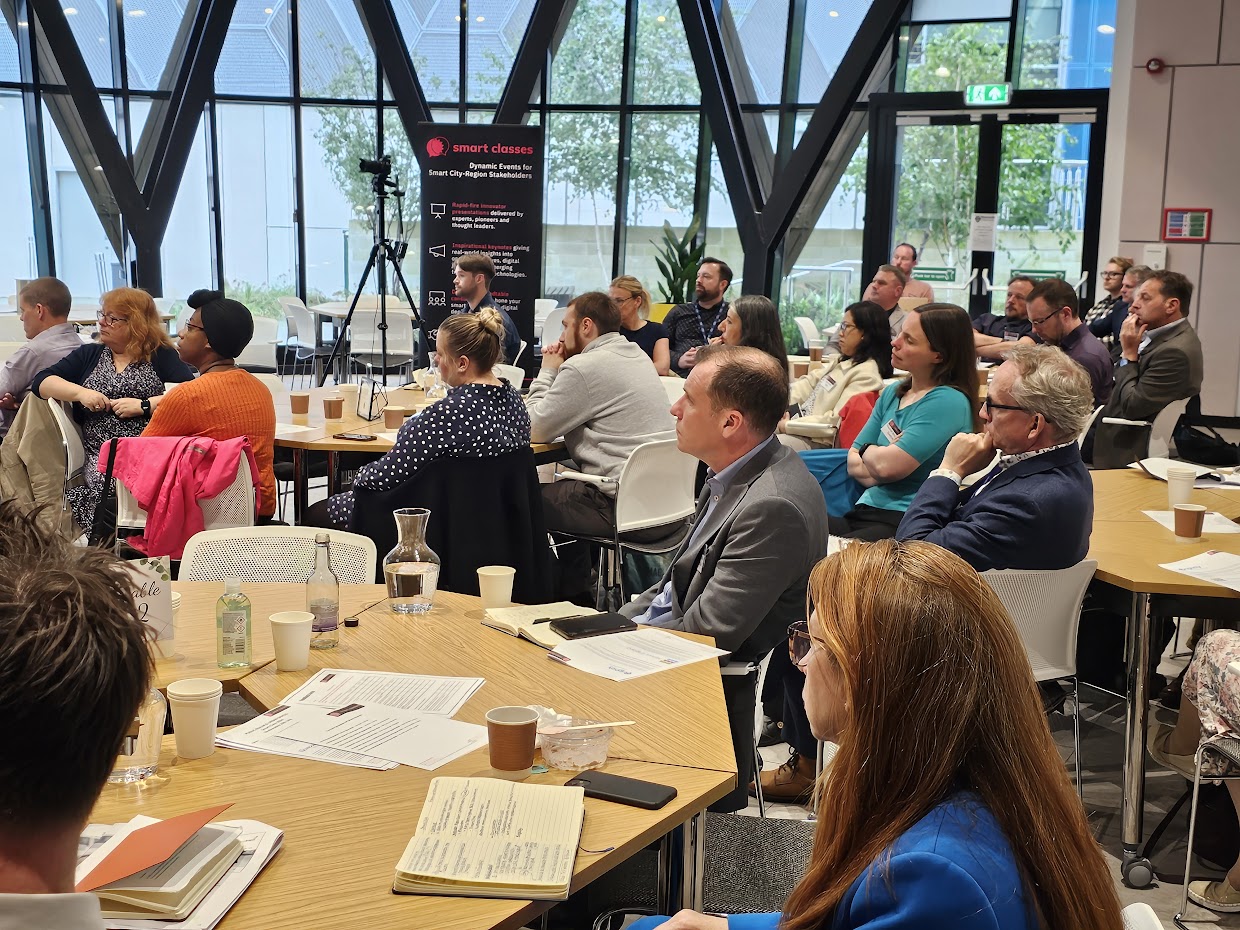
If you meet our regular delegate qualification criteria but were unable to join us at The Catalyst, Newcastle, for the live in-person event on July 10th, CLICK HERE and complete the short “Download form” (located at the bottom of the post) to receive a unique link enabling free access to the presentation video recordings and slides (including the film footage and slides from Cherryanne’s presentation).
Those qualifying to receive the rich presentation content from this event include commissioning, procurement, trialling, partnering and policy leads, senior influencers, strategic decision makers, planners, place makers, architects, green space managers, urban designers, communities & neighbourhoods, highways & street scene, transport & mobility and high streets & regeneration professionals from UK councils and local authorities (city, borough, metropolitan, district, county and combined); people and place partnerships; developers, landowners and creators of privately owned public spaces; prime contractors and city centre management companies; DfT, DEFRA, MHCLG, EA and supporting governmental bodies; transport authorities, highways agencies and public transport operators; civic organisations and community groups; and other key players from the public realm ecosystem with responsibility for managing, maintaining and operating our streets, squares, forecourts, parks, pathways, retail centres, car parks, airports, ports, travel hubs, hospitals, housing estates, campuses, communal gardens and the assets contained within these public or semi-public spaces.


