
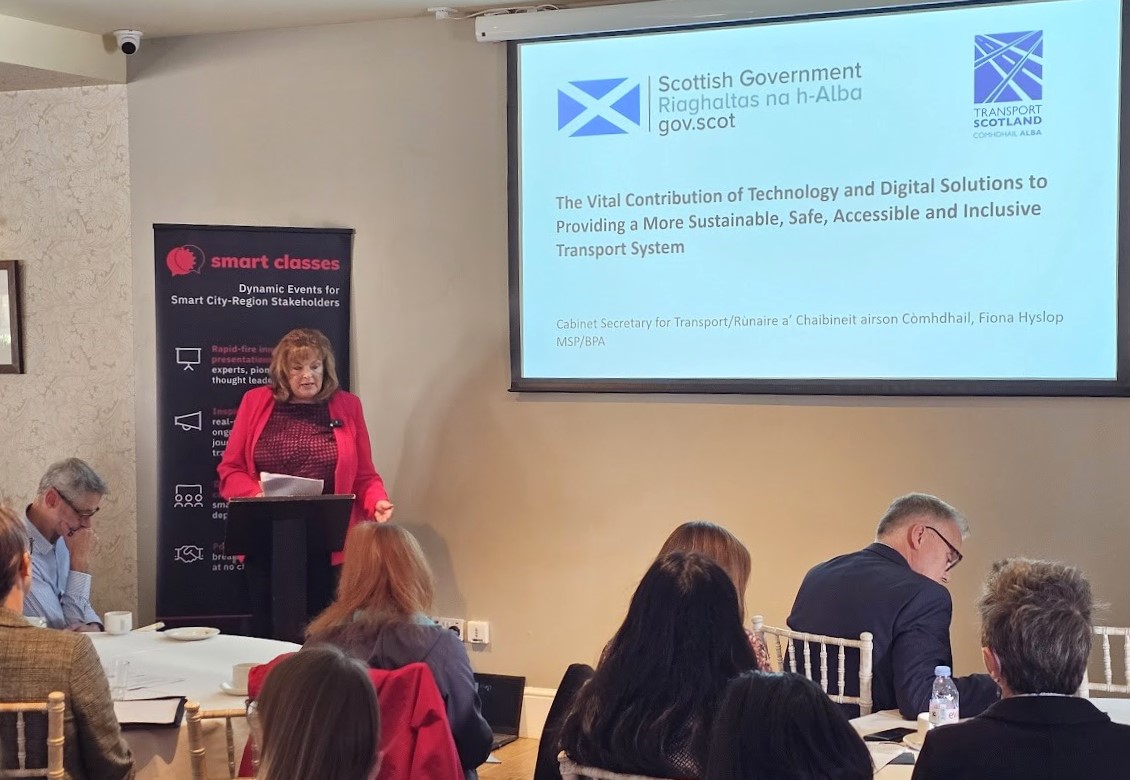
Previously Scotland’s Transport Minister, Fiona Hyslop MSP/BPA was promoted to Cabinet Secretary for Transport in February 2024. In May 2024 she was reappointed to the position by Hamza Yousaf’s successor, John Swinney.
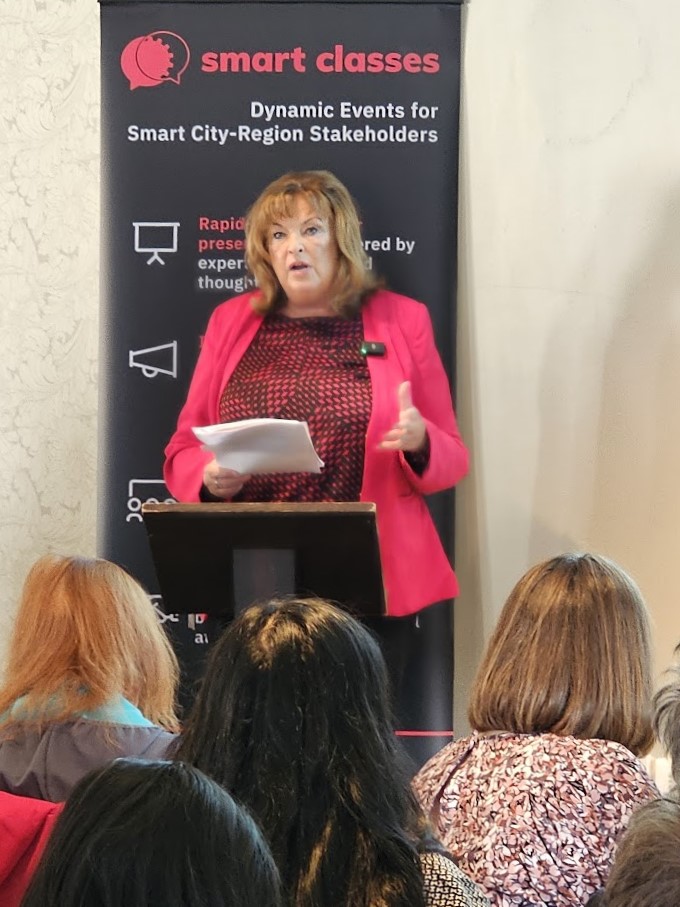
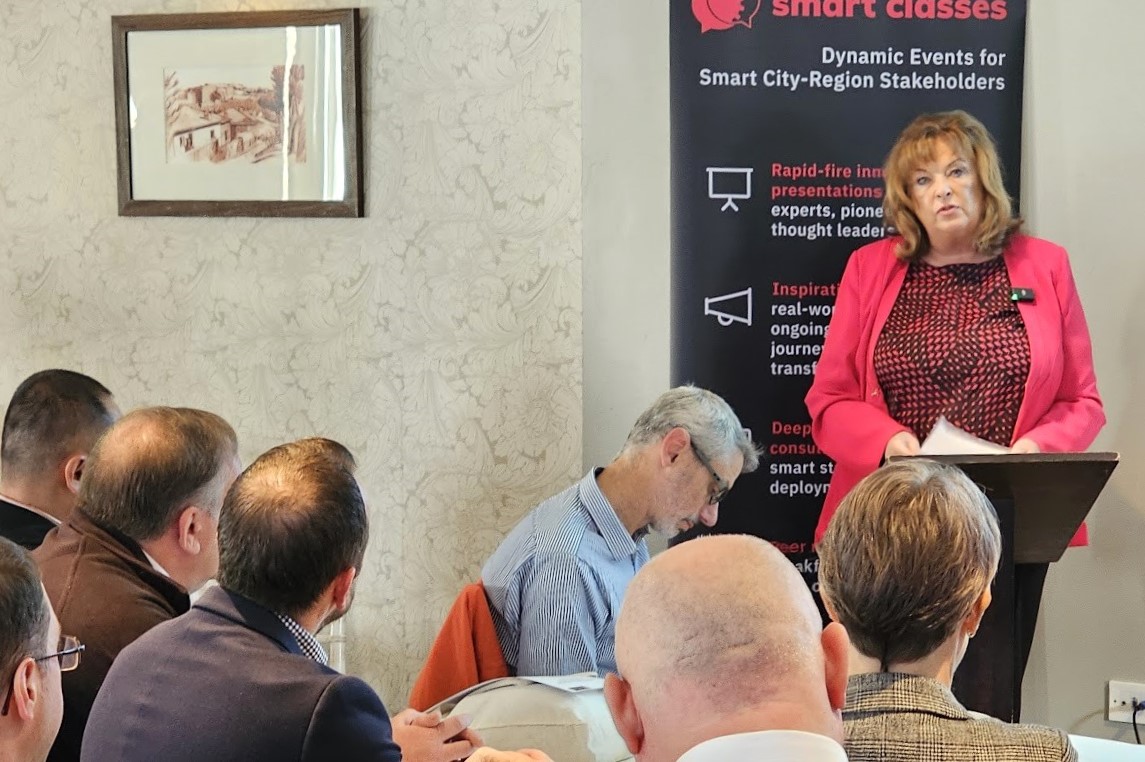
Earlier this month we were delighted to welcome Ms Hyslop back to deliver the opening keynote at TRANSPORT Smart Class, Scotland 2024.
Setting the scene for wider discussion across the day, her speech outlined the vision behind Scotland’s National Transport Strategy, the steps being taken by the Scottish Government to support this vision, and reflected on the important contributions that technology and digital innovation can and will make in realising the long term ambitions for transport in and across Scotland.
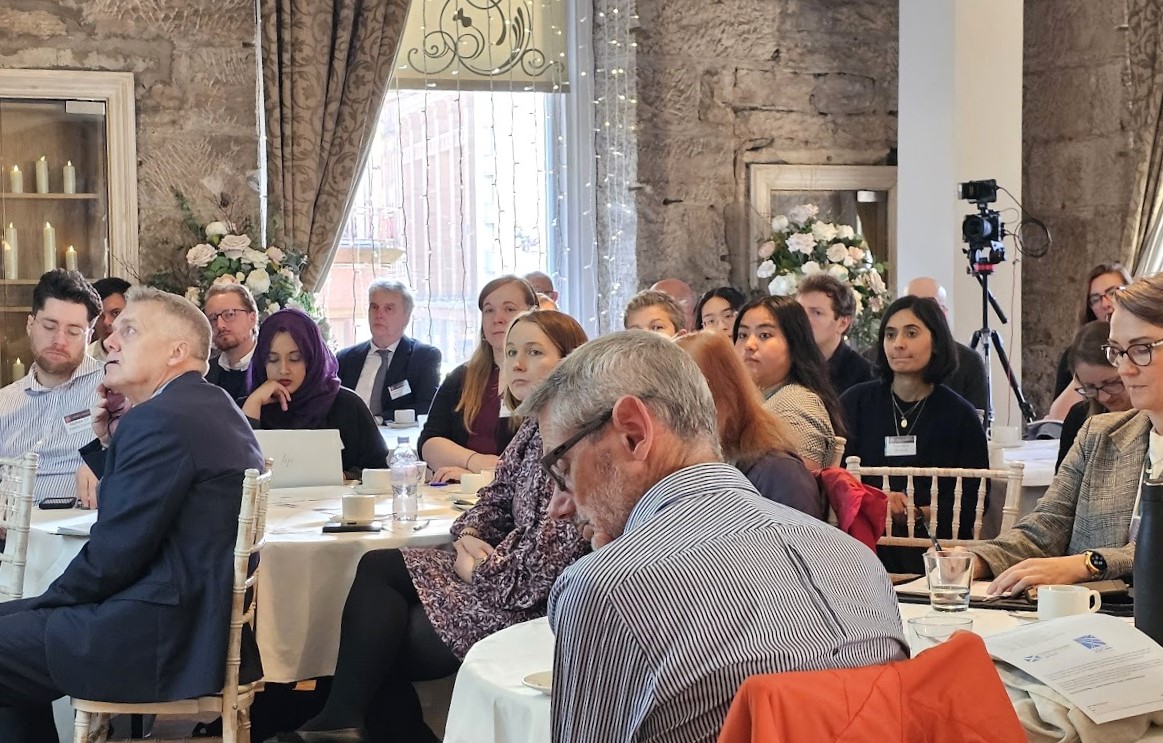
Summary notes from Ms Hyslop’s opening keynote speech:
- “If there’s one message that I hope you can take away today, it’s that Scotland is open for business and the Scottish Government is committed to working right across the economy to maximise the opportunities which lie ahead, and that includes transport”;
- As well as economic growth, also relevant is commitment to protect the planet by taking climate action. This includes supporting a just transition to net zero that creates jobs and empowers communities and businesses, whilst reducing emissions and adapting to climate change. This creates opportunities for innovation and entrepreneurship in the transport sector;
- Transport provides a key foundation and infrastructure to achieving all of the government’s priorities;
- To keep Scotland moving, nearly £2.5 billion will be provided to support public transport in 2024-25 and £1 billion is being invested to ensure that Scotland’s motorway and trunk road network is safe, resilient and efficient;
- A fair approach is central to taking climate action and progressing transition to a net zero transport system. This means ensuring that it helps tackle and reduce poverty, especially child poverty. NB Transformative policies such as free bus travel for young people;
- Working with partners across the country the Scottish Government (and Transport Scotland which is delivering SG’s vision for transport) is committed to reducing car use by 20% by 2030, whilst recognising that there won’t be one solution that suits all of Scotland. This will encourage a shift towards sustainable travel and affordable, available and accessible public transport options in a way that is inclusive and reflects the varied needs of Scotland’s people and communities;
- Mobility-as-a-Service is helping change the way people plan their travel – Providing access to digital information keeps them better informed about different ways to undertake their journeys and the concept can be expanded to allow people to book and pay for their journey digitally;
- The 5 funded MaaS projects cover the Highlands & Islands, Central Tayside and South East Scotland – Evidence of benefits is already coming through e.g. Learned from from one of the projects that the majority of journeys undertake were by bus and that most people using the app did not have access to a car, so there could be tangible benefits is using MaaS to reduce transport poverty and improve access to key services and amenities. Evidence suggests that the apps were used mainly for journey planning rather than ticketing and payment. By providing more comprehensive travel information, the aim is to empower people to use alternative ways to travel, encourage them out of cars and private car ownership, and therefore reduce emissions;
- Integrating the various ticketing and payment options (some of which are still evolving) remains an ongoing challenge. Tacking payment issues and improving smart ticketing and payments is essential to realising the full, long term, benefits of MaaS and to making it easier for people to travel by public transport;
- Working with transport authorities and operators, universal smart cards have been delivered, concessionary ferry travel is being modernised, free bus travel has been extended to young people and contactless payments are being brought to 98% of Scotland’s bus services; Working with the new National Smart Ticketing Advisory Board (NSTAB) is building momentum to deliver legislation and activities to improve the integration of contactless and digital ticketing between operators – Smart ticketing delivery strategy was published last month, outlining a programme for the next 5-10 years which includes exploring options for a new national integrated ticketing system;
- The new Traveline Scotland website & app launch soon, and will include open data for 3rd party journey planners to further improve the way that people access and plan for journeys online – This project will improve the way open data is managed and controlled, ensuring that the best quality information is provided for traditional, new and emerging modes of transport;
- Connected and Autonomous Vehicles also have the potential to bring transformative changes to people’s lives, not just to highway travel but in relation to the environment, safety, where we live and how we work. Some of the most important CAV research and development – most notably, the world leading Project CAVForth – is currently taking place in Scotland, and a CAV roadmap for Scotland has recently been published to ensure that Scotland is well placed to unlock the associated benefits and opportunities. The CAVForth trial is building understanding of safe delivery of CAVs in public transport but a robust regulatory framework is also required to provide certainty for innovators and investors and to give people confidence that the technologies can work in their interests. So SG welcomes the Automated Vehicles Act, which received royal ascent in May 2024;
- Evolving Traffic Scotland (the national traffic and travel information service) to take best advantage of emerging technology, data and connectivity opportunities is another priority. This includes through the collection and communication of rich data from connected vehicles to improve the effectiveness of how critical safety information is captured and communicated to transport users;
- Artificial Intelligence will play a part of all our futures and research shows that the integration of AI technologies into the transport sector can be transformative and support improved efficiency and sustainability; Scotland’s AI strategy was published in 2021 and sets out how Scotland can become a leader in its development and how to ensure its use is trustworthy, ethical and inclusive – The strategy seeks to help Scotland to maximise the potential economic and social benefits of AI by working closely with industry, innovator and educators to build the best environment to encourage growth and investment; Scotland is first part of the UK to it mandatory to register any use of AI within the public sector;
- Bus already provides a climate friendly way to travel and decarbonising to zero emissions further increases the benefits bus has as a transport choice – Since 2020, SG has supported operators to acquire 548 zero emission buses and supporting infrastructure through SULEBS. And £21 million in grants has been awarded to enable bus and coach operators to upgrade over 1200 mid-life vehicles to be compliant with Scottish cities LEZs;
- Route map to achieving 20% car use reduction will be published this Autumn and include a timeline for implementing demand management and consideration of how local government action can further incentivise the switch to electric vehicles, in addition to reducing overall car use;
- Key to success in car use reduction is embedding sustainable travel behaviour at a young age – Good progress here thanks to strong uptake of young persons free travel scheme and provision of thousands of free bikes to children who need them;
- SG also planning to simplify funding for post-school education and skills, including apprenticeships, through legislation that will bring responsibility for securing and funding in one place;
- “This is the most difficult public spending environment that this devolved parliament has ever seen. We will remain open and honest about these challenges and how they affect the industry and transport users”; “Some of the the vision and practical things we are doing is about future proofing…and the habits of today can inform the activity of the future. Between technology, education and legislation, we have got a grasp of what we are required to do and our ambition to deliver it”.
If you meet our regular delegate qualification criteria but were unable to join us at Citation, Glasgow, for the live in-person event on September 12th, CLICK HERE and complete the short “Download form” (located at the bottom of the post) to receive a unique link enabling free access to the presentation video recordings and slides (including the film footage from Fiona Hyslop’s opening keynote).
Those qualifying to receive the rich presentation content from this event include commissioning, procurement, trialling, partnering and policy leads, senior influencers, strategic decision makers, programme managers and planners from local authorities (e.g. city, borough, metropolitan, district and county councils); public transport operators; regional transport partnerships, sub-regional transport bodies, combined authorities, integrated transport authorities and passenger transport executives; highways authorities and road operators; government and supporting national transport agencies; non-governmental organisations; fleet operators, parking operators, prime contractors etc.


