Devolution and local government reorganisation have shifted responsibility for transport policy and delivery closer to local areas, giving councils and combined authorities greater influence over planning, funding, and service design.
Transport for the South East is the Sub-national Transport Body for the South East of England, covering the six Berkshire authorities, Kent, Medway, Hampshire, the Isle of Wight, Portsmouth, Southampton, Surrey, East Sussex, West Sussex and Brighton & Hove. Mark Valleley is Transport for the South East’s Head of Strategy and has overall responsibility for a number of areas of the technical work programme including the development of TfSE’s transport strategy and their work on freight and logistics, active travel, decarbonisation, future mobility and electric vehicle charging infrastructure.
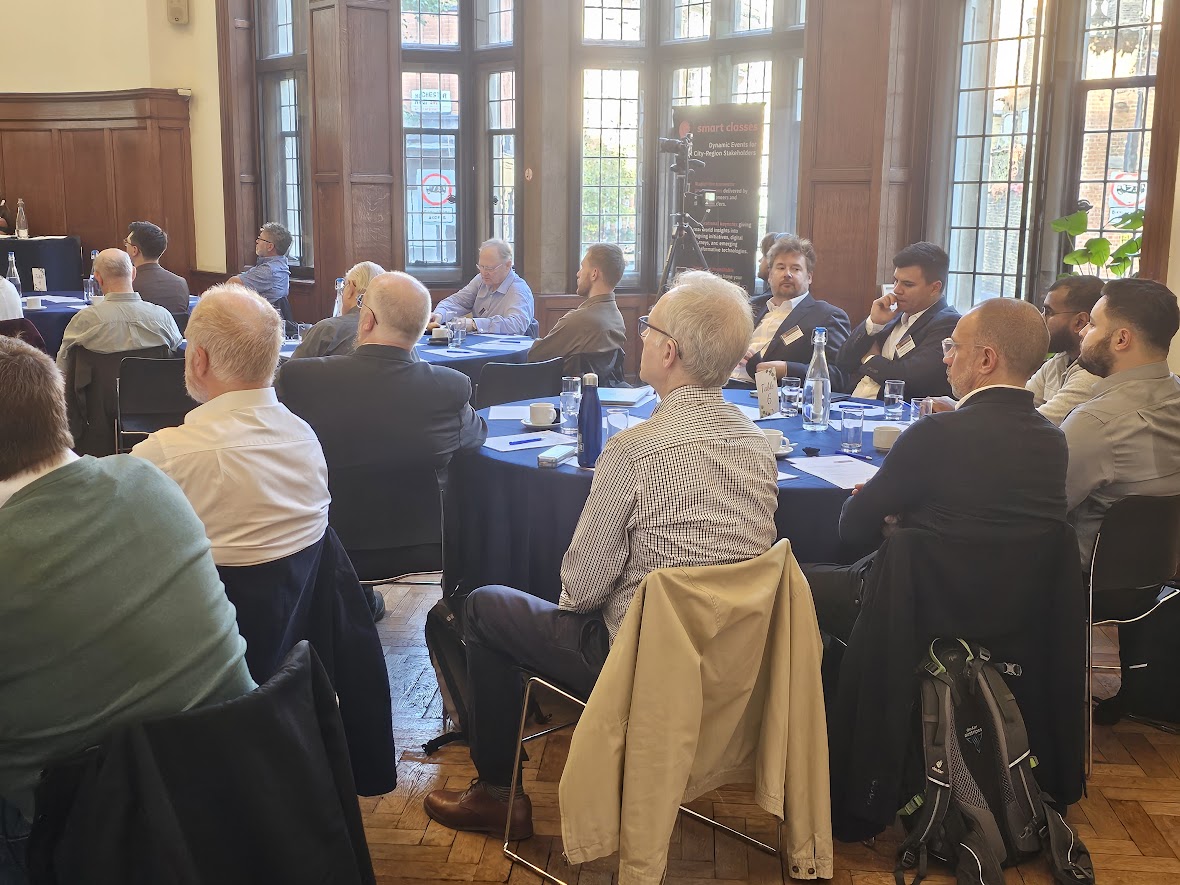
With the South East primed to welcome the introduction of two new strategic combined mayoral authorities in Sussex and Hampshire, Mark joined us at TRANSPORT Smart Class, London & South East England 2025 earlier on this month to outline some of these changes and assess their impacts on both transport users and policy makers.
Drawing on work recently undertaken for TfSE about devolution’s impact on how local transport authorities manage bus service provision in their area, key themes covered in Mark’s opening keynote included changes to governance structures, the balance of responsibilities between different tiers of government, and the opportunities for improvements to the way in which bus services are managed.
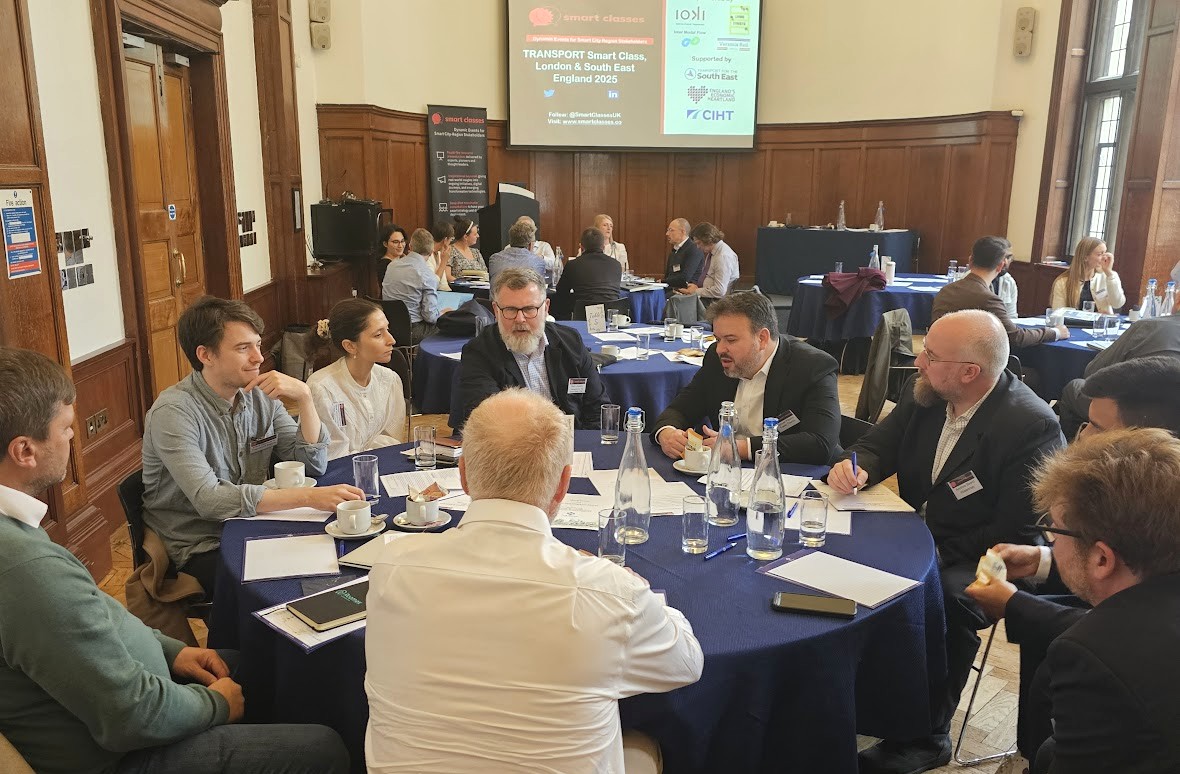
Summary of presentation highlights:
- Introducing Transport for the South East and it’s constituent parts;
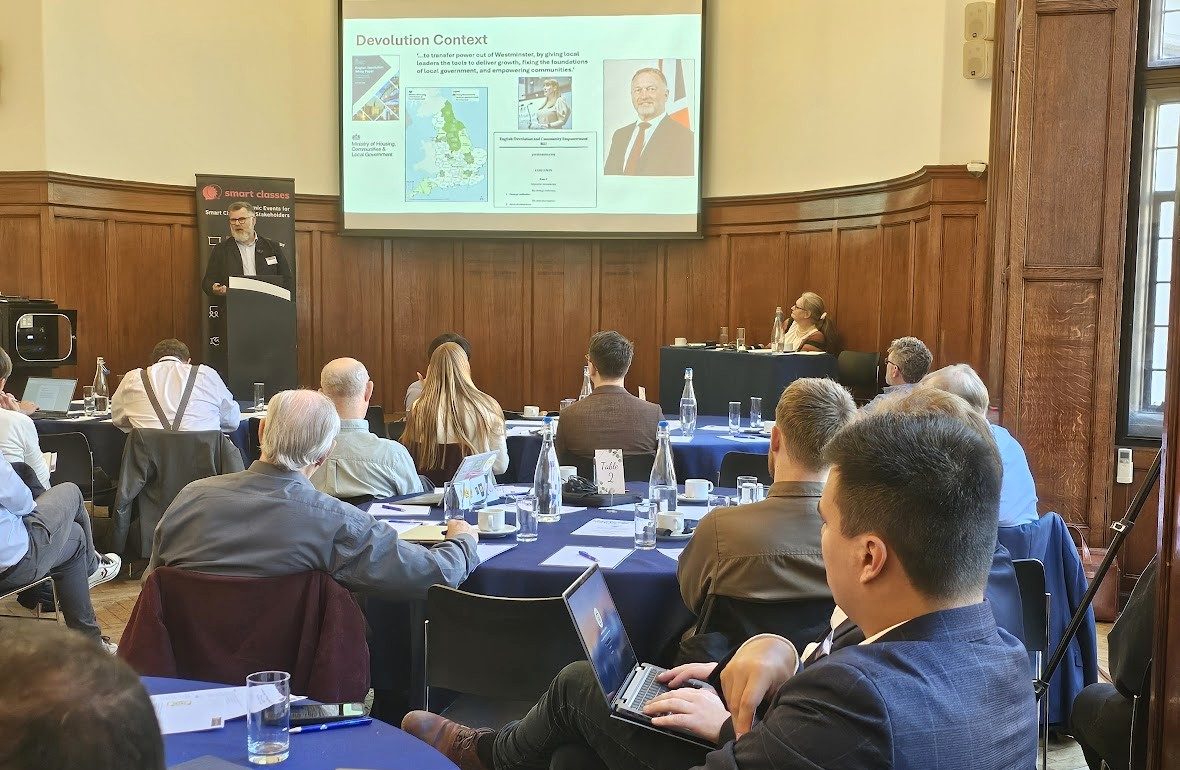
- Devolution Context – ‘…to transfer power out of Westminster, by giving local leaders the tools to deliver growth, fixing the foundations
of local government, and empowering communities’; - English Devolution White Paper published in December 2024 – Proposed “Strategic Authorities” across all England, many with directly elected mayors; Will receive consolidated powers over transport, planning, economic development, housing and strategic public services; Reorganisation of local government, especially in two-tier areas, to larger unitary authorities and redesigning the role of district, parish and community tiers;
- English Devolution and Community Empowerment Bill published July 2025 – Gives local areas the option to adopt a directly elected mayor as a condition for gaining new devolved powers over transport, housing, skills and economic development; Local government reorganisation encourages councils to merge into larger, more strategic authorities; Designed to strengthen local leadership, streamline governance and shift decision making from Whitehall to locally accountable mayors and councils; Introduced by Angela Raynor MP but now the responsibility of Steve Reed MP, Secretary of State for Housing, Communities and Local Government;
- What does Devolution Mean?
- Consistent England-wide approach – Much of the North and Midlands already has directly elected mayors; Current wave of devolution aligns with government priority to empower local communities; Devolution gives powers to the most appropriate level; Strategic Authorities oversee key areas, including transport and local infrastructure;
- 3 types of Strategic Authority – Each with progressively more powers and functions: Foundation, Mayoral, Established;
- In the South East, Combined Authorities will adopt the role of the Local Transport Authority (LTA) from constituent local authorities;
- Devolution ensures powers are administered at most appropriate level – frontline services under Local Authority (LA) control; strategic decisions at combined authority level;
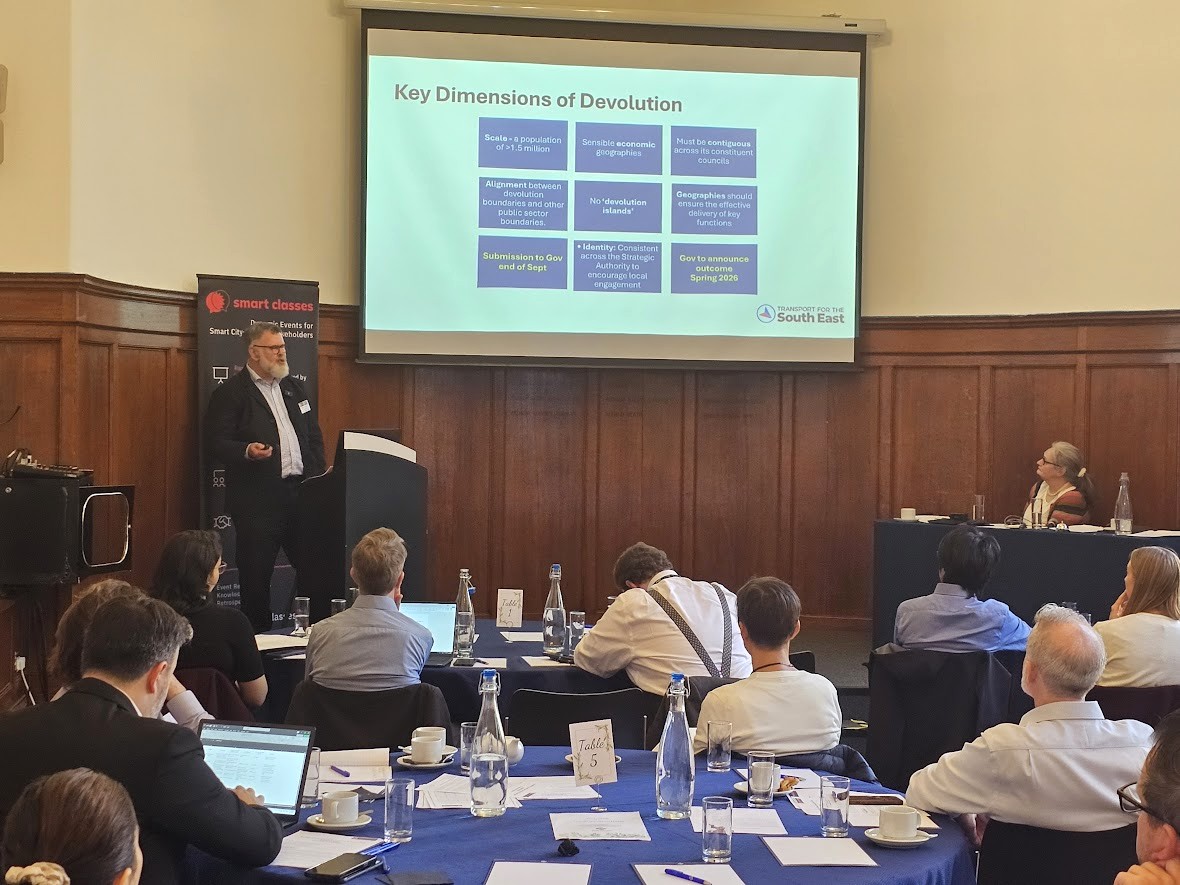
- Key Dimensions of Devolution: Scale – a population of >1.5 million; Sensible economic geographies; Must be contiguous across its constituent councils; Alignment between devolution boundaries and other public sector boundaries; No ‘devolution islands’; Geographies should ensure the effective delivery of key functions; Submission to Gov end of Sept; Identity – consistent across the Strategic Authority to encourage local engagement; Gov to announce outcome Spring 2026;
- Transport for the South East: Proposed Mayoral Authorities 2026 – Sussex and Brighton and Hampshire and the Solent;
- Strategic Authorities: Summary of Transport Powers – Role of Local Transport Authority, including area-wide Local Transport Plan and bus franchising; Simplification and consolidation of local transport funding; Duty to establish a Key Route Network on the most important local roads; Priority for strategic rail engagement (including mayoral partnerships) with Great British Railways; Statutory role in governing, managing, planning, and developing the rail network; Priority for support to deliver multi-modal ticketing; Clear, strategic role in the decarbonisation of the local bus fleet; Formal partnership with National Highways;
- Devolution relies on legislation still happening – >Bus Bill; >Creation of GBR; Picture is evolving. Devo bill is amendment to existing legislation;
- Strategic Authorities: Powers and Responsibilities for Buses – Responsible for preparing a bus strategy; Administer concessionary fares schemes; Legally responsible for securing public passenger transport services where necessary; Able to decide whether to franchise the bus network or enter into partnerships with operators (Bus Bill No.2); Ability to establish a LA bus company (Bus Bill No.2); Ability to provide bus grants to service operators (Bus Bill No.2);
- Devolution: Unlocking Bus Service Improvements – Bigger scale delivers: Better bus service planning, which is more aligned to people’s travel patterns; More efficient use of resources through smarter cross-subsidy across bus networks and coordinated investment in bus priority infrastructure to deliver improved reliability; Better service offer to passengers through unified branding, information and simplified fares; Better integration with rail, walking, cycling and demand-responsive transport, making end-to-end journeys easier;
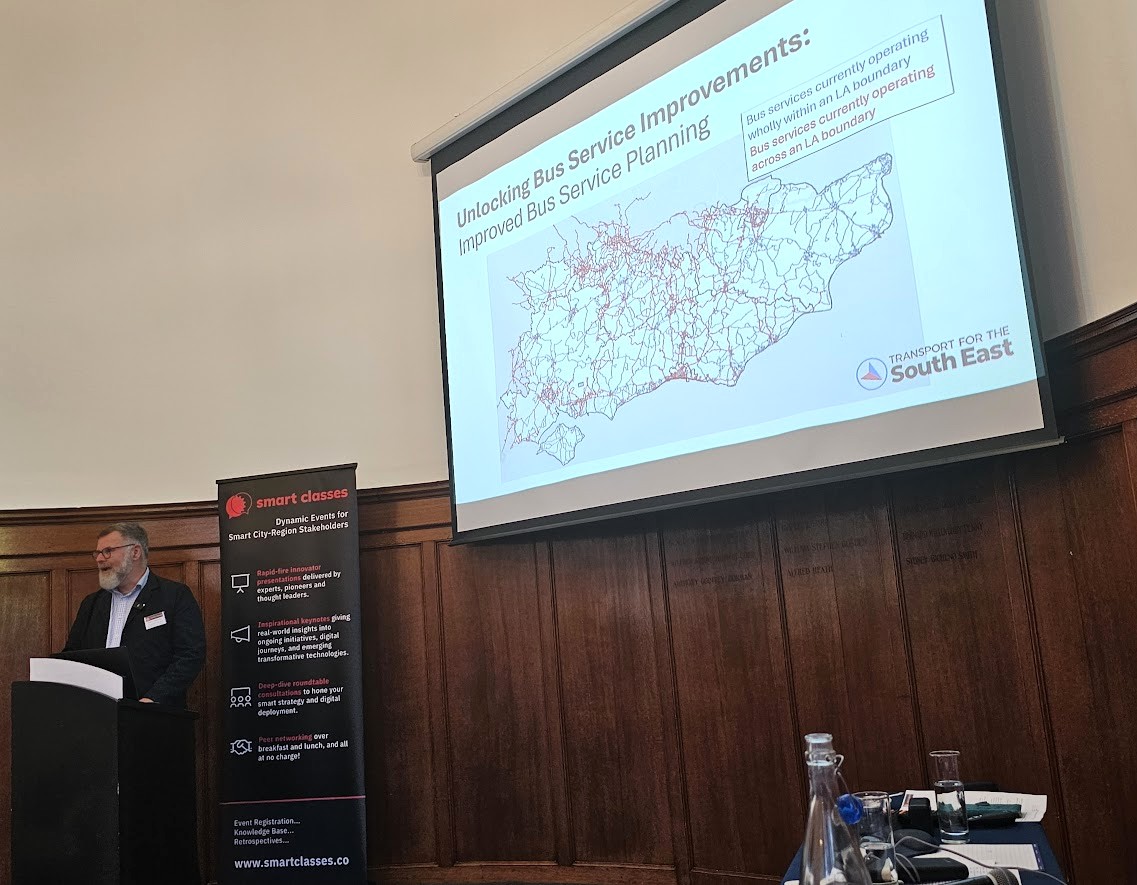
- Unlocking Bus Service Improvements: Improved Bus Service Planning…
- Map depicts bus services currently operating wholly within an LA boundary and bus services currently operating across an LA boundary;
- Currently, cross-boundary bus services make up a large proportion of total services – typically 25-50% of all services in any one LTA area; This illustrates that bus travel is mainly related to regional land use patterns and the locations of key generator and attractions, rather than LA boundaries;
- In the event of larger combined authorities being implemented, the proportion of buses that travel into different authority areas would fall significantly to around 15% of all services i.e. each combined authority would essentially include the whole route for virtually all bus services;
- This suggests that under devolution plans the larger geography will be more aligned with bus travel, and that bus governance through BSIPs or franchising is likely to be better matched with operational planning;
- Unlocking Bus Service Improvements: More Efficient Use of Financial Resources…
- Breakdown of financial contributions to bus network costs (Arup: Devolution and Bus Governance 2025) – Graph includes: Fare cap (pro rata by passenger journeys); BSOG (pro-rata by service kms); Bus Grant resource (simple/affordable fares); Bus Grant resource (bus service support only) 2025/26; Concessionary Reimbursement; Fare revenue excluding profit (OPEX minus LTA spend);
- Combined funding – Pooling various central government funding streams into a strategic budget gives strategic authorities opportunities to realise efficiencies and cross-subsidy between areas based on strategic objectives;
- Currently, each Local Transport Authority manages its own pot of revenue support and concessionary fare reimbursement; That limits flexibility because resources are tied to local boundaries and priorities, even though travel patterns often cut across them;
- The pooling of funds allows bus services to be managed as a single network rather than a patchwork of local compromises; This strengthens the scope for redistributing resources in line with strategic objectives – whether economic growth, social inclusion, or decarbonisation;
- Examples: 1) Stabilising commercially fragile routes – A town-to-town route with peaks of demand but weak off-peak use could be cross-subsidised by revenues from higher-yield urban services, helping maintain network connectivity across the geography; 2) Supporting marginal routes at network scale – A rural evening service that is not viable could be sustained if revenues from stronger inter-urban corridors elsewhere in the sub-region are available to offset it; 3) Better use of concessionary reimbursement – Rather than funds sitting unevenly across councils (some with higher proportions of older or disabled passengers), a centralised pot allows redistribution so the whole area can sustain a consistent offer;
- Unlocking Bus Service Improvements: A Better Offer for Passengers…
- In Sussex and Brighton, the integration of information and fares, is dependent on the geography, LA and operator; Devolution provides the opportunity to improve the offering to passengers, simplifying information and branding and making fares easier to understand;
- Unified branding – Building on the strong branding of Brighton & Hove buses, a single travel brand could help boost recognition, passenger confidence, and efficiency;
- Unified information – Consistent data across multiple sources including LA and operator websites, creates seamless travel planning and reduces duplication;
- Simplified fares – Multi-operator tickets support easy travel and provide reassurance for passengers;
- Conclusions…
- Devolution is bringing significant change – With change comes opportunities for local areas to shape transport in ways that better reflect people’s needs;
- Operating at scale – Larger geographies allow more efficient planning, funding, and delivery of bus services;
- Smarter use of resources – Pooling funding enables cross-subsidy and the ability to invest to support wider strategic objectives;
- Better passenger offer – Unified branding, simpler fares, and consistent information make public transport easier to use and more attractive;
- The wider opportunity – Devolution can deliver coherent bus networks that better meet people’s travel needs and support growth, inclusion and decarbonisation.
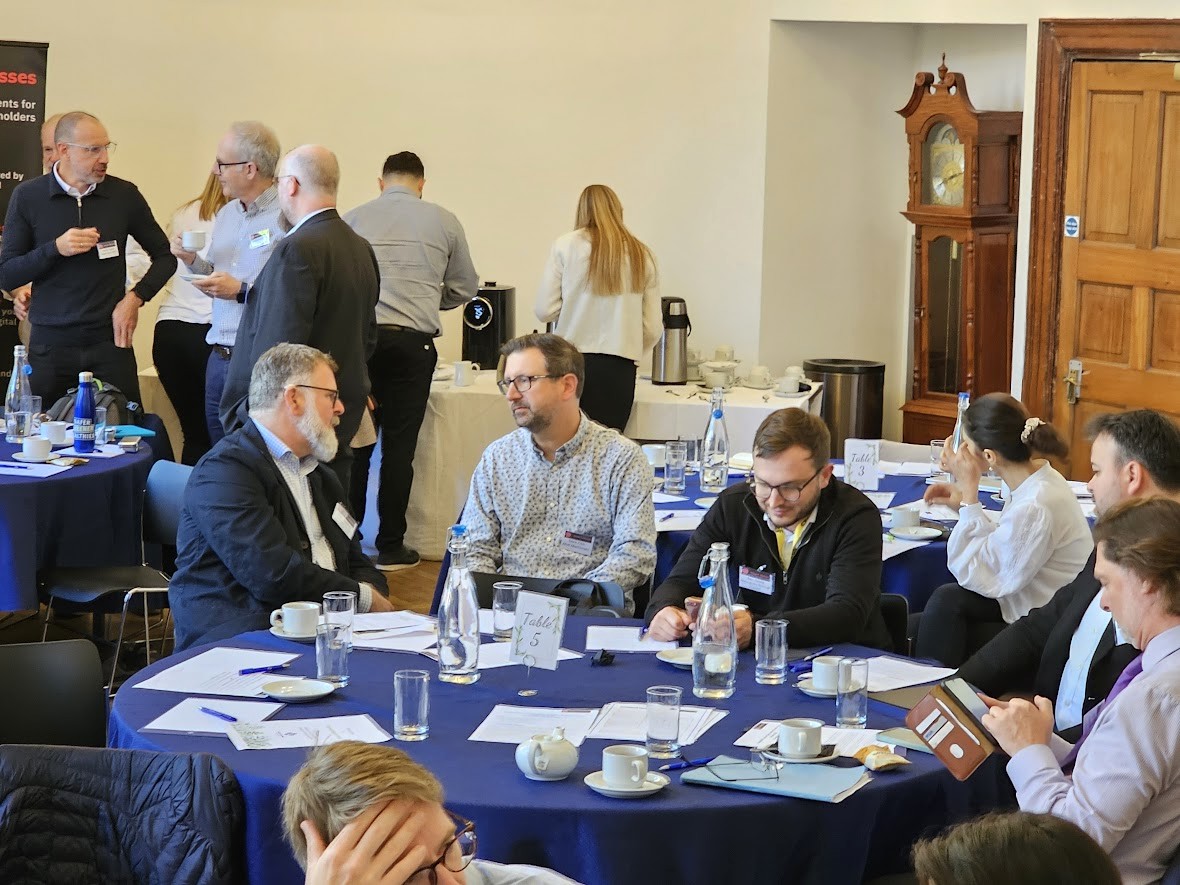
If you meet our regular delegate qualification criteria but were unable to join us The Wellington Hotel, Westminster, for the live in-person event on October 9th, CLICK HERE and complete the short “Download form” (located at the bottom of the post) to receive a unique link enabling free access to the presentation video recordings and slides (including the film footage and slides from Mark’s keynote).
Those qualifying to receive the rich presentation content from this event include commissioning, procurement, trialling, partnering and policy leads, senior influencers, strategic decision makers, programme managers and planners from local authorities (e.g. city, borough, metropolitan, district and county councils); public transport operators; regional transport partnerships, sub-regional transport bodies, combined authorities, integrated transport authorities and passenger transport executives; highways authorities and road operators; government and supporting national transport agencies; non-governmental organisations; fleet operators, parking operators, prime contractors etc.