Government’s development of the Integrated National Transport Strategy (INTS) is an exciting opportunity to put people at the centre of transport policy in a way which is ambitious and innovative. Integration of systems, modes, data and joined-up decision making are all key to ensuring journeys across the transport network are easy, reliable and convenient.
England’s Economic Heartland is the Sub-national Transport Body for the region stretching from Swindon and Oxfordshire across to Hertfordshire and Cambridgeshire. With DfT’s publication of the INTS forthcoming, EEH’s James Golding-Graham (Head of Decarbonisation and Innovation) and James West (Project Lead, Integration) joined us as keynote speakers at TRANSPORT Smart Class, London & South East England 2025 to explain why – “for a polycentric, largely rural region like EEH” – a regional approach to delivering integrated transport solutions, whilst tricky, is strategically imperative to meeting the needs of their local communities. For example, as part of their response to the INTS ‘call for ideas’ EEH outlined that it is vital that major infrastructure projects, including key schemes in the region such as East West Rail, have integration and ‘door to door’ solutions built in from the beginning of the project.
James and James then moved on to some of the more practical approaches/solutions and opportunities they are working on delivering for the region. EEH’s work has integration embedded across its entire approach. They are already undertaking technical activities that address or accelerate specific integration opportunities. This, for example, includes their work on mobility hubs which considers how modes (public transport, active travel, and shared mobility) can be integrated at points of interchange.
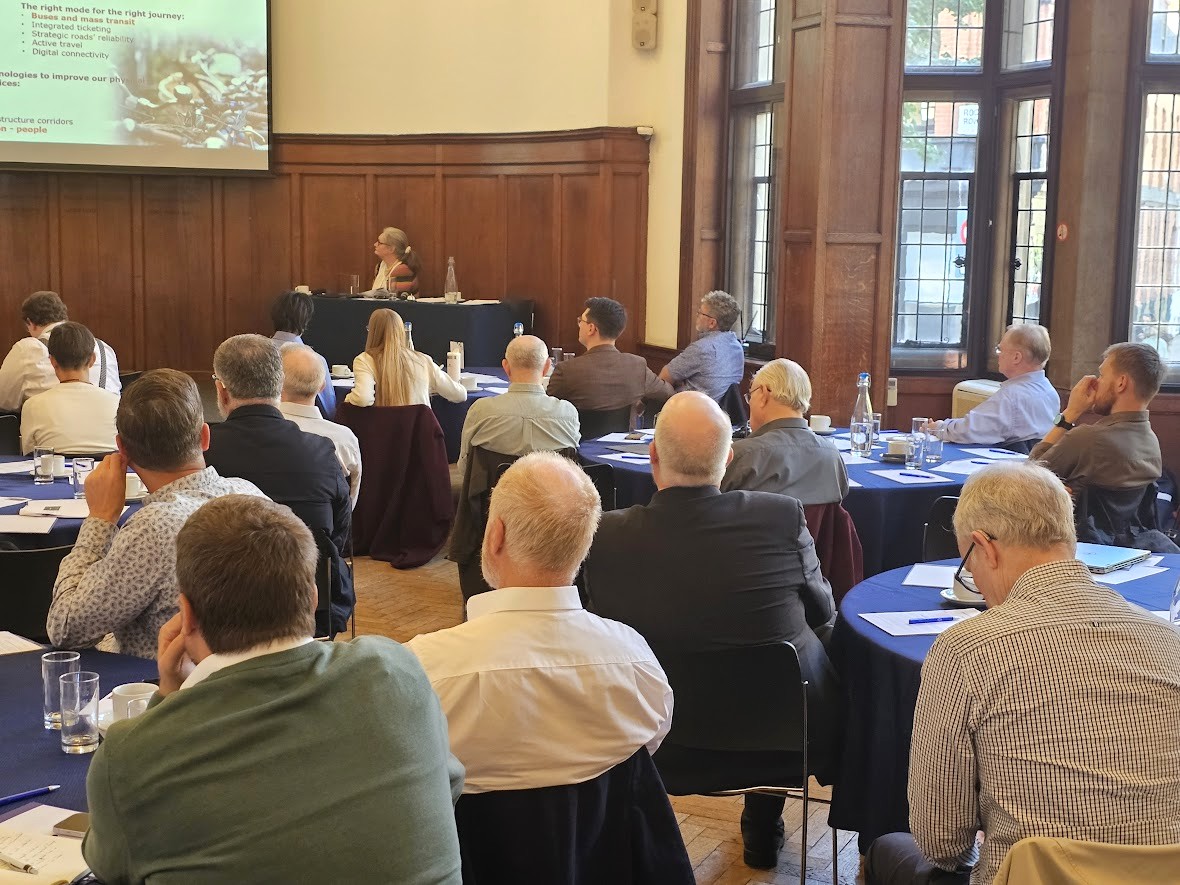
Summary of presentation highlights:
- Introducing EEH – As one of the seven STBs in England, EEH is made up of 12 local authorities including Swindon, Oxfordshire, Buckinghamshire, Milton Keynes, West Northamptonshire, North Northamptonshire, Bedford, Central Bedfordshire, Luton, Hertfordshire, Peterborough and Cambridgeshire; Cambs and Peterborough is the only devolved part of the EEH region; Bucks has an early stage deal but EEH isn’t on the fast track to devolution – It is still going through the process of local government reorganisation and thinking about where those devolution deals might go, and where MCAs might emerge;
- The Opportunity – There’s a huge amount of activity happening in this part of the world…
- EEH covers the entirety of the Oxford-Cambridge Growth Corridor (which also brings MK into the mix) and comprises an IP supercluster of life sciences, digital creative, advanced manufacturing, aviation & aerospace, and universities – This corridor aims to boost the UK economy by £78 billion by 2035;
- The EEH region also has an enormous amount of housing growth coming – Just over 550,000 homes are currently in plan and this is pre the uplift that has come from the National Planning Policy Framework (NPPF); New towns announced for the region will further bump up the number of new houses;
- Another notable opportunity is the investment in Universal as a landmark destination by 2030;
- So from a political perspective, it’s understandable that the government is really interested in this region, is giving EEH continuity of funding and is committed to keeping EEH as a body that enables integration and enables the benefits of East-West Rail connectivity; Government understands the value of good transport connectivity and EEH see integration as being at the heart of everything they do;

- The Issue…
- Map showing where you can get to within an hour by cycling, walking, bus and rail from Luton, High Wycombe, Hemel Hempstead, Stevenage, Bishop’s Stortford and Stevenage – Whilst EEH has quite decent connectivity up and down into London, it’s problematic when you start looking East to West, which is why investment into the rail network has been made with East-West Rail;
- However, from a Bus perspective the region isn’t doing so well – There are pockets of integration and some multi-ticketing arrangements (e.g. parts of Oxfordshire) but, overall, EEH has a very fragmented bus market; Expired section 106 funding has also affected East-West bus travel;
- Challenges of getting bus-rail integration really flowing and replacing car use for East-West journeys presents big opportunities around modal shift and the carbon benefits that result;
- EEH have built a tool called the Common Analytical Framework (CAF) which enables you to see where emissions are coming from – About half the emissions in most EEH local authorities are generated from trips which start or finish outside of those localities;
- Flows – As a STB, EEH has access to some interesting mobile network data which shows that there’s a lot of demand happening across boundaries and borders between EEH LAs and not all of this is long distance; Just under half are happening within the region – So, again, we need to be thinking regionally to achieve more sustainable journeys!
- How are EEH doing it?
- Integrating Transport…
- Improving public transport connectivity across the region – EWR as an enabler; Funding and models; Journey planning, information and integration; Rural services; Mobility hubs;
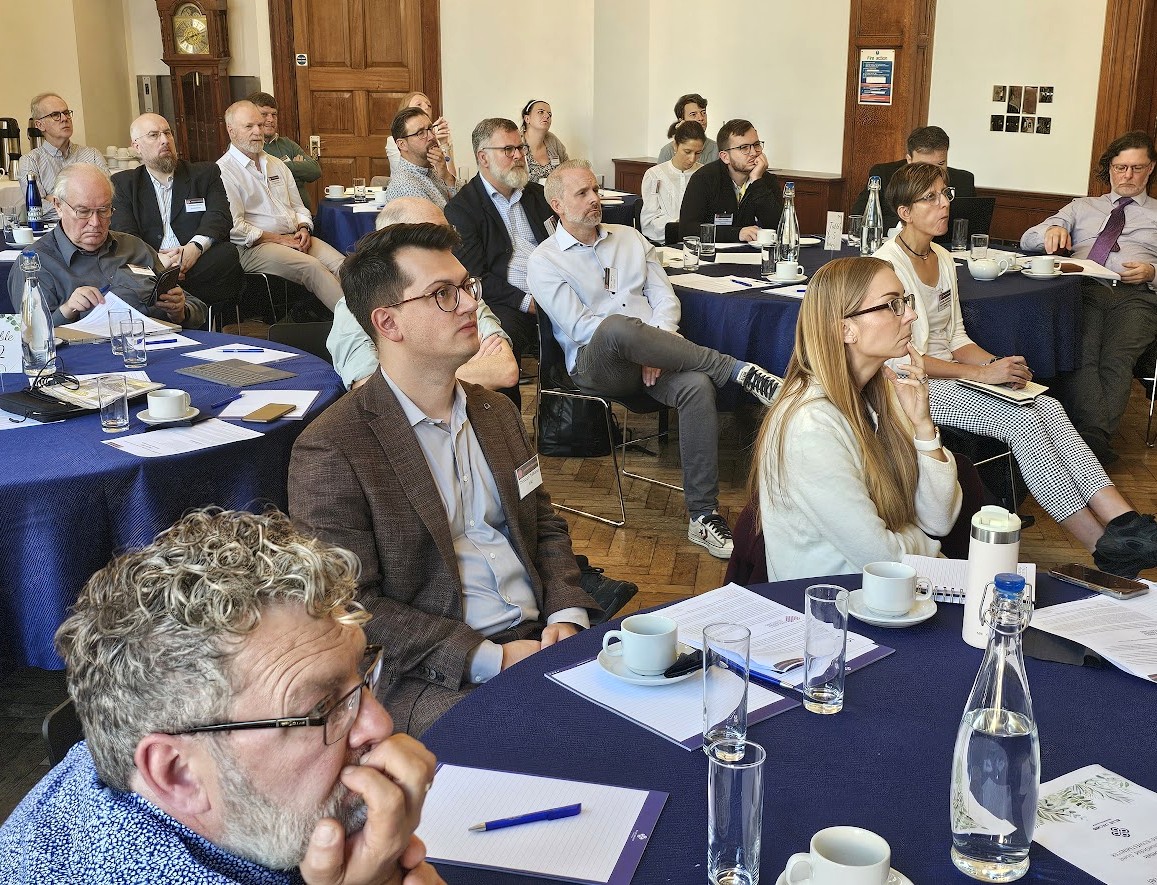
- The right mode for the right journey – Buses and mass transit; Integrated ticketing; Strategic roads’ reliability; Active travel; Digital connectivity;
- Harnessing digital technologies to improve our physical infrastructure and services – Smart junctions; Autonomous vehicles; Journey planning; 5G along existing infrastructure corridors; Supporting innovation – People;
- Benefits of joining up across places and modes – Economic, environmental, and social;
- Is it possible? We can aim for what Wales, for example, has achieved with integrated timetabling and live, interactive maps;
- It’s Time to Integrate – Mobility and connectivity are high on government agendas to enable economic growth; New Towns Commission have 3 new towns planned for the wider EEH Region – Milton Keynes, Heyford Park, and Tempsford on the 12 town shortlist; Integrated National Transport Strategy (INTS) due to release shortly; East-West Rail will provide much needed connectivity between Oxford and Cambridge; Several more generational investments/transformational developments within the EEH region are also coming – Universal’s century-long plans for what (at Kempston Hardwick, near Bedford) will be the largest theme park in the UK, and plans for a new, large-scale history-themed theme park by Puy du Fou to be built (near Bicester in Oxfordshire); So it’s a once in a lifetime opportunity to scale/build things from ground up and ensure that everything is connected – In alignment with TAG guidance and LOP, “Transport must provide the connectivity to enable these regional investments to thrive”!
- Universal’s development will generate nearly £50 billion of economic benefit and create 28,000 jobs; at opening the entertainment resort complex would be one of the largest employers in the region, with approximately 80% of employees expected to come from Bedford, Central Bedfordshire, Luton and Milton Keynes; The project will also help deliver several long sought after transportation upgrades including an expanded Wixams railway station, direct slip roads from the A421 and other local road improvements;
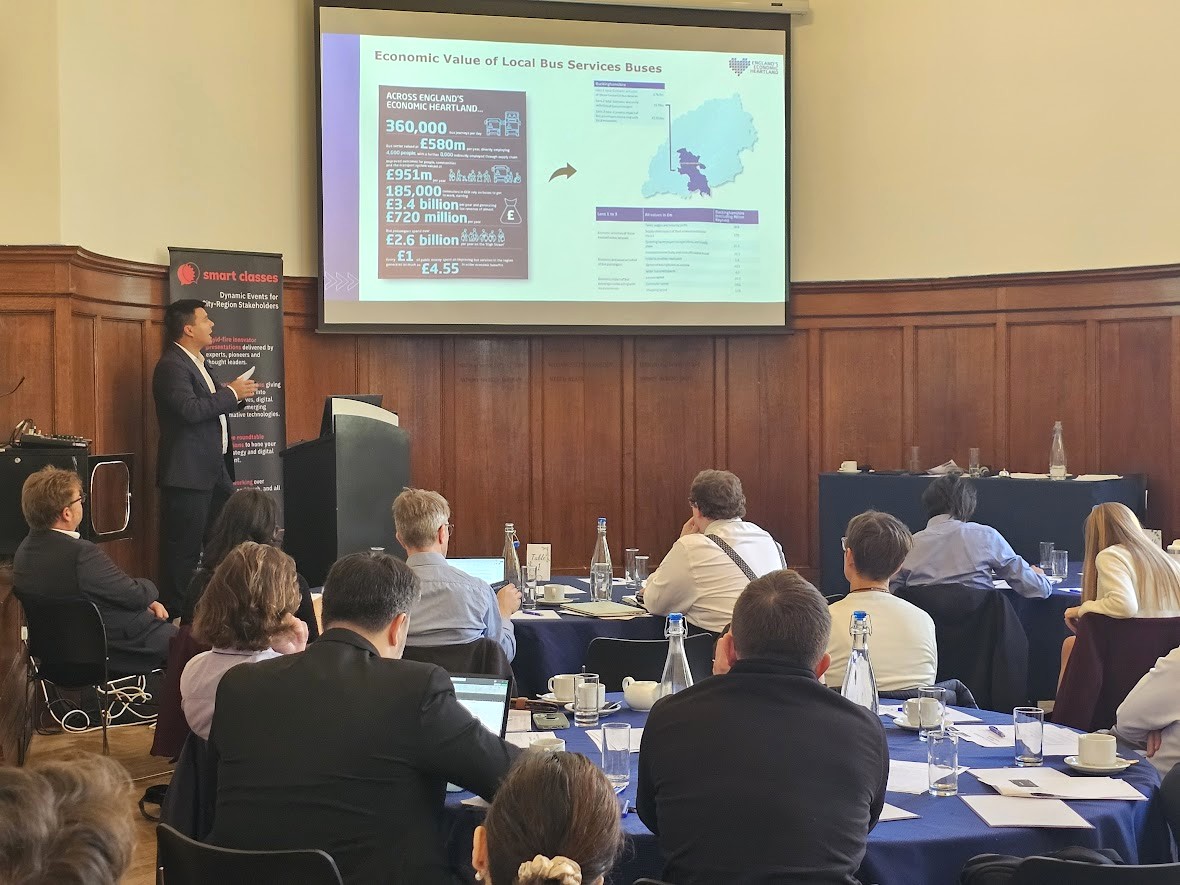
- Economic Value of Local Bus Services Buses…
- Across England’s Economic Heartland: 360,000 bus journeys per day; Bus sector valued at £580m per year, directly employing 4,600 people, with a further 8,000 indirectly employed through supply chain; Improved outcomes for people, communities and the transport system valued at £951m per year; 185,000 commuters in EEH rely on buses to get to work, earning £3.4 billion per year and generating tax revenue of almost £720 million per year; Bus passengers spend over £2.6 billion per year on the ‘High Street’; Every £1 of public money spent on improving bus services in the region generates as much as £4.55 in wider economic benefits;
- Buckinghamshire Case Study: Lens 1 – Economic activities of those involved in bus services; Lens 2 – Economic and social activities of bus passengers; Lens 3 – Economic impact of bus passengers interacting with local economies;
- The Importance of Integration – Connects our 12 authorities; Enables new journey possibilities – Cross Boundary Connections are Key; Economic Growth – > inward investment and job creation; De-Siloes Local Transport to deliver Regional Transport; Delivering Meaningful Connections across the region; Rural Connections – Ensuring it is door-to-door connectivity;
- Integration means a range of options: Range of options are possible, not a copy and paste approach; Scale and level of ambition will be varied – e.g. Modes of Transport, Types of Ticketing; Integration means all modes – > Active Travel, Micromobility and Parking Strategies; Think beyond franchising, such as enhanced partnerships and ticketing innovations to deliver creative solutions for passengers e.g. Hertfordshire has Intalink which is an enhanced partnership for bus services;
- We can take inspiration from the likes of TfL in London and the Bee Network (bus rail and tram all under one roof) in Manchester, but it’s also about recognising locally what works for that region.
If you meet our regular delegate qualification criteria but were unable to join us The Wellington Hotel, Westminster, for the live in-person event on October 9th, CLICK HERE and complete the short “Download form” (located at the bottom of the post) to receive a unique link enabling free access to the presentation video recordings and slides (including the film footage and slides from James and James’ keynote).
Those qualifying to receive the rich presentation content from this event include commissioning, procurement, trialling, partnering and policy leads, senior influencers, strategic decision makers, programme managers and planners from local authorities (e.g. city, borough, metropolitan, district and county councils); public transport operators; regional transport partnerships, sub-regional transport bodies, combined authorities, integrated transport authorities and passenger transport executives; highways authorities and road operators; government and supporting national transport agencies; non-governmental organisations; fleet operators, parking operators, prime contractors etc.