The Regent Street, Haymarket and Piccadilly Circus public realm project is a collaborative initiative between The Crown Estate and Westminster City Council aimed at transforming one of London’s most iconic streets into a greener, safer, and more accessible destination. With a rich history dating back to 1819, Regent Street has long been a hub for retail, culture, and architecture. The programme focuses on securing the future of this street amongst global competition and climate challenges. It reflects a forward-looking vision that balances heritage with innovation, ensuring the street remains vibrant and resilient for years to come.
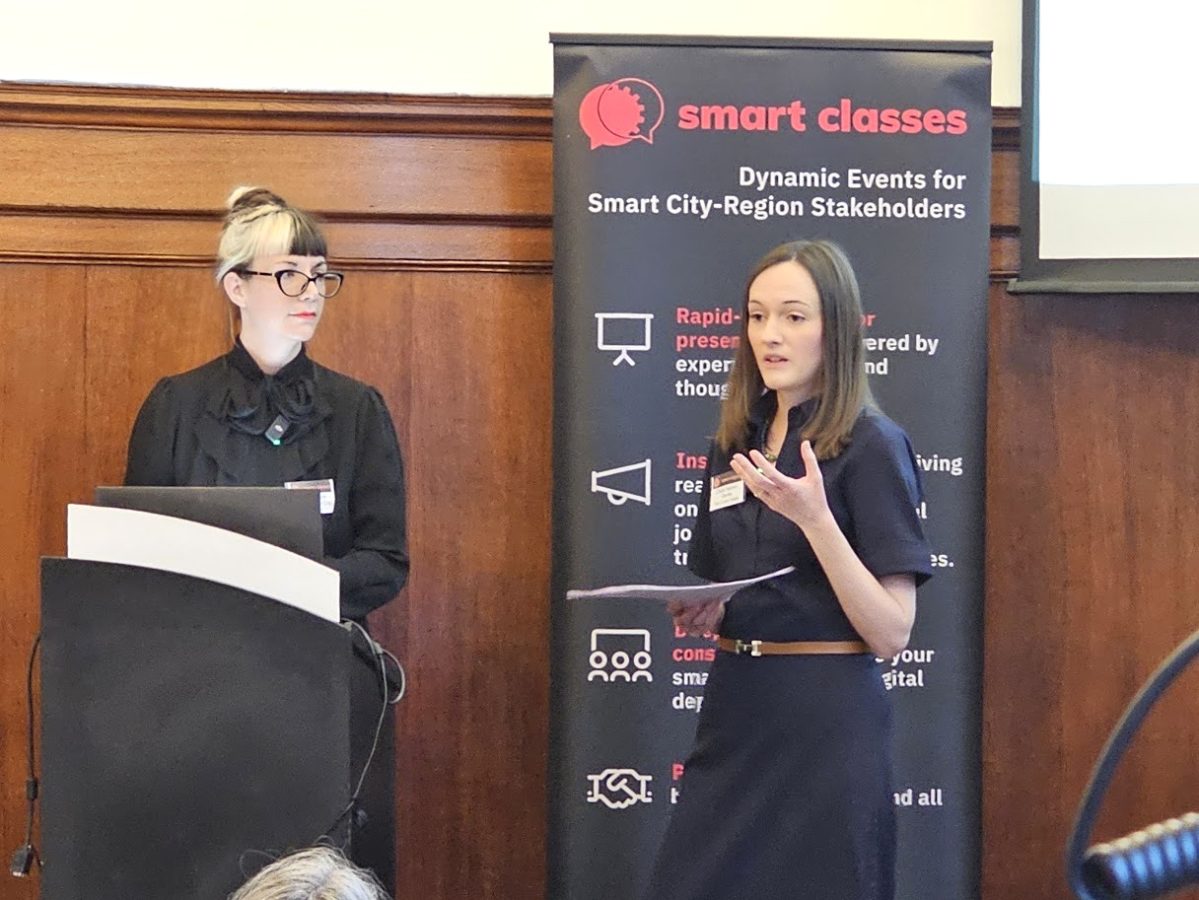
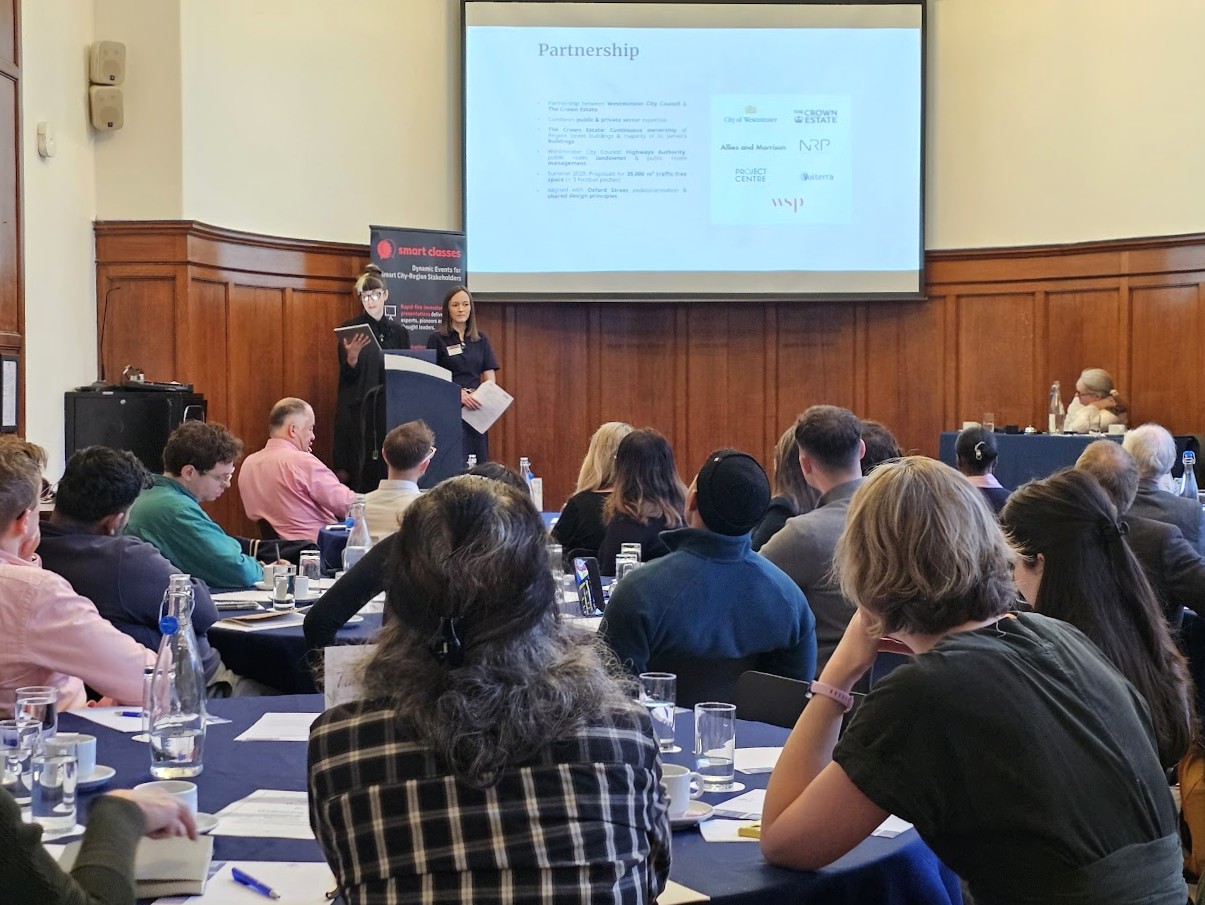
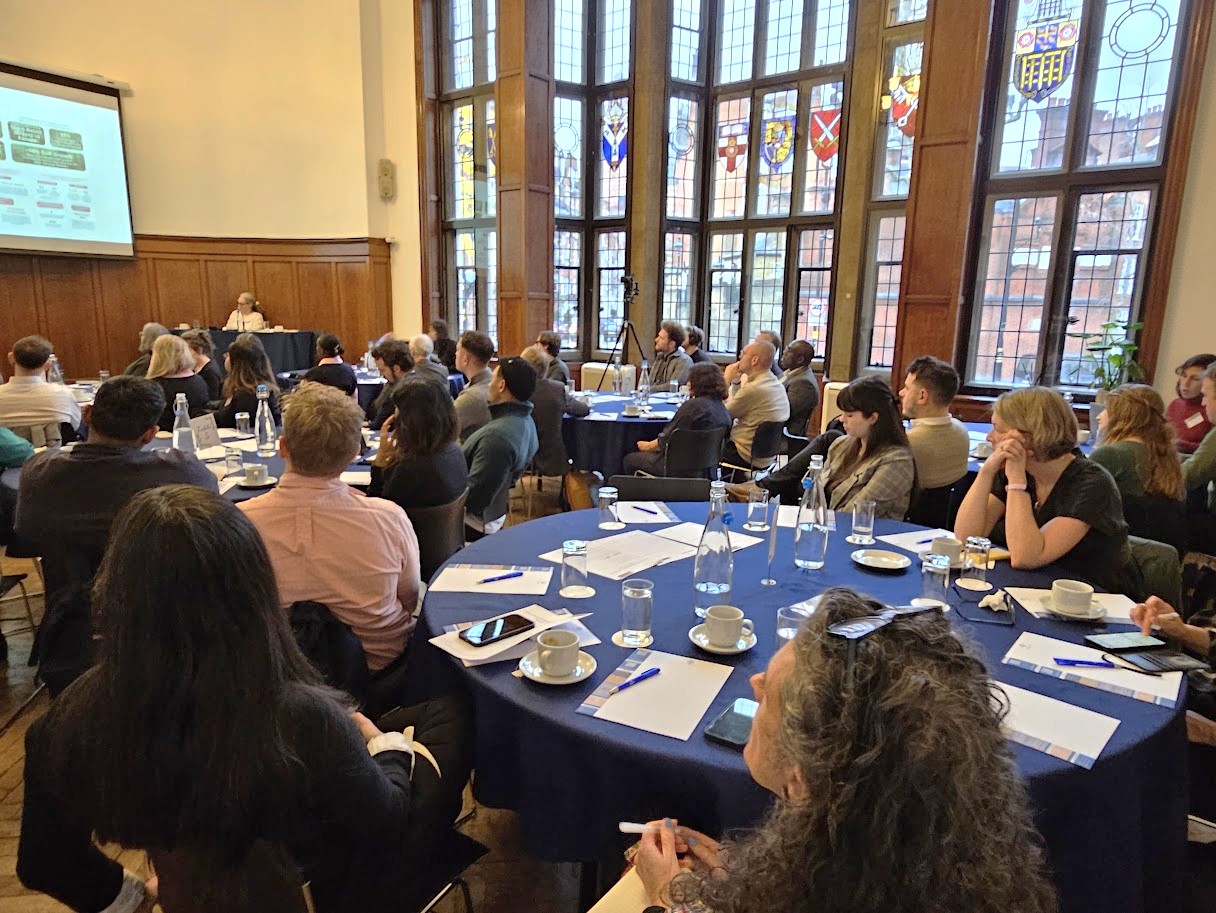
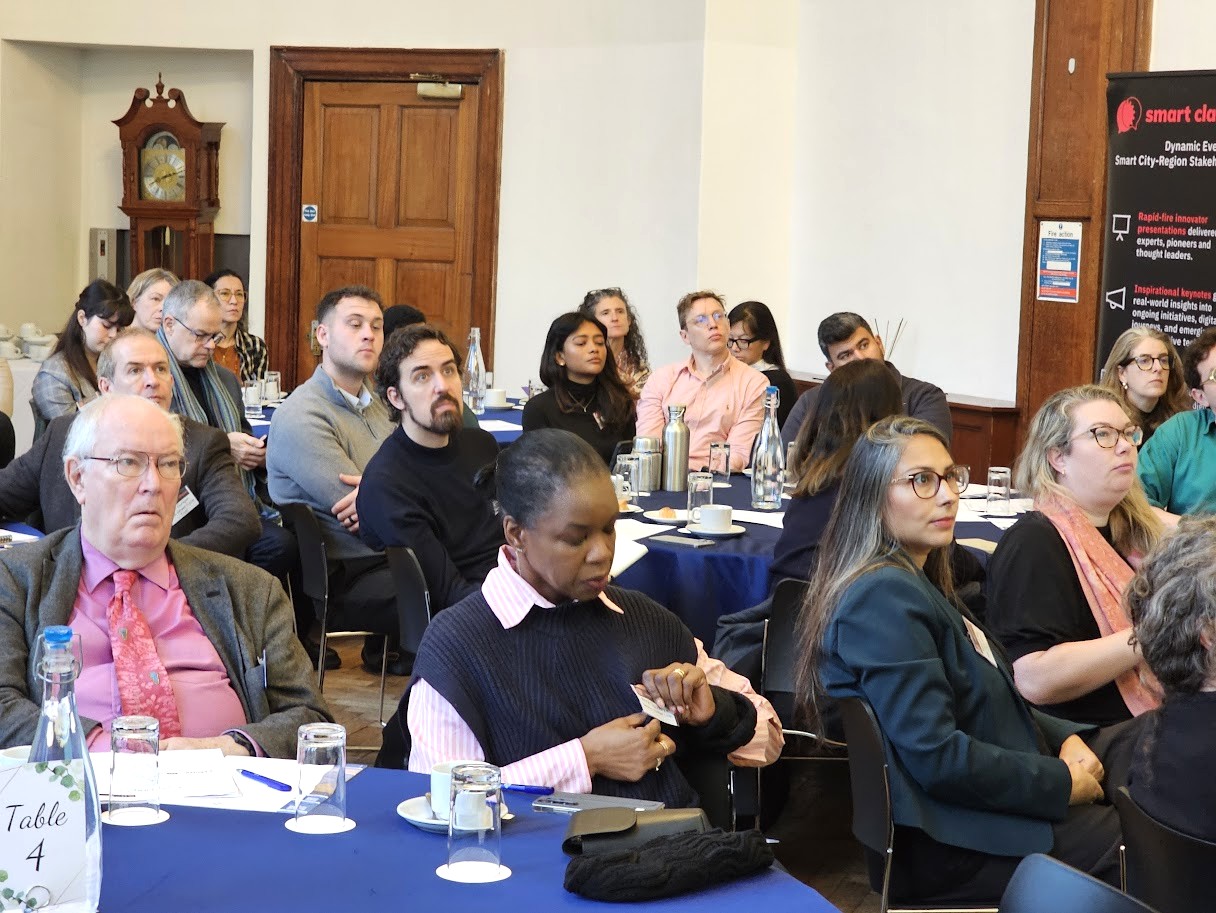
In a captivating opening keynote at PUBLIC REALM & URBAN SPACES Smart Class 2025, Claire Hepher-Davies (Senior Development Manager – Public Realm) from The Crown Estate and Sarah Hoare (Head of Public Realm) from Westminster City Council shared how this unique partnership has formed, the proposals following recent engagement on a masterplan and movement strategy and the opportunities and challenges a proposal of this nature faces.
Summary of presentation highlights:
- The public realm is the the space between buildings, which can include streets, squares, gardens, and other associated public spaces;
- Westminster City Council and The Crown Estate are working together with their award-winning design team on ambitious proposals to transform the public realm of Regent Street, Haymarket and Piccadilly Circus; This is a once-in-a-generation opportunity to create a legacy for an iconic part of London and everyone who uses it; The emerging public realm proposals are aimed at creating a sustainable, inclusive, and world-class places in a thriving West End;
- “We want you to be part of the discussion and help to shape the most significant transformation of Regent Street, Haymarket and Piccadilly Circus in over 100 years”;
- The Context – Public Sector Challenges; Climate Emergency; Sustainable Transport and Health Outcomes; Unregulated Shared Mobility Services; The Crown Estate’s Purpose; Why it matters for The Partnership;
- Partnership – Partnership between Westminster City Council & The Crown Estate combines public & private sector expertise – WCC, TCE + Allies and Morrison, NRP, Project Centre, Volterra and WSP; The Crown Estate – Continuous ownership of Regent Street buildings & majority of St. James’s buildings; Westminster City Council – Highways Authority, public realm landowner & public realm
management; Summer 2025 – Proposals for 35,000 m² traffic-free space (≈ 5 football pitches); Aligned with Oxford Street pedestrianisation & shared design principles; - Interim Scheme – In 2020, WCC and TCE worked in partnership to deliver an interim scheme on Regent Street…
- A Temporary Traffic Order (TTO) was put in place to address the public safety and economic impacts of the COVID-19 pandemic;
- Key improvements included: Wider pavements and 1.2 km of new cycle lanes; 30 accessible seats, 330 planters, and 60 new trees; Reduced traffic with single-lane flow in both directions;
- “We now have a once-in-a-generation opportunity to replace the interim scheme with a permanent world class transformation” – Opportunity to respond to climate change, economic shifts, and evolving urban lifestyles: setting a global precedent in London for future-thinking urban design;
- The need for change…
- What’s at stake? The long term success of Regent Street, Haymarket and Piccadilly Circus as a nationally important hub for commerce, culture and leisure; Without bold, future-focused investment, these iconic streets risk falling behind, especially in the wake of strong competition from other places; Together we can set a new global benchmark as the world’s best destination and a place for everyone;
- Regent Street, Haymarket and Piccadilly Circus is home to: 94k jobs supporting £11.3bn GVA; 700 Listed buildings; Over 70m Visits per year – 10x more than the UK’s top rated visitor destination;
- A thriving area that supports London’s global reputation and competitiveness – Regent Street is in the Top 5 Retail Streets in Europe; 37% International visitors, so a focal point for tourism in the UK; +98% GVA Growth – More than double GVA growth recorded across London and the UK over the past decade;
- Why is action needed? There are significant threats, which if left unaddressed will erode the attractiveness of Regent Street, Haymarket and Piccadilly Circus as a place to visit, work, live and invest;
- London’s global economic position is facing increasing competition and these streets are vital to ongoing economic success and the reputation of the city and the UK – London’s share of European inward investment has fallen from 38% to 31% over the last decade, and the total number of inward investment projects into the city in 2024 was half the number of 2019;
- The Climate Emergency is making the area a less comfortable and resilient place: Temperature – There was a 25% drop in usual levels of visitors and workers in Central London when temperatures reached 40C in 2022; 26C or above for 50 days of the year by 2050 (currently 10 days), with heatwaves more likely to be sustained for longer periods; Surface Water Flooding – >500 properties at risk of flooding in the West End ward in a 1:30 year event; Winter rainfall is expected to rise by 15% with significant (2.5x) increase in flash flooding in places such as Conduit Street and Pall Mall;
- There are weaknesses in the quality and safety of the environment: Active Travel – 6x more cyclist casualties and 5x more pedestrian casualties (compared with other streets in Westminster); Nature – At 5.1%, tree canopy coverage is one of lowest in London and only 2% of the surface area is nature or greenery; Accessibility & Pedestrian Comfort – No pedestrian crossings meet accessibility standards and 60% of footways are at risk of crowding; Traffic & Air Quality – More than 50% of residents in the St. James ward and over a third of residents in West End ward cite heavy traffic and poor air quality as “a problem”;
- We can make a difference if we act now – Many of the world’s leading cities are proactively investing in improving the quality of their city centres, with a focus on transforming and improving levels of urban greening, comfort and accessibility for residents, workers and visitors:
- Following public realm improvements delivered by TfL and London boroughs, there was a 93% boost in active active street behaviours such as walking, resulting in more active lifestyles;
- Shoppers will visit more often and travel further to retail streets with well maintained tree cover – Increased spend by up to 12% on goods and services;
- There was an 84% increase in dwell time following streetscape improvements around Times Square and Herald Square, in New York City;
- Ambitions for change – In 2023, the public helped shape the vision for this area; What emerged was a strong set of shared ambitions that now inform WCC and TCE’s approach and set a clear direction for design; These ambitions go beyond aesthetics – they respond to the realities of climate change, economic shifts, and evolving social needs; This is a once-in-a-generation opportunity to reimagine some of London’s most iconic streets; By unlocking the full potential of the public realm, we can create world-class spaces that feel welcoming, resilient and vibrant – spaces that invite people to stay, connect, and experience the city in new ways; Together, we can position Regent Street, Haymarket, and Piccadilly Circus not just as destinations, but as global exemplars of how cities can adapt, lead, and inspire:
- World-class destination – Celebrate spaces that reflect London’s position as a global capital; Accessible, safe and inclusive – Create spaces that work for everyone to experience, explore and enjoy; Green and sustainable – Ensure spaces are resilient to changes in our climate for generations to come;
- The masterplan – 10 transformative moves mapped…
- 1) All Souls Plaza – A reimagined setting for All Souls Church, providing space for visitors and locals alike; 2) Oxford Circus – Working with the Mayor of London to reimagine this iconic space as the gateway to two world-renowned streets; 3) Regent Street – Transforming Regent Street’s public realm into a world-class exemplar to ensure its ongoing prosperity for future generations; 4) The Quadrant – Embracing John Nash’s bold architectural curve to make a unique destination linking Regent Street and Piccadilly Circus; 5) Piccadilly Circus – Reclaiming space from vehicles to enable public life to thrive in this world-famous setting; 6) Haymarket – A reconfigured and vibrant streetscape for people, theatres and culture; 7) Regent Street St James’s – A traffic-free streetscape with scope to become one of London’s most exciting new destinations; 8) Waterloo Place – A major new public space for London, creating much-needed space for community and events; 9) Pall Mall East – More space around Trafalgar Square, and strengthened connections to and from this major destination; 10) Side Streets – Unlocking the value of side streets to provide inviting places to rest and connect. The extent of delivery will be explored at the next design stage;
- Movement – Maps depicting: Proposed vehicular movement; Existing vehicular movement; Existing, proposed and future proofed cycleways; Existing and proposed two-way bus route alignment etc;
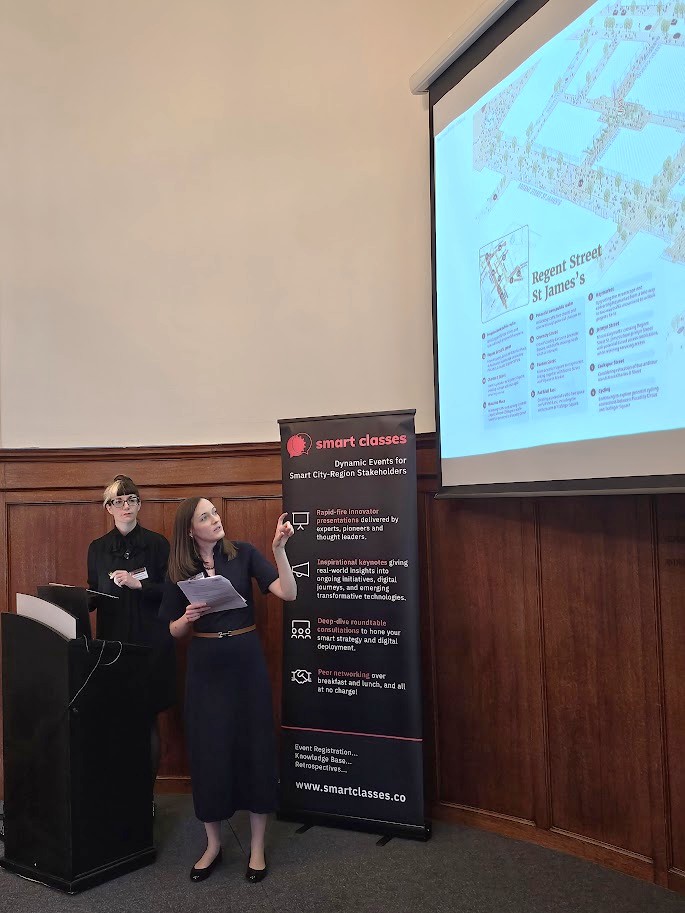
- Regent Street – A global landmark: Regent Street is more than just a street – it’s a global stage, blending Regency heritage with modern spectacle; Visitors come to see and be seen, sharing their experiences worldwide; Yet, visitors don’t find it inviting to stay; WCC and TCE aim to change that by creating more space, reducing traffic, and enhancing the experience – Imagine strolling between shops shaded by trees, discovering pocket gardens and playful spaces; Regent Street will become a vibrant, welcoming place that invites wonder, comfort, and connection for everyone. Illustration depicts…
- 1) World-class public realm – Introducing distinctive public realm including paving, street furniture and lighting; 2) Planting – Establishing bold and confident planting to bring climate resilience and nature; 3) Regent Street Plaza – A new space with engaging features and a people-focused design; 4) Resilient movement network – Removing the central street island to help reduce traffic congestion and increase space for people; 5) Cycling on Regent Street – Integrating a safer provision for cycling on Regent Street; 6) Safe and accessible – Improving pedestrian crossings, de-cluttering and widening footways; 7) Side streets – Unlocking the value of side streets to provide inviting places to rest and connect. The extent of delivery will be explored at the next design stage;
- Piccadilly Circus – The beating heart of London: Piccadilly Circus is a cultural crossroads; A stage for gathering, performance, and expression, with a unique, captive audience; By reclaiming space from vehicles, WCC and TCE’s partnership will transform it into a bold, welcoming, and energetic destination – a dynamic platform for London’s diverse culture and creativity. Illustration depicts…
- 1) Rebalanced space for people – Closing vehicle access to Regent Street St James’s and Coventry Street, enabling a major increase in usable public space; 2) Reconfigured crossings – Introducing a simpler and safer configuration of pedestrian crossings; 3) World-class public realm – Amplifying Piccadilly Circus’s iconic status and creating an exceptional backdrop for public life to thrive; 4) Places to dwell – Introducing street furniture and planting to create places to pause from its dynamic environment; 5) A restored Eros – Exploring bringing the fountain back to life as the heart of Piccadilly Circus; 6) Transport interchange – Improving the arrival experience, whether by underground, bus, cycle or on foot;
- Haymarket and Waterloo Place and Regent Street St James’s – Map and illustration depicts…
- 1) Proposed new public realm – Unlocking traffic-free streets and spaces through proposed changes to: 1a) Regent Street St James – From Piccadilly Circus to Waterloo Place; A destination streetscape connecting Piccadilly Circus to St James’s Park 1b) Charles II Street – From Haymarket to St James’s Square, creating a street with managed servicing access; 1c) Waterloo Place – Removing traffic and parking to create a space almost 6000sqm in scale – broadly equivalent to Piccadilly Circus; 2) Potential new public realm – Unlocking traffic-free streets and spaces through potential changes to: 2a) Coventry Street – From Piccadilly Circus to Leicester Square, with traffic moving north-south at intervals 2b) Panton Street – From Leicester Square to Haymarket, linking together with Norris Street and St James’s Market 2c) Pall Mall East – Creating a potential traffic-free space on Pall Mall East, including the western arm of Trafalgar Square; 3) Haymarket – Upgrading the streetscape and converting Haymarket from a one-way to two-way traffic movement to unlock projects 1a-1c; 4) Jermyn Street – Minimising traffic crossing Regent Street St. James’s from Jermyn Street with potential timed access restrictions, while retaining servicing access; 5) Cockspur Street – Considering relocation of bus and tour stands from Charles II Street; 6) Cycling – Continuing to explore potential cycling connections between Piccadilly Circus and Trafalgar Square;
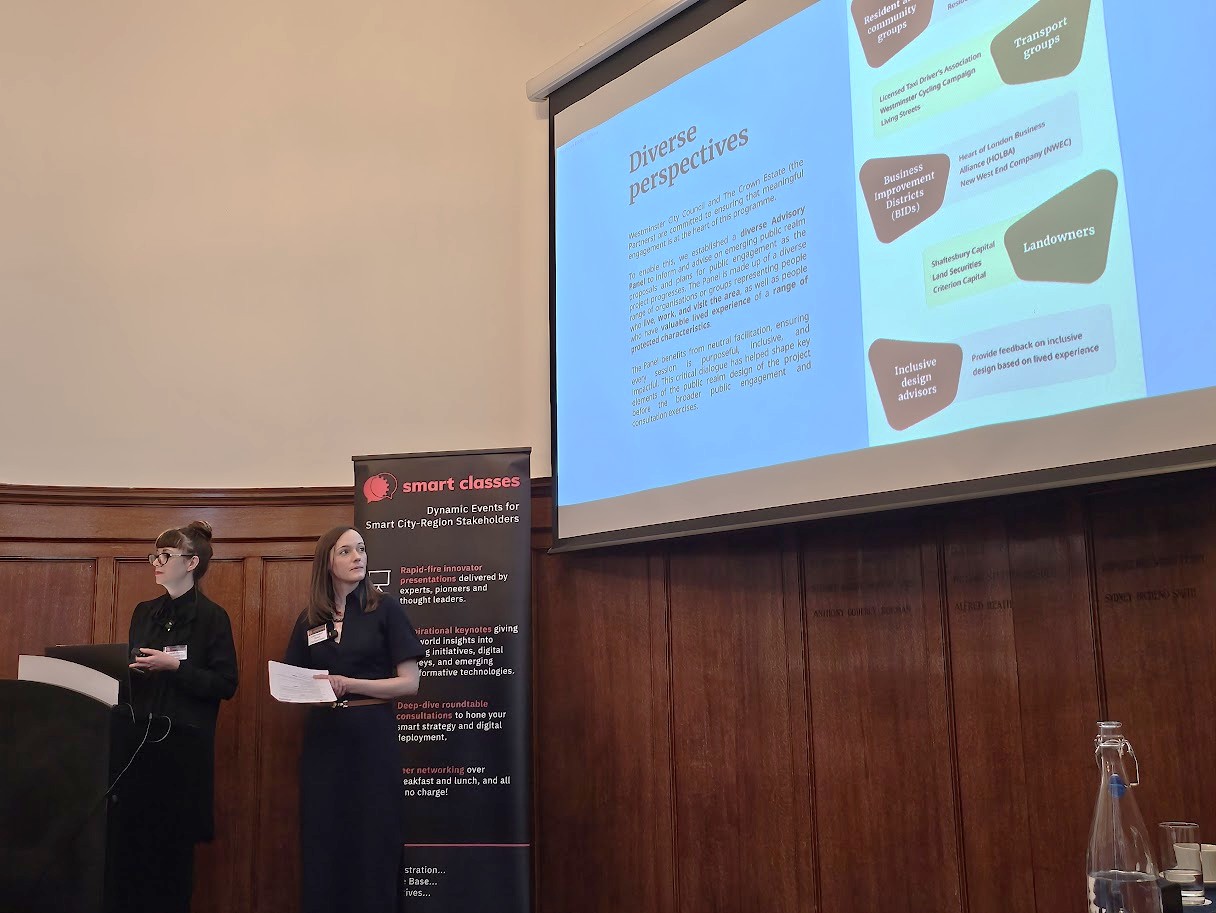
- Diverse perspectives – Westminster City Council and The Crown Estate (the Partners) are committed to ensuring that meaningful engagement is at the heart of this programme; To enable this, they have established a diverse Advisory Panel to inform and advise on emerging public realm proposals and plans for public engagement as the project progresses; The Panel is made up of a diverse range of organisations or groups representing people who live, work, and visit the area, as well as people who have valuable lived experience of a range of protected characteristics; The Panel benefits from neutral facilitation, ensuring every session is purposeful, inclusive, and impactful; This critical dialogue has helped shape key elements of the public realm design of the project before the broader public engagement and consultation exercises;
- Resident and community groups – St James’s Conservation Trust, Soho Society, Marylebone Association, Resident Society Mayfair and St James’s;
- Transport Groups – Licensed Taxi Driver’s Association, Westminster Cycling Campaign, Living Streets;
- Business Improvement Districts (BIDS) – Heart of London Business Alliance (HOLBA), New West End Company (NWEC);
- Landowners – Shaftesbury Capital, Land Securities, Criterion Capital;
- Inclusive design advisors – Provide feedback on inclusive design based on lived experience;
- Public Engagement Key Stats – Largest WCC response rate to a place or public realm project: 7m+ Combined media coverage reach; 133,224 Reached through social media ads; 7,269 Social media clicks; 3,502 New CommonPlace subscribers; 3,470 Online survey responses; 2,610 Clicks through four WCC external newsletters; 1,500 Engaged through 31 in-person events; 21 Formal responses received; 17 Early Stakeholder briefings; 5 Advisory Panel sessions since January 2025;
- Key concerns related to safety and anti-social behaviour – Fear of pickpockets in crowded and pedestrianised areas areas; Fear that groups of people gathering in places like Piccadilly Circus at night might make the area feel unsafe, which is intensified by street clutter limiting visibility; Lighting is a major factor in perceptions of safety so enhancements including feature lighting on buildings and trees would be welcomed, particularly around tube entrances;
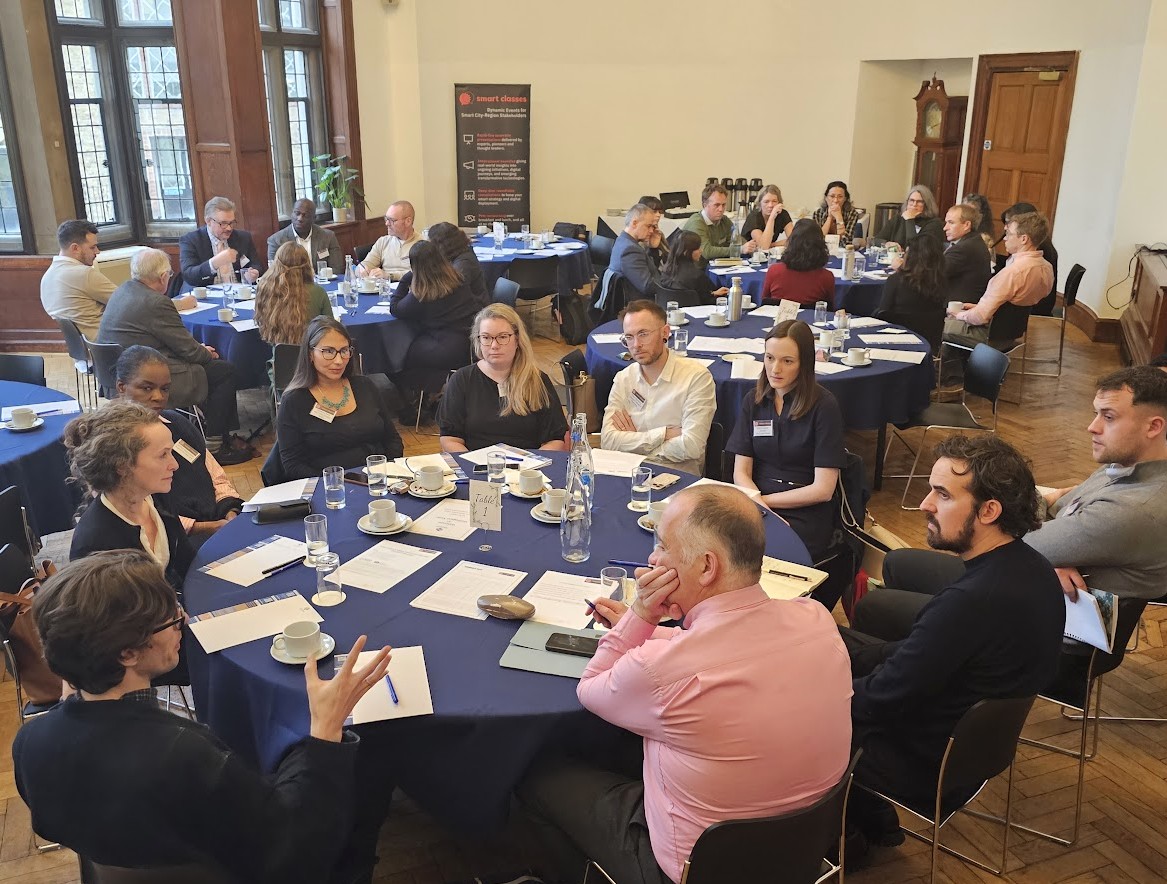
- Continuing the conversation…
- 2020 – Interim public realm changes made to address the public safety and economic impacts of the COVID-19 pandemic; May 2023 – The interim measures are retained to allow time for a permanent scheme to be developed; Summer 2023 – Over 4,100 people participate in engagement about Haymarket and the interim scheme, and share future priorities to inform a vision; January 2024 – WCC and TCE publish their vision and begin developing proposals for Regent Street, Haymarket, and Piccadilly Circus; January 2025 – Design team appointed and Stakeholder Advisory Panel assembled to help inform and guide development of the proposals; July 2025 – Public engagement on the emerging public realm masterplan and movement proposals;
- Autumn 2025 – Engagement insights will be analysed and proposals refined in line with feedback. Further engagement will take place on developed designs; Late 2025/Early 2026 – Cabinet Member approvals in November 2025 and February 2026; Mid 2026 – Further public engagement on the final proposals; Late 2026 – WCC’s Cabinet and TCE will decide if the proposals will progress; 2027 – Should the proposals progress, the design work will continue, and the delivery of some early interventions will be considered; 2028 – Should the proposals progress, and subject to further funding and approvals, construction will begin.
If you meet our regular delegate qualification criteria but were unable to join us The Wellington Hotel, Westminster, for the live in-person event on December 4th, CLICK HERE and complete the short “Download form” (located at the bottom of the post) to receive a unique link enabling free access to the presentation video recordings and slides (including the film footage and slides from Claire and Sarah’s keynote).
Those qualifying to receive the rich presentation content from this event include commissioning, procurement, trialling, partnering and policy leads, senior influencers, strategic decision makers, planners, place makers, architects, green space managers, urban designers, communities & neighbourhoods, highways & street scene, transport & mobility and high streets & regeneration professionals from councils and local authorities (city, borough, metropolitan, district, county and combined); people and place partnerships; developers, landowners and creators of privately owned public spaces; prime contractors and city centre management companies; DfT, DEFRA, MHCLG, EA and supporting governmental bodies; transport authorities, highways agencies and public transport operators; civic organisations and community groups; and other key players from the public realm ecosystem with responsibility for managing, maintaining and operating our streets, squares, forecourts, parks, pathways, retail centres, car parks, airports, ports, travel hubs, hospitals, housing estates, campuses, communal gardens and the assets contained within these public or semi-public spaces.